Photo: Kindra Clineff
1. Remove the Glass
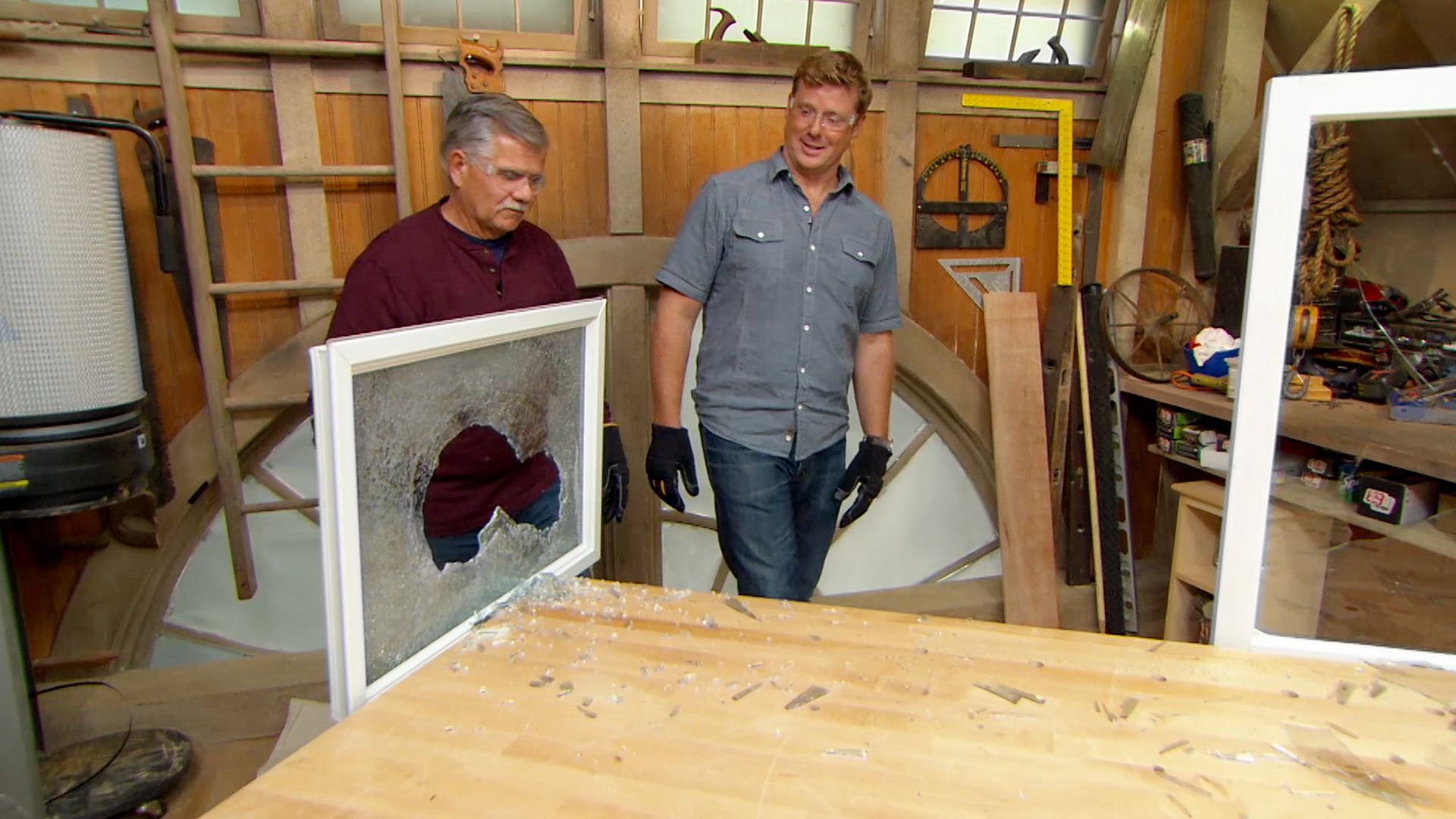
Don gloves and safety glasses and cover the broken pane with a rag. Tap the center of the rag-covered pane with a hammer to loosen the shards.
With gloved hands, wiggle free any pieces that remain embedded in the putty.
If the sash is still in the window opening, or the pane has a crack or two but is otherwise intact, it's best to remove the putty first, then the glass.
2. Remove the Old Putty
Pry out any loose putty with a painter's tool. Gradually soften the putty that's still intact by holding a heat gun about an inch away and moving it back and forth.
Put doubled sheets of aluminum foil on the adjacent panes to keep them from being cracked by the heat.
Use the chiseled point of the tool to rake out the warm putty. Repeat on the remaining sides.
TIP: When removing putty from a pane that isn't broken, Tom holds a piece of metal flashing over the glass to dissipate the heat.
3. Prep the Rabbets
Pry the old metal glazing points out of the rabbets, the grooves in the sash where the glass sits.
Scrape and sand the rabbets down to bare wood. Brush an exterior primer onto the bare wood so it won't draw the oils out of the putty and shorten its life.
When the paint dries, knead a handful of putty until it's warm and malleable, then press it into the rabbets, filling them completely (as shown). Neatness doesn't matter at this stage.
4. Bed the Glass
Wiggle the pane into the putty while applying even pressure with the tips of your fingers.
Continue pushing down until the glass is centered in the opening and about 1/8 inch of putty remains between the face of the glass and the rabbet.
If any voids show under the glass, pull out the pane, add more putty, and start over.
5. Set the Points
At the center of each side of the pane, place a glazier's point flat on the glass and fit the tip of the putty knife against the point's raised shoulders.
While applying slight downward pressure, gently rock the point from side to side until it's seated in the wood.
Repeat on the opposite side, and then on the two remaining sides. For panes 12 inches or longer on a side, space the points evenly 4 to 6 inches apart.
Flip the sash over and scrape off the excess putty that squeezed out the other side.
6. Knead
Warm a handful of putty and roll it into a long rope about about ¾ inch in diameter.
7. Apply Putty Rope
Place the rope around the edges of the glass and push it firmly against the exposed rabbets.
If one rope isn't enough, roll out more and overlap the ends to form an unbroken ring of putty around the edges of the glass.
8. Smooth the Putty
Starting in a corner, rest the putty knife's blade at about a 45-degree angle to the glass, with its tip on the top edge of the rabbet and one corner on the glass.
Flatten the blade against the putty with your index finger and maintain the angle as you pull the knife along one side of the pane.
Leave a neat crease in the corner — then collect the excess putty.
For the remaining sides, set the blade tip on the crease and repeat the tooling process.
TIP:If the knife pulls the putty off the glass, clean the blade and try again.
9. Fine-tune
If the underside of the putty can be seen from the other side of the window, the putty is too wide and needs retooling.
Set the corner of the blade on the glass a little closer to the rabbet than before and hold the knife handle a bit closer to the glass.
Retool as in Step 8. You'll know you've gotten the angle right if the putty's edge lines up with the inside edges of the sash or muntins on the opposite side of the window.
Scrape away the excess (as shown).
10. Prime and Paint
Wait about seven to ten days for the putty to stiffen up, then clean the oily putty film off the glass with a dry rag.
Paint the putty with an oil-based primer, overlapping it about 1/16 inch onto the glass to prevent water from getting behind the putty.
After the primer dries, apply a coat of exterior paint.
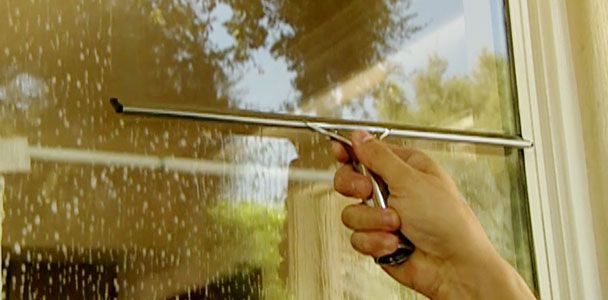
When the paint dries, you can give the pane a thorough scrubbing.