
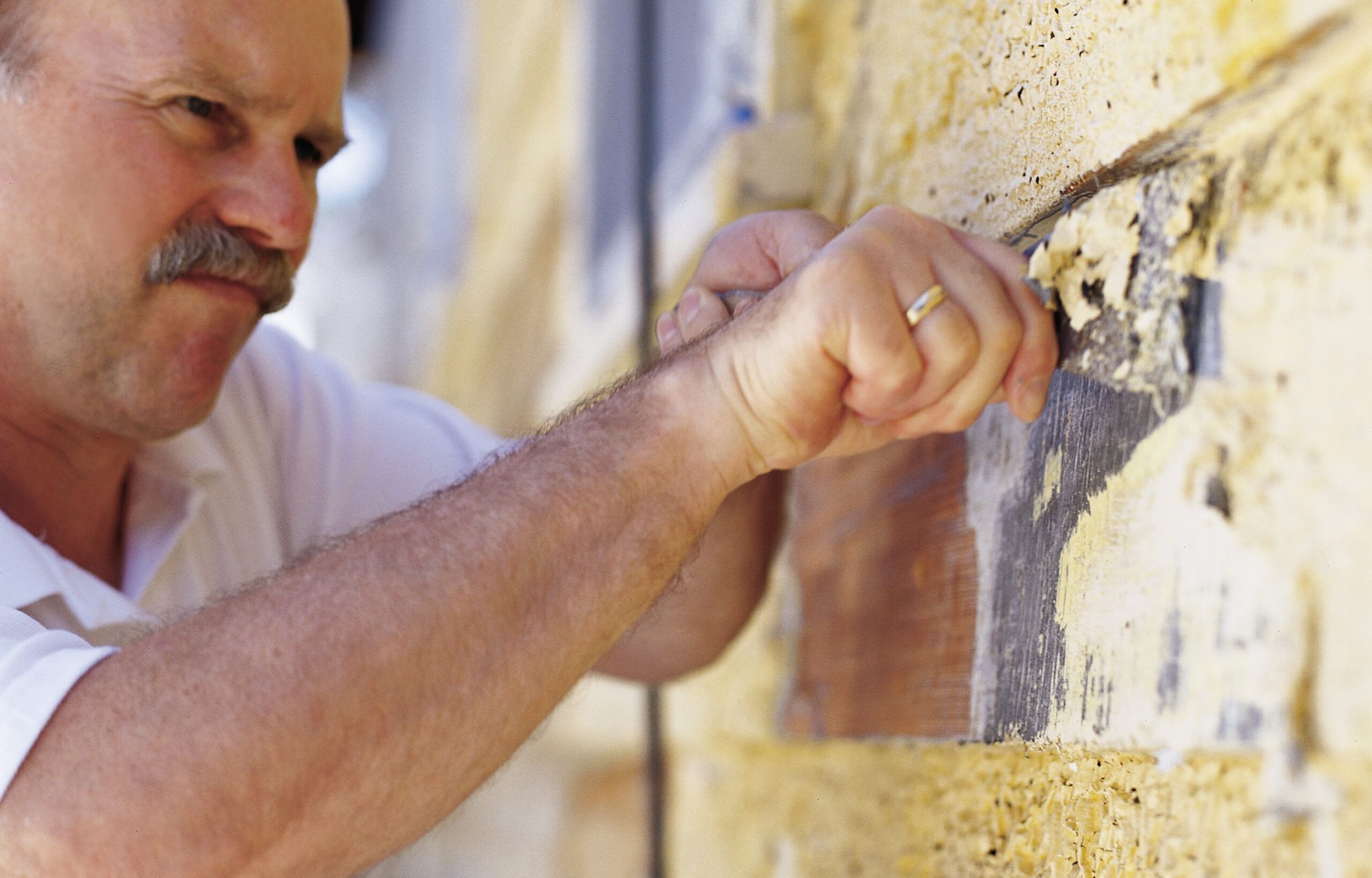
From a distance, the house in Winchester, Massachusetts—site of the 2002 This Old House TV project—was a picture of crisp yellow siding and white trim. Closer inspection revealed a craggy clapboard landscape of cracks, chips, and flakes where 10 coats of paint, applied during the 80-year life of the house, were failing by degrees. We’ll walk you through the steps the This Old House team took to remove all that paint and provide pro tips and tricks so you can tackle your own paint-removal projects.
Winchester Project Background
“The clapboards are cypress, I think—a full 10 inches wide and 7/8 inches thick at the butt,” said This Old House general contractor Tom Silva. “Beautiful wood in great condition, except that it won’t hold any more paint.”
Painting contractor Jim Clark concurred: “We could feather out the failed areas with scrapers and sandpaper before priming and top coating, but a year after we finish, the flaking and chipping could start again. So all the paint has to go. That means a lot of work, but when we’re finished, we’ll have a baby-smooth surface that will hold nice, even coats of paint for a long time to come.”
Assessing Paint Condition
Assessing the current state of your home’s exterior paint is important before embarking on a paint removal project.
Identifying Paint Layers
Examine your home’s exterior closely to determine how many layers of paint are present. You can do this by carefully scraping a small area to reveal paint layers’ different colors and textures. This information will help you choose the most appropriate removal method.
Checking for Lead Paint
For houses built before 1978, there’s a high likelihood of lead-based paint being present. Lead paint poses serious health risks, especially when disturbed during removal. If you suspect your home has lead paint, it’s essential to have it tested by a professional before proceeding with any removal work.
Dealing with Lead Paint
If your home has lead paint, extra precautions are necessary.
Legal Considerations
Be aware of local and federal regulations regarding lead paint removal. In many areas, homeowners can remove lead paint, but you must adhere to strict safety protocols.
Safe Removal Practices
When dealing with lead paint, use methods that minimize dust creation. Wet scraping and sanding, along with proper containment and clean-up procedures, are imperative for safe lead paint removal. Using polyethylene sheets to seal off the area and creating a decontamination zone can further prevent lead dust from spreading.
Preparing for Paint Removal
Proper preparation is key to a successful paint removal project.
Safety Precautions
Safety should be your top priority regardless of the removal method you choose. Always wear protective gear, including goggles, gloves, and a respirator. Additional precautions—including professional intervention—are necessary to prevent contamination when dealing with lead paint.
Gathering the Necessary Tools and Materials
Depending on your chosen method, you’ll need various tools and materials. These may include scrapers, sanders, heat guns, chemical strippers, drop cloths, and disposal bags.
Methods for Stripping Paint
Several methods exist for stripping paint from a house’s exterior, each with its own advantages and drawbacks.
Grinding Method
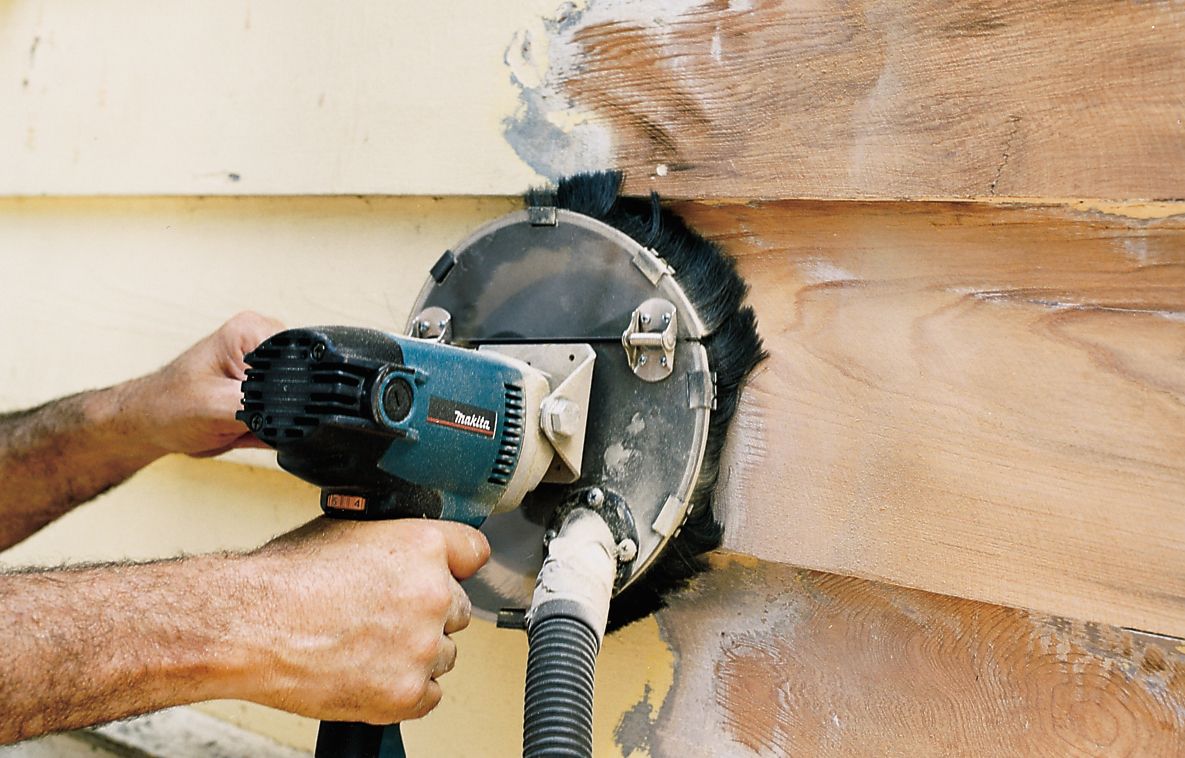
Grinding involves using power sanders or specialized clapboard sanders to remove paint mechanically.
Grinding pros:
- Fast and efficient, especially on smooth surfaces like clapboards
- Leaves no residue on surface
- Relatively inexpensive, with no chemicals to buy
Grinding cons:
- Can damage the wood if not done carefully
- Only works on non-patterned siding like clapboards
- Noisy
- Creates airborne dust that’s a lead concern and requires a HEPA-filter mask
- Some states require a vacuum connection
Heat-Based Removal Techniques
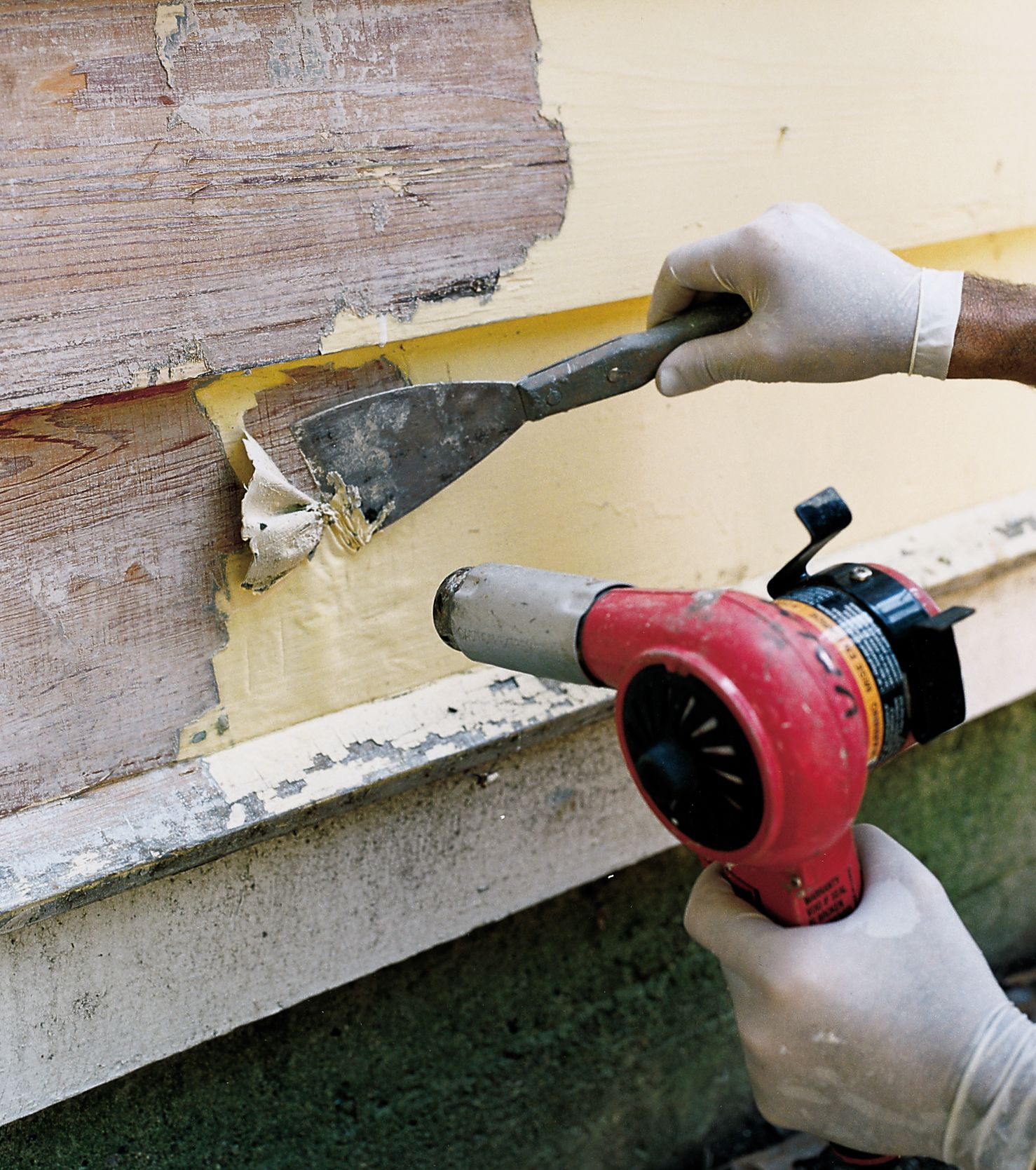
Heat guns and infrared devices can soften paint, making it easier to scrape off. While effective, these methods carry a risk of fire and can release lead fumes if lead paint is present.
Heat gun pros:
- Relatively fast,
- Thorough
- Inexpensive, with no chemicals to buy
Heat gun cons:
- Can release some lead along with smoke, so a respirator is recommended
- Danger of fire, which is often delayed when an ember under a clapboard ignites
A newer, safer option is the infrared paint remover, which heats the substrate behind the paint without reaching dangerous temperatures.
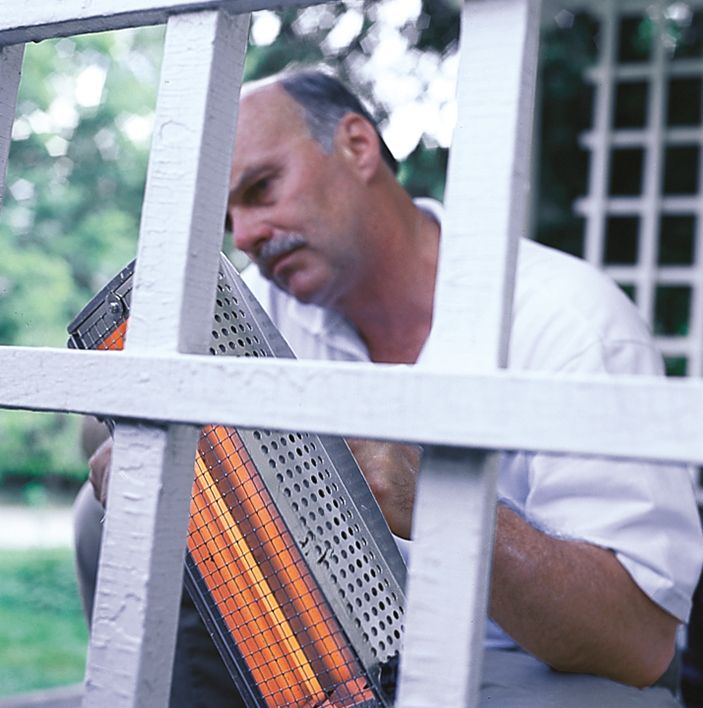
Infrared heat pros:
- Very fast—about 20-30 seconds exposure
- Low operating temperature won’t ignite wood
- Removes all paint with one pass
- Requires no mask, gloves, or goggles
- Inexpensive to operate, with no chemicals to buy
infrared heat con:
- Expensive—our team found prices for the necessary device from hardware stores like Lowes and Home Depot, and on Amazon.com, ranging from $140 to $363
Chemical Strippers
Chemical strippers come in various formulations, from traditional methylene chloride-based products to newer, more environmentally friendly options.
Peel-Away Options
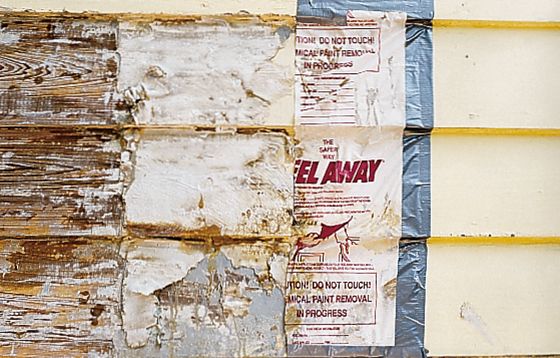
Peel-away paint removal is a technique that uses a paste-like chemical stripper to soften multiple layers of paint. The stripper is applied thickly and covered with a special fabric. After a set time, the fabric peels off, taking the loosened paint with it.
Peel-away pros:
- Generally quick to apply
- Nonflammable
- Can be sprayed or brushed on
Peel-away cons:
- Mixed results
- Often requires a second application
- Paper is an extra hassle
Abrasive Blasting
Abrasive blasting uses high-pressure equipment to blast a surface with materials like silica sand, glass beads, or walnut shells. While effective for removing multiple layers of paint quickly, it can also damage delicate surfaces. It requires proper skill and technique, limiting its viability for do-it-yourself enthusiasts.
Paint Stripping Guide
Once you’ve chosen your method, follow these general steps for paint removal.
Surface Preparation
Start by cleaning the exterior surface and removing any loose paint. Cover nearby plants and areas to prevent the paint removal process from affecting them.
Application Process
Apply your chosen removal method according to the manufacturer’s instructions. For chemical strippers, this typically involves applying the product, allowing it to work, and then scraping off the loosened paint. For heat or grinding methods, work in small sections to maintain control.
Clean-Up and Disposal
Properly dispose of all removed paint, especially if it contains lead. Clean the surface thoroughly after stripping to ensure good adhesion for new paint.
Post-Stripping Surface Preparation
After removing the old paint, proper surface preparation is critical for the success of your new paint job.
Sanding Techniques
Lightly sand the stripped surface to create a smooth base for new paint. Be careful not to overdo it, as this can damage the wood or create an overly slick surface to which the paint won’t adhere well.
Filling and Patching
Inspect the stripped surface for any holes, cracks, or imperfections. Use wood filler or exterior-grade putty to repair damages before sanding these patches smoothly. Proper patching ensures a uniform appearance and creates a stable surface for the new paint application.
Priming the Bare Surface
Apply a high-quality primer to the bare wood or other substrate.
Selecting New Exterior Paint Colors
Choosing new colors for your home’s exterior is an exciting process.
Historical Accuracy Considerations
If you have a historic home, consider researching historically accurate color schemes. Many paint manufacturers offer heritage color collections that can guide your choices.
Modern Trends
Consider current exterior paint trends that can add curb appeal and increase property value. Neutral tones with bold accents are popular choices that blend modern aesthetics with timeless appeal.
Testing Color Choices
Always test your chosen colors on an area of your home’s exterior before committing. Paint large swatches and observe them at different times of the day to see if you’re happy with the result.
Professional vs. Do-It-Yourself Paint Removal
Deciding whether to tackle paint removal yourself or hire a professional is an important consideration.
When To Hire a Professional
Consider hiring a professional if you’re dealing with lead paint, have a multi-story home, or lack the time and equipment to do the job safely and effectively. Professionals have the expertise and tools to handle complex paint removal projects.
Tips for Do-It-Yourself Enthusiasts
If you decide to tackle it yourself, start with a small, inconspicuous area to practice your technique. Be patient and thorough, and don’t rush the process. Remember that proper preparation is key to a successful paint job. Gather all necessary safety equipment and follow the manufacturer’s guidelines for any tools or chemicals used.
Environmental and Health Considerations
Paint removal can have environmental and health impacts to consider.
Eco-Friendly Paint Removal Options
Look for environmentally friendly paint strippers that are biodegradable and low in volatile organic compounds (VOCs). These products are safer for both you and the environment.
Protecting Your Health During the Process
Always work in well-ventilated areas and use appropriate personal protective equipment. Be especially cautious when dealing with lead paint or harsh chemical strippers. Wearing long sleeves and pants can prevent skin contact with chemicals. Additionally, using a vacuum with a HEPA filter can reduce dust during sanding and cleanup.
Maintaining Your Newly Painted Exterior
Regular maintenance helps retain the fresh look of your home’s exterior paint and protective properties.
Routine Inspection
Perform routine inspections—at least twice a year—for signs of wear, such as peeling or fading. Early detection of potential issues can prevent larger problems and extend the life of your paint job.
Cleaning Techniques
Gently clean the exterior with a soft brush and mild detergent to remove dirt, mildew, and other contaminants. Avoid high-pressure washing, as it can damage the paint and underlying materials.
Touch-Up and Repair
Address minor damages promptly with touch-up paint to prevent more significant issues. Keep some leftover paint from the original job for this purpose, as it ensures color consistency.
Our Conclusion
By carefully assessing your situation, choosing the correct removal method, and following proper safety procedures, you can successfully strip old paint and give your home a fresh start. We encourage you to consult with or hire a professional painter if you need clarification on any aspect of the job. Investment in professional help can often save time, ensure safety, and produce a superior finish for your home’s exterior.
