
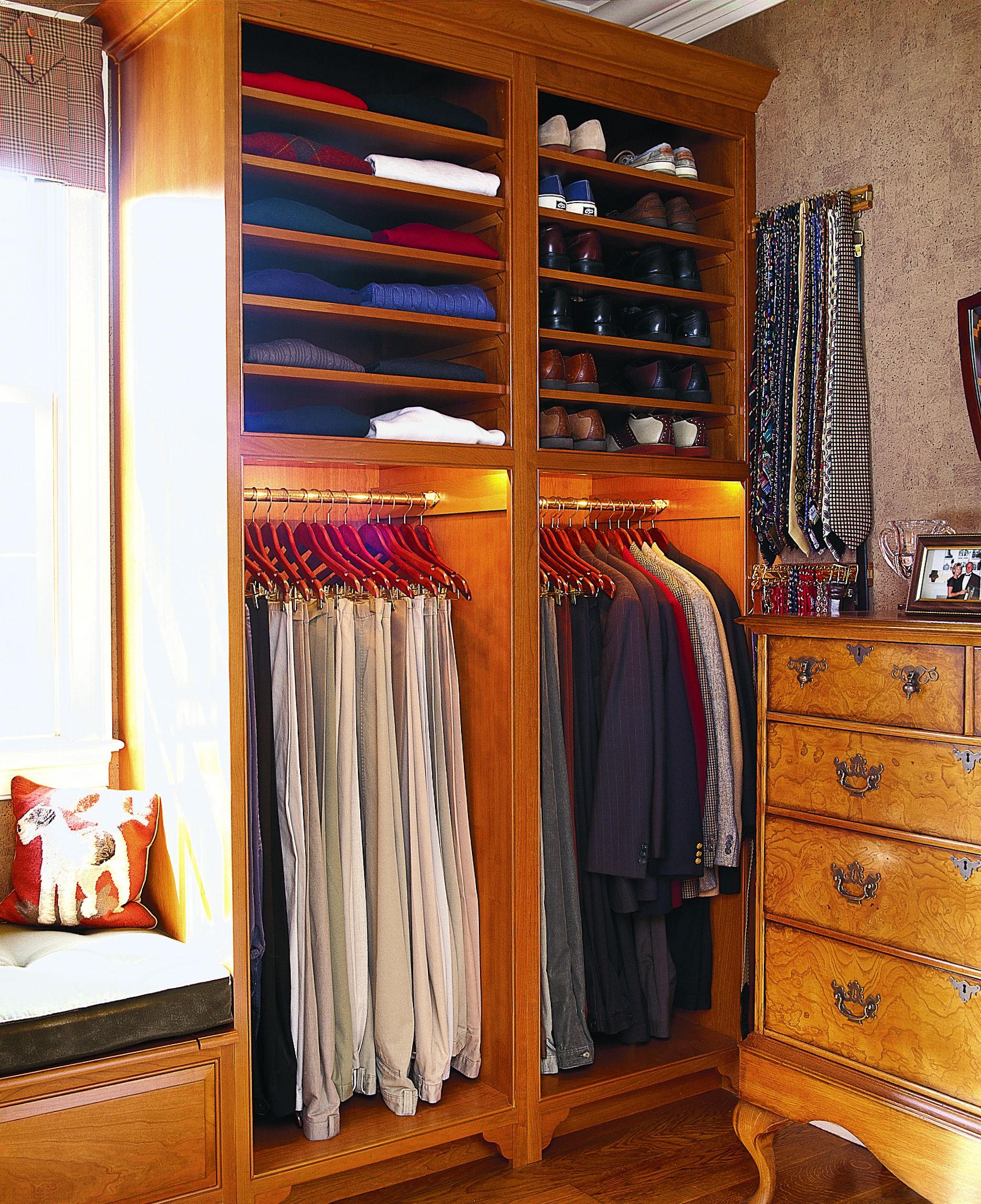
Closets can be more than just a simple storage space. With careful planning, you can create a multifunctional area that significantly improves your home’s organization.
Whether you’re designing a new closet or updating an existing one, understanding the principles of closet design can help you create a space that’s functional and tailored to your needs. This guide will walk you through the essential elements of effective closet design to help you embark on your own closet project.
Understanding Your Closet Needs
Before starting the design process, it’s important to assess your specific closet needs. This initial step will guide your decisions throughout the project, guaranteeing that your closet will be both functional and personalized.
Assessing Your Wardrobe
Take inventory of your clothing, accessories, and other items that will be kept in the closet. Consider the types of garments you own and how you prefer to store them. Do you have many items that need to be hung, or do you prefer folding most of your clothes? Understanding your wardrobe habits will help you determine the right balance of hanging space, shelving, and drawers.
Identifying Storage Requirements
Beyond clothing, think about other items you need to put in the closet, such as shoes, bags, or seasonal gear. Consider how frequently you access different things and plan your storage accordingly. Frequently used items should be easily accessible, while less-used items can be stored in higher or lower spaces.
Key Elements of Effective Closet Design
The best closet designs incorporate elements that maximize space and improve functionality. These principles can be applied to closets of any size to create a more organized and efficient storage solution.
Vertical Space
One of the most important aspects of smart closet design is making full use of vertical space. This approach can significantly increase your storage capacity. Consider installing shelves or cabinets that reach all the way to the ceiling to house infrequently used items. Floor-level storage, such as roll-out boxes, can also be ideal for shoes or seasonal items.
Lighting
Proper lighting is important for a functional closet. Natural light from skylights or windows can be beneficial, but be mindful of its potential to fade clothes. When relying on artificial lighting, ensure it’s positioned to illuminate your closet without casting shadows.
The important thing to remember about artificial light is that it should be between you and everything in the closet; if it’s behind you, you’ll cast a shadow on what you’re trying to see. Consider LED lighting options, which are energy-efficient and produce less heat than incandescent bulbs, making them safer for enclosed spaces.
Visibility and Accessibility
Choose a layout that allows you to see and reach all your items easily. Consider using clear storage bins, glass-fronted drawers, or open shelving to keep your things visible. Adjustable shelves and rods provide flexibility to adapt your storage layout as your needs change over time.
Choosing the Right Closet System
Selecting the best closet system for your needs will impact the functionality and style of your space. Several options are available, each with its own advantages.
Modular Closet Systems
Modular systems offer a middle ground between customized and DIY options. These systems are professionally designed and measured to fit your closet, but use standardized components. They offer variability and a more finished look than DIY options, but at a lower cost than a full customized space.
Custom-Built Systems
Custom-built closets offer the highest level of personalization and can be tailored to fit your exact space and needs. While this is typically the most expensive option, these closets provide unparalleled flexibility in design and materials.
DIY Options
For those on a tighter budget or who enjoy hands-on projects, a DIY closet can be the best choice. These typically include wire shelving or basic wood components you can install yourself. While they may not offer the same level of customization or finish as professional options, they can significantly improve your closet’s functionality at a lower cost.
Essential Closet Components
A well-designed closet incorporates a variety of components to accommodate different storage needs. Understanding these elements can help you create a more usable space.
Hanging Rods and Shelving
As the name implies, hanging rods are used to store clothes that need to be hung, while shelves provide space for folded items and accessories. You can always double-hang rods to maximize vertical space for shorter items like shirts and pants. Adjustable shelving allows for flexibility as your storage needs change over time.
Drawers and Cubbies
Drawers are ideal for storing smaller items like underwear, socks, and accessories. Cubbies can be used for shoes, bags, or folded sweaters, making them easier to keep out of sight. Conversely, you can use clear-fronted drawers or pull-out trays to make it easier to see and access the contents.
Specialty Storage
There are also storage options for specific items, such as tie racks, belt hooks, jewelry organizers, or pull-out hampers. These specialized components can help keep your closet organized and make it easier to find certain items.
Seating and Dressing Areas
If you have a larger space, consider adding a seating area in your closet. A chair can be especially useful in walk-in closets, providing a comfortable spot for dressing or trying on shoes. For smaller closets, a fold-down seat or a small ottoman can serve the same purpose without taking up too much space.
Integrated Ironing Stations
For those who frequently iron clothes, an integrated ironing station can be a valuable addition. A flip-down board allows you to tend to clothes right where you store them, saving time and effort in your daily routine.
Closet Door Options
The type of door you choose for your closet can affect its practicality and your room’s overall look. Each style has advantages and drawbacks.
Swinging Doors vs. Sliding Doors
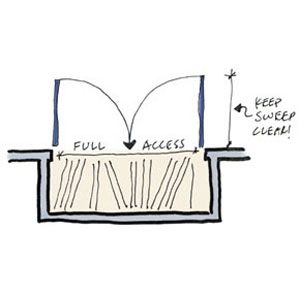
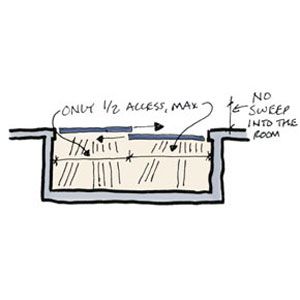
Swinging doors provide full access to the closet interior but require clearance space to open. Sliding doors, on the other hand, don’t require clearance space but only allow access to half of the closet at a time. They are also prone to racking, binding, and popping off their tracks.
Swinging Door
Sliding Door
Bifold and Pocket Doors
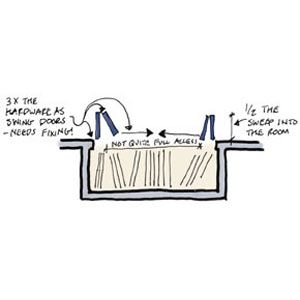
Bifold doors offer a compromise, providing nearly full access while taking up less floor space than swinging doors. However, they have more moving parts that can potentially malfunction. Pocket doors slide into the wall, saving space and providing full access, but they require specific wall construction and can be more complex to install.
Bifold Door
Closet Flooring Choices
The flooring in your closet is often overlooked, but it’s an important aspect of closet design. Carpet provides warmth and comfort underfoot, which can be pleasant when dressing, although a bit more difficult to maintain. Hard surface options like wood or vinyl are generally easier to clean and can withstand the wear and tear of daily use. If you opt for carpet, choose a low-pile option that’s easier to vacuum and less likely to trap dust and debris.
Smart Technology in Closet Design
Incorporating smart technology into your closet design can enhance organization and convenience. Consider these modern features to further transform your closet into a more efficient and user-friendly space.
Automated Lighting Systems
Motion-activated or voice-controlled lighting systems can provide hands-free illumination when you enter your closet. This is particularly useful when your hands are full or you don’t want to fumble around in the darkness to find a light switch.
Digital Inventory Management
Digital inventory systems, like the many wardrobe planning apps available for smartphones, can help you manage your wardrobe. These tools assist in outfit planning, tracking wear frequency, and even suggesting donations for items you rarely use. This feature is especially useful if you have a lot of clothes.
Our Conclusion
Designing a smart closet is about more than just maximizing storage space—it’s about creating a functional, organized environment that simplifies your daily routine. By considering factors including vertical space, lighting, accessibility, and climate control, you can transform your closet into a highly efficient area tailored to your specific needs.
Remember that the best closet design is one that works for you. Whether you choose a custom-built system or a DIY project, the key is to create a space that makes your life easier and keeps your belongings organized and accessible. With thoughtful planning and implementation of these smart design principles, you can create a closet that not only meets your storage needs, but also enhances your overall living space.
