
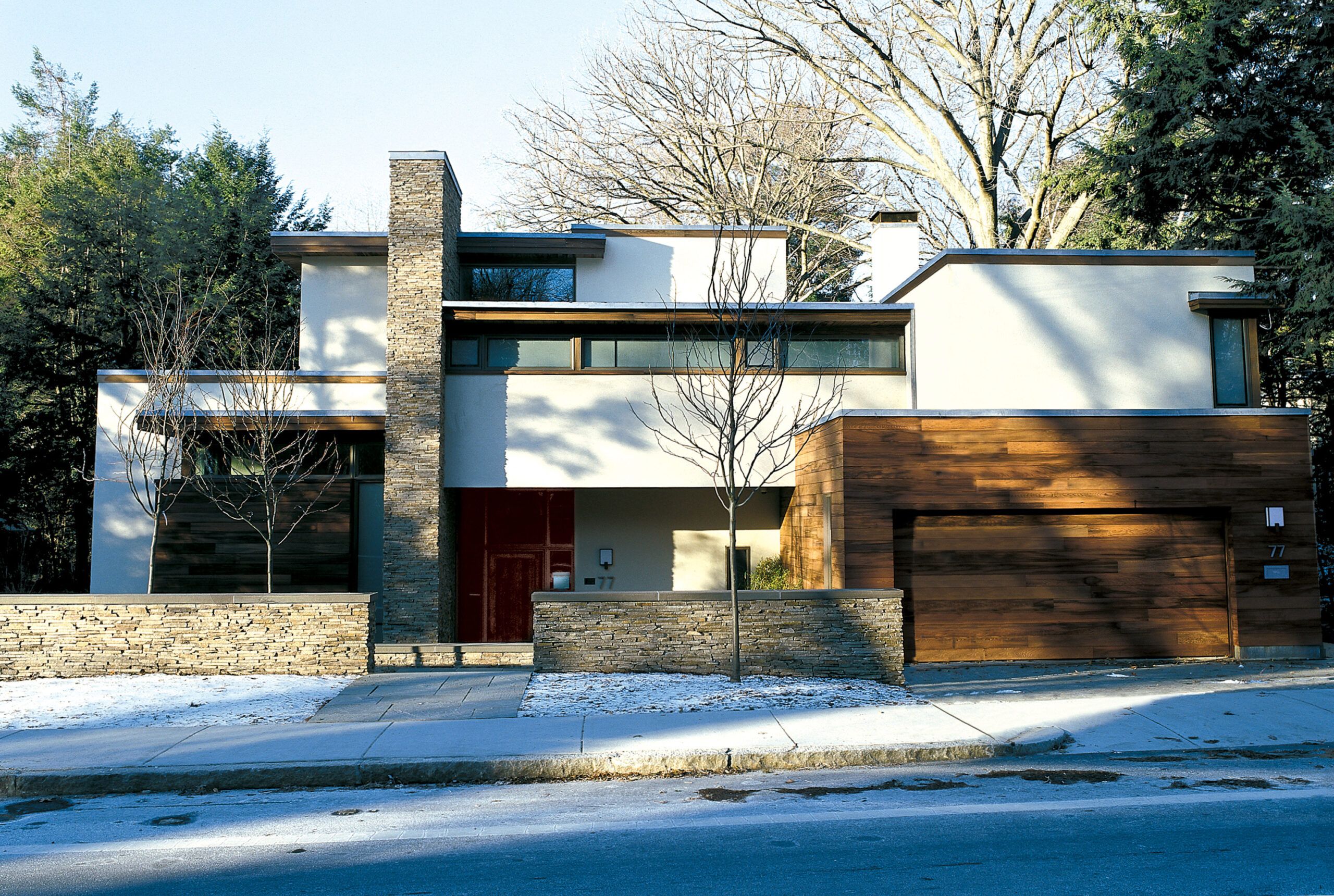
Homeowners can choose among three kinds of flat roofs, says Bruce O’Neal, vice president of Matthews Roofing, which has been keeping Chicago’s many flat roofs dry since 1934.
What are the different types of flat roofs? Built-up roof (BUR), modified bitumen roof (MBR), and rubber membrane roof (EPDM).
Pros and Cons for Flat Roof Materials
All three types of flat roofing cost $250 to $350 per “square” (100 square feet), but prices vary according to region and size of the roof. Flat roofs usually come with a 10- to 20-year warranty but can last 25 years if you build the roofs right and maintain them using commonsense rules.
1. Built-Up Roof (BUR)
The traditional hot-tar-and-gravel roof is built from three or more plies of waterproof material alternated with hot tar and ballasted by a layer of smooth river stone. Once made of tar paper, these types of roofs gradually are using more-advanced materials such as fiberglass membranes.
Pros
- Gravel is an excellent fire retardant.
- Attractive for windows and decks that overlook the roof.
- It’s the cheapest of the four roof varieties.
Cons
- Very heavy.
- Joists sometimes have to be strengthened.
- Smelly and messy to install.
- Installation is not recommended for occupied homes.
- It’s not a DIY installation job, and it is hard to find the source of leaks.
- Gravel can clog gutters and scuppers.
2. Modified Bitumen Roof
A single-ply rolled roof similar to ice-and-water shield, but impregnated with a mineral-based wear surface. Torch-down systems involve heating the adhesive as the material is unrolled. Newer peel-and-stick systems are safer and easier.
Pros
- Peel-and-stick material can be installed by homeowners.
- Its light-colored mineral surface reflects heat and cuts energy bills.
- Its price is in the middle of the pack.
Cons
- Torch-down application is a fire hazard, and not recommended for occupied buildings.
- It’s not as scuff- or tear-resistant as rubber-membrane roofs (see the next item).
3. Rubber Membrane Roof
EPDM (short for ethylene propylene diene monomer) is a true rubber. The durable single-ply membrane material resembles an inner tube, but it’s engineered to resist damage from sunlight. EPDM can be mechanically anchored with fasteners, ballasted with stone, or glued.
Pros
- Homeowner-friendly installation.
- The material’s relatively light yet highly resistant to scuffs and tears.
- Leaks are easy to patch.
Cons
- The standard black material absorbs heat, and light-colored coatings (recommended in warm climates) add 30% or more to the cost. Even the black version, though, costs more than BUR or modified bitumen.
- It’s also more vulnerable to punctures than other choices.