
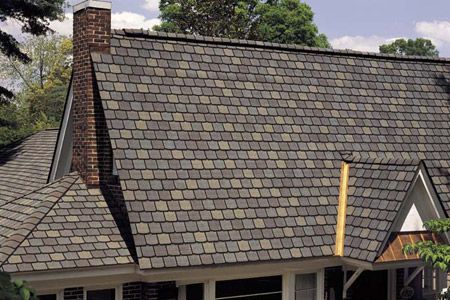
Keeping your roof in good shape protects your home from the elements. Over time, shingles can get damaged, curl, or go missing, which can lead to leaks or other structural problems. Knowing how to repair or replace shingles can save you money and prevent larger issues down the road. In this guide, we’ll walk you through how to spot shingle damage and handle common repairs to keep your roof in tip-top shape.
Common Types of Roof Shingle Damage
Before jumping into repairs, understand common types of shingle damage and the signs that tell you they need attention. Roof shingles can suffer from the following:
- Blistering: Caused by trapped moisture or excessive heat, blistering creates small raised areas on the surface of shingles, which can eventually pop and lead to further damage or leaks.
- Cracking or splitting: Over time, weather exposure can cause shingles to crack or split, weakening their ability to protect the roof and leaving it vulnerable to water infiltration.
- Curling at the edges: Shingles may begin to curl upward at the edges due to aging, moisture, or poor installation. This reduces their ability to provide an effective barrier against the elements.
- Missing granules: Granules protect shingles from UV rays and weathering. When they fall off due to age or impact, it leaves the shingles exposed to sun damage.
- Wind damage: High winds can lift or completely tear off shingles, leaving parts of the roof exposed and more prone to leaks or structural damage.
Early identification of shingle damage can save you from costly repairs. Regular roof inspections, at least twice a year—preferably in spring and fall—help you spot potential problems before they escalate. Look for bald spots, nails popping out, warped or buckled shingles, and mold and mildew growth.
Tools and Materials for Shingle Repair
You’ll need the following tools and materials to take on shingle repair:
- Brick or heavy object (for weighing down curled shingles)
- Flat pry bar
- Hammer
- Ladder
- Putty knife
- Replacement shingles
- Roofing cement
- Roofing nails (1-and-1/4-inch)
- Roofing sealant
- Safety gear (gloves, safety glasses, non-slip shoes)
- Utility knife
Setting up your workspace is just as important as having the right tools. Make sure your ladder is stable on solid ground. Check the weather and aim for at least 24 hours of dry conditions to allow adhesives or sealants to set properly.
Step-by-Step Guide to Replacing Damaged Shingles
Replacing shingles can extend your roof’s life. Do this on a warm, dry day to ensure the shingles are pliable and less likely to crack during the repair process. Follow these steps to handle the job:
- Lift the edges of the surrounding shingles gently with a pry bar.
- Remove the nails securing the damaged shingle using the pry bar.
- Slide out the damaged shingle carefully.
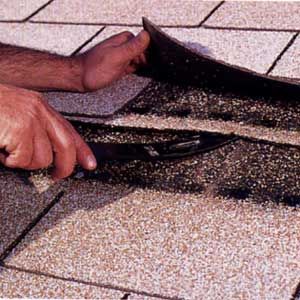
Proper removal prevents damage to surrounding shingles and underlayment. To install new shingles, slide them into place, aligning them with the surrounding shingles. Secure the new shingles with roofing nails, placing them where the overlapping shingles will cover them. Apply a small amount of roofing sealant under the tabs of the new shingles to help them adhere.
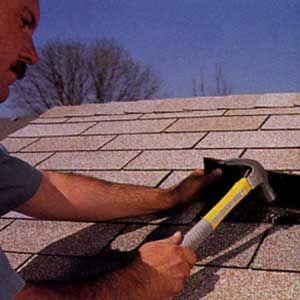
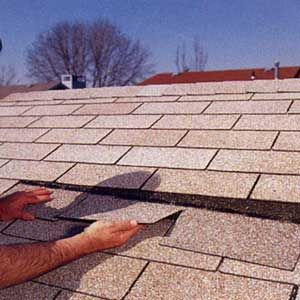
For extra protection against leaks, use roofing cement at the edges of new shingles—especially in areas prone to high winds. This can add an additional layer of security and prolong the shingle’s life.
Techniques for Repairing Curled Shingles
You can often fix curled shingles without fully replacing them. Follow these steps:
- Clean the curled area of any debris.
- Apply a generous amount of roofing sealant under the curled section.
- Press the curled portion down firmly.
- Place a brick or heavy object on top of the repaired section.
- Leave the weight in place for at least 24 hours to allow the sealant to dry completely.
How To Fix Cracked or Torn Shingles
Cracked or torn shingles don’t always require full replacement. You can often repair them in place, saving you time and materials. To fix a cracked shingle, follow these steps:
- Apply a thick bead of roofing sealant under the crack.
- Press the shingle down firmly.
- Apply a second bead of sealant on top of the crack.
- Use a putty knife to spread the sealant evenly over the crack.
To make the repair less noticeable, check your gutters for accumulated granules that have washed off the shingles. Collect these granules in a small container and sprinkle them over the wet sealant to match the surrounding shingle texture.
When To Consider Professional Roof Repair
While many shingle repairs can be do-it-yourself (DIY) projects, some situations call for professional intervention. Consider calling a professional if your roof is nearing the end of its lifespan or if you notice any of the following:
- Multiple damaged or missing shingles
- Sagging areas on your roof
- Signs of water damage inside your home
When deciding whether to tackle the repair yourself or hire a professional, consider your comfort level working on roofs and the complexity of the repair. If your DIY repairs have the potential to cause further damage or if you’re unsure about any aspect of the repair, consult a roofing professional to avoid mistakes. Professionals not only bring expertise but often provide warranties for their work.
Preventative Maintenance To Extend Shingle Life
Regular maintenance goes a long way in extending the life of your roof and keeping problems in check. Perform visual inspections of your roof at least twice a year, ideally in spring and fall. Look for the following:
- Damaged or missing shingles
- Debris accumulation
- Proper drainage in gutters and downspouts
- Signs of wear or aging
Spring inspections help identify damage from winter weather, while fall inspections prepare your roof for colder months.
Seasonal Maintenance Tips
Different seasons pose different challenges for your roof. In winter, make sure snow and ice don’t accumulate excessively to prevent ice dams. In summer, check for any signs of heat damage or sun wear on shingles.
Professional Roof Inspections
Even with diligent DIY inspections, we recommend hiring a professional to check your roof every few years. They can spot issues that might be easy for an untrained eye to miss and advise you on any preventative measures you should take.
