
The way Bo Sullivan talked about the Antique Doorknob Collectors of America having its conference and auction in Portland, Oregon, you’d think the Grateful Dead had resurrected Jerry Garcia for a reunion concert. “You have to come,” he said. “It’ll be amazing.”
I didn’t go. Not because I doubted Bo, the historian for Rejuvenation, which makes new door hardware based on old designs, but because I had just made a pilgrimage to Discovery Architectural Antiques in Gonzales, Texas, where one of the shop’s co-owners, Brad Kittel, gave me a private viewing of his extraordinary doorknob collection. Plus, why bother when so much of the buying and selling of antique hardware happens online these days?
In 2005, for instance, a cast bronze knob with the figure of an elk sold on an auction website for $9,450, a record amount paid for a doorknob. The “standing elk” was made in 1870 by the Metallic Compression Casting Company, then the benchmark for quality in American hardware. What distinguishes the company’s designs is the detail, Kittel told me as he handed me his prized Metallic Compression lion’s-head knob: “Just look at the whiskers.” Artisans achieved such precision by hand-pouring molten metal—bronze, brass, or iron—into a carved mold, which they spun in a mechanical centrifuge until all the tiny voids were filled.
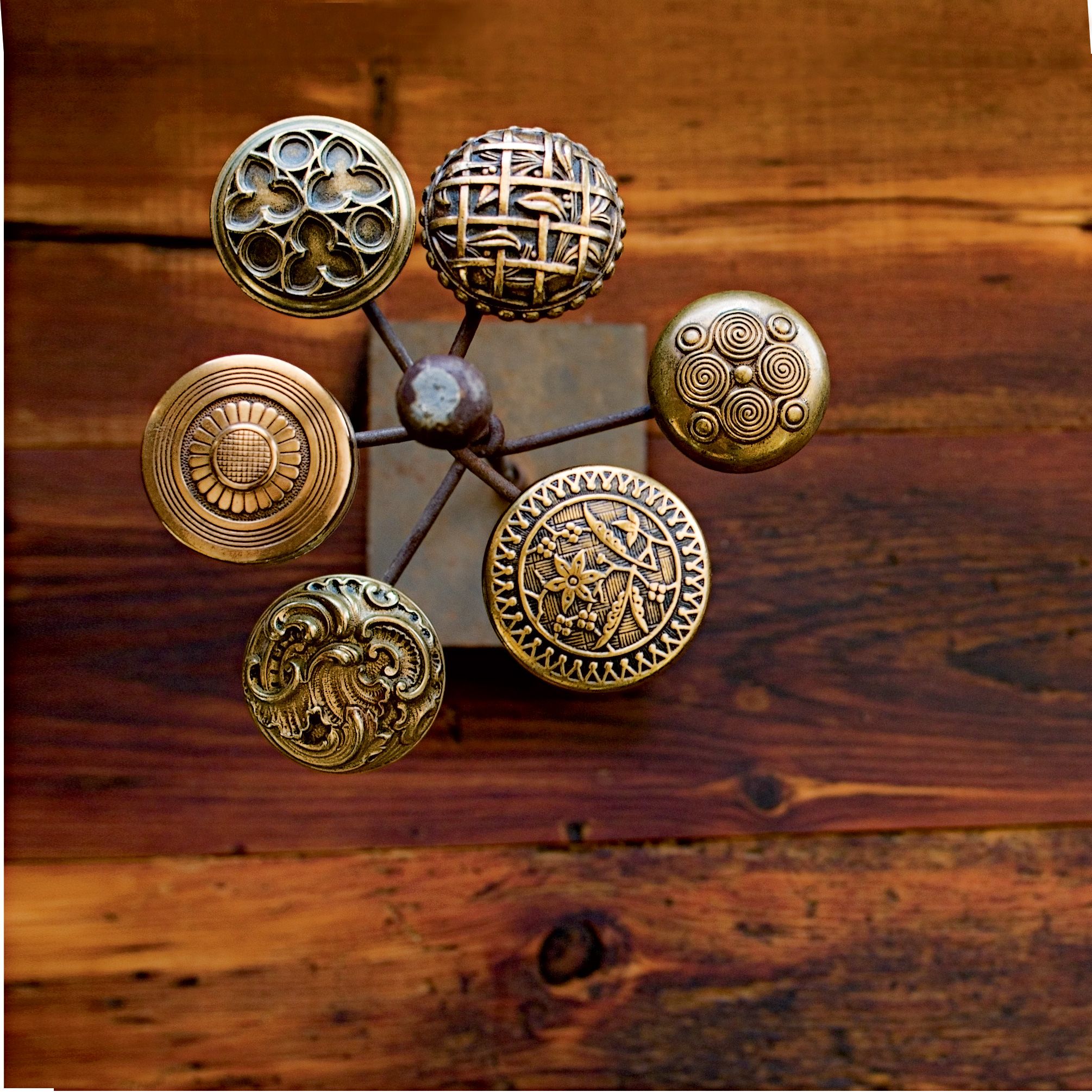
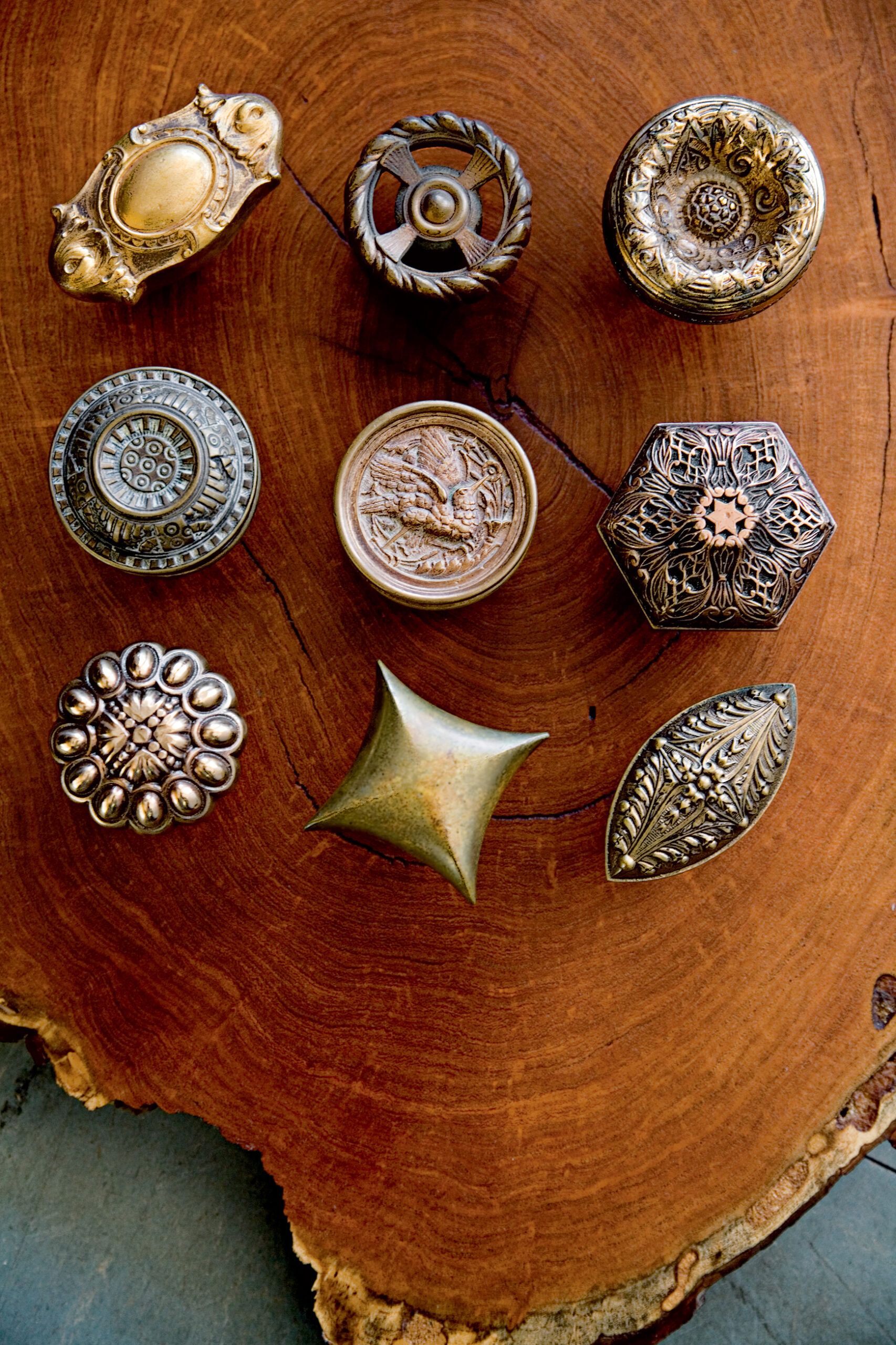
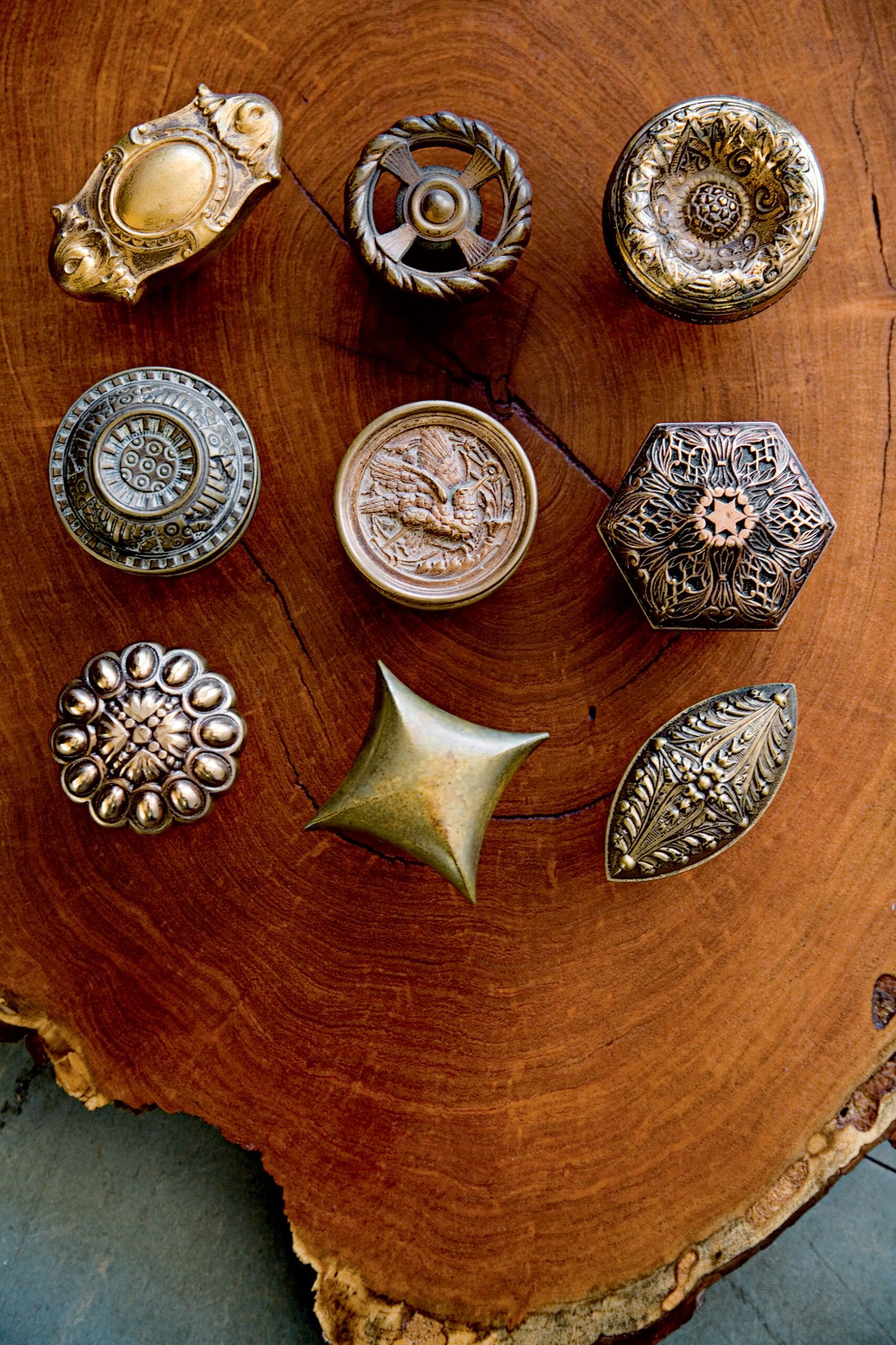
Elaborate castings by Metallic Compression and successors such as Russell & Erwin (which took over the company), Mallory Wheeler, and Yale & Town complemented new Victorian-era houses. In contrast with the austere Federal and Greek Revival–style architecture that was popular in the first half of the 19th century, the Second Empire, Stick, and Queen Anne styles of the second half were downright romantic, and certainly deserving of knobs that were more expressive than the plain porcelain and pressed-glass ones used before. In addition to elk and lions, hummingbirds, flowers, ships, various geometric shapes, and even Japanese geishas were cast onto metal doorknobs. There were also ones with symbols of fraternal organizations, state seals, and commercial insignias. With the exception of rare pieces, most patterned knobs at Discovery can be had for less than $150. Smooth brass ones start at just $6.
Rooting around the shop, I found a brass knob marked “Newark Board of Education,” which I bought for my husband, Jon, a New Jersey newspaper reporter who covers the city. I also picked up a few others, including one marked “No. 1 5th Ave.” that was salvaged from an elegant prewar apartment building in New York City. I planned to mount my mismatched purchases on a board to serve as a coatrack (to see how, click here)
The cool thing about old knobs is that putting them on doors is only one of the myriad ways to use them. Mine would have also worked well as drapery tiebacks attached to the wall on either side of the living room windows. Along those same lines, a TOH reader once sent me a photo of a sort of curtain rod that she made out of knobs lined up on a board above a window. She used those curtains with the tab-top ties that loop around the knobs. I’ve even seen a chandelier dripping with doorknobs instead of crystals.
While knobs certainly open doors for you, they also open up a realm of imaginative reuse projects that show off their handsome craftsmanship. For inspiration, even my buddy Bo would agree that attending a collector’s convention is overkill. Just visit a salvage yard.