
We may be compensated if you purchase through links on our website. Our team is committed to delivering honest, objective, and independent reviews on home products and services.
Project details
Skill
Cost
Estimated Time
A diamond-patterned twig trellis provides support for climbing plants and serves as an attractive focal point. By using pruned branches and simple materials, you can craft a unique, eco-friendly structure in just a few hours. This do-it-yourself (DIY) guide walks you through building your own diamond-patterned twig trellis, from gathering materials to finishing touches.
Tools and Building Materials for a Diamond-Patterned Twig Trellis
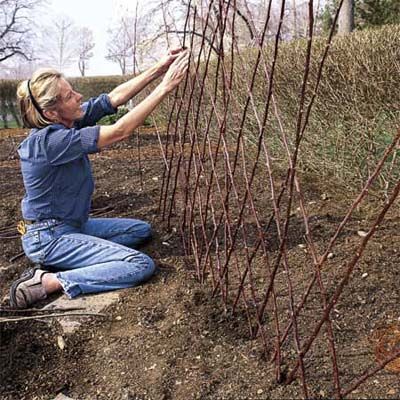
To create a 3-foot-high, 10-foot-long trellis, you’ll need approximately 60 straight hardwood cuttings, each about 1/2-inch in diameter and 3–4 feet long. We recommend flexible apple shoots, but shrub willow, maple, or sassafras sapling twigs will work as well. If you don’t have access to these cuttings, you can purchase bamboo stakes from the garden center.
You’ll also need three thicker sticks, 4–5 feet long, to serve as support posts. If you can’t find suitable natural materials, rebar or garden stakes are good alternatives.
In addition, you should have the following:
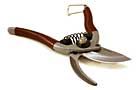
- Anvil pruner
- Gardening gloves
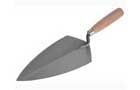
- Pointed trowel
- Scissors
- Twine

“For quantities of sticks, offer to pick up prunings from a local landscaper or orchardist in early spring. Their disposal problem could become your treasure trove,” says Thyrza Whittemore of Middlebury, Connecticut.
How To Build a Diamond-Patterned Twig Trellis
Once you have your tools and materials, you can follow these steps:
1. Lay the Framework
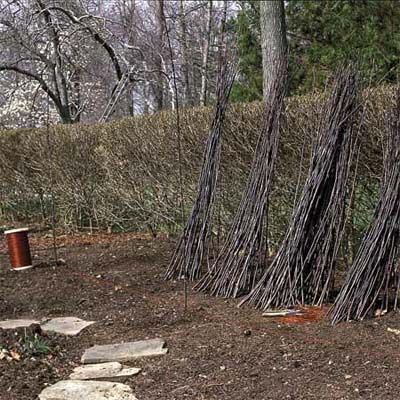
These beginning steps will create proper spacing and stability for your trellis.
- Sort your collected sticks by length, setting aside the longest ones for the initial framework.
- Cut several pieces of lightweight twine into 5- to 6-inch lengths and keep them nearby.
- Push the three support sticks about 6 inches into the ground at each end of the trellis and in the middle. To create a straight line, fasten twine between the end supports just above ground level.
- Prepare two measuring sticks: one 5 inches long for spacing and another 3 feet long to check the trellis height as you build.
2. Set the First Diagonals
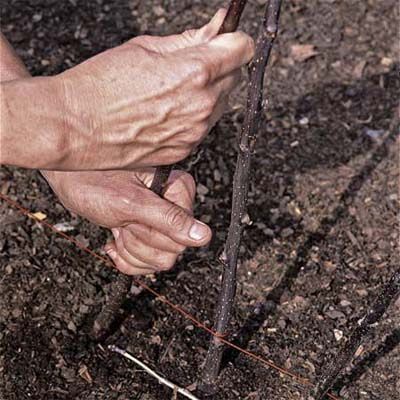
To begin creating the diamond pattern,
- Center the 5-inch spacing guide at the base of the middle support stick.
- At each end of the guide, insert a stick diagonally into the ground at approximately a 60-degree angle, pushing it about 3 inches deep. Make sure these diagonals are parallel to each other.
- At the base of these first sticks, insert diagonals in the opposite direction, always crossing in front of the support stick. This initial set of diagonals forms your diamond pattern’s foundation.
3. Weave in More Sticks, Tie Them Where They Cross
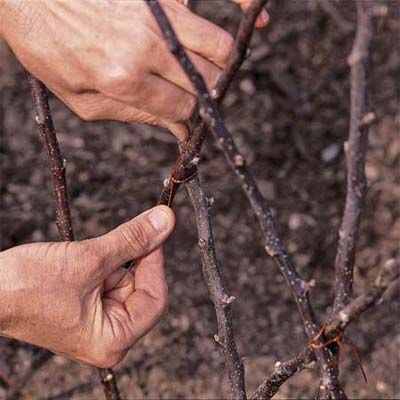
Work from the center outwards, adding, weaving, and tying sticks.
- Alternate sides, using the 5-inch spacer to add three more diagonals in the first direction, followed by three in the other direction.
- As you add each stick, weave it in and out of the existing structure at every other intersection to improve your trellis’s stability.
- Secure the crossing sticks together at the bottom, middle, and top of the trellis using the twine you prepared earlier.
- Regularly step back to assess the pattern and make any necessary adjustments. Retie any loose connections.
- Continue this process until you reach both ends of the structure.
4. Trim the Ends
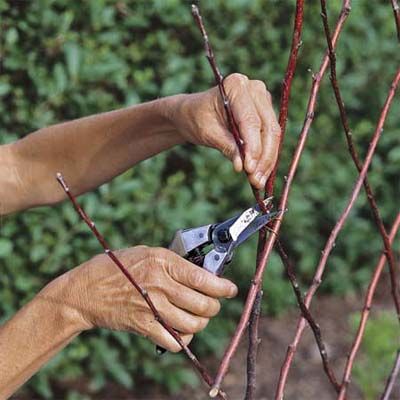
For a neat and professional finish, trim the twigs along the top of the trellis using your 3-foot measuring stick as a height guide. Clean up the sticks at both ends to create clean, straight lines and frame your diamond pattern.
Using Your Diamond-Patterned Twig Trellis
It’s time to put your trellis to use. You can use it for a variety of plants, but here are some suggestions and tips to prepare the trellis for peas, peonies, and tomatoes:
Plant Peas and Watch Them Climb
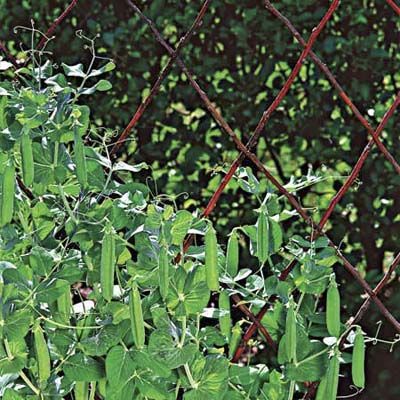
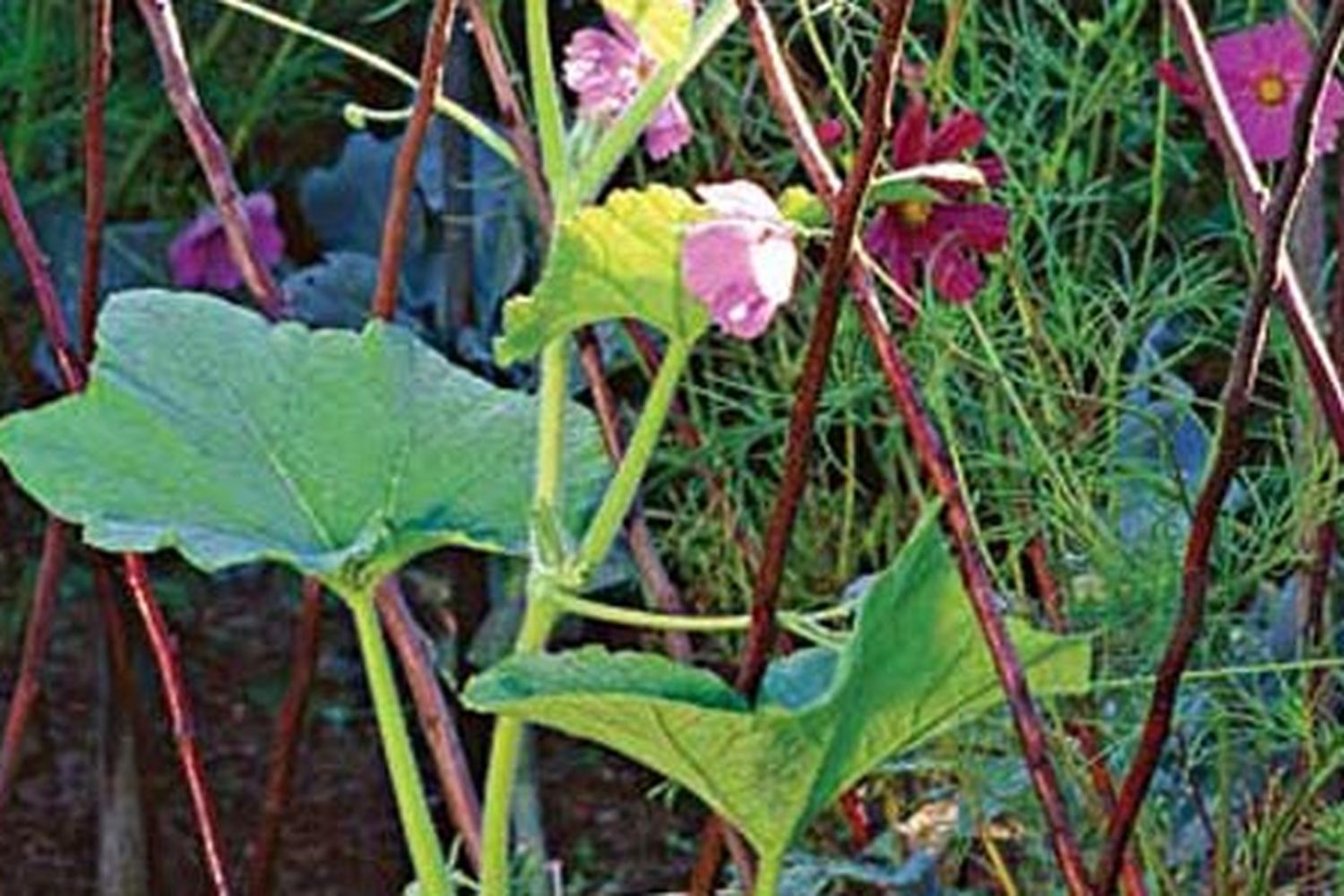
Whittemore recommends planting a variety of peas along the trellis’s length, including shelling peas, snow peas, and sugar snaps. As the pea vines grow, they will naturally wrap their tendrils around the twigs, climbing upwards. This arrangement provides the plants with better air circulation and sun exposure, promoting healthy growth and making harvesting easy.
To plant your peas, do the following:
- Create shallow trenches along the base of the trellis.
- Sow the seeds according to the package instructions.
- As the plants begin to grow, guide the young shoots towards the trellis to help them start their climb.
- Regularly water and monitor your pea plants.
Beef Up Twig Supports for Peonies
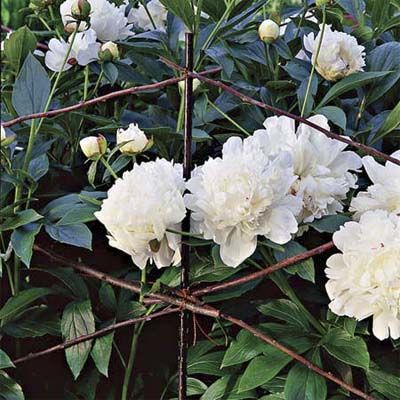
For plants that require more substantial support, such as peonies, you can reinforce your twig structures with plastic-coated metal garden stakes or rusted rebar, spraypainted brown so it blends in.
For Thyrza’s 36- to 40-inch-tall ‘Festiva Maxima’ peonies, she creates a supportive grid system:
- When the peonies are 1 foot tall, drive 3-foot metal stakes into the ground around the peony bed, spacing them about 2 feet apart.
- Secure twine to the stakes, creating a grid just below the flower heads and hide it in the foliage.
- Add a second grid when the plants reach 2 feet tall.
- Enhance the structure’s appearance by tying apple-twig X’s to the outside of the stakes.
“Take into account the height of your peonies so that the stakes don’t stick up above their heads like they’re in a corral,” says Whittemore.
Reinforce Framework for Tomatoes
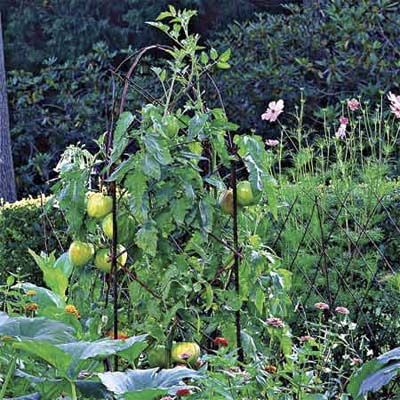
Tomatoes require a sturdier support system due to their heavy fruit and vigorous growth. Whittemore’s solution is a four-legged tower that combines functionality with rustic charm:
- Drive four 6-foot metal stakes into the ground to form a 2 1/2-foot-sided square.
- Tie straight apple cuttings in large X patterns to the outside of the stakes.
- Create crossed arches at the top using bent twigs, tying them to opposing stakes.
This structure gives the tomato plants ample support while keeping the ripe ones within reach.
