
Project details
Skill
Cost
Estimated Time
Unfortunately, a door’s weather seals, if it has any at all, can rip, compress, bend, or wear out over time, leaving chilly winter air free to enter (or expensive air-conditioned air to leave). Fortunately, attaching new weather seals is a straightforward exercise, far cheaper and faster than installing a new door.
How Much Does It Cost to Seal a Door?
It costs approximately $100 for materials and labor to seal a door. And when you consider that even a tiny 1/8-inch gap around a typical entryway door is the equivalent of drilling a 5 ½-inch-diameter hole through an outside wall, closing that gap is well worth the effort.
How Do You Seal a Gap in a Door?
Any well-sealed door requires two components: weatherstripping, which covers the sides and top of the door, and a sweep, which fills the space between the threshold and the door bottom. Hardware stores and home centers sell an array of metal, foam, felt, and plastic products for this purpose.
Tom prefers a weather seal system that includes a tubular silicone weatherstripping that fits against the doorstop and a twin-fin silicone sweep that fits beneath the door. Silicone makes an ideal weatherstripping because it’s durable, soft, and has no “compression memory”; it remains tight as the door swells and shrinks. The following steps will teach you how to weatherstrip a door to keep cold drafts from entering your home.
Step 1: Measure the door gap
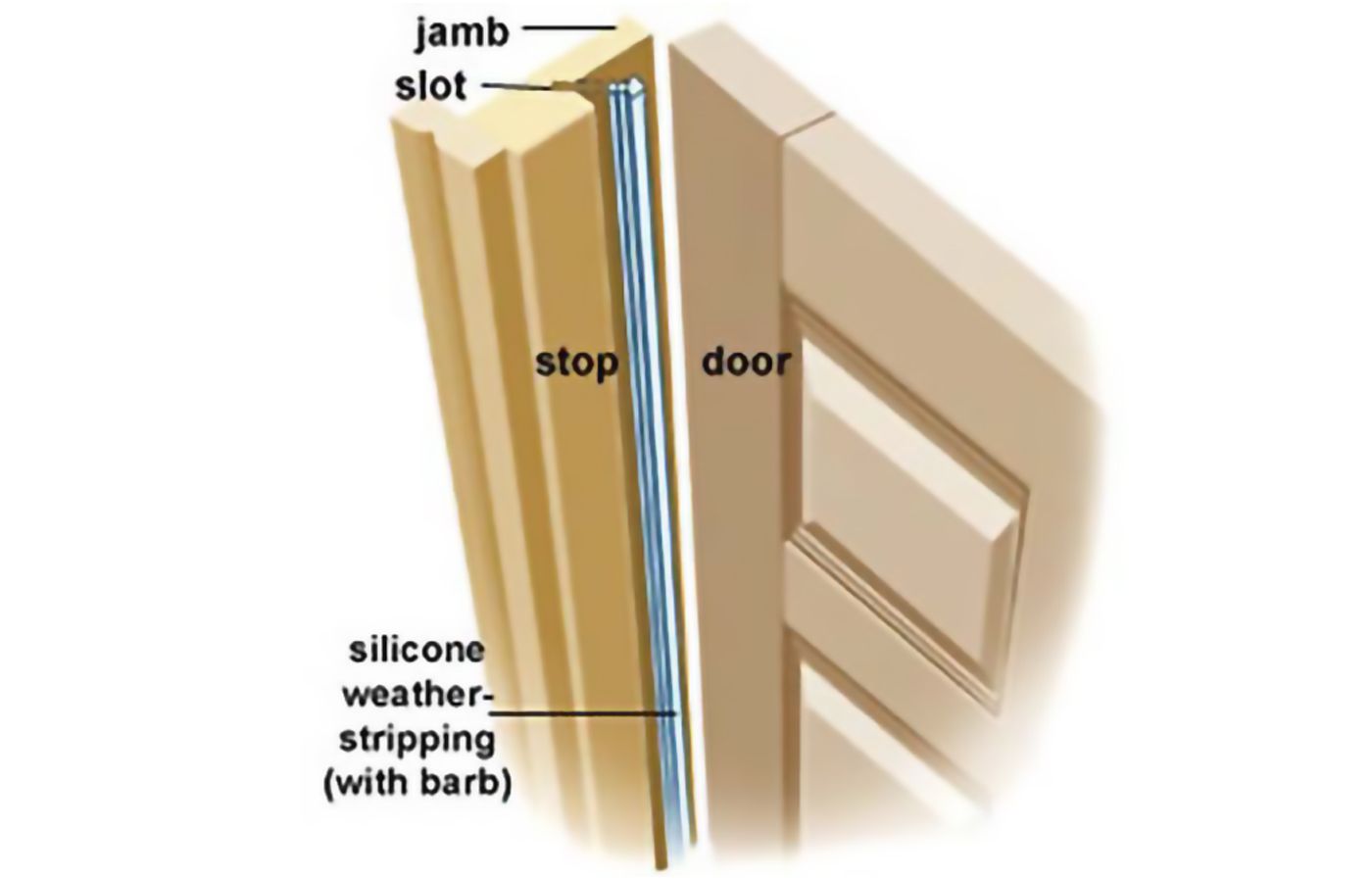
Before ordering weatherstripping, measure the gap between the door and jamb and the door and stop with the door closed. Make sure to take measurements along both side jambs and the head jamb, then choose weatherstripping for each side that’s big enough to fill the largest gap along its run (3/8-inch maximum).
Step 2: Cut a groove
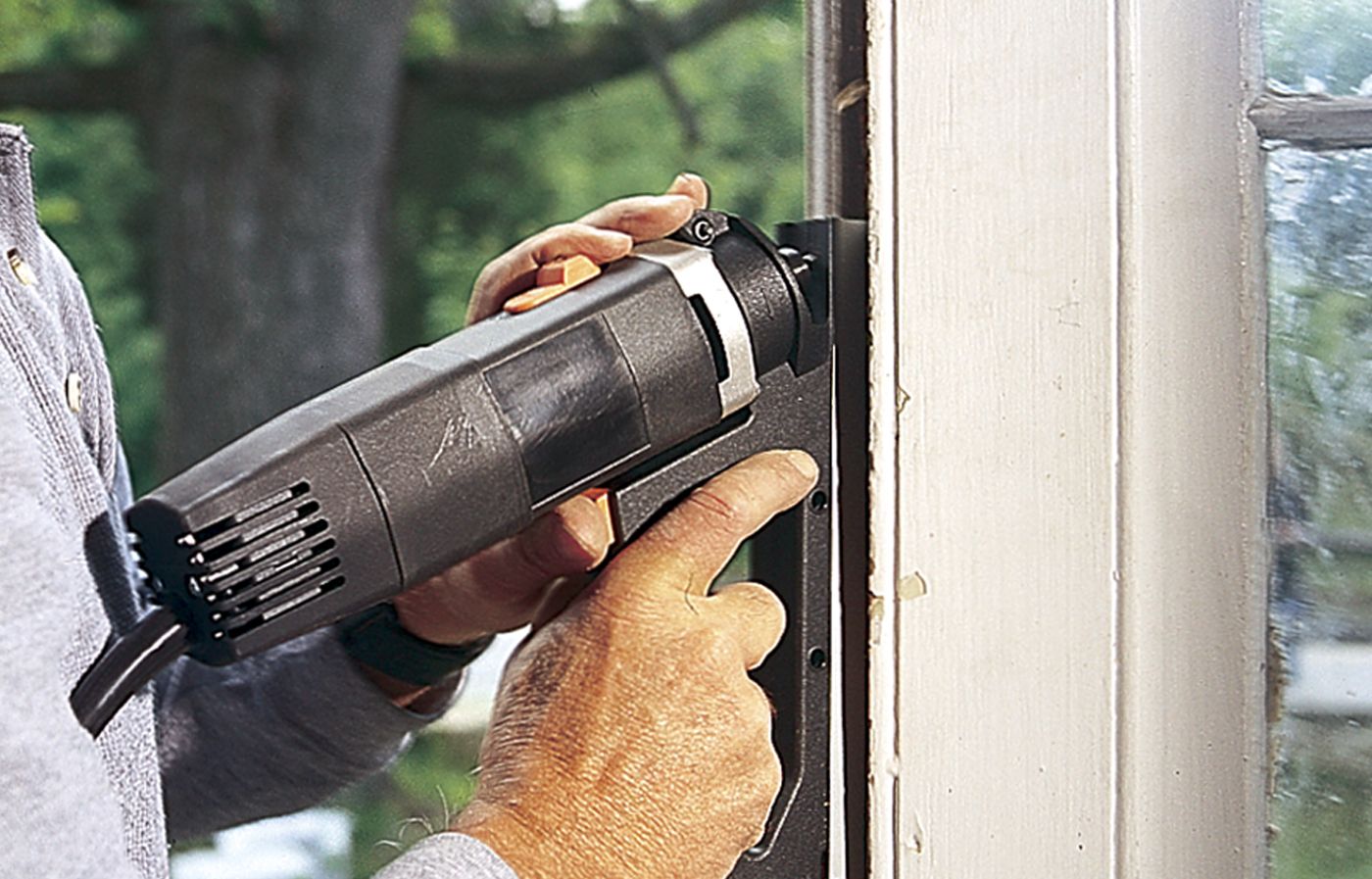
Pull a paint scraper along the stop and jamb to make sure that both surfaces are smooth, flat, and free of protruding nails. Fit the grooving tool’s V-shaped base into the corner formed by the jamb and the stop, with the bit pointing up.
Turn on the motor and push the tool up to the head jamb. This creates a slot 1/8 inch wide and 3/16 inch deep. At the top, turn off the motor and remove the bit from the slot. Reinsert it at the starting point, but this time with the bit pointing down. (Retracing your path in the slot can widen it too much to grip the weatherstripping.)
A steady push to the bottom of the jamb with the motor revving finishes the slot on that side. Repeat the process on the opposite side jamb and the head jamb. If the shop vacuum leaves any wood chips in the slot, Tom gently cleans them out with a small screwdriver before he continues to weatherstrip the door.
Step 3: Insert the weatherstripping
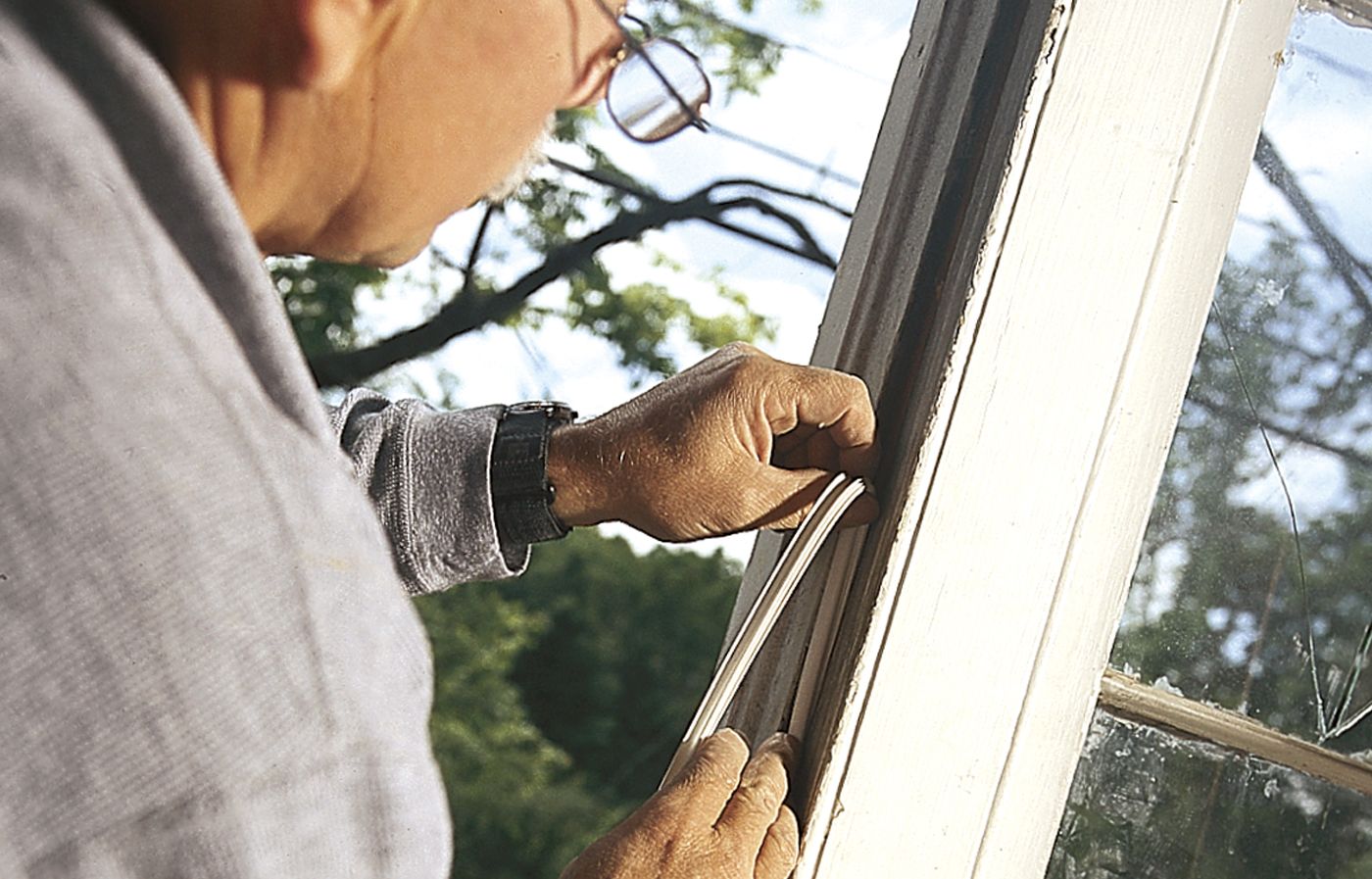
Tom takes one end of the weatherstripping and pushes its barbed tongue into one end of the slot. As he works up the slot, he’s careful not to stretch the weatherstripping; it will return to its original length and leave gaps.
A couple of inches from the slot’s opposite end, he gauges the proper length and cuts the strip with scissors. (Another method eliminates the possibility of stretching: Cut the product to length first, fit its ends into the ends of the slot, then push in the barb at the halfway point. Continue to push at each of the quarter points, and so on until the entire strip is secure.)
It’s not necessary to miter the ends where they meet at the head jamb; a butt joint seals best. To finish, drive the weatherstripping into its slot with a spline roller. Check the installation by shutting the door from the outside and looking for gaps.
Step 4: Rout the dado
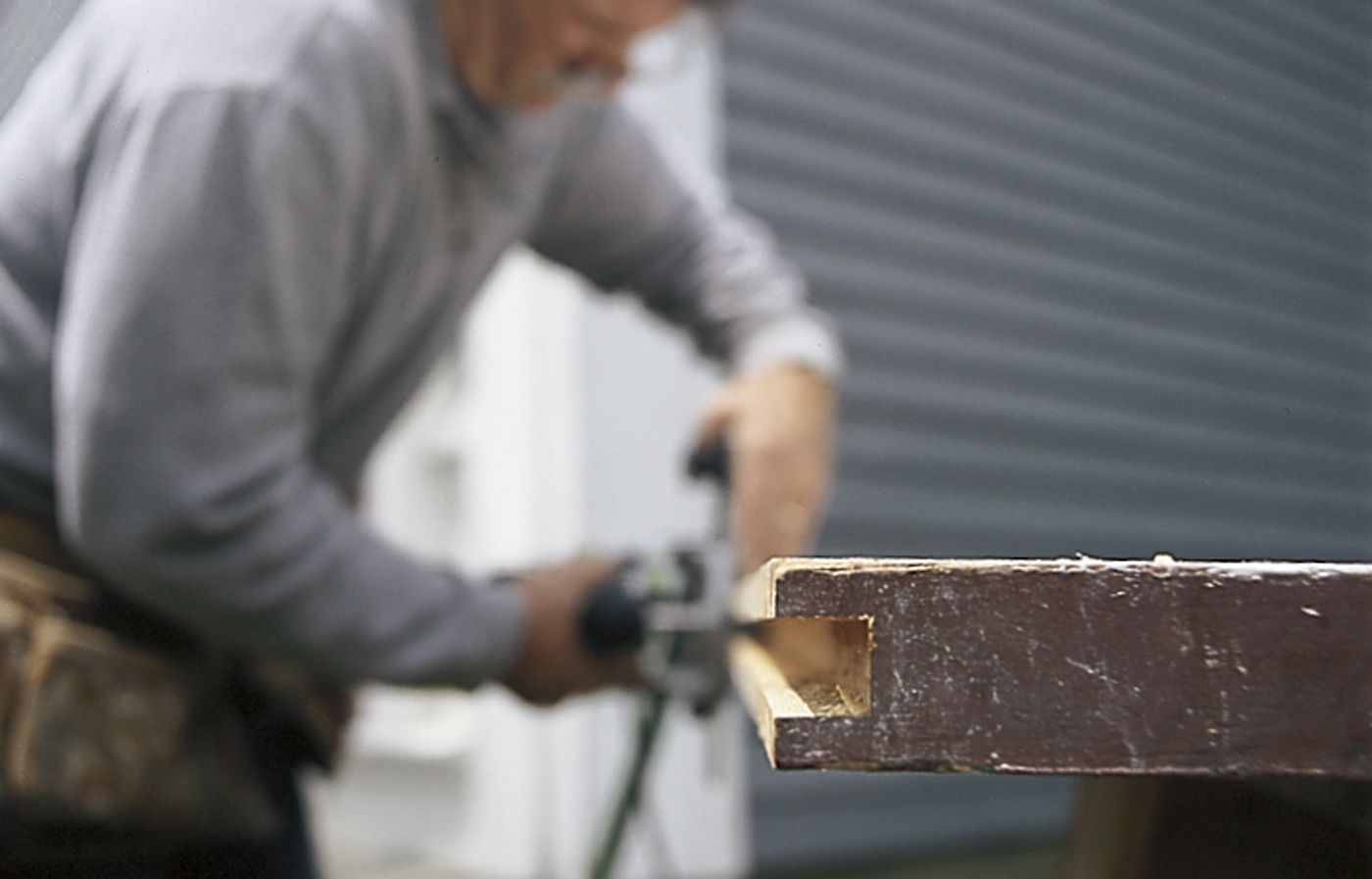
To seal the door gap in the bottom, place the door on sawhorses and use a square to mark out a 5/8-inch-wide dado centered on the door’s bottom edge. Tom sets the router’s guide so a ½-inch bit will cut next to the top mark when the guide rests on the door’s top face. On the first pass, move the router from left to right. On the second pass, the guide rides on the door’s opposite side as the router moves from right to left. Make multiple passes to reach full depth (1⅛ inch).
Step 5: Attach the channel
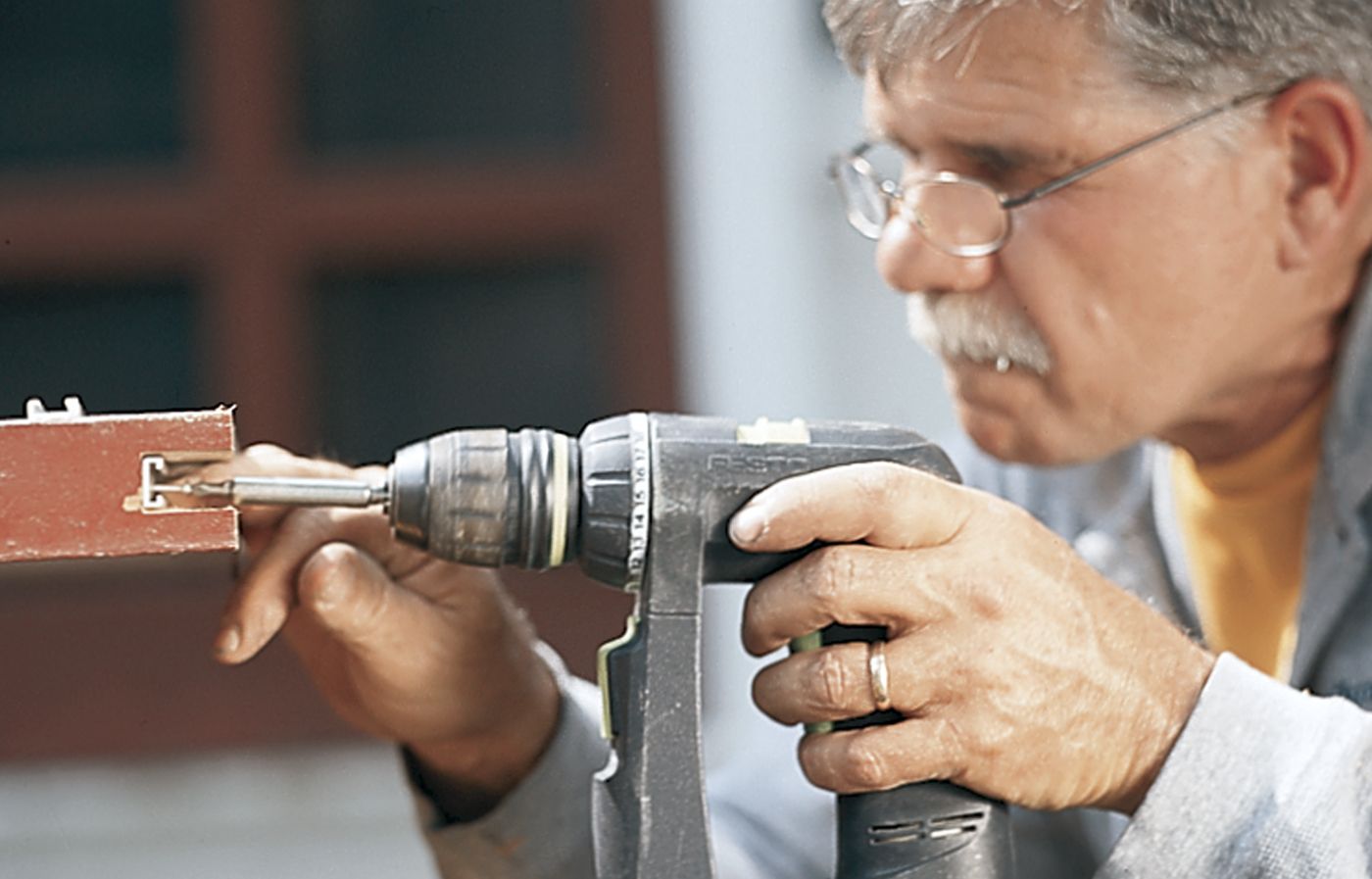
Coat the exposed wood in the dado with primer and paint. Then cut the sweep’s two aluminum channels just 1/8-inch shy of the width of the door (to allow for end caps to be installed later). To make sure the cut is clean, Tom clamps the channels in a miter box and uses a hacksaw with a waxed blade. Insert one channel into the dado, center it end to end, and screw it in place, as shown.
Step 6: Install the door sweep
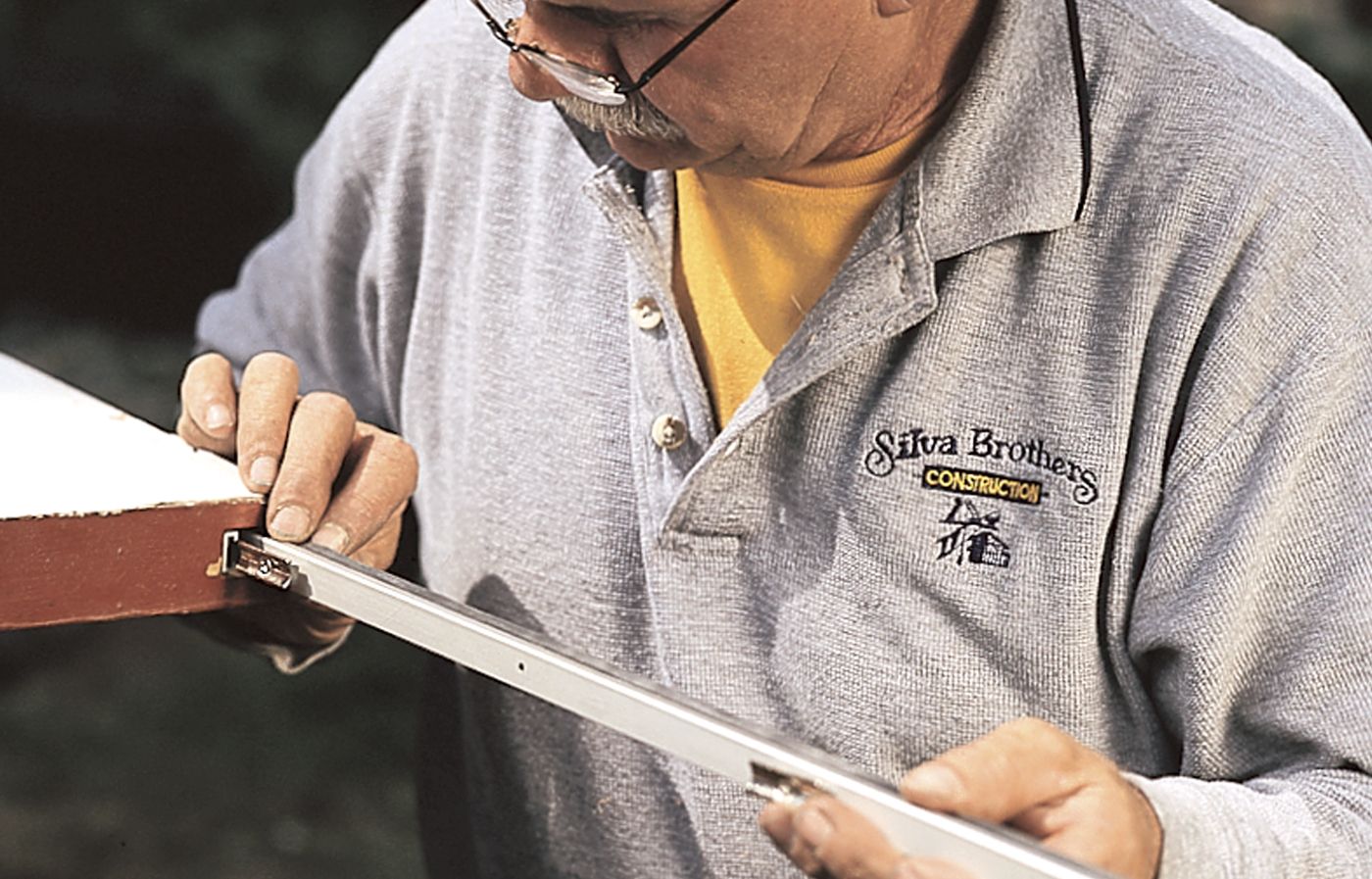
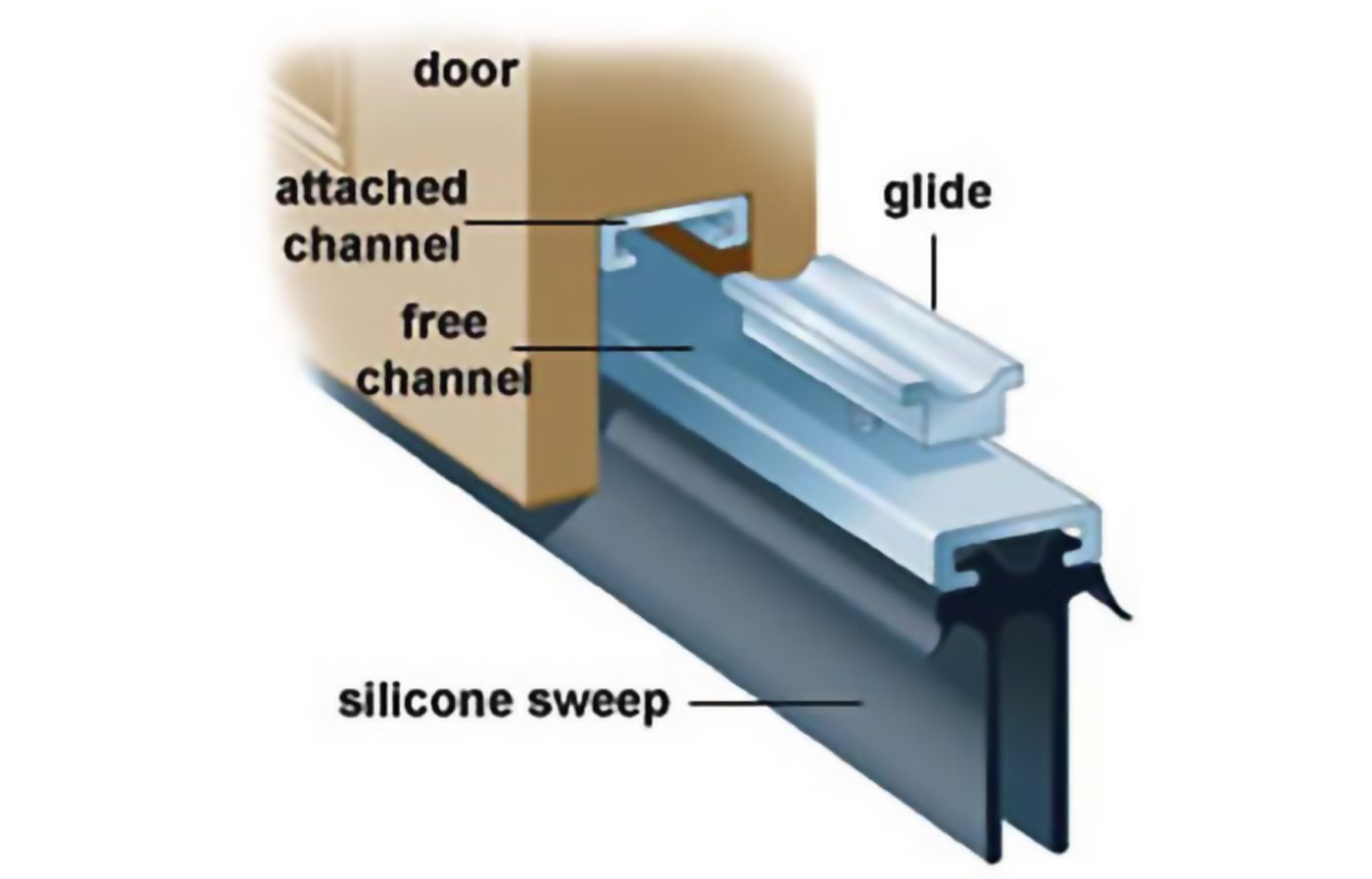
After he fits the black silicone sweep into the free channel, Tom slides the glides into the channel in the dado, then carefully rehangs the door. (To avoid the possibility of damage to the sweep, hang the door first, then install the sweep.)
Adjust the glides until no light shows between the sweep and the threshold when the door is closed. To seal the ends of the dado, snap plastic caps into the ends of the channel and stick squares of adhesive-backed pile against the bottom of the jambs.
Step 7: Adjust the glides
The secret behind this sweep’s adjustability is its glides, which lift or lower the sweep by as much as ¼ inch. To adjust the fit, simply open the door, remove the end cap from the latch side, and slide out the sweep. Turning the glides clockwise raises the sweep; counter-clockwise lowers it. Then slide the glides back into the attached channel.
