
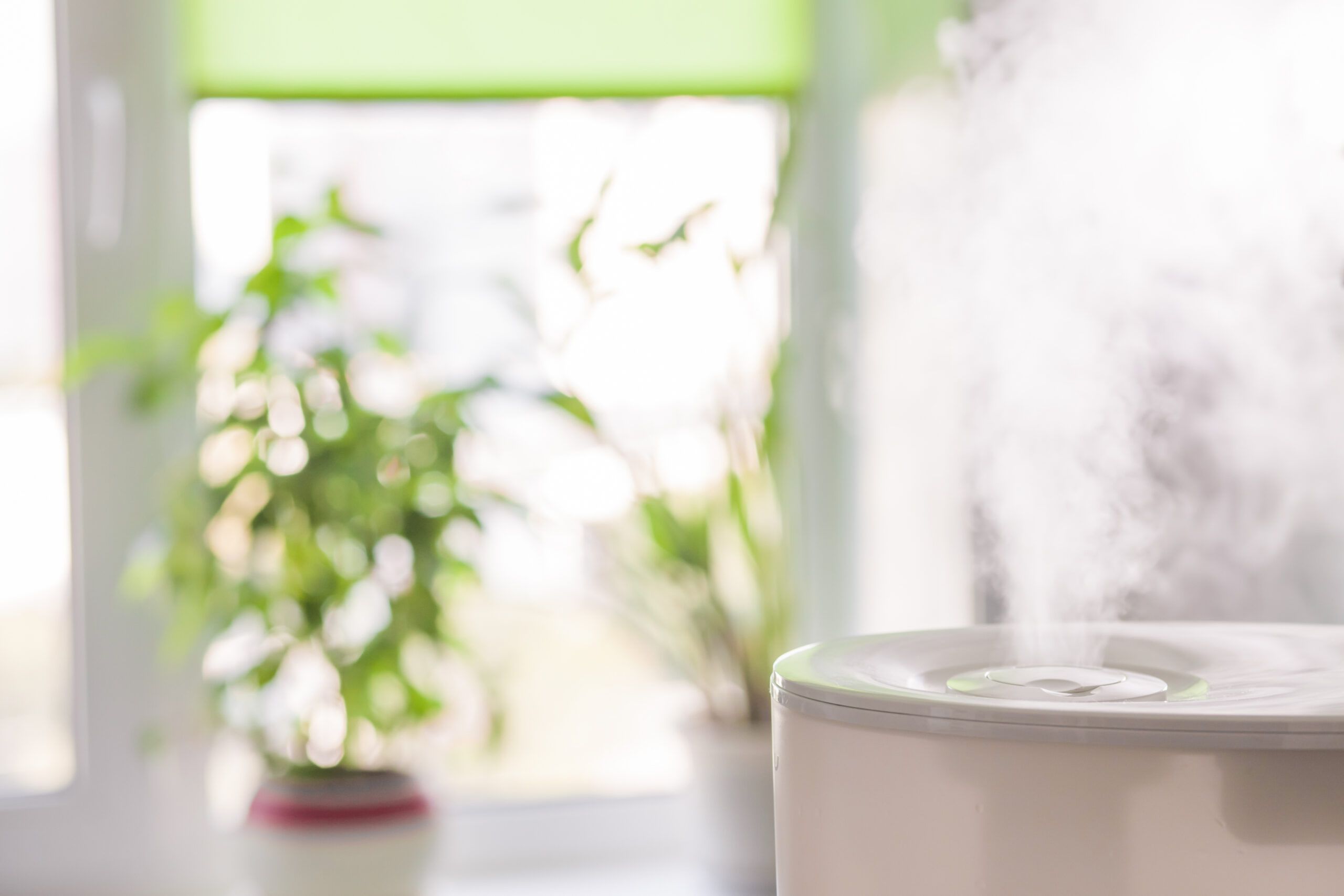
According to the Environmental Protection Agency, the air indoors—where we spend as much as 90 percent of our time—can be more polluted than even city smog. That’s because today’s insulated houses keep weather out, but contaminants in.
The dirt you see is just the beginning. That dust collecting on end tables and bookshelves is only a fraction of what’s actually swimming around in the air. An invisible mix of dust mites, pollen, dander, mold, and smoke in your indoor air can be annoying to breathe and hazardous to your health.
The first line of defense against airborne contaminants is to keep a house clean and well-ventilated. But for some sensitive people, that may not be enough. That’s where whole-house air filters come in.
How Do House Air Filters Work?
Household air filters are available in two basic types—media filters, which create a physical barrier that traps minute particles, and electronic filters, which use a high-voltage charge to attract and capture contaminants.
Some air filters are hybrids that combine both methods, and others include activated carbon elements to combat odor.
Typically, air filters are either built into the heating and cooling system (whole house filters) or are freestanding units that can be placed in individual rooms (portable filters with self-contained fans).
4 Kinds of Whole-House Air Purifiers
The most efficient way to filter household air is through your home’s forced-air heating or central air-conditioning system. Like the extended media filter shown here, whole-house filters must be professionally installed in return-air ductwork. The filters are built into the return-air ductwork, trapping particles as air passes through.
Such systems are passive—as long as the fan is running, they constantly filter the air in your house. Whole-house purifiers come in four main types.
1. Flat Filters
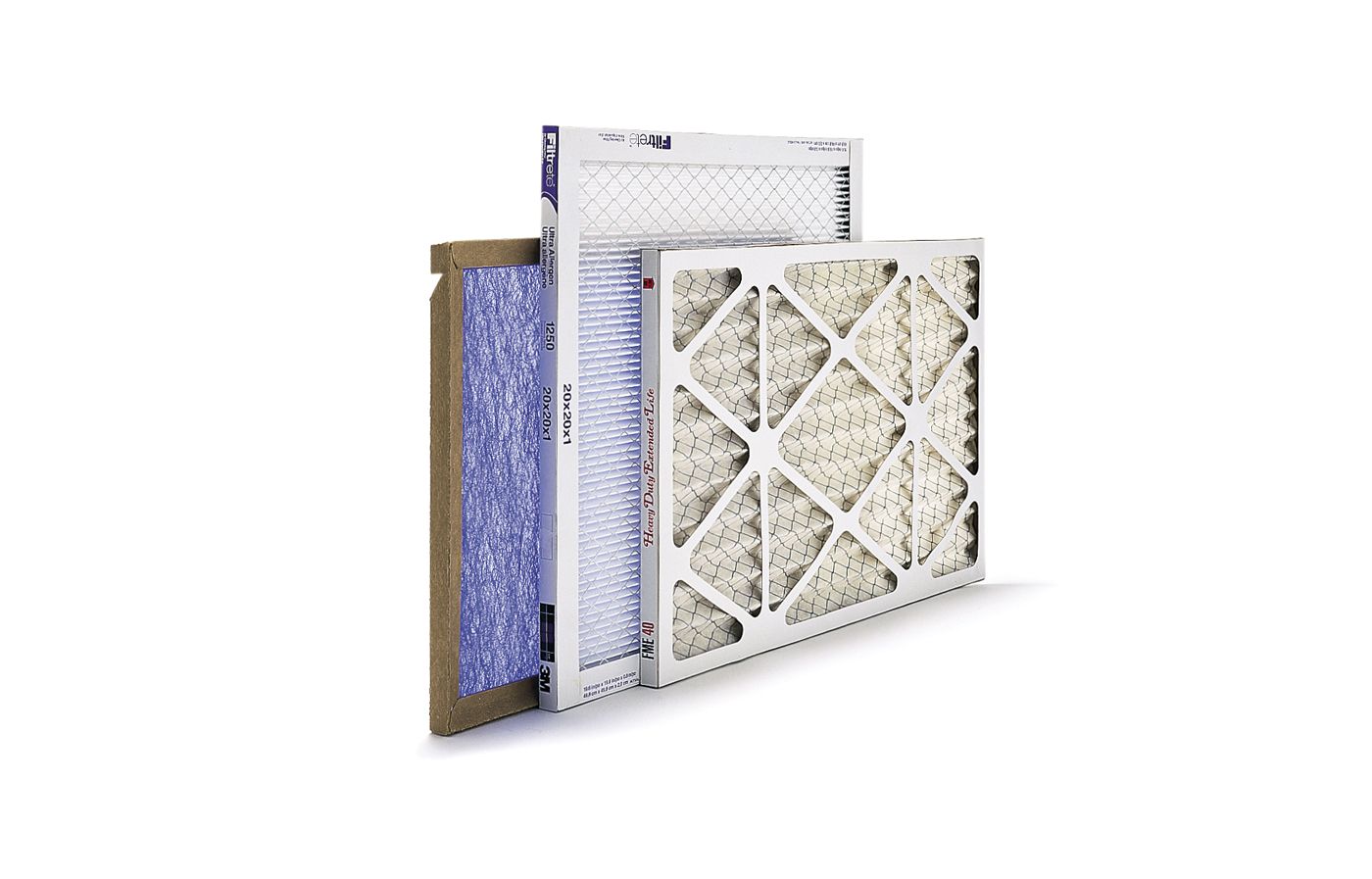
If you have a forced-air furnace, you’ve already got a rudimentary air-filtration system—that matted fiberglass filter that should be changed once a month. “You can’t change it often enough,” says This Old House plumbing and heating expert Richard Trethewey.
When it clogs with dust, a flat filter stops working and overworks the furnace. In fact, such filters are designed to protect your furnace from large particles of dust, and while they might keep surfaces in your house a bit cleaner, they won’t block the microscopic particles that are most irritating to lung tissue.
Pleated filters, which pack more material in the same amount of space, cost a few bucks more and do a slightly better job. The best pleated filters are electrostatically charged to attract allergens like pollen and pet dander. They cost around $15 and should be changed every two to three months.
2. Extended Media Filters
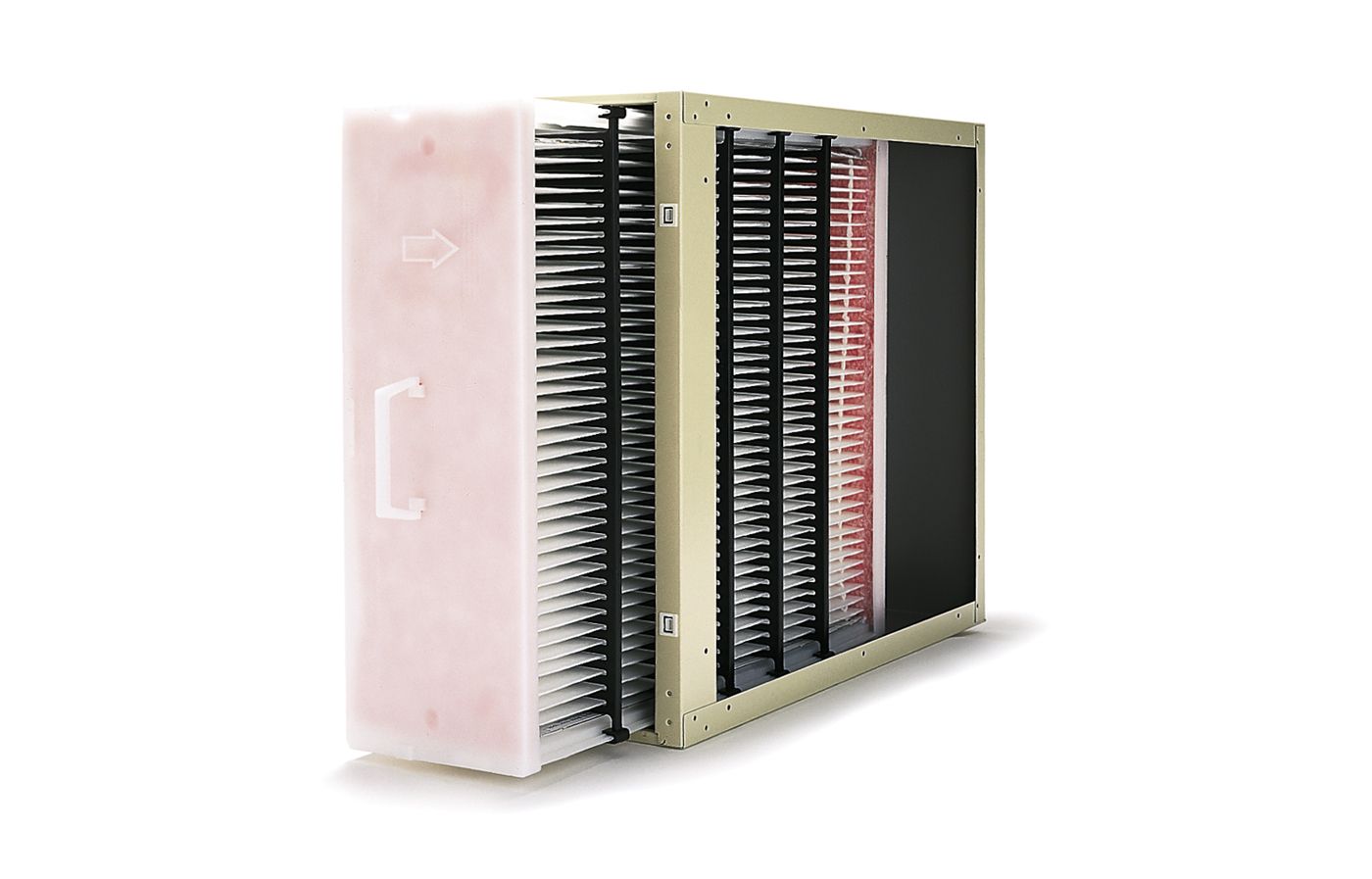
Picture a stack of furnace filters about 8 inches thick, and you get the idea of an extended media filter. These boxy units contain an accordion-like filtration media pile, making them more effective than regular fiberglass filters.
They require professional installation because the large filter holder must be plumbed into the ductwork. The price, including installation, ranges from $400 to $700, and you’ll need to replace the $40-to-$60 filters every year.
*Cost data in this article sourced from contractor estimates used by Home Advisor.
3. Electronic Filters
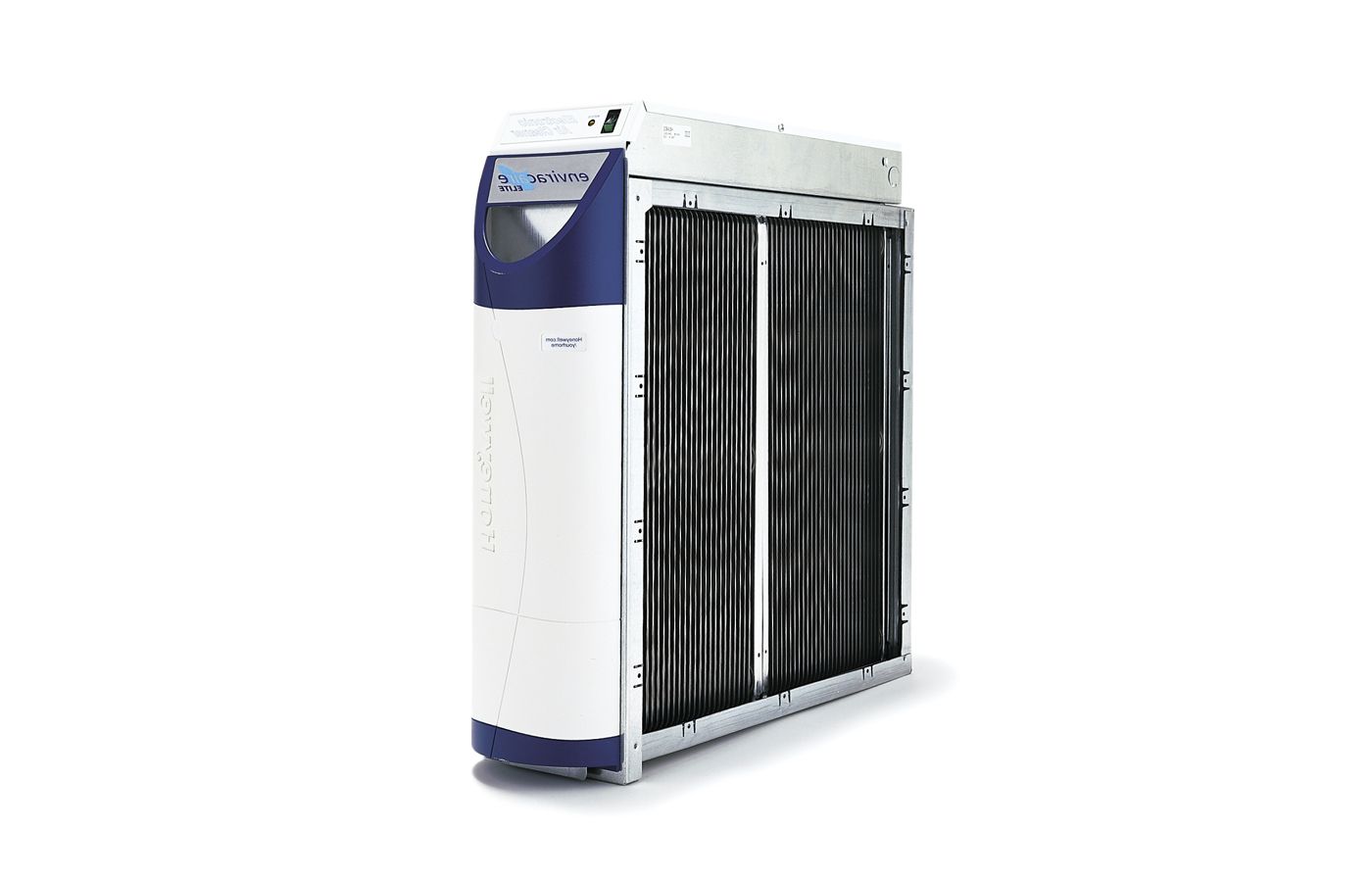
These high-tech units, sometimes called electrostatic precipitators, are also incorporated into the ductwork. As air passes through, a high-voltage current puts an electrical charge on particles. At the other end of the unit, oppositely charged collector plates grab the particles like a magnet.
Electronic filters work especially well on smoke particles too small to be trapped in media filters. One independent test found such filters worked about 30 times as well as regular fiberglass filters. (There is no industry yardstick for measuring the effectiveness of whole-house units because performance is affected by a home’s blower and ductwork.)
Unlike media filters, electronic filters never need replacing, but the aluminum collector plates must be cleaned in soapy water every few months. The process of charging particles, called ionization, may produce trace amounts of ozone, a lung irritant. Electronic filters cost $500 to $2,000 installed and require a 120-volt electrical outlet.
4. Ultraviolet Filters
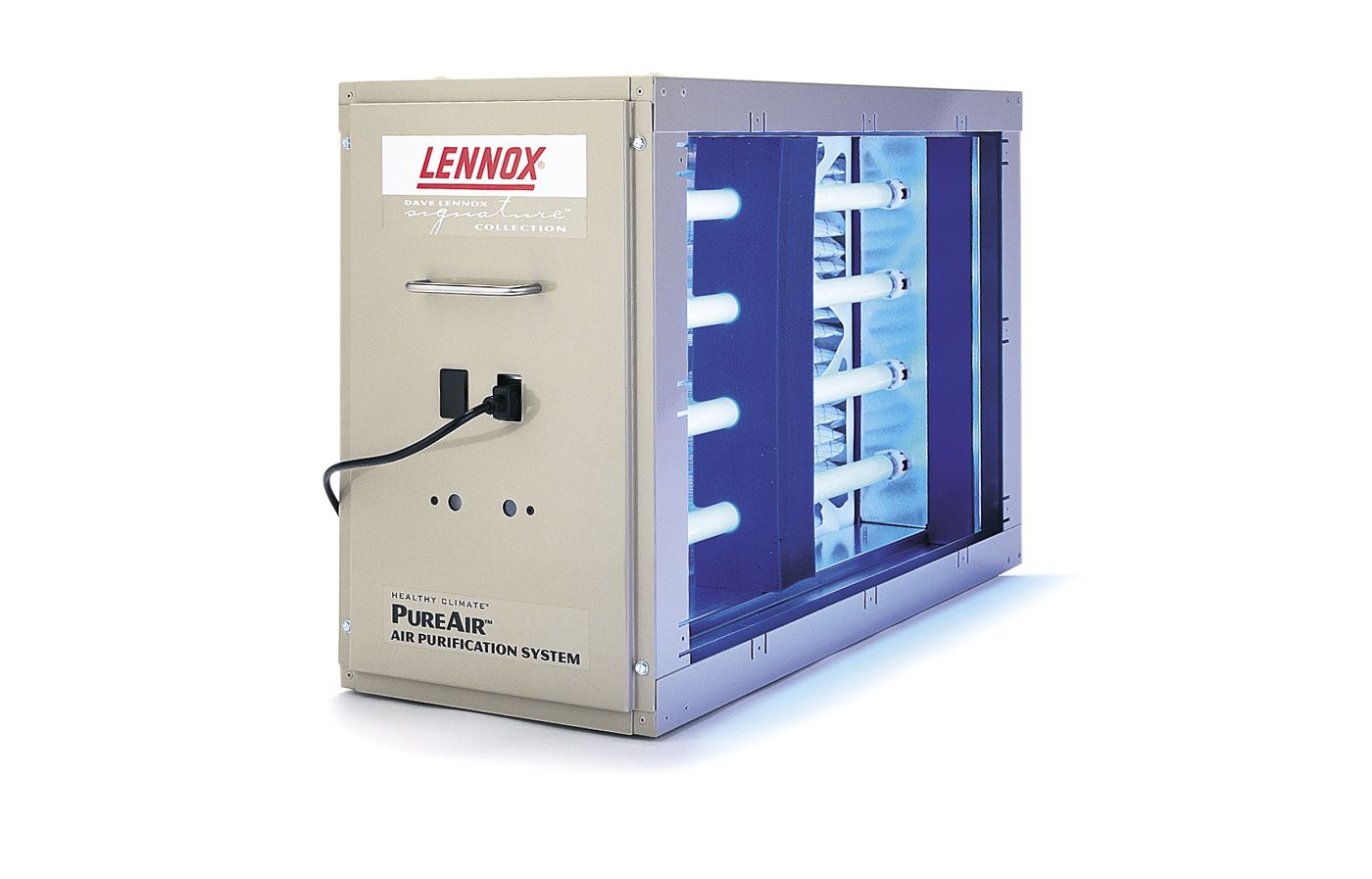
People worried primarily about germs can consider an ultraviolet filter. Typically, UV filters are built-in components sold as add-ons to a whole-house electronic precipitator, and cost $400 to $800).
The ultraviolet light zaps airborne bacteria and viruses into oblivion, which is why hospitals use UV air filters in tuberculosis wards. Of course, the bug has to reach the filter before it can be zapped—if someone sneezes in your face, UV technology won’t help.
Portable Room Air Filters
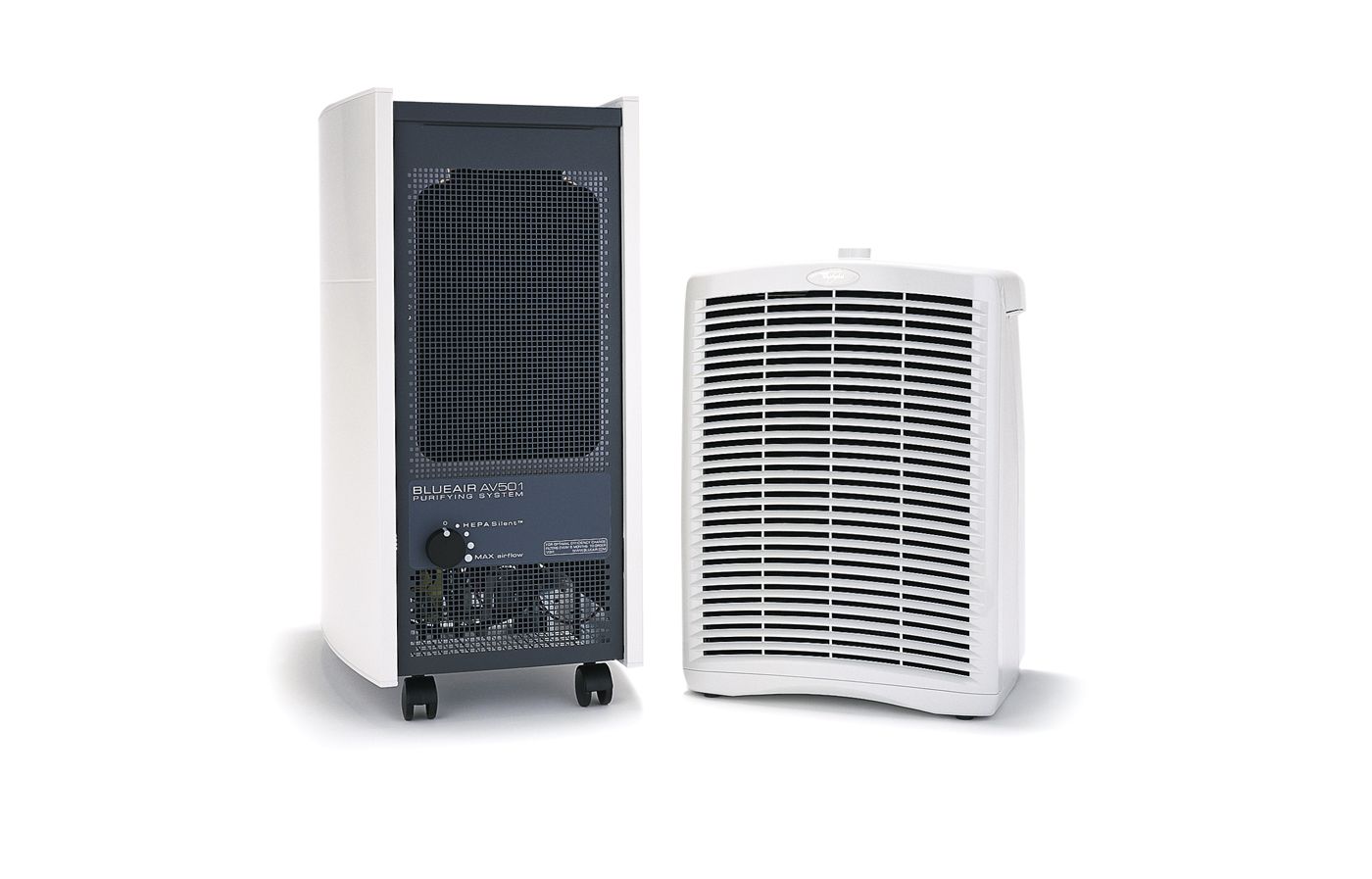
If your house does not have central air-conditioning or heating, portable room air filters are the most practical choice. Freestanding whole-house units exist, but they typically require attic installation and ducting to individual rooms.
Most portables employ high-efficiency particulate air (HEPA) filters, which are not generally used in whole-house systems because they need more powerful fans than furnaces can provide.
Some portable units, called ion air cleaners, use electrostatic precipitator technology. Ion units, which don’t require fans, are typically quieter than HEPA models and cost less to operate because there are no filters to replace. But these units may produce trace amounts of the lung irritant ozone as a by-product of the ionization process
Portable units range in price from $150 to as much as $1,500, and there are ongoing costs. HEPA filters, which must be replaced annually, cost from $40 to more than $100.
Portables can also be noisy because it takes a lot of force to push air through such a fine filter. Some manufacturers are addressing the noise issue with so-called smart filters that employ an optical sensor to judge when the air is relatively clean and then switch to a lower fan setting. Another strategy is to run a portable filter on high during the day and then turn it to low at night.
Portables powered by fans are rated by “clean-air delivery rate” (CADR), which measures both air movement and contaminant-trapping effectiveness. It’s important to buy a filter that’s big enough. Manufacturers recommend that the CADR be at least two-thirds the room’s area in square feet—so a 15-by-20-foot room (300 square feet) would need a filter with a CADR rating of 200. (The calculation assumes 8-foot ceilings.)
Portable Ion Units
Portable ion units are similar to whole-house electronic filters in that they both put an electrical charge on particles.
In a whole-house system, dust and pollen particles are charged as they pass through the unit and captured on an oppositely-charged collector plate. Portable ion filters, which operate without fans, send streams of negative ions directly into the air.
Charged airborne particles are then attracted to a collection rod in the unit (which needs occasional cleaning), or with some models allowed to land on surfaces in the house (where dusting removes them from the room).
These types of units may produce trace amounts of ozone, a lung irritant, as a by-product of the ionization process.
Ion filters are considered safe if they release less than 50 parts per billion of ozone, the government’s threshold. But even smaller amounts could bother people with asthma or other breathing disorders.
If you’re considering a whole-house or portable electronic filter, check the product specifications to make sure it does not exceed safe levels for ozone emission.
Getting Hip to HEPA Filters
High-efficiency particulate air (HEPA) filters were invented during World War II as a way to prevent radioactive particles from escaping laboratories.
The filters are made of various synthetic fibers—there is no construction standard because the term merely designates an efficiency rating, which is the ability to block 99.97 percent of all particles 0.3 microns or larger.
That rating is for laboratory conditions, however. Experts say that at home, a HEPA filter can realistically capture about 80 percent of such particles.
A new home filter technology called ULPA (ultra-low penetration air) has raised the stakes. ULPA filters block 99.99 percent of particles measuring 0.12 microns, quite a bit smaller than the HEPA threshold. But ULPA filters restrict so much airflow that, in practice, they can clean less air than HEPA filters. For best performance, look for those labeled “true HEPA.”
Do Air Filters Really Make You Feel Better?
Air filters, in general, do a good job of clearing the air. But do they actually make you feel better? The medical verdict is still out.
According to Andrew Filderman, M.D., a pulmonary specialist in Rockport, Maine, no controlled studies have been done on the subject. “We know these things filter the stuff, but we don’t know if it helps,” he says. “It’s difficult to prove because there are so many provocative things in the air, and you don’t always know what’s causing the problem.”
Dr. Filderman adds that while some allergic or asthmatic patients report benefits from air filters, the evidence remains anecdotal. “If source control and ventilation don’t help,” he says, “it’s not unreasonable to try a filter.”
Where To Find Air Filters
Flat furnace filter
Fiberglass-mesh and standard pleated
Chicago, IL
877-345-3371
www.filtersUSA.com
Extended media filter
Model# 2200
Aprilaire
608-257-8801
www.aprilaire.com
Electronic purifier
Enviracaire Elite F300E
Honeywell
Morristown, NJ
800-328-5111
www.honeywell.com
UV filter
PureAir Air Purification System
Lennox
Richardson, TX
800-953-6669
www.lennox.com
Portable air purifiers
Blueair 501
Blueair, Inc.
Provided by Pure n Natural Systems, Inc.
Morton Grove, IL
800-237-91199
www.purenatural.com
Whispure Model# AP25030H
Whirlpool
800-253-1301
www.whirlpool.com
Our Conclusion
Your house is a sanctuary, but it’s also a hub for air pollution and contaminants. There are several types of whole-house air filters that can help you breathe easier. Some may require more expensive installation, but there are also more budget-friendly options available. Use this guide will help you find what’s right for you.
