
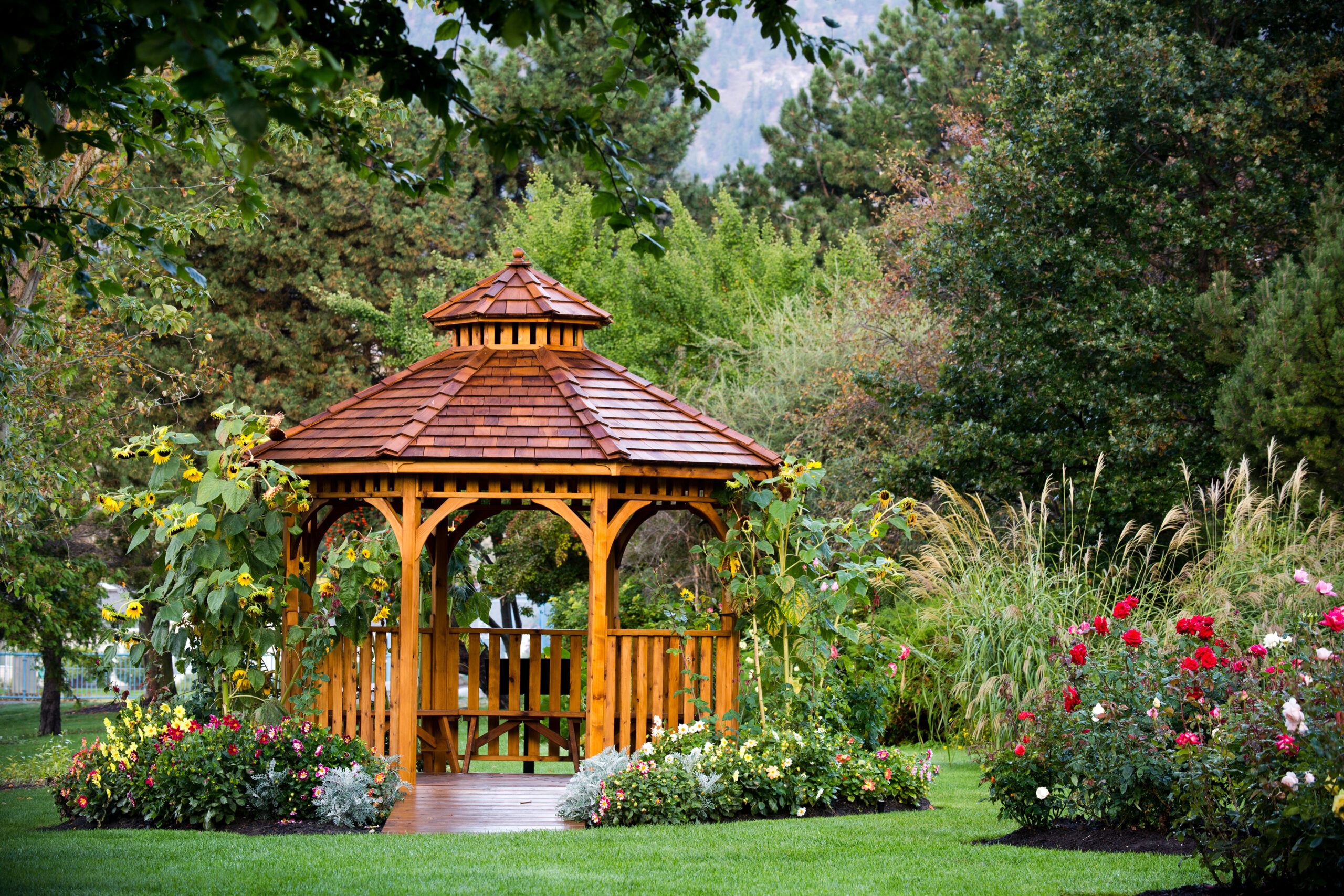
Say “gazebo” and what springs to most people’s minds is an octagonal white garden building at the end of a long stretch of lawn. Many gazebos fit that image, but today’s versions are just as likely to experiment with sleek designs and different shapes. You can build them right into a porch or onto a deck, patio, or pool surround.
Planning Your Gazebo Project
Some careful planning can help you clarify what you want from your gazebo. Planning also helps ensure the final product meets local regulations.
Choosing a Size
If you’re using your new gazebo for dining or entertaining guests, build a structure at least 12 feet in diameter. Anything narrower than that will be too small to accommodate a table and chairs, or more than six people at a time.
However, if you’re building a gazebo in the middle of your garden or as an architectural accent, you can go with 8 feet or smaller.
Choosing a Location
Choose a level or slightly elevated spot that receives some sunlight, and avoid low-lying areas where water collects. If the gazebo is in shade all the time, it’ll be more likely to have mold and mildew problems.
You should also allow at least 2 feet of clearance around all sides for air circulation and maintenance access. Trim back any low-lying vegetation near the base to promote healthy airflow and discourage insects from setting up camp near your gazebo.
Consider the Climate
If you live in a mild climate where frost isn’t a concern, dig the footings at least 18 inches deep or pour a 4-inch thick concrete slab to serve as the gazebo floor.
Choosing a Shape
Gazebos come in various designs to suit different architectural styles and personal preferences. A few include:
- Octagonal: Classic octagonal gazebos remain a popular choice for their timeless appeal. They offer great views from all angles and fit well in both formal and informal settings.
- Square/rectangle: Contemporary gazebos feature clean lines and minimalist designs. They can help you maximize interior space and integrate more seamlessly with a modern house.
- Custom: Custom designs complement your home’s specific style. They’re often dedicated for a specific use, such as poolside cabanas or tea houses.
You may also find gazebos combining traditional and modern elements. Some pair the classic octagonal shape with metal roofing and minimalist decor, and vice versa.
Choosing a Material
The gazebo materials you choose will affect durability, maintenance needs, and design. A few commonly-used materials include:
- Wood: Wood is a popular choice for its natural beauty, but you’re best off using a variety that’s naturally resistant to rot, decay, and insects. Cedar, redwood, and pressure-treated pine are good options.
- Metal: Metal gazebos are usually made of aluminum or wrought iron. Compared to wood, they offer longevity and minimal maintenance.
- Stone: Stone gazebos are a little more expensive, but they provide a permanent and elegant solution that lasts for generations.
- Composite: Composite is a blend of recycled wood and plastic. Compared to standard wood, it’s more pest- and decay-resistant, lower-maintenance, and more environmentally friendly.
Choosing a Roofing Material
Your gazebo’s roof matters just as much as its framework. A few materials you can choose from include the following:
- Cedar shakes: Traditional and naturally beautiful
- Asphalt shingles: Cost-effective and available in various colors
- Metal roofing: More expensive, but also more durable and lower-maintenance
- Copper: Luxurious design with a distinctive patina that forms over time
Understanding Local Codes and Permits
Some jurisdictions require a permit to build a gazebo. Regulations often depend on size, with structures larger than 10 feet getting more scrutiny. Codes also dictate foundation requirements based on climate and gazebo size.
Contact your local building department for more information on what’s required where you live.
Three Ways to Build Your Gazebo
Depending on your skills, budget, and time constraints, you have three main options for building a gazebo.
Building From Scratch
Building a gazebo from scratch requires excellent carpentry skills and a good set of plans. However, the greater leeway you have to customize the space is often worth the added time investment.
Hiring a Professional
Going with a professionally-built gazebo is usually the most expensive method, but it’s also the easiest since your contractor does all the work. If you think avoiding headaches and hassle would be worth the added cost, hiring a builder may be the way to go.
Assembling a Prefabricated Gazebo Kit
Prefab kits come with ready-made pieces and detailed instructions, making them a good middle ground between DIYing your gazebo and hiring a professional builder. You’ll still have to do some of the harder work, like roof framing, yourself, and this can take several days to complete.
Bells and Whistles
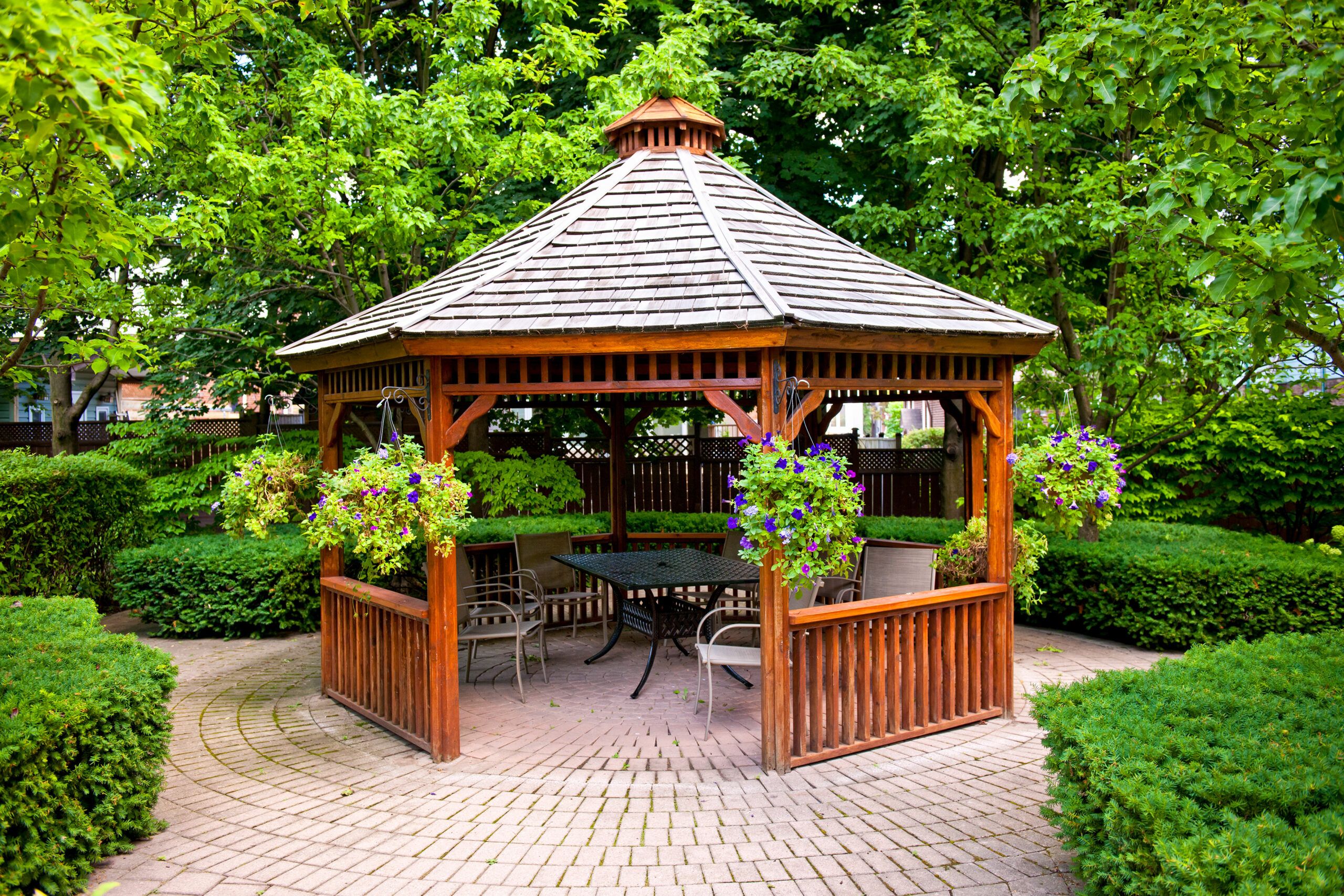
Enhance your gazebo’s functionality and comfort with these optional features.
Electrical Wiring and Lighting
Not every gazebo needs to be wired, but it’s a popular option. You may not want to limit the usefulness of an already-versatile structure. Outlets can power reading lamps, blenders for mixing drinks, and plug-in sound systems to set the mood for an outdoor gathering.
Consider both ways to light the inside of the gazebo and ways that it can look attractive from a distance. For example, pool lighting installed in the floor can provide dramatic uplighting that bolsters the gazebo’s role as a garden feature.
Finally, ensure all electrical work complies with local codes and is performed by a licensed electrician.
Screens and Mosquito Nets
Screening the sides of your gazebo will deter mosquitos from barging in on your dinner parties. Removable windows are another option that can extend the gazebo’s use in cooler weather. In either case, you can add sliding lattice-panel sides for extra privacy.
Additions for Your Lifestyle
Consider adding these other accessories to better meet your lifestyle:
- Cold-water supply pipes, which can serve a wet bar or whirlpool spa
- Cupolas and weather vanes
- Louvered shutters, which can block annoying sun and wind
- Outdoor ceiling fans, to provide a cool breeze in warmer climates
- Ramps, especially if you use a serving cart or need an accessible space
Tips For Building a Gazebo From a Kit
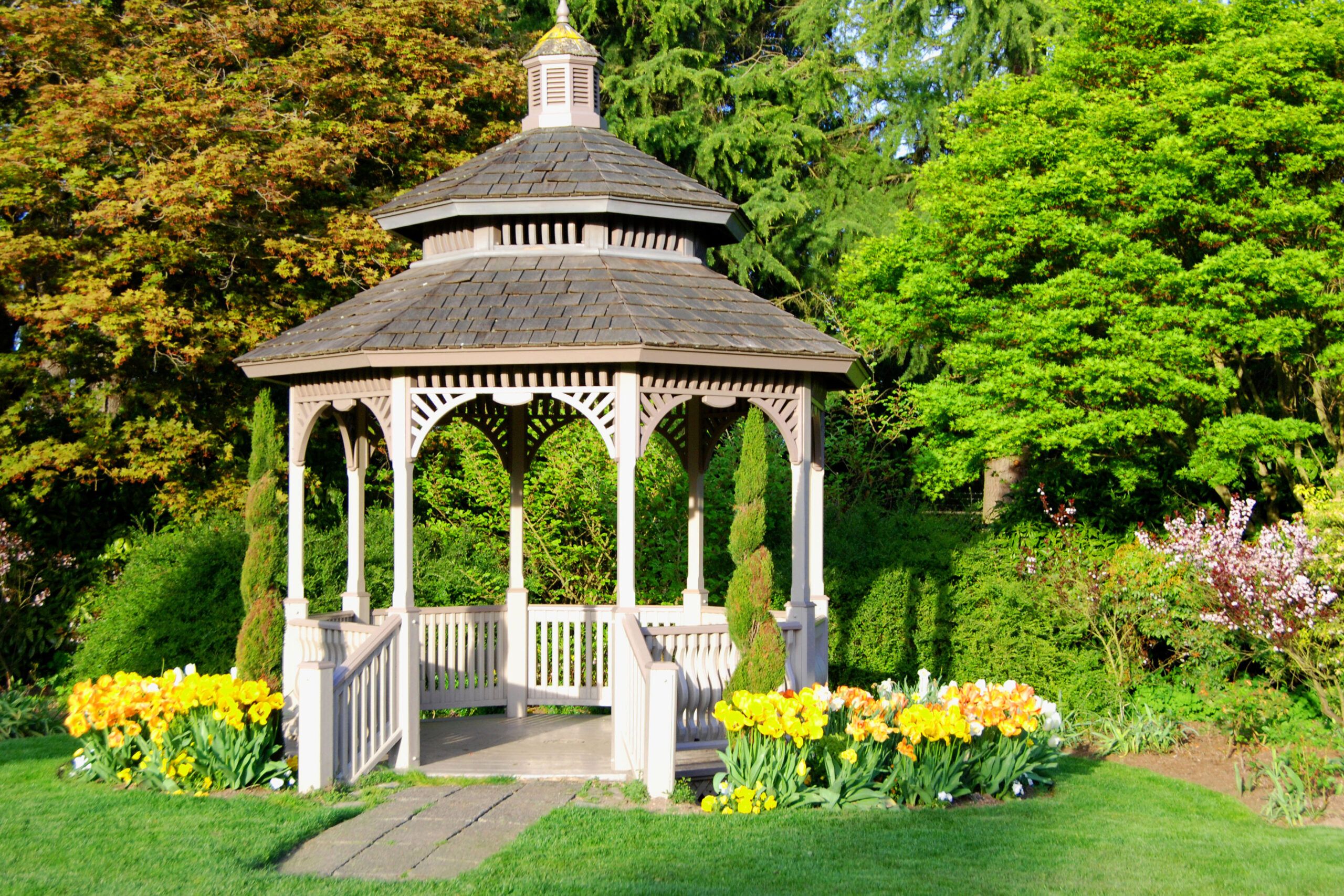
Gazebo kits should include precut pieces cut to specification, though the largest components like roofs, floors, and sides may already be preassembled. All fasteners (stainless or galvanized steel) should be included. If they aren’t, the instructions should tell you what you need to complete the build.
Support columns are typically held by gusset plates bolted directly onto the foundation piers, deck, patio, or concrete floor. Sections bolt together through predrilled holes. Smaller pieces screw together. Designs range from simple square latticework structures to octagons dripping in decorative millwork and capped by a two-tiered, cupola-topped roof.
Most company literature says that a couple of people can put together a small to midsize model in a day or two with just a cordless drill, a wrench and sockets, and, in some cases, a hammer and a nail set. That time frame may or may not include the groundwork. For most homeowners, the hardest part is the foundation. Typically, that requires digging and pouring concrete piers around the perimeter and one in the center, which equals nine footings for octagonal structures.
