

Whether sipping your morning coffee or unwinding after a long day, a well-hung porch swing can help you relax. This guide will walk you through everything you need to know about selecting, installing, and maintaining the perfect porch swing for your home.
Understanding Porch Swings
Porch swings have been a beloved feature of American homes since the mid-1800s, offering a comfortable spot to enjoy the outdoors. Before diving into the installation process, understand the various types of swings available and the benefits they bring to your home.
Types of Porch Swings
Porch swings come in various materials and styles to suit different tastes and architectural designs. The most common types include the following:
- Metal swings
- Plastic or synthetic materials
- Wicker swings
- Wooden swings (teak, cedar, pine, maple, or oak)
Each material offers unique benefits in terms of durability, looks, and maintenance requirements. For example, teak and cedar are naturally rot-resistant and weather beautifully over time, while pine or maple work best with a coat of paint—ideal if you want your swing to complement your home’s exterior color palette.
Choosing the Right Porch Swing
Your ideal porch swing will depend on the dimensions and shape of your porch, your personal tastes, and the level of maintenance you’re willing to undertake.
Material Considerations
When choosing a porch swing, we recommend considering the following materials:
- Cedar: Naturally rot-resistant and aromatic, with a beautiful reddish hue
- Metal: Durable and low-maintenance, available in various designs
- Pine: Affordable and easy to paint, great for customizing colors
- Teak: Highly durable and weather-resistant, ideal for long-term outdoor use
- Wicker: Lightweight and stylish, best for covered porches
Each material has its pros and cons when it comes to factors such as cost, durability, and requisite maintenance. For instance, teak swings can cost between $300 and $1,500 but offer exceptional longevity, while pine swings range from $200–$600 but may require more frequent upkeep.
*Costs in this article sourced from estimates used by Angi.
Size and Style Options
Porch swings typically come in 4- or 5-foot lengths, with seat depths varying from 18–36 inches. Consider these factors when choosing your swing:
- Back design (squared-off, curved, or Adirondack-style)
- Comfort preferences (contoured vs. flat seats)
- Desired aesthetic (traditional, modern, rustic, etc. )
- Number of people you want to accommodate
- Porch size and available space
Remember, comfort is key. Ask This Old House master carpenter Norm Abram advises, “It’s a good idea to test-drive a swing before you buy.”
Preparing Your Porch for a Swing
Before installation, we recommend assessing your porch’s structure and carefully planning the swing’s placement. This preparation ensures that your swing is safe and located in a spot that’s both practical and offers the best view.
Assessing Structural Support
The most critical aspect of hanging a porch swing is ensuring proper structural support. Key considerations include the following:
- Ceiling material (finished wood vs. exposed beams)
- Joist condition and strength
- Need for additional reinforcement
For older homes with hidden joists, you may need to cut a small access hole in the porch roof to secure the swing properly. While this requires more work, it ensures the safest and strongest installation.
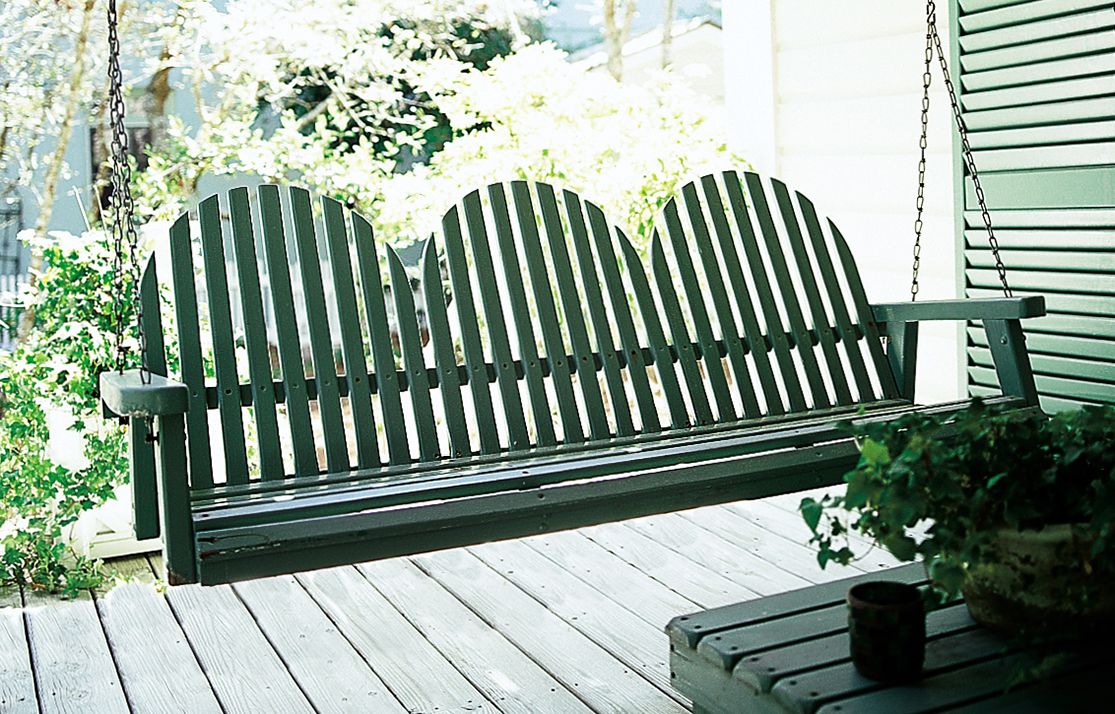
Measuring for Proper Placement
Proper placement is essential for both safety and comfort. To accomplish this, follow these expert guidelines:
- Allow at least a 4-foot arc for the swing’s movement
- Position the swing 17 inches off the floor as a starting point
- Ensure enough clearance from walls and railings
- Consider the view and natural light when choosing the location
Essential Tools and Materials
Gathering the right tools and materials before you begin will make the installation process smoother and more efficient. Here’s what you’ll need to hang your porch swing.
Hardware Requirements
The specific hardware you’ll need may vary depending on your porch structure and swing type, but generally includes the following:
- Lag screws (if reinforcing joists)
- S-hooks or quick links
- Screw eyes or eyebolts (4–6 inches long)
- Stainless or galvanized steel chains
- Washers and nuts
For a more rustic look, you might opt for marine-grade braided nylon or polyester rope instead of chains. However, be sure to inspect the rope regularly (at least every few months) for signs of wear.
Safety Equipment
Safety should always be a priority when working on home improvement projects. For the safest installation, we recommend the following:
- Dust mask (for drilling)
- Helper (to assist with lifting and positioning)
- Safety goggles
- Sturdy ladder
- Work gloves
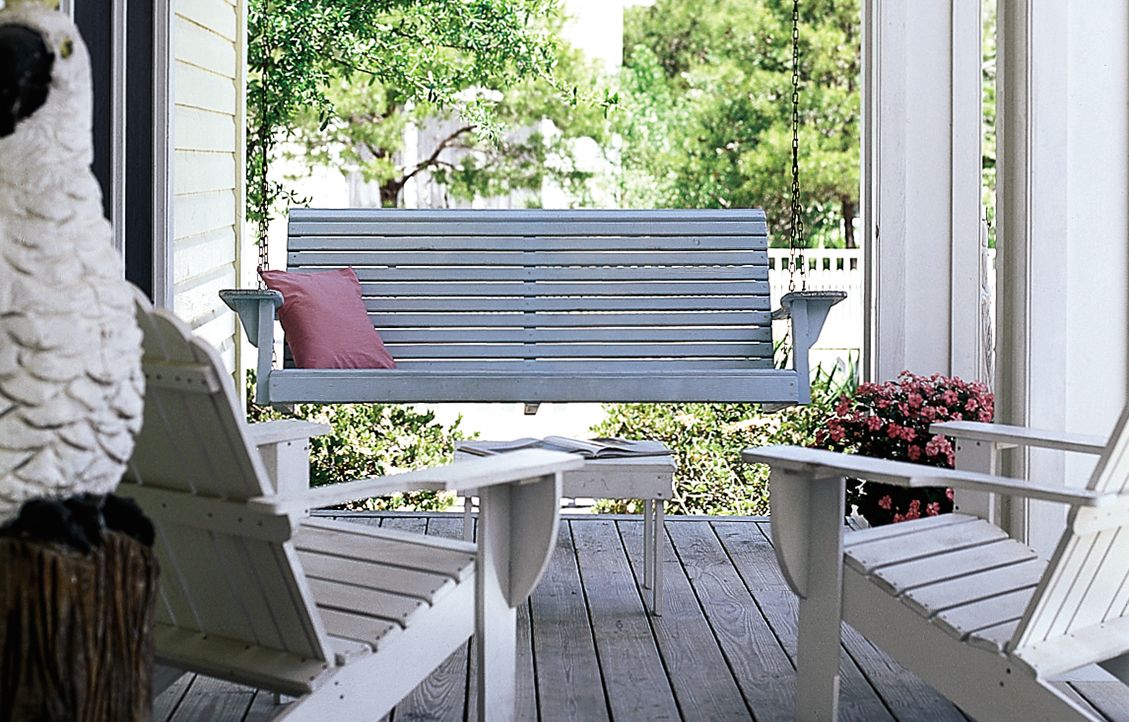
How To Hang a Porch Swing
When hanging your porch swing, consider the structural integrity of your roof and how much space you need above, below, in front of, and behind it.
Spatial Considerations
Allow for at least a 4-foot lateral arc, which should provide ample room for rocking it back and forth. As for height off the floor, try hanging it 17 inches off the ground as a starting point and adjust from there.
Hanging Chains or Rope
Use steel chains (stainless or galvanized) or marine-grade rope (braided nylon or polyester) to suspend the swing. Again, if you choose rope, check it for signs of wear regularly.
Structural Considerations
“The biggest thing in installing a porch swing is to make sure it goes into something structural,” says TOH general contractor Tom Silva.
Newer Homes
In Seaside, Florida, where many of the porches feature exposed beams and joists, and most of the cottages are around 20 years old, town carpenter Jim Eichberger uses stainless steel screw-eyes with a 4-inch shaft as hanging hardware. He first drills a pilot hole slightly smaller than the shaft, then twists the screw eye into place as far as it will go, and then wedges a screwdriver through the eye for the final tightening.
Older Homes
Tom Silva is more accustomed to working on the porches of older homes, where a finished wood ceiling ofter conceals the condition of the joists.
Rather than remove a section of the ceiling and replace the whole thing later, he prefers to cut a 3-by-3-foot hole in the porch roof and patch it after installing the swing.
From the roof, he predrills holes through the joists, then inserts 6-inch machine-threaded eyebolts through the ceiling and joists, securing them with nuts. (You can use a threaded connector and nut to lengthen a 6-inch eyebolt if the job calls for it.)
If the joists don’t exactly line up with where you want to put your swing, Tom advises hanging a timber between two joists, then placing the eyebolt through the timber and securing the nut.
If you plan to install your swing parallel to a single joist but full-dimension lumber isn’t in place, you should sister the joist. “It’s definitely more of a pain to do it this way,” says Tom, and it’s likely to take the project out of the hands of most do-it-yourselfers. But it’s the safest, strongest approach. I wouldn’t feel comfortable any other way.”
Ensuring Proper Porch Swing Safety
Safety is paramount when it comes to porch swings. Here are important considerations to keep in mind.
Weight Capacity Considerations
Every porch swing has a maximum weight capacity, which you must adhere to for safe use. To assess your swing’s load-bearing capacity, do the following:
- Account for the combined weight of potential users.
- Check the manufacturer’s specifications for weight limits.
- Consider adding a safety margin to the stated capacity.
Exceeding the weight limit can stress the mounting hardware and potentially lead to failure.
Reinforcing Joists if Necessary
In some cases, especially with older homes or lighter construction, you may need to reinforce the joists. Here are several scenarios in which you should use reinforcements.
- If joists are undersized or show signs of weakness, sister them with additional lumber.
- For swings hung parallel to a single joist, add strength to the system by sistering the joist.
- If the joists don’t align with the desired location of your swing, consider installing a support beam between the two joists.
While reinforcing joists requires extra effort, it’s essential for ensuring the safety and stability of your porch swing.
Alternative Porch Swing Hanging Locations
While the front porch is the traditional spot for a swing, there are other locations where you can enjoy this addition to your home. Exploring alternative hanging locations can open up new possibilities for outdoor enjoyment. Here are a few ideas.
Deck and Backyard Options
If you don’t have a suitable porch, consider these alternatives:
- Backyard: Hang a swing from a strong tree limb or a freestanding frame.
- Deck: Install a swing on a sturdy deck for a similar effect to a porch swing.
- Pergola or arbor: Create a dedicated swing area in your garden.
Using Swing Stands
For those without a suitable structure or who want the flexibility to change their swing’s location, swing stands offer a great solution. Here are a few perks that swing stands offer:
- Freestanding frames allow you to place a swing anywhere in your yard.
- Portable options let you move the swing as needed.
- Some stands come with built-in canopies for shade.
Porch Swing Maintenance and Care Tips
Regular care can extend the life of your swing and keep it looking its best. Here are our experts’ recommendations.
Seasonal Upkeep
Perform these maintenance tasks seasonally to keep your swing in top condition:
- Check and tighten all hardware connections.
- Clean the swing thoroughly with appropriate cleaners for its material.
- Inspect chains or ropes for wear and replace if necessary.
- Remove the swing and store it indoors during harsh winter months if possible.
- Touch up paint or apply wood preservatives as needed.
Weatherproofing Techniques
Protect your swing from the elements with these weatherproofing tips:
- Apply a water-resistant sealant to wooden swings annually.
- Consider a swing cover for additional protection from the elements.
- Use outdoor fabric protectors on cushions and pillows.
- For metal swings, touch up any rust spots promptly to prevent spreading.
Troubleshooting Common Porch Swing Issues
Even with proper installation and maintenance, porch swings may develop minor issues over time. Promptly addressing these problems can prevent them from becoming more serious concerns. Here’s how to handle them.
Addressing Squeaks and Creaks
If your swing starts making noise, do the following:
- Check for loose bolts or screws and tighten as needed.
- Inspect the chains or ropes for signs of wear and replace them if necessary.
- Lubricate all moving parts with a silicone-based lubricant.
- For wooden swings, sand down any rough spots that may be causing friction.
Fixing Uneven Swinging
If your swing doesn’t move evenly:
- Check the chain or rope lengths and adjust for equal lengths on both sides.
- Ensure the swing is hanging plumb and adjust its position if off-center.
- Inspect the swing seat for warping or damage and repair or replace it as necessary.
- Verify that the mounting points are level and adjust if needed.
Our Conclusion
By carefully selecting, properly installing, and diligently maintaining your porch swing, you can enjoy this classic feature for years. Remember, while hanging a porch swing can be a rewarding DIY project, it’s crucial to prioritize safety and structural integrity. If you’re unsure about any aspect of the installation process, don’t hesitate to consult a professional.
Where To Find It
Cedar swings:
Walpole Woodworkers
Walpole, MA
800-343-6948
www.walpolewoodworkers.com
Cypress swings:
Cypress Moon Porch Swings
Alexandria, Louisiana
(903) 571-3612
Cypress Swings:
Mahogany swings:
Weatherend Estate Furniture
Rockland, ME
800-456-6483
www.weatherend.com
Oak swings:
Creative Woodworking
Spruce Pine, AL
888-225-2029
www.oakswings.com
Wood, wicker, and vinyl/aluminum swings:
Porches and Yards
800-872-6525
