

Geothermal heat pumps offer a sustainable alternative to traditional HVAC systems, tapping into the earth’s constant underground temperature. This innovative technology can reduce energy costs while providing efficient climate control year-round. In this guide, we explore how geothermal heat pumps work, their benefits, and installation considerations.
Components of a Geothermal Heat Pump
A geothermal heat pump system consists of three main components—an indoor unit, a ground loop system, and a distribution system. These work together to provide efficient heating and cooling for your home.
Geothermal Heat Pump System
The indoor unit is the “brain” of the system, containing the compressor, heat exchanger, and controls. It functions similarly to a conventional heat pump, but it interacts with the stable ground temperature rather than fluctuating air temperatures.
Within the unit, the heat exchanger facilitates the transfer of heat between the refrigerant and the home’s air- or water-based heating system. The compressor then raises the refrigerant’s temperature, allowing it to release or absorb heat.
Ground Loop System
The “heart” of a geothermal system is its ground loop—a network of pipes buried in the earth. These pipes are installed horizontally in trenches or vertically in deep boreholes, depending on available space and local geology. These loops circulate a water-based solution that absorbs or releases heat as it travels through the ground. The length and configuration of the ground loop depend on various factors, such as available land, soil conditions, and the home’s heating and cooling requirements.
There are several types of ground loop systems, each suited to different site conditions:
- Horizontal loops: Installed in shallow trenches, these require more land and are typically used for residential or small commercial properties
- Vertical loops: Drilled deep into the ground, these are ideal for locations with limited space and are commonly used in urban settings
- Pond/lake loops: Utilize nearby water bodies for heat exchange, offering an efficient solution where water resources are available
The longevity and performance of the ground loop system will depend on the quality of the installation. According to the International Ground Source Heat Pump Association, properly designed and installed loops can last for 50 years or longer, often outlasting the lifespan of the indoor heat pump unit.
Distribution System
Once the indoor unit captures or releases heat, it’s distributed throughout your home via a network of ducts or radiant floor heating. This system can often utilize existing ductwork, making retrofits possible in many homes.
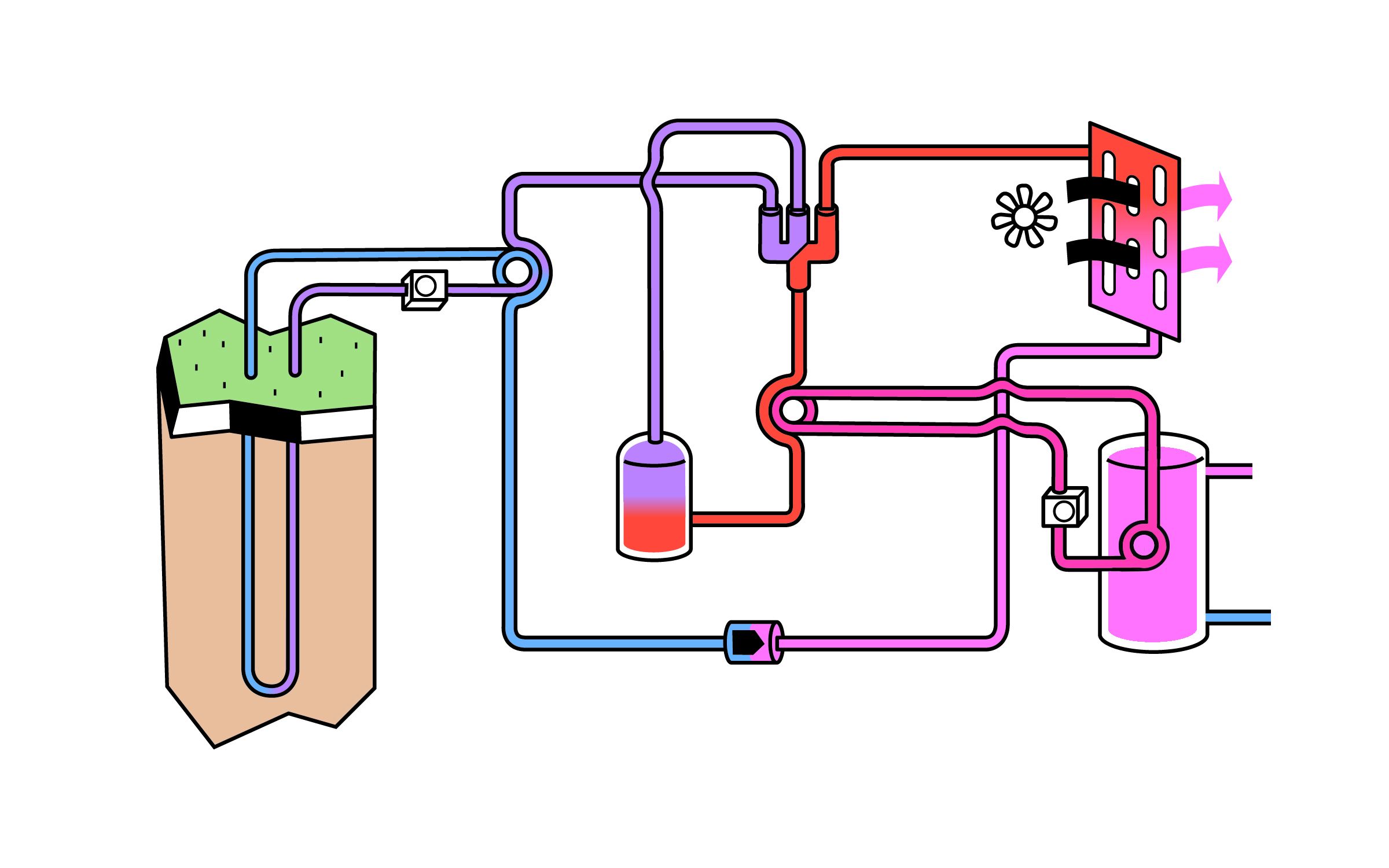
How Does a Geothermal Heat Pump Work?
Geothermal heat pumps operate on simple thermodynamic principles, transferring heat between your home and the earth through a network of underground pipes. This process is far more efficient than generating heat or cooling from scratch, and it can help homeowners save on their energy bills.
The exact process varies slightly depending on whether the system is in heating or cooling mode. During heating mode, the system leverages the earth’s consistent heat to provide reliable warmth, even during the coldest months. This method is particularly effective in regions where traditional heating systems may struggle with extreme temperature drops. Here’s how it works.
- The cold fluid in the ground loop absorbs heat from the earth.
- This warmed fluid returns to the indoor unit.
- The heat pump compresses the refrigerant, raising its temperature.
- The hot refrigerant transfers heat to air or water circulated through your home.
- The cooled fluid returns to the ground loop to repeat the cycle.
In cooling mode, the geothermal heat pump removes excess heat from the home and deposits it into the earth, providing a consistent and comfortable indoor environment. Here are the steps the system takes to cool your home.
- The indoor unit extracts heat from your home’s air.
- This heat is transferred to the fluid in the ground loop.
- The warm fluid circulates underground, releasing heat into the earth.
- Cooled fluid returns to the indoor unit to absorb more heat from your home.
- The cycle continues, maintaining a comfortable indoor temperature.
Geothermal Heat Pump Efficiency and Performance Metrics
Geothermal heat pumps are known for their exceptional efficiency, often surpassing traditional HVAC systems. Two key metrics, EER and COP, are used to measure their performance.
Energy Efficiency Ratio (EER)
EER measures cooling efficiency, indicating how many British thermal units (BTUs) of cooling the system produces per watt-hour of electricity consumed. Geothermal systems typically have higher EERs than conventional air conditioners. A higher EER signifies greater efficiency and lower operating costs, making geothermal heat pumps an attractive option for homeowners seeking to reduce their energy usage even during peak summer months.
Coefficient of Performance (COP)
COP measures heating efficiency, representing the ratio of heat output to energy input. Geothermal heat pumps often achieve COPs of 3 to 4.5, meaning they produce three to five units of heat for every unit of electricity consumed. This is higher than the COP of 1.0 for electric resistance heating.
Benefits and Drawbacks of Geothermal Heat Pumps
Geothermal heat pumps offer numerous benefits that make them an attractive option for homeowners, such as:
- Energy efficiency: They can reduce energy consumption by up to 72% compared to traditional HVAC systems, according to the U.S. Department of Energy. They also contribute to energy independence by reducing reliance on fossil fuels.
- Lower operating costs: While initial installation costs are higher, ongoing energy savings can lead to significant, long-term cost reductions.
- Environmental impact: Geothermal systems produce fewer greenhouse gas emissions than fossil fuel-based heating systems.
- Longevity: With proper maintenance, indoor components can last 25 years or more, while ground loops can last 50+ years.
- Quiet operation: Without outdoor units, geothermal systems operate quietly, enhancing home comfort.
- Ability to operate anywhere: Geothermal heat pumps can operate in any climate because of the earth’s constant underground temperatures, which range between 45 and 75 degrees Fahrenheit.
Despite their many advantages, geothermal heat pumps have some potential drawbacks to consider:
- High initial costs: Installation can be expensive, particularly for retrofit projects requiring extensive excavation.
- Site suitability: Not all properties are suitable for ground loops due to space limitations or unfavorable soil conditions.
- Limited installer network: Finding experienced installers may be challenging in some areas.
- Landscaping disruption: Installing ground loops can temporarily disrupt landscaping, though the area may be restored after installation.
Geothermal Heat Pump Installation Process and Requirements
Installing a geothermal heat pump system involves several steps and considerations to ensure optimal performance. Here is the installation process:
- Site assessment: A thorough site evaluation is necessary to determine the feasibility of a geothermal system. This assessment includes analyzing soil composition, available land area, and the home’s heating and cooling loads.
- Loop installation: Based on the site assessment, pros will install the appropriate ground loop configuration. This may involve horizontal trenching or vertical drilling, depending on available space and soil conditions. The process can take several days to complete.
- Indoor unit setup: Once the ground loop is in place, professionals will install the indoor heat pump unit and connect it to the loop and the home’s distribution system. This typically involves integrating with existing ductwork or installing a new distribution system if necessary. The installation process requires careful coordination between various trades, including HVAC technicians, plumbers, and excavators.
Retrofitting Existing Homes with Geothermal Systems
While geothermal systems are easiest to install in new construction, retrofitting existing homes is possible and increasingly common. The process may involve:
- Assessing the current HVAC system and home insulation
- Determining the best ground loop configuration for the property
- Installing the ground loop with minimal disruption to landscaping
- Connecting the new geothermal heat pump to existing ductwork or installing a new distribution system
How Much Does a Geothermal Heat Pump Cost?
While geothermal heat pumps have higher upfront costs than traditional HVAC systems, their long-term savings and efficiency can make them a sound investment.
The average cost to install a geothermal system ranges from $4,278 to $26,000*, depending on factors such as home size, loop configuration, and local installation costs. This is higher than the cost of conventional HVAC systems, but there are also long-term savings, incentives, and rebates to consider.
Despite higher initial costs, geothermal systems can reduce energy bills by up to 65% compared to traditional HVAC units, based on data from the U.S. Department of Energy. Many states and utilities also offer incentives for geothermal installations, which can help offset initial costs. Additionally, federal tax credits may be available. The Database of State Incentives for Renewable Energy provides up-to-date information on state incentive programs.
*Cost data sourced from Angi.
Geothermal Heat Pump Maintenance Requirements
Geothermal heat pumps require minimal maintenance compared to traditional HVAC systems. Regular check-ups, filter changes, and occasional antifreeze level checks in the ground loop are typically all that’s needed to keep the system running efficiently for decades.
Proper maintenance ensures the system’s longevity and performance. Scheduling annual inspections and addressing any issues promptly can extend the lifespan of both the indoor unit and the ground loop.
Our Conclusion
Geothermal heat pumps can help reduce energy bills while offering unparalleled efficiency and environmental benefits. The initial investment is expensive, but the long-term energy savings, reduced carbon footprint, and minimal maintenance requirements make geothermal systems an attractive option for many homeowners. For those considering a new HVAC system or looking to reduce their energy consumption, a geothermal heat pump could be a wise investment in both comfort and sustainability.
To find manufacturers, visit the Geothermal Heat Pump Consortium website. To find trained installers and designers who know the local geology and how to size systems for maximum efficiency, go to the International Ground Source Heat Pump Association’s website.
