
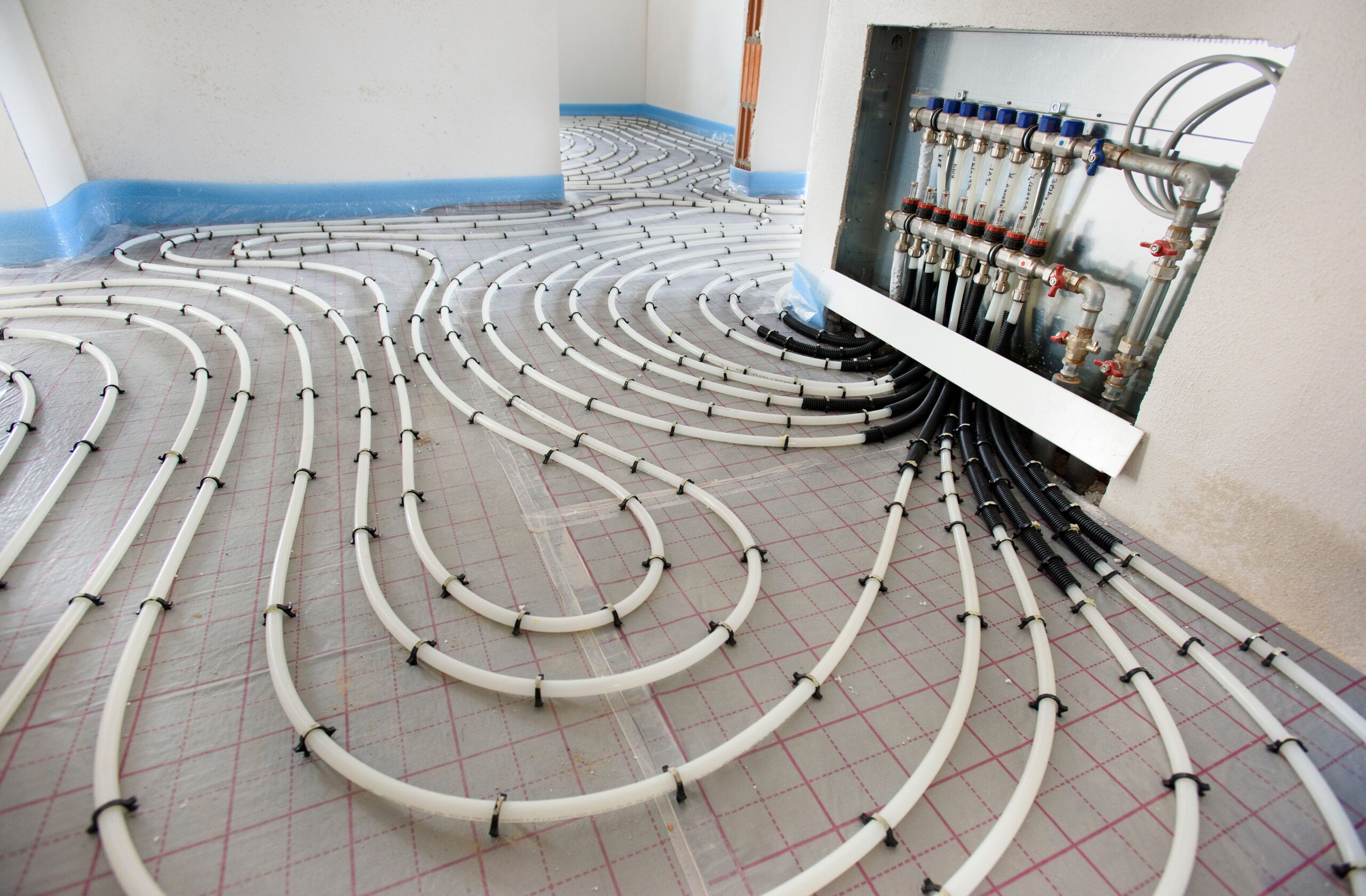
A nice warm floor on a chilly morning can really improve your daily life. Radiant floor heating can make this happen, providing consistent warmth from the ground up.
This guide will explore the ins and outs of radiant floor heating, from system options to installation processes and maintenance tips. Whether you’re considering a cozy bathroom upgrade or a whole-house heating solution, we’ll help you navigate the world of radiant floor heat.
Types of Floor Heating Systems
Radiant floor heating is offered in several styles. Each has its own unique benefits and drawbacks and may be better suited for certain homes and needs than others.
Electric Radiant Systems
Electric radiant systems consist of thin heating cables installed under your flooring. These cables work like an electric blanket, warming the floor surface directly. They’re particularly well-suited for single-room installations, such as bathrooms, kitchens, or mudrooms.
These systems are relatively simple to install, especially during renovations, as they don’t significantly raise your floor level. They require a dedicated 15- to 20-amp GFCI-protected circuit and are controlled by their own thermostat.
Hydronic Radiant Systems
Hydronic radiant systems use hot water circulated through a network of tubing installed beneath your flooring to provide heat. These systems are particularly efficient and well-suited for heating entire homes, offering even and comfortable warmth across living spaces, bedrooms, and bathrooms.
The installation process involves laying the tubing and connecting it to a boiler or water heater, which can be more complex and often requires professional assistance. Hydronic systems are highly energy-efficient and can operate using various heat sources, including natural gas, oil, or electricity. Controlled by a central thermostat, they offer precise temperature regulation and can be integrated with existing HVAC systems for better efficiency.
Geothermal In-Floor Heating
Geothermal in-floor heating systems use heat derived from the earth to warm your floors. These systems circulate a water-antifreeze mixture through a series of pipes embedded in your flooring, absorbing geothermal heat and distributing it evenly across the surface. They are particularly effective for whole-house installations, providing consistent warmth in living rooms, bedrooms, and basements.
Geothermal systems are efficient and environmentally friendly, as they leverage renewable energy from the ground. The installation can be complex and typically requires professional expertise, but the long-term energy savings and low operating costs can make them a worthwhile investment. They operate quietly and are controlled by a central thermostat, ensuring precise temperature regulation throughout your home.
Solar Radiant Heating
Solar radiant heating systems utilize solar panels to capture and convert sunlight into heat, which is then distributed through a network of pipes installed under your floors. These systems are ideal for eco-conscious homeowners looking to reduce their carbon footprint while heating sunrooms, living areas, or entire homes.
The installation of solar radiant systems can be more involved, often requiring integration with existing heating infrastructure and enough sunlight exposure for optimal performance. They provide a sustainable heating solution with the added benefit of lowering utility bills. Controlled by a solar-compatible thermostat, these systems ensure efficient and consistent heating, even during the cooler months.
Propane Underfloor Heating
Propane underfloor heating systems use propane-fueled boilers to heat water, which is then circulated through pipes beneath your flooring. These systems are particularly suited for areas without access to natural gas, providing effective heating for spaces such as basements, garages, and rural homes.
Installation of propane systems can be straightforward but should be conducted by a professional to ensure safety and efficiency. They offer reliable heat output and can be connected to an existing propane supply. Controlled by a dedicated thermostat, propane underfloor heating systems deliver consistent and adjustable warmth, making them a flexible option for various residential settings.
Benefits of Radiant Floor Heating
Radiant floor heating offers several advantages over traditional heating methods. Let’s explore the key benefits that make this heating option increasingly popular among homeowners.
Energy Efficiency
Radiant floor heating can be more energy-efficient than forced-air systems. The heat rises evenly from the floor, warming people and objects directly, which can lead to lower thermostat settings and reduced energy consumption.
Improved Comfort
One of the main draws of radiant floor heating is the comfort it provides. It eliminates cold spots and drafts, creating a consistently warm environment from the ground up. This even heat distribution can make your living spaces more comfortable, especially in bathrooms and kitchens where bare feet are common.
Silent Operation
Unlike forced-air systems that can be noisy when cycling on and off, radiant floor heating usually operates silently. This quiet operation contributes to a more peaceful home environment, free from the background noise of traditional heating systems.
Assessing Your Home for Radiant Floor Heat Installation
Before diving into a radiant floor heating project, you should determine this type of system is a good fit for your home. Consider the rooms where you’d like to install radiant heat and the types of flooring you have or plan to install.
Suitable Room Types
Radiant floor heating can be installed in virtually any room, but some areas benefit more than others. Bathrooms, kitchens, and entryways are popular choices due to their typically cold floor surfaces. They make the most sense to install in rooms where bare feet are common or where you want a little extra warmth.
Flooring Compatibility
While radiant floor heating works well under most flooring types, some materials conduct heat better than others. Tile and stone are excellent conductors, making them ideal for radiant heat, although heating these types of flooring tiles is generally more expensive. Hardwood and laminate can also be good materials for heating, but special considerations may be needed to prevent warping.
Carpet, tile, and vinyl flooring can be heated, but only with certain heating systems. They’re not ideal for electrical heating. Additionally, you’ll lose some heating efficiency if you install a carpet pad.
Planning Your Radiant Floor Heating Project
Proper planning is crucial for a successful radiant floor heating installation. This section will help you estimate costs and decide whether to tackle the project yourself or hire a professional.
Calculating Costs
The cost of installing radiant floor heating can vary widely depending on the system type, room size, and whether it’s a new construction or retrofit project. On average, a radiant floor heating system costs between $1,700 and $6,000, with most homeowners paying around $3,800, according to Angi’s data. In general, you can expect to pay about $6–$20 per square foot for a floor heating system.
The total cost of your heating project will also be affected by the type of heating system you decide to install. Propane heating is the most affordable, while hydronic systems tend to be the most expensive.
| Heating System | Cost to Heat an Entire Home |
| Electric | $19,000–$36,000 |
| Hydronic | $19,000–$48,000 |
| Geothermal | $9,500–$27,000 |
| Solar | $8,000–$19,500 |
| Propane | $2,400–$2,900 |
DIY Installation of Electric Radiant Floor Heating
Most radiant heat installations are beyond the reach of a typical homeowner, but installing an electric radiant floor heating system can be a manageable DIY task if you’re already installing new flooring. Here’s what you need to know to install an electric floor heating system on your own.
Required Tools and Materials
You’ll need the following tools:
- Floor sensor
- Heating cables or mats
- Multimeter
- Thermostat
- Thinset mortar
- Tile cutter
- Tile and grout
- Trowel
Step-by-Step Installation Process
- Create a scale drawing of your floor plan, identifying the “walking area” where the cable will run.
- Order the appropriate amount of heating cable based on your floor plan.
- Prepare the subfloor and install a layer of cement board if necessary.
- Lay out the heating cables or mats according to the manufacturer’s instructions.
- Connect the system to the thermostat and electrical circuit (have a licensed electrician perform this step).
- Test the system with a multimeter to ensure proper functionality.
- Apply thin-set mortar over the heating elements.
- Install your flooring material, typically tile or stone.
- Allow the mortar to cure completely before activating the system.
Remember, the objective is to cover the subfloor with a continuous, closely spaced pattern of heating cable, connect it to a thermostat on the new circuit, and cover the cable with thin-set and tile.
Radiant Floor Heating Maintenance
Proper maintenance can help ensure your radiant floor heating system operates efficiently for years to come. Schedule annual inspections by a qualified technician to catch and address any potential issues early. And keep the surrounding areas of components like boilers, heat pumps, and solar panels clean and free of obstructions.
Here are some tips for upkeep and common issues to watch for with particular types of radiant heat systems.
Electric Radiant Systems
- Electrical safety: Since these systems operate on electricity, ensure that all connections are secure and that circuits are protected by GFCI (Ground Fault Circuit Interrupter) to prevent electrical hazards.
- Thermostat calibration: Ensure that the thermostat is functioning correctly and accurately reflecting the desired temperature.
Geothermal In-Floor Heating
- Fluid levels: Check the antifreeze mixture in the pipes to maintain optimal thermal transfer and prevent freezing.
- Heat pump maintenance: Regularly service the geothermal heat pump according to the manufacturer’s recommendations to ensure it operates efficiently.
- System inspections: Have a professional inspect the system annually to ensure there are no leaks or blockages in the pipes and that the heat exchange process is functioning properly.
Solar Radiant Heating
- Backup system: Since solar energy can be intermittent, ensure that any auxiliary heating systems are also maintained to provide consistent heating when solar input is insufficient.
- Solar panel maintenance: Keep solar panels clean and free of debris to maximize their efficiency in capturing sunlight.
- System monitoring: Regularly monitor the system’s performance to ensure that the solar collectors and associated components are working correctly.
Propane Underfloor Heating
- Boiler maintenance: Regularly service the propane boiler to ensure it is burning efficiently and safely.
- Propane supply: Ensure a steady supply of propane and regularly check for any leaks in the propane lines.
- System checks: Periodically inspect the system for any signs of wear or damage in the piping and connections, and address any issues promptly.
Hydronic Radiant Systems
- Boiler service: Regularly service the boiler or water heater to ensure it operates efficiently and safely.
- Leak detection: Monitor the system for any leaks in the tubing or connections, as even small leaks can reduce efficiency and cause water damage.
- Water quality: Maintain the quality of the water in the system to prevent scaling, corrosion, or bacterial growth. Use additives if recommended by the manufacturer.
Common Issues With Radiant Floor Heating and How to Address Them
Floor heating systems can encounter various issues, but understanding common problems and their solutions can help maintain their efficiency and reliability. Regular maintenance and timely troubleshooting can prevent most of these issues and ensure your floor heating system operates smoothly and efficiently. Here are some typical issues and how to address them:
Uneven Heating
Certain areas of the floor may feel warmer or cooler than others. To address this:
- Ensure that the installation was done correctly, with heating elements evenly distributed.
- Check for air trapped in hydronic systems and bleed the system if necessary.
- Verify that the thermostat is functioning properly and is set to the correct temperature.
Thermostat Malfunction
Sometimes, the system won’t respond to temperature adjustments or displays incorrect readings. In that case:
- Replace the thermostat batteries or reset the thermostat according to the manufacturer’s instructions.
- Inspect the thermostat wiring for any loose or damaged connections.
- If the problem persists, consider replacing the thermostat with a new, compatible model.
High Energy Bills
If your energy bills go up suddenly, and your consumption is reading much higher than usual:
- Ensure the system is only running when needed and consider installing programmable thermostats to optimize usage.
- Check for insulation issues in the room, as poor insulation can lead to heat loss and increased energy use.
- Have the system inspected to ensure it is operating efficiently without any blockages or malfunctions.
Leaks in Hydronic Systems
Water or antifreeze leaks from the pipes can be dealt with these steps:
- Locate the source of the leak and repair or replace the damaged section of the pipe.
- Regularly check for signs of moisture or water damage around the system.
- Ensure the system pressure is within the recommended range to prevent stress on the pipes.
No Heat or Insufficient Heat
If the system either isn’t producing any heat or is producing significantly less than normal:
- For electric systems, check the electrical connections and ensure the circuit breaker hasn’t tripped.
- For hydronic systems, verify that the boiler or water heater is functioning properly and that the water temperature is set correctly.
- Inspect the pipes or heating cables for any damage or blockages that may be preventing efficient heat transfer.
Noise Issues
When you’re hearing unusual noises coming from the flooring system such as gurgling, banging, or hissing:
- In hydronic systems, these noises can indicate air in the pipes, which can be resolved by bleeding the system.
- Check for loose components or debris in the system that might be causing noise.
- Ensure the pump and other mechanical parts are well-lubricated and functioning correctly.
System Not Turning On
If the heating system will not activate or turn on at all:
- Check the power supply and ensure the system is properly plugged in and the circuit breaker is not tripped.
- Inspect the thermostat settings and wiring connections.
- For hydronic systems, verify that the pump and boiler are operational.
Overheating
If the floor becomes excessively hot:
- Adjust the thermostat settings to a lower temperature.
- Check the system’s controls and sensors to ensure they are calibrated correctly.
- Inspect the system for any issues with the heating elements or circulation that might cause overheating.
Energy-Saving Strategies for Radiant Floor Heating
To maximize the efficiency of your radiant floor heating system, consider implementing these energy-saving strategies.
Programmable Thermostats
Installing a programmable thermostat can significantly reduce energy consumption. You’ll save energy by cutting heat during periods when the system is not in use. Set lower temperatures when you’re away or sleeping, and program the system to warm up just before you wake or return home.
Zoning Options
For larger installations, consider zoning your radiant floor heating system. This allows you to heat different areas of your home independently, focusing warmth where it’s needed most and reducing energy use in less frequently occupied spaces.
Addressing Common Concerns About Radiant Floor Heating
While radiant floor heating offers many benefits, homeowners often have questions about its practicality. Let’s address some common concerns.
Installation Time
The installation time for radiant floor heating varies depending on the system type and room size. Electric systems in a single room can often be installed in a few days, while whole-house hydronic systems may take a week or more. Always factor in additional time for flooring installation and system testing as well, as these will also impact your timeline.
Impact on Existing Flooring
In many cases, installing radiant floor heating requires removing and replacing existing flooring. However, some newer electric systems can be installed under existing floors with minimal disruption. Consult a professional to determine the best approach for your situation.
Compatibility with Solar Panels
Homeowners interested in sustainable energy might wonder if radiant floor heating can be integrated with solar panels. The good news is that electric radiant floor heating can work seamlessly with solar power. By harnessing energy from solar panels, you can reduce your dependency on grid electricity and lower your energy costs. Hydronic systems offer a highly efficient and eco-friendly solution when paired with solar water heaters. Solar water heaters can preheat the hydronic system’s water, reducing energy consumption.
Long-Term Durability
Radiant floor heating systems are known for their longevity and durability. These systems can often last decades with minimal effort as long as they are regularly checked and maintained like any other part of your home. Proper installation and regular checks are key to ensuring the system’s longevity. Unlike forced-air systems, which may require frequent servicing of filters and ducts, radiant systems make long-term care simple.
Our Conclusion
Radiant floor heating offers a luxurious and efficient way to warm your home, providing consistent comfort from the ground up. However, this heating system requires a significant initial investment.
Whether you choose an electric system for a single room or a hydronic system for your entire home, proper planning and installation are key to enjoying the full benefits of radiant floor heating. Don’t forget to implement energy-saving strategies to create a cozy, efficient home environment with your new heat source.
