We’ll let you in on a little secret: A lot of the fancy woodwork you see inside old houses is nothing more than deft layering, bits of simple molding combined to mimic ornate profiles. Consider, for example, the wall frame, the thin rectangle first used by the British in the 1750s to give the illusion of wood paneling after plaster walls came into vogue. If you have a plain room, you don’t need to hire a pro—or be one yourself—to get this bit of custom carpentry. As This Old House senior technical editor Mark Powers shows on the following pages, all you need is a miter saw and a nail gun. Then, in just one weekend, you’ll be able to add timeless character to a house of any age.
Day-to-day timeline
FRIDAY Smooth and prime the wall where the frames will go, then create an aesthetically pleasing layout. Once you have the frame sizes established, calculate how much material you will need and go shopping.
SATURDAY Create a jig to help you build the frames square and tight. Cut all the molding to size and build all the frames.
SUNDAY Glue and nail all the frames to the wall, fill and sand the nail holes, and paint the area below the chair rail.
Step 1: Prep the walls
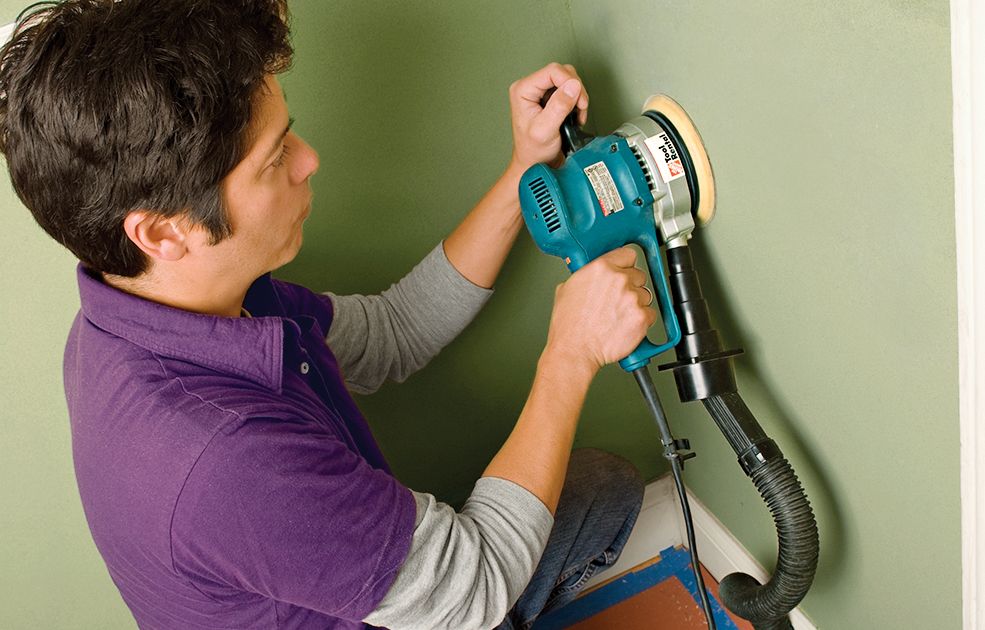
Smoothing and priming the walls before applying the frames avoids the drips and blobs that often accompany painting around the molding when it’s already in place.
A_ Using a random-orbit sander and 150-grit sandpaper, smooth the walls in the area under the existing chair rail.
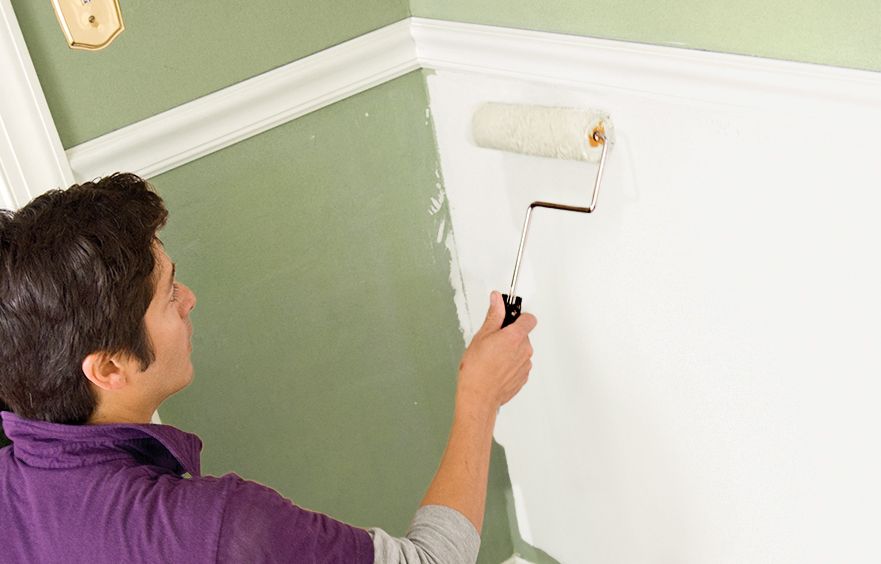
B_ Prime the walls below the chair rail. Let the primer dry completely before continuing.
Tip: Since you have the materials out already, plan to prime your molding before cutting and installing. This will save you time later.
Step 2: Mark the layout
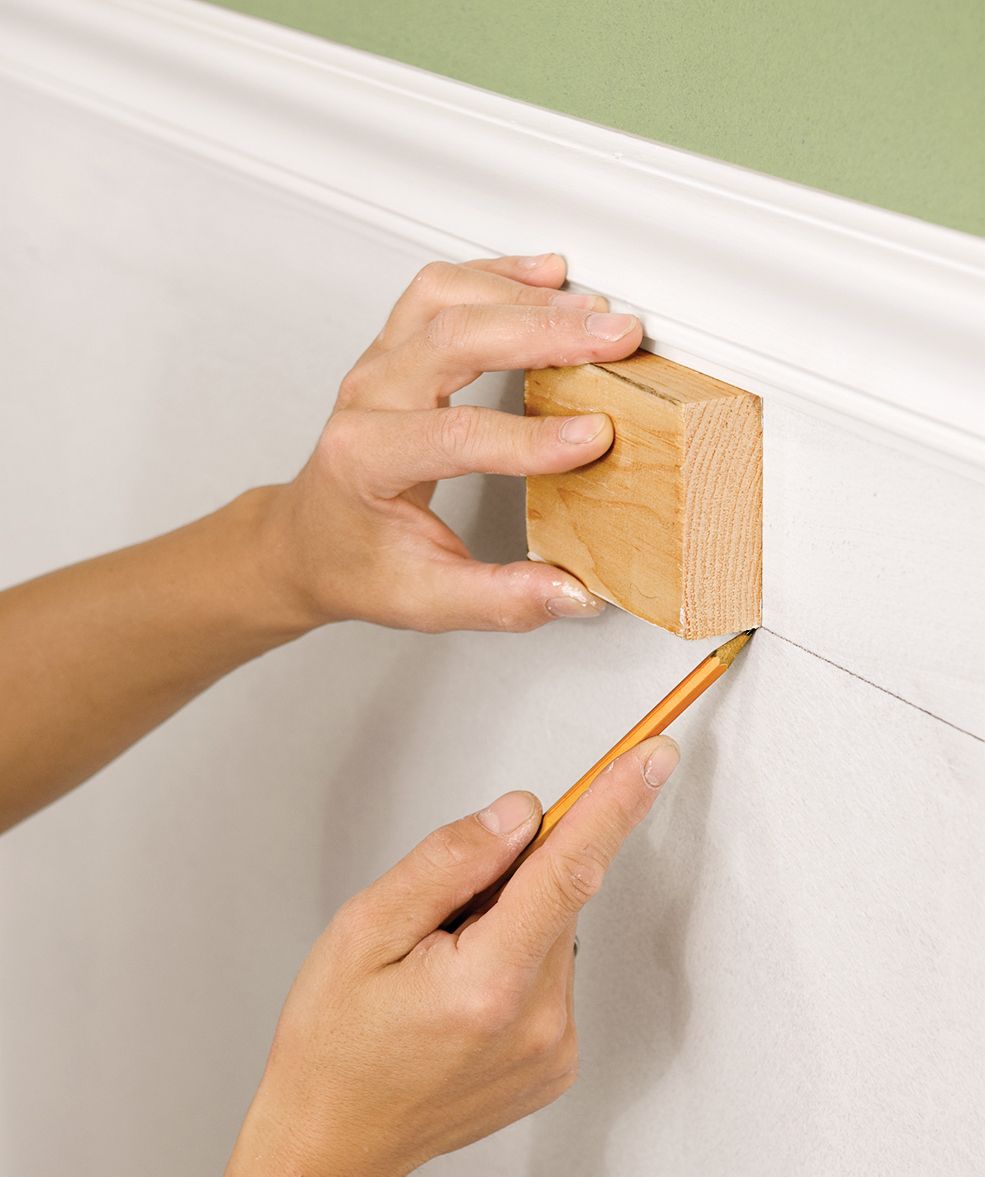
The spacing between wall frames should be from 23⁄4 to 31⁄2 inches, but the space above and below can be as much as 4 inches. Whatever spacing you choose, stick to it all around the room. The frames can change size, but the measurement above, below, and between them must remain consistent.
A_ To determine the width of the frames for a particular wall, first measure the length of the wall. Add 1 to the number of frames that go on that wall and multiply by the spacing between frames. Subtract that sum from the length of the wall. Divide the remainder by the number of frames. This is the outside width of each frame. (See Tip at right for a helpful formula.)
Cut a block equal to the space between the bottom of the chair rail and the frames. Use the block to run a top layout line along the wall.
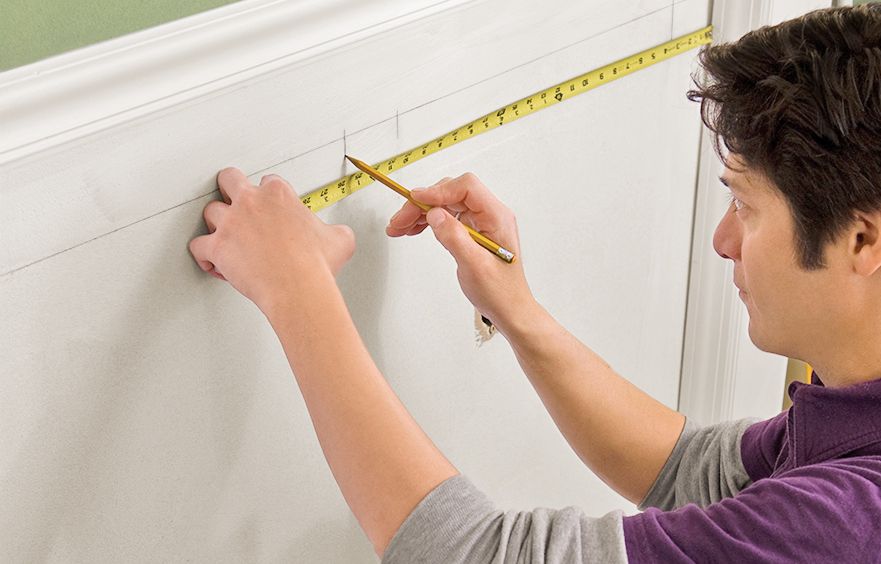
B_ Measure and mark where the outside corner of each frame falls on the top layout line.
Tip: Use this formula to calculate frame sizes: wl – (s x (f + 1)) ÷ f = fw
Where wl is the wall length, s is the spacing between frames, f is the number of frames, and fw is the frame width. So, for example, a 60-inch wall with 3 frames on it set 3 inches apart would mean each frame is 16 inches wide: 60″ – (3″ x (3 + 1)) ÷ 3 = 16″
Step 3: Make a jig
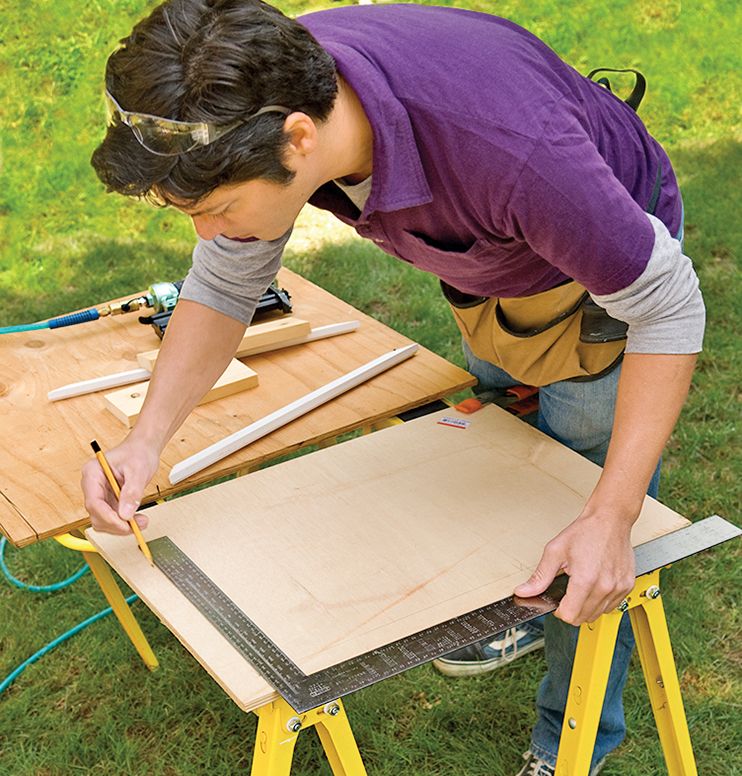
A jig is a guide that helps keep your work uniform in size or shape. This one, made from plywood and scrap lumber, is for aligning the square corners of the frames.
A_ Using a framing square, draw two perpendicular lines on the plywood. Position the lines far enough from the edges of the plywood to accommodate a piece of molding.
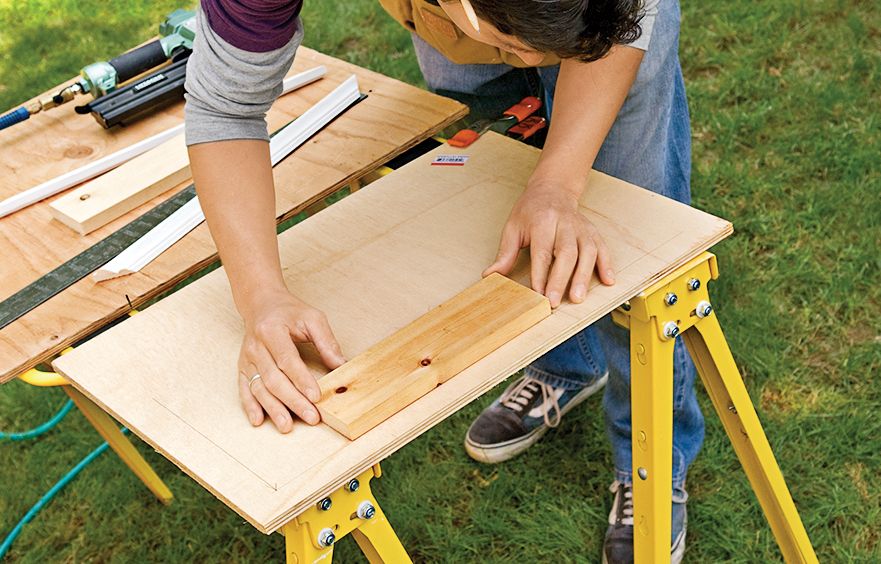
B_ Determine the inside width of the smallest frame you’ve designed. Cut a piece of scrap wood to a length shorter than that measurement. Position the scrap against one of the lines on the plywood and set into the corner of the intersecting lines. Using a brad nailer, tack the scrap to the plywood.
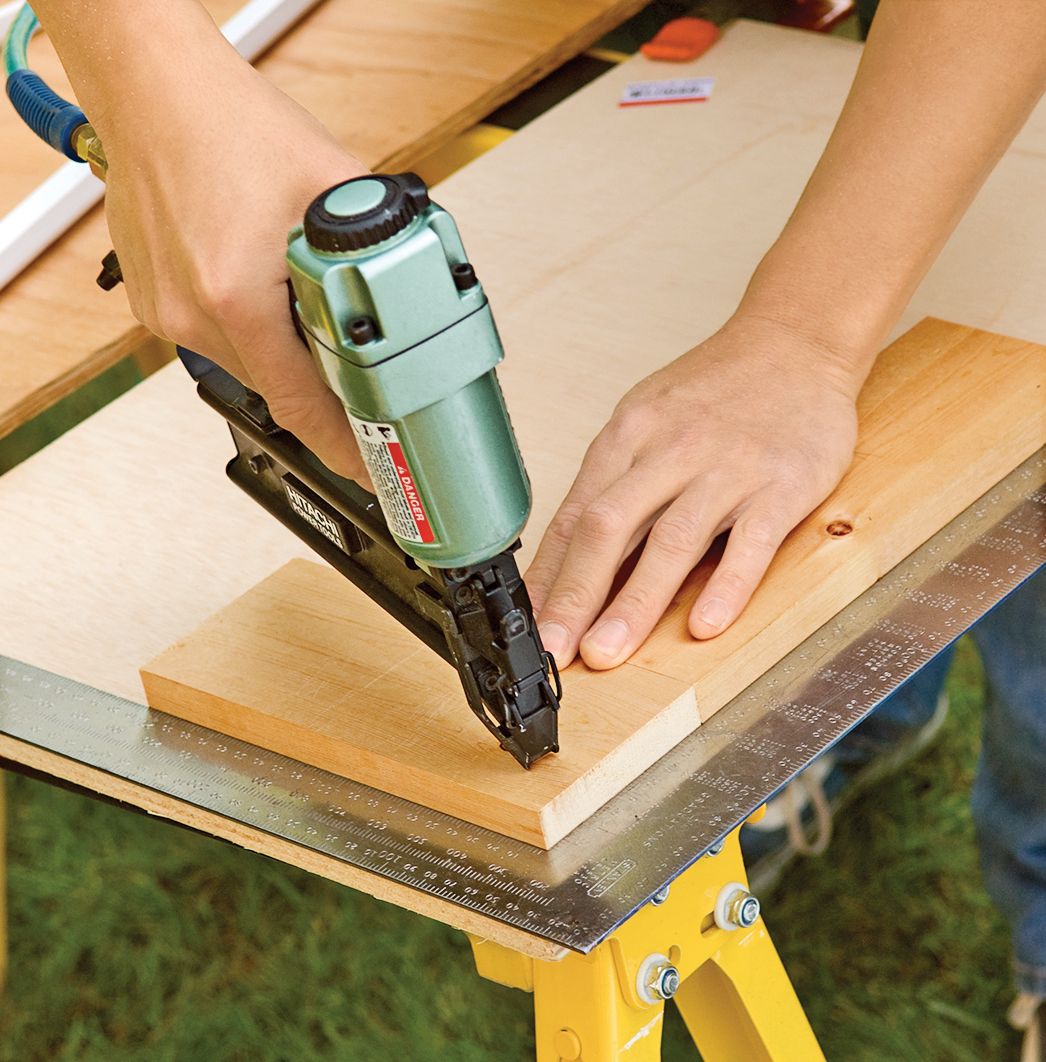
C_ Cut another piece of scrap to place perpendicular to the first piece. Make sure that the two pieces together are still shorter than the inside measurement of your smallest frame. Use a framing square to check that the two pieces of scrap are perfectly square to each other. Tack the second scrap in place.
Step 4: Build the frames
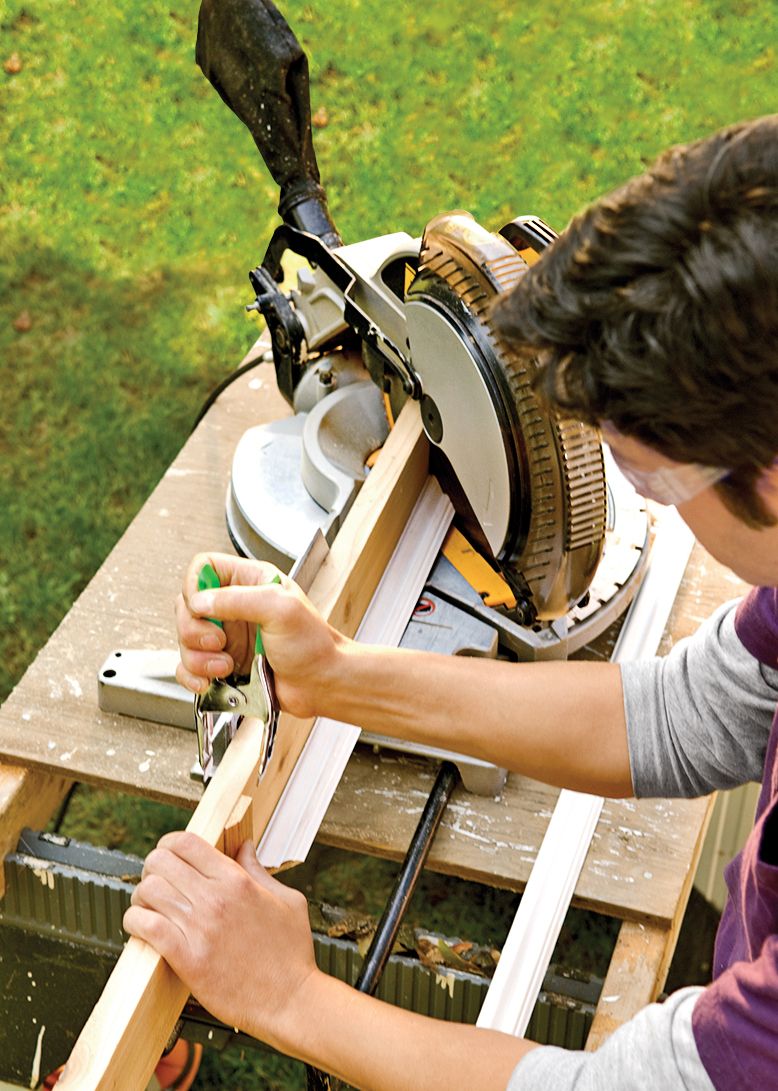
To make uniform frames, you’ll need to cut your molding into consistent pieces. You can do this by clamping a piece of scrap wood to the fence on your miter saw to act as a stop, allowing you to make matching pieces without measuring every time. It also helps to have a list of all the cuts you’ll need ready ahead of time and to mark each piece’s length on the back after you cut it.
A_ Place a piece of molding rightside up on the saw deck, fat edge against the fence. Set the blade to the right at 45 degrees. Cut the left end of the molding at this angle. Measure out the desired length on the molding along the longer back edge and mark it. Swing the blade to the left and set it to 45 degrees. Slide the molding over to line up the blade with the mark, and cut the right side of the molding. Leaving the blade down, clamp the stop into place against the left end of the molding.
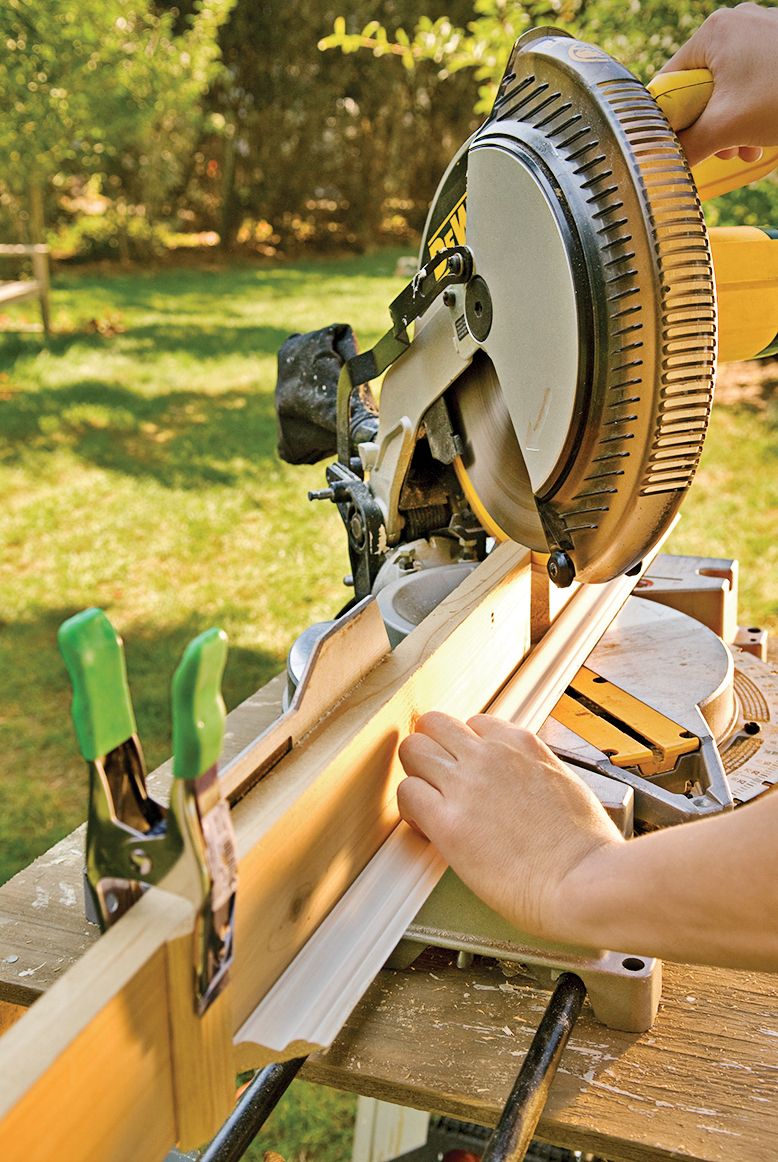
B_ Continue cutting all the molding for this length with the stop in place. Adjust the stop for each of the different lengths on your cut list, and cut until you have the pieces you need to build all the frames.
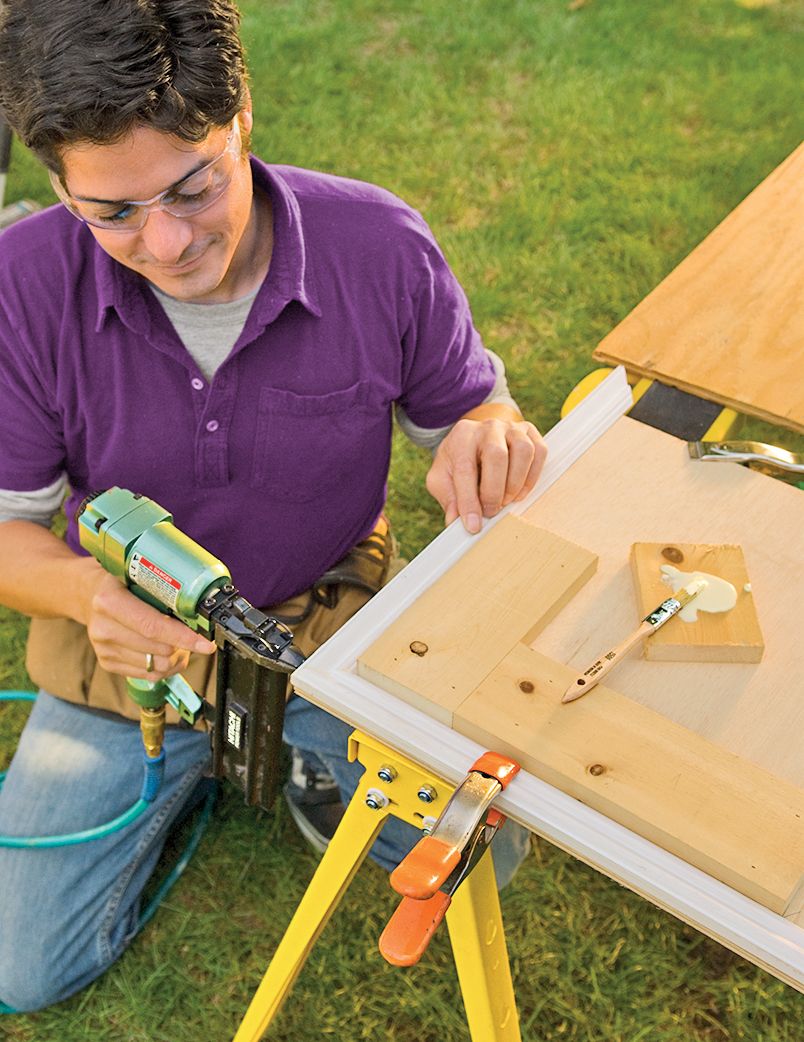
C_ Using a chip brush, apply wood glue to the mitered ends of two adjoining pieces of molding and position them around the jig. Line up the corner so that the edges are flush and square, tight to the jig. Clamp the molding in place to the jig. Using a brad nailer and 2-inch nails, secure the mitered corner of the frame by shooting two nails into the fattest part of the molding. Continue assembling the frame corner by corner until complete. Make all the frames and set them aside.
Tip: Because you’ll be using a lot of glue over time, pour it out in small batches onto a piece of scrap wood.
Step 5: Install the frames
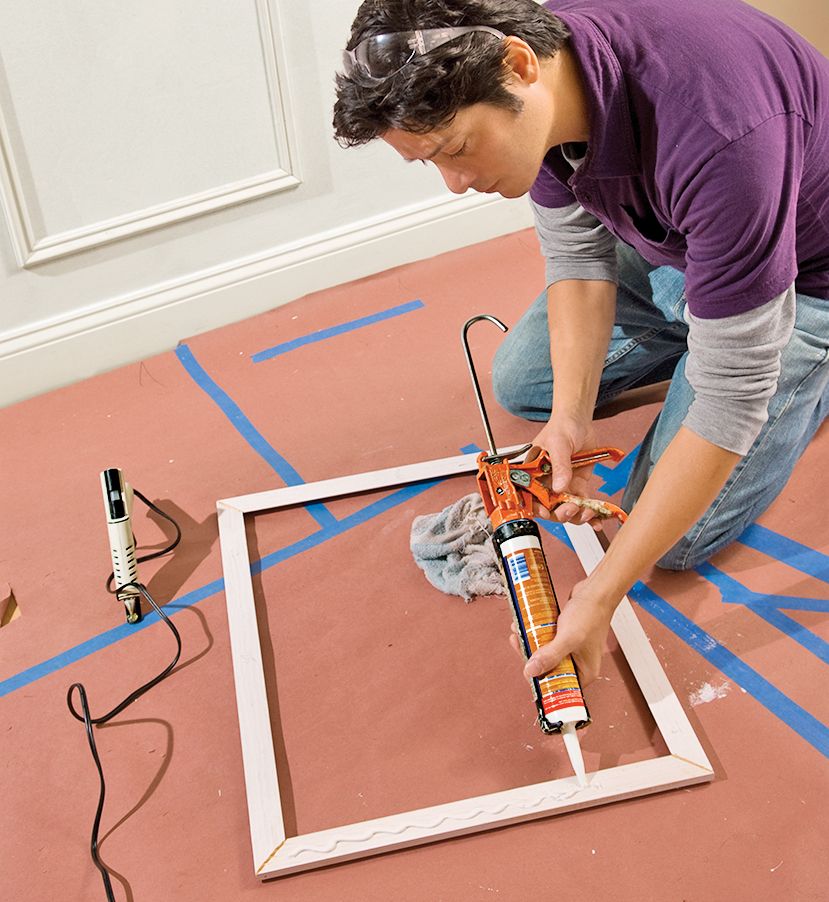
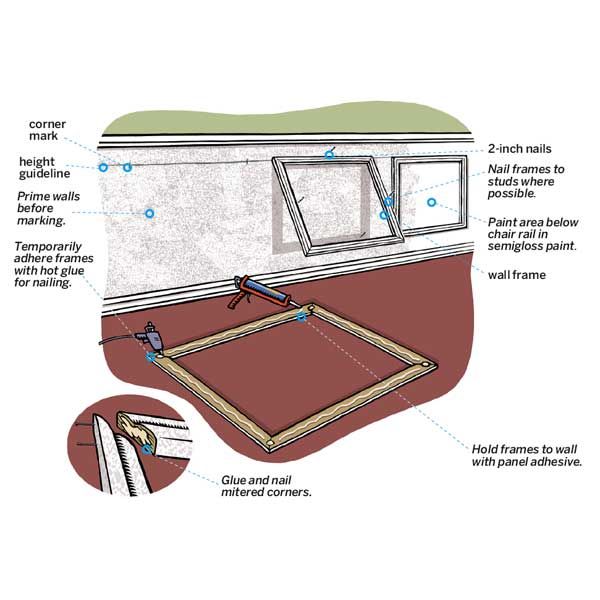
As you put the frames on the wall, it’s more important to align them relatively parallel to the elements around them—the chair rail, a wall corner, or door trim—than to check them for level or plumb. The frames go up with panel adhesive, which will hold them to the wall permanently, but quick-drying hot glue clamps them in place while the adhesive sets.
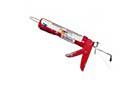
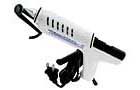
A_ Using a caulk gun, apply panel adhesive to the four sides of the frame. Using a hot-glue gun, put a dab of glue on each corner.
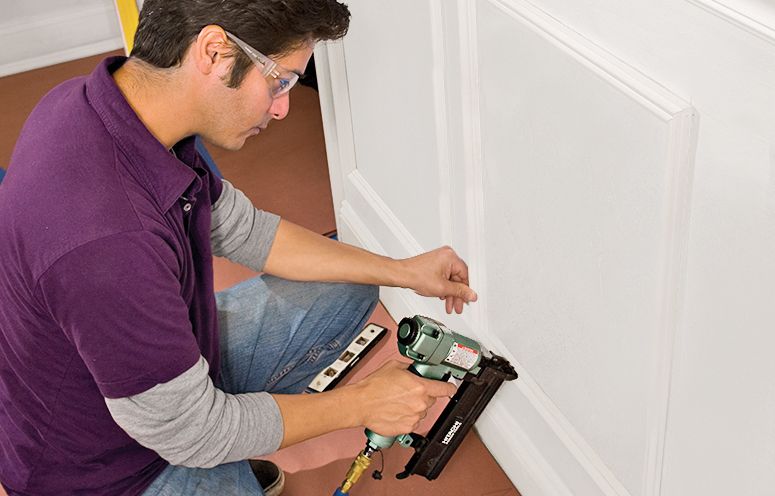
B_ Tip the top of the frame against the crosshatches on the layout line on the wall. Make sure the frame is aligned correctly before pressing the whole piece into place. Using a brad nailer, tack the frame to the wall once on all four sides. Aim for the wall framing, if you know where it is.
Step 6: Paint the frames
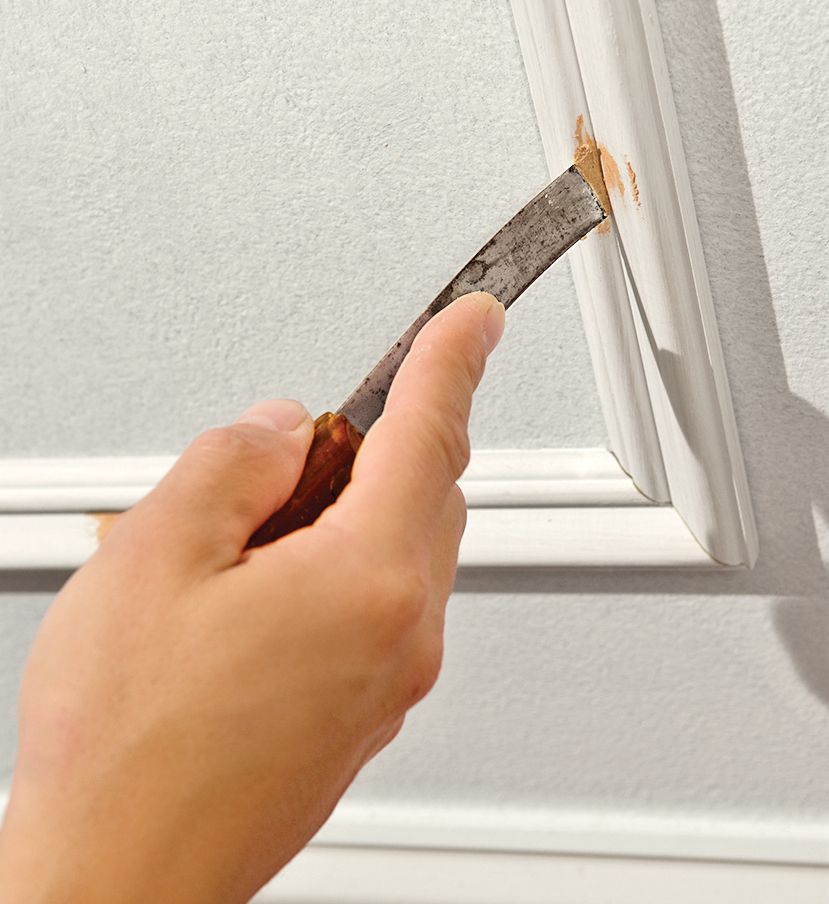
Filling nail holes and caulking before you paint ensures that the frames will look integral to the walls.
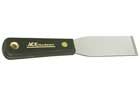
A_ Using a small putty knife or your finger, fill any nail holes with putty. Caulk any gaps at the mitered corners or between the frames and the wall. Allow the putty and caulk to dry completely. Using 220-grit sandpaper, smooth all the nail holes and take down any rough patches on the molding.
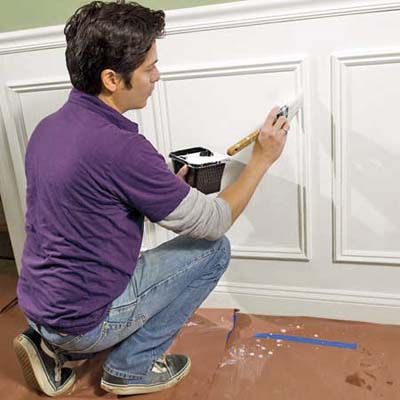
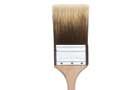
B_ Using a paint brush and paint roller, coat the entire area from the chair rail down with semigloss paint.
Shopping
molding Typically, base cap or panel molding works best for creating frames. Make sure to get 10 to 20 percent more than you think you’ll need, to accommodate offcut waste.
scrap plywood and
wood blocks to make a jig for building the frames
2-inch brad nails
wood glue
220-grit sandpaper for smoothing mitered corners and filled nail holes
panel adhesive to secure the frames to the wall
hot-glue cartridge
wood putty
paintable caulk
primer and paint
Tools
 Random orbit sander
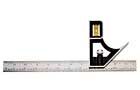
- Combination square
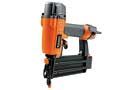
- Pneumatic brad nailer
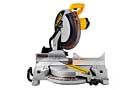
- Miter saw
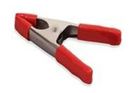
- Spring clamps
- Caulk gun
- hot glue gun
- small putty knife
- Paint brush
- Paint roller