
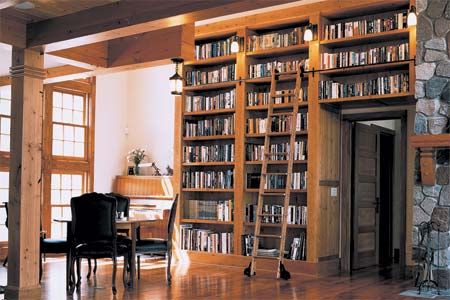
Built-in bookcases add storage, character, and charm in a way that freestanding bookcases can’t match. In this guide, we’ll cover the basics of built-in bookcases so you can design the perfect ones for your home, from location and layout considerations to the best materials and structural supports.
Choosing the Right Location for Your Built-In Bookcase
Because they’re enormously flexible, built-ins can fit just about anywhere. The location you choose will impact the bookcase’s design and how well it integrates with your existing space.
Traditional Placements
Classic locations for built-in bookcases are lining a wall in a study or beside a fireplace in the living room. Wall-to-wall bookcases can transform an ordinary room into a cozy library, while fireplace-flanking units add symmetry and warmth.
Innovative Locations
Think beyond familiar locations. If you want to be creative, you could build a hallway alcove, frame a window or door, or repurpose the empty space under a stairway. Built-ins can even follow you up the stairs, turning a transitional space into a functional one.
Take tabs on any overlooked areas in your home that a bookcase could improve. Tailor yours to fit any space, and dress it out by adding cabinets, drawers, or a built-in desk.
Factors To Consider When Designing Bookcase Built-Ins
When planning your built-in bookcase, the following factors will heavily influence its design and function.
Size and Proportions
We strongly recommend that you calculate the dimensions of your built-in bookcase to fit your space and storage needs. Account for ceiling height, wall width, and the maximum depth you’ll need to fit any storage items.
Standard bookshelf depth ranges from 10–12 inches, but you may want deeper shelves for larger books, art, or other display pieces.
Support Structures
Your bookcase needs proper support, both for your safety and for the bookcase’s longevity. Securely anchor the structure to wall studs and the floor. We also suggest adding vertical dividers or supports to prevent longer shelves from sagging and splitting.
Veneer Options
Veneers range from natural wood grains to painted finishes. Match the veneer to existing woodwork in your home for cohesion, or choose a contrasting finish to make your bookcase into a statement piece.
Selecting the Ideal Material for Built-Ins
Your choice of materials plays a huge role in the overall strength of your bookcase, so pick something with quality. Each option has pros and cons, which we’ll review below.
Solid Wood
Solid wood is a natural, easy to customize, and sustainable option. Hardwoods like oak or maple are highly durable and can support significant weight without sagging. A 3-foot 1-by-12 oak shelf, for example, can hold up to 313 pounds without sagging more than 1/4 of an inch. While it’s more expensive than other options, solid wood shelves can last for generations with proper care.
Plywood
Hardwood plywood is a strong and cost-effective alternative to solid wood. Plywood is available in 4-by-8-foot sheets with minimal defects and offers a wide range of face veneers you can use with paint or clear finishes. It offers strength and stability: a 3-foot 1-by-12 plywood shelf capable of supporting 129 pounds without significant sagging.
Medium-Density Fiberboard (MDF)
MDF is the most affordable option for a bookshelf. While it’s not as stiff as solid wood or plywood, it won’t cup, warp, or splinter, and it takes paint exceptionally well. However, it has the lowest weight capacity. A 3-foot 1-by-12 MDF shelf only holds 87 pounds before sagging 1/4 of an inch.
When designing your bookcase, consider the types of items you’ll be storing and choose a material that can comfortably support the expected load.
How To Maximize Storage in Your Built-In Bookcase
To get the most out of your built-in bookcase, consider adding features that maximize its storage capacity and versatility. Here are a couple of ideas.
Adjustable Shelving Systems
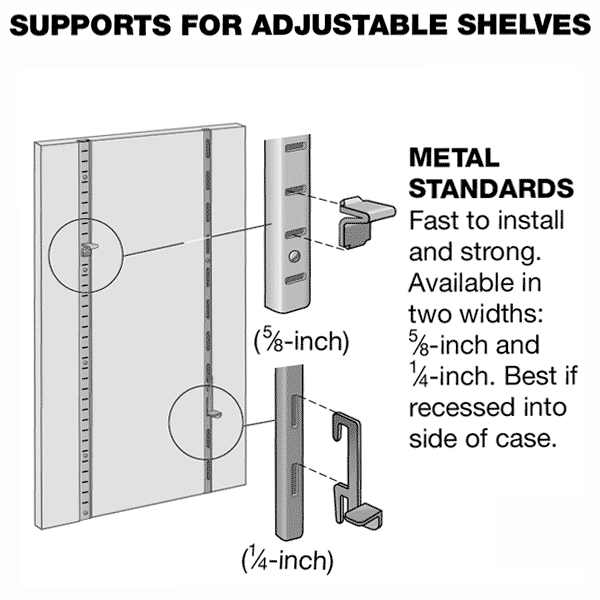
Adding an adjustable shelving system allows you to customize the space between shelves as needed. This flexibility means you can incorporate items of varying sizes, from small paperbacks to large art books or heirlooms.
Use metal shelf pins or tracks so that you can make easy adjustments without compromising the bookcase’s structural integrity.
Incorporating Drawers and Cabinets
Adding drawers and cabinets to the lower portion of your built-in bookcase allows you to house office supplies, electronics, or personal items. We like using soft-close hardware to prevent slamming.
How To Build a Custom Bookcase
Creating a custom built-in bookcase requires careful planning and execution. While we typically recommend professional installation, understanding the basics of the process can help you make informed decisions about your project.
Planning and Measurement
Begin by taking precise measurements of your space and creating a detailed plan. Think about factors such as electrical outlets, baseboards, and any architectural features that may affect the design. Use these measurements to create a scale drawing or 3D model of your bookcase.
Construction Techniques
How you make the bookcase depends on your chosen materials and the design’s complexity. For a basic bookcase, you’ll typically start by building a frame, attaching it securely to the wall, and then adding shelves and facing. More complex designs may involve custom cabinetry work and specialized joinery techniques.
Finishing Touches
Once the basic structure is in place, focus on the finishing details, such as adding trim, installing lighting, or applying paint or stain. Pay special attention to the edges of the shelves and the overall fit of the bookcase to get a polished, professional look.
Incorporating Lighting Into Built-In Bookcases
Well-planned lighting can highlight key items, add ambiance, and make it easier to view the contents of your shelves.
Types of Lighting
There are a few DIY lighting options we recommend. LED strip lights are popular for their versatility, energy efficiency, and consistent glow. Add puck lights for focused lighting, or recess them into the bookcase for a clean, low-profile finish. You can also install spotlights at the top of the bookcase to create a dramatic effect.
Installation Tips
When installing lighting in your built-in bookcase, plan the electrical layout carefully to get clean lines with minimal visible wiring. Use conduits or trunking to hide wires. You can even integrate automated switches or smart lighting systems that you can schedule or control remotely.
Maintaining Your Built-In Bookcase
Dust shelves weekly with a soft cloth or duster, and maintain wood finishes by periodically applying wood cleaner and polish. Check for any signs of sagging or damage, especially on heavily loaded shelves, and address issues promptly to prevent further damage.
