
Project details
Skill
Cost
Estimated Time
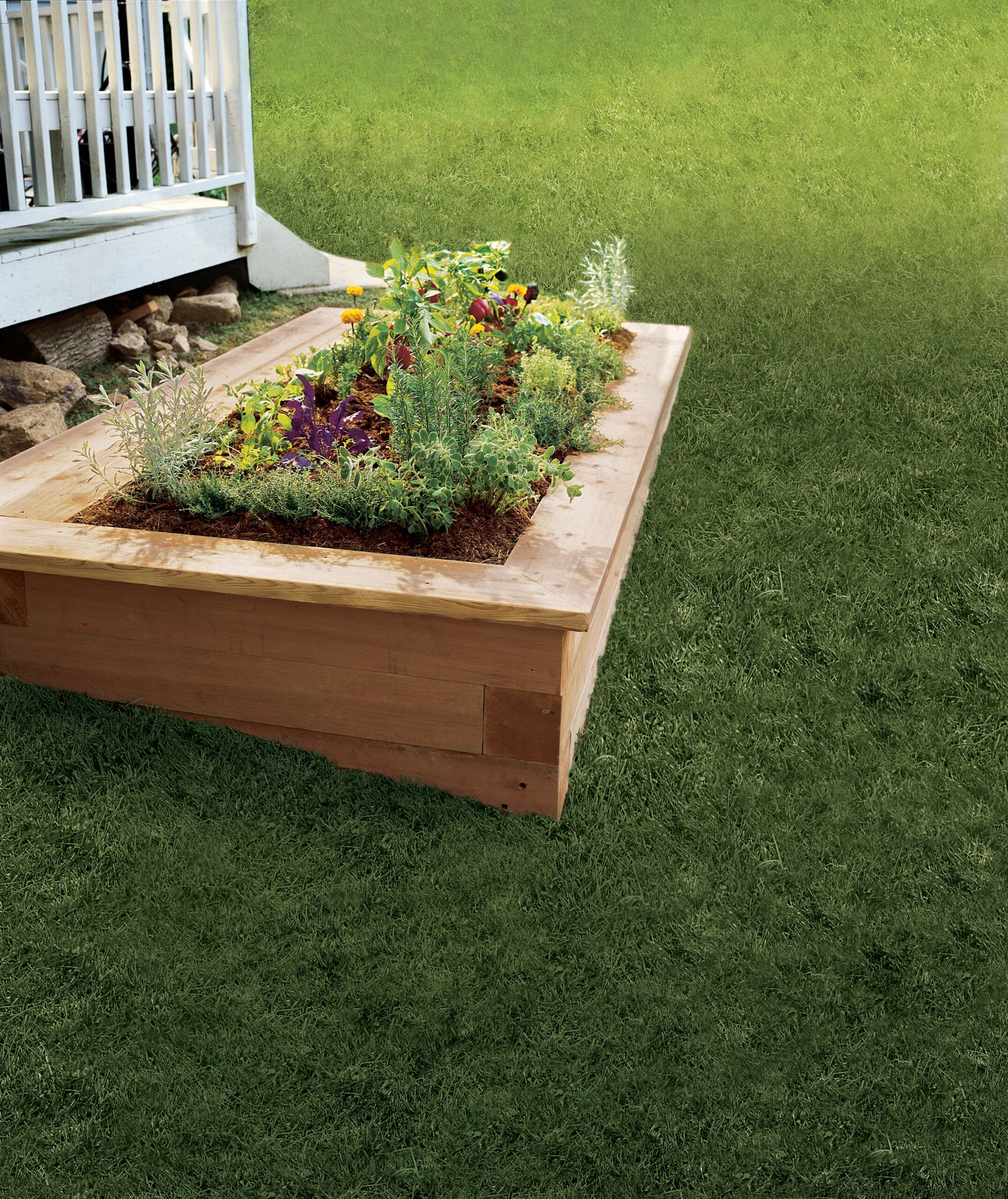
A raised planting bed is a great option for gardeners facing challenging soil conditions or wanting an easier way to tend to plants. Installing one in your garden can improve growing conditions and enhance the look of your landscape. In this step-by-step guide, we’ll explain how to build a raised planting bed and create a customized space for your plants.
Raised Planting Bed Overview
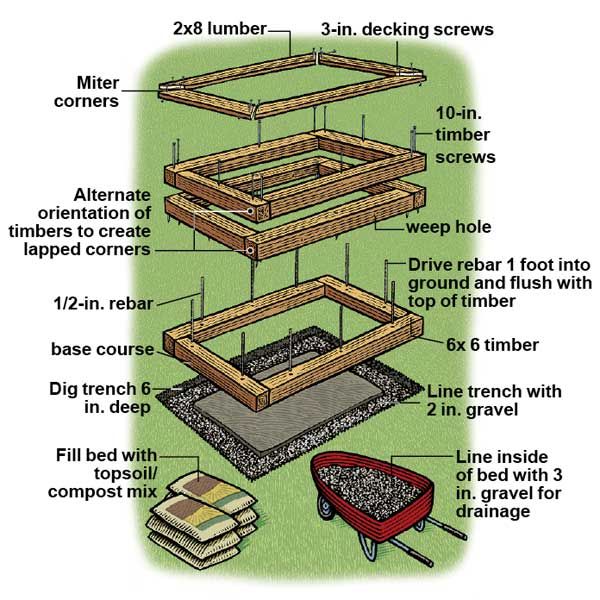
You can construct a raised garden bed in any sunny, level area of your yard. If your chosen spot has a slight slope, you may need to excavate it to create a level surface.
The size of your lumber will determine the number of pieces needed for the project, with larger timbers requiring fewer pieces overall. Cedar and redwood are popular choices because of their natural weather resistance, while pressure-treated lumber is a more budget-friendly option.
When planning your raised bed, consider its dimensions. Roger Cook, a landscape contractor for This Old House, advises, “It should rise at least a foot off the ground—this gives the plant roots room to grow and gives the gardener’s back a break.” Keep the width four feet or less, allowing easy access to the center from either side. The length can vary, but with 6×6 timbers, it’s best not to exceed 10 feet to avoid excessive weight.
Materials for Building a Raised Planting Bed
Before starting your project, gather the following tools and materials:
- Circular saw
- Construction adhesive
- Drill or driver
- Framing square
- Garden hoe
- Gravel
- Hacksaw
- Hammer
- Handsaw
- Level
- Rebar
- Sledgehammer
- Soil and topsoil
- Spade or square-edged shovel
- Timbers and timber screws
- Trenching shovel
- 3/8-inch copper pipe
Guide To Building a Raised Planting Bed
From preparing the location of the raised beds to the construction, here’s everything you need to know about building a raised planting bed at home.
Mark the Bed’s Outline
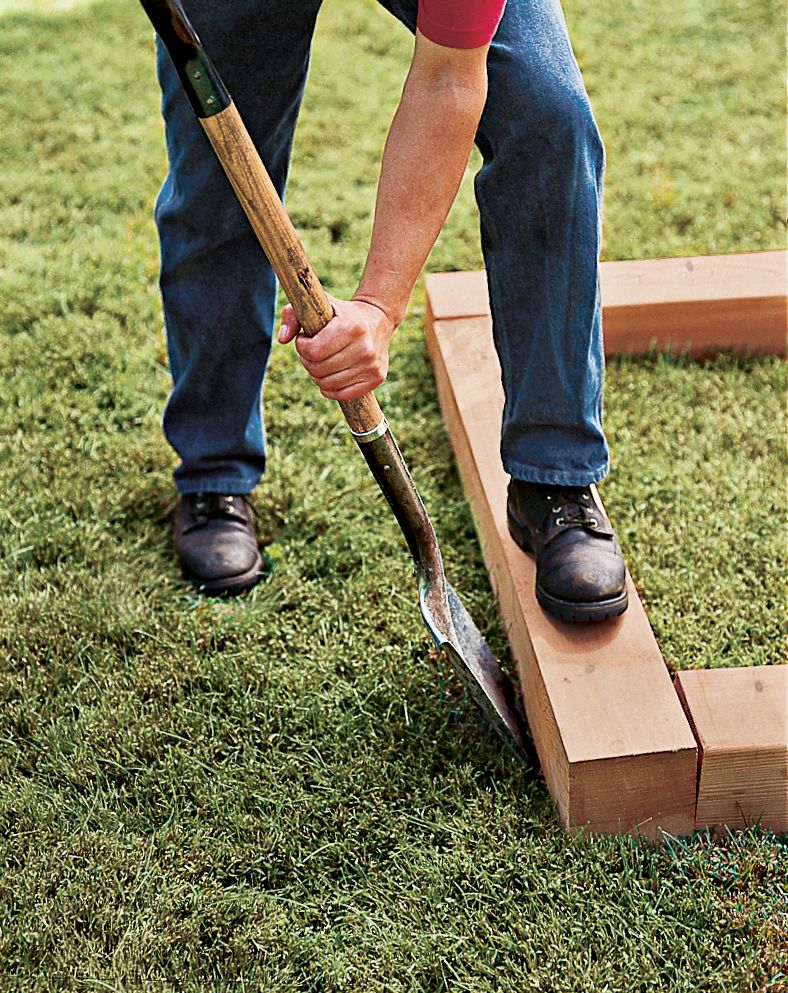
Begin by measuring the dimensions of your raised bed. Remember that the timbers are the corners that will rub against each other end to side, so subtract 5.5 inches (the actual width of a 6×6) from the length of each side when cutting your timbers. Using a circular saw and handsaw, cut 12 timbers to the correct lengths.
Clear the area where you plan to build, removing any leaves and debris. Arrange four timbers in the outline of your planned bed, making each timber’s end meet the side of the next. Use a spade or square-edged shovel to mark the bed’s perimeter, cutting vertically through the turf both inside and outside the loose-laid timbers.
Dig Trenches for the Walls
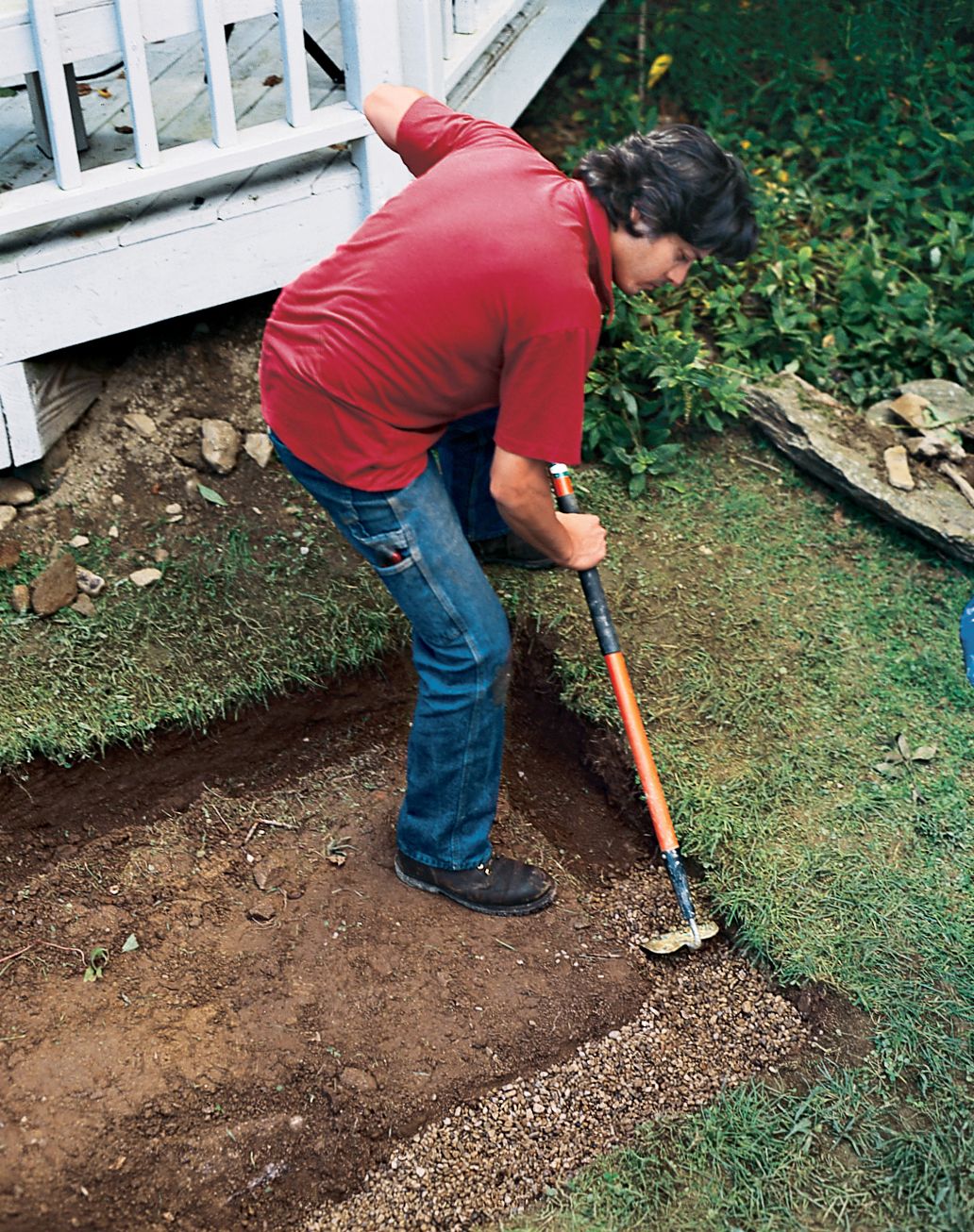
Remove the timbers and use a spade to clear the turf within the lines you’ve marked. Switch to a trenching shovel and dig a six-inch-deep trench following the outline of the timbers. This trench serves as a foundation for your bed’s walls.
To protect against rot, lay a two-inch layer of gravel under the first course of timbers, using a hoe to spread it. This also promotes water drainage and provides a solid foundation for the base of the garden bed.
Set the First Course of Timbers
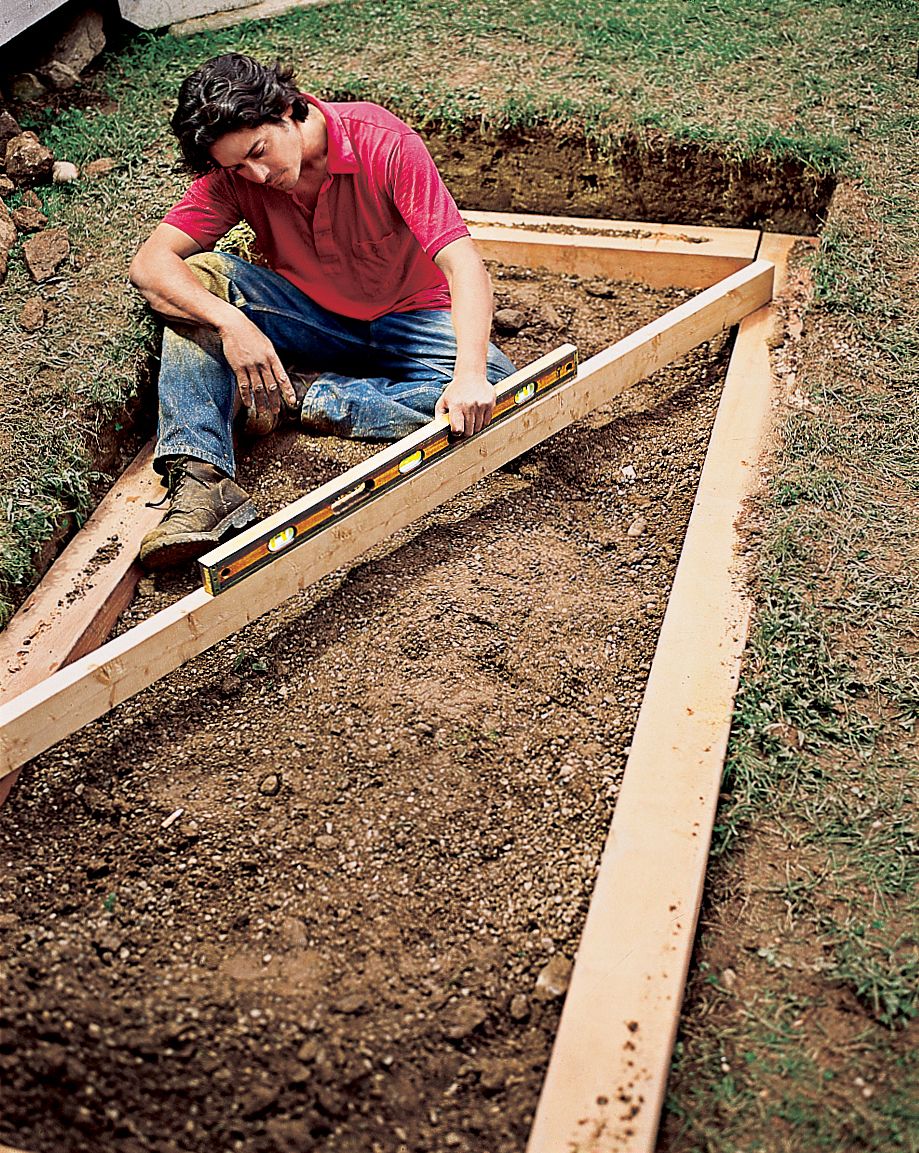
Prepare the base timber by drilling holes through them every two feet using a drill fitted with a 1/2-inch extended spade bit. These holes will secure the timbers to the ground.
Place the timbers in the trenches, making sure all the pilot holes are vertical. Arrange them so the butt end of one timber meets the side of the next in a clockwise pattern. This creates a strong, interlocking planting bed.
Using a four-foot level and framing square, check that the four timbers are level and square. Add or remove gravel as necessary to get a perfectly level base. Place the level on top of a scrap piece of lumber laid diagonally across the timbers to determine that all the corners are level with each other.
Fasten the Frame With Rebar
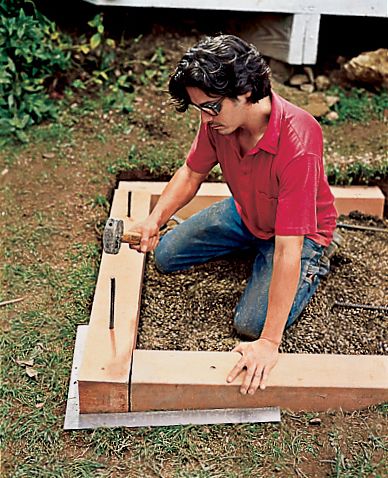
With the base and timbers in place and level, secure them by driving rebar through the pilot holes in the timbers and at least one foot into the ground using a sledgehammer. Continually check that the frame remains level and square.
Hammer each piece of rebar until it’s flush with the top surface of the timbers. Avoid striking the frame itself since this could knock it off balance. Driving the rebars creates a solid, immovable foundation that can withstand inclement weather and the weight of the soil.
If you need to cut rebar to the appropriate length, use a hacksaw to cut halfway through and bend it to break at the cut point, which is usually faster than sawing all the way through.
Assemble the Bed’s Walls
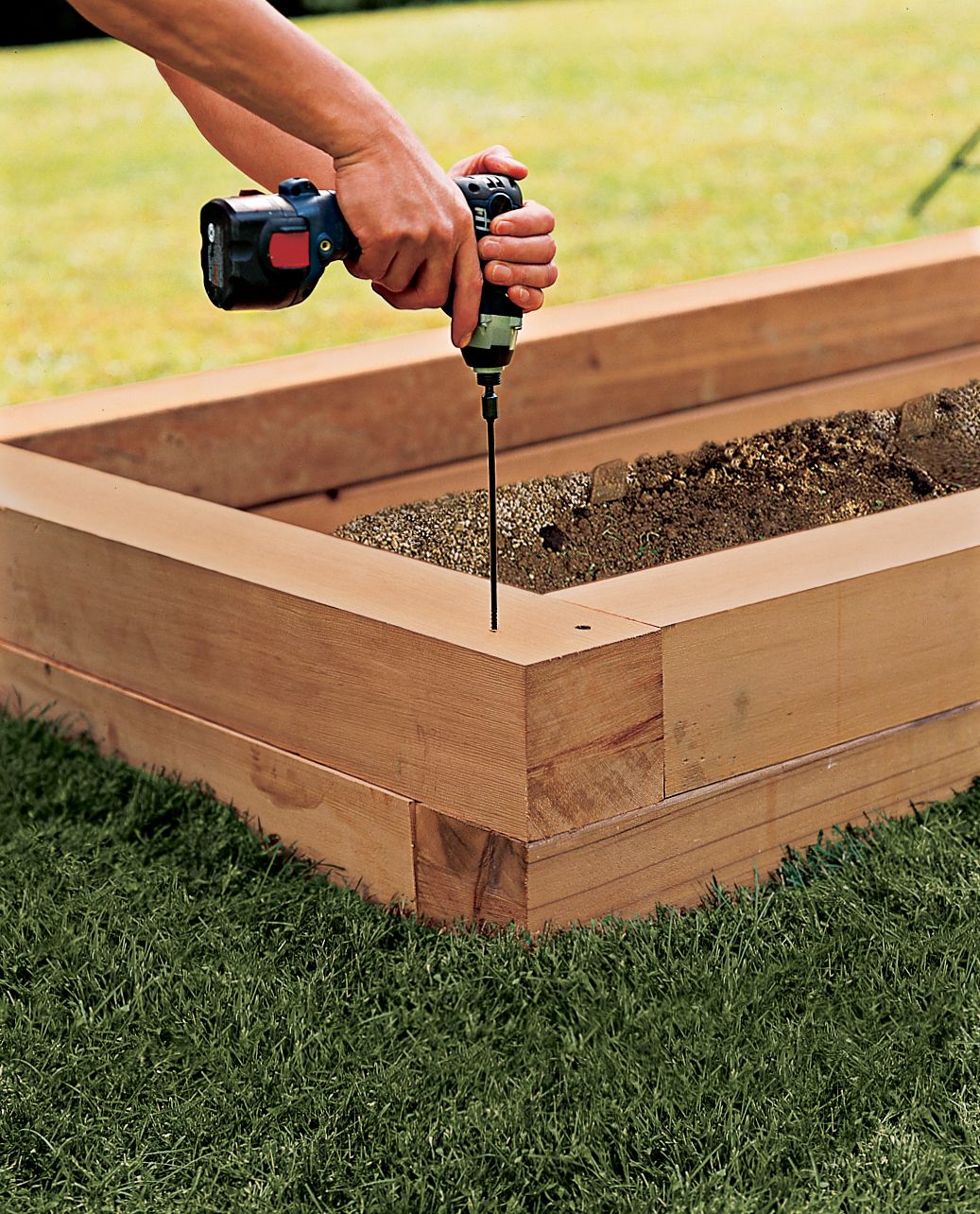
For the second course of timbers, lay them on top of the base course, arranging them counterclockwise. Placing them in the opposite direction of the first course creates an overlapping pattern at the corners for better stability.
Secure the second course to the first one using timber screws. Drive two screws at each corner and one in the center of each side. This method keeps your raised bed walls sturdy and aligned as you keep building upward.
Continue adding courses of timbers until you reach the desired height for your raised bed. Check that each course is securely fastened to the one below to maintain good stability of the structure over time.
Drill Weep Holes
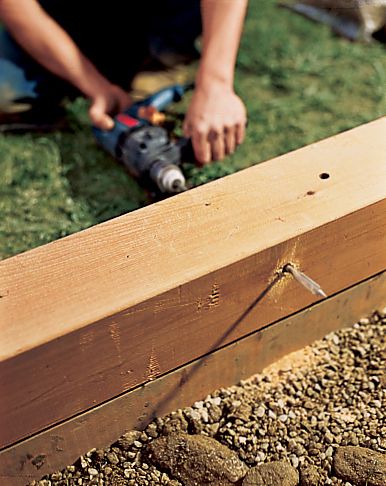
Weep holes are small openings in walls, foundations, and other structures that allow water to drain. Proper drainage is important for the health of your plants and the longevity of your bed. Using an extended 1/2-inch spade bit, drill weep holes through the second course of timbers every four feet. To maintain a neat appearance and provide good drainage, drill from the outside in and angle the bit slightly upward.
After drilling the weep holes, lay the third course of timbers clockwise on top of the second, again overlapping at the corners. Fasten this course to the one below using timber screws, following the same pattern as before.
To protect the weep holes and make them easier to clean if they clog, insert 3/8-inch copper pipe into each hole. This addition can extend the functionality of your drainage system and prevent soil from blocking the holes.
Install the Cap Railing
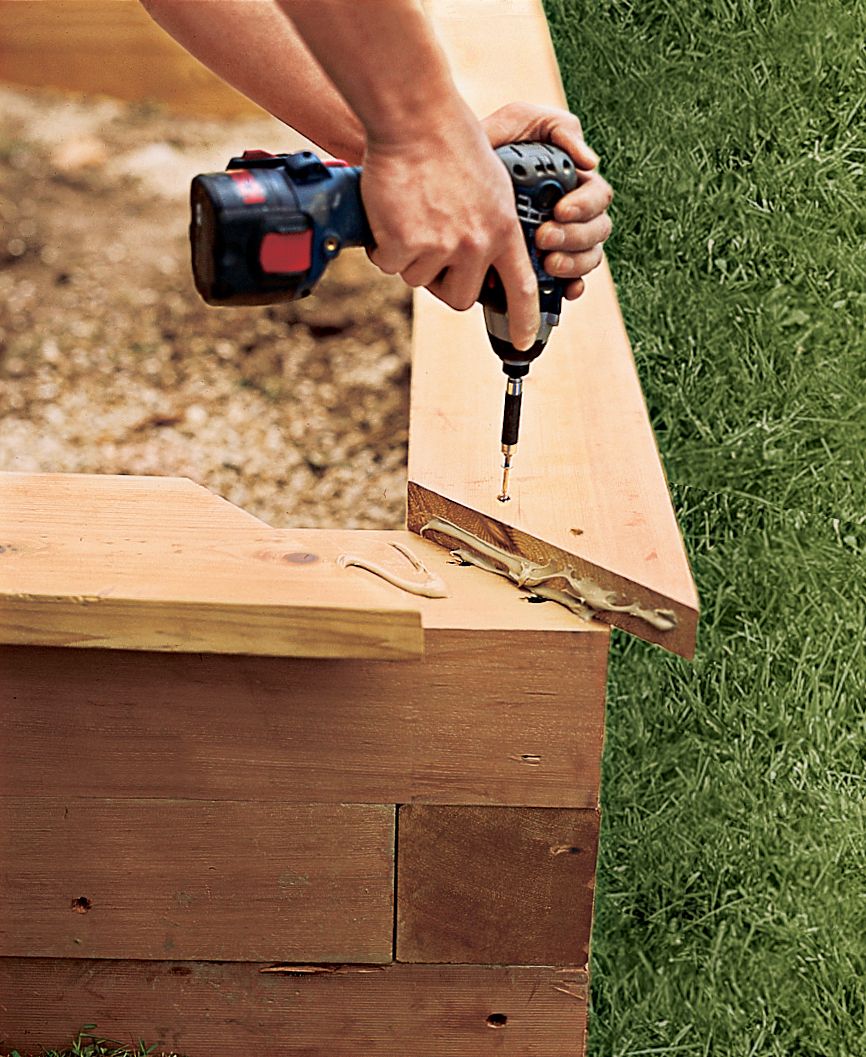
A cap railing adds a finished look to your raised bed and provides a comfortable place to sit while gardening. Start by laying a 2×8 board on top of one wall, aligning it with the inside edge. Mark where the board meets the inner corners and use a speed square to extend this mark at a 45-degree angle outward.
Cut the ends of the board at the 45-degree miters using a circular saw guided by the square. Repeat this for the other three sides of the bed until you have a frame of 2x8s that sits flush with the inner edge of the bed and extends two inches over the outer edge.
Apply construction adhesive along the top of the timbers and on the boards’ mitered edges before installing them. Secure the boards to the timbers with three-inch decking screws every 12–16 inches. For added stability at the corners, drill a horizontal pilot hole through the rails’ edge and across the mitered corner, then drive a three-inch screw into the joint.
You can also paint or stain the cap railing if you want to match your outdoor space. This can improve the aesthetics of your raised bed and contribute to its durability.
Fill the Bed
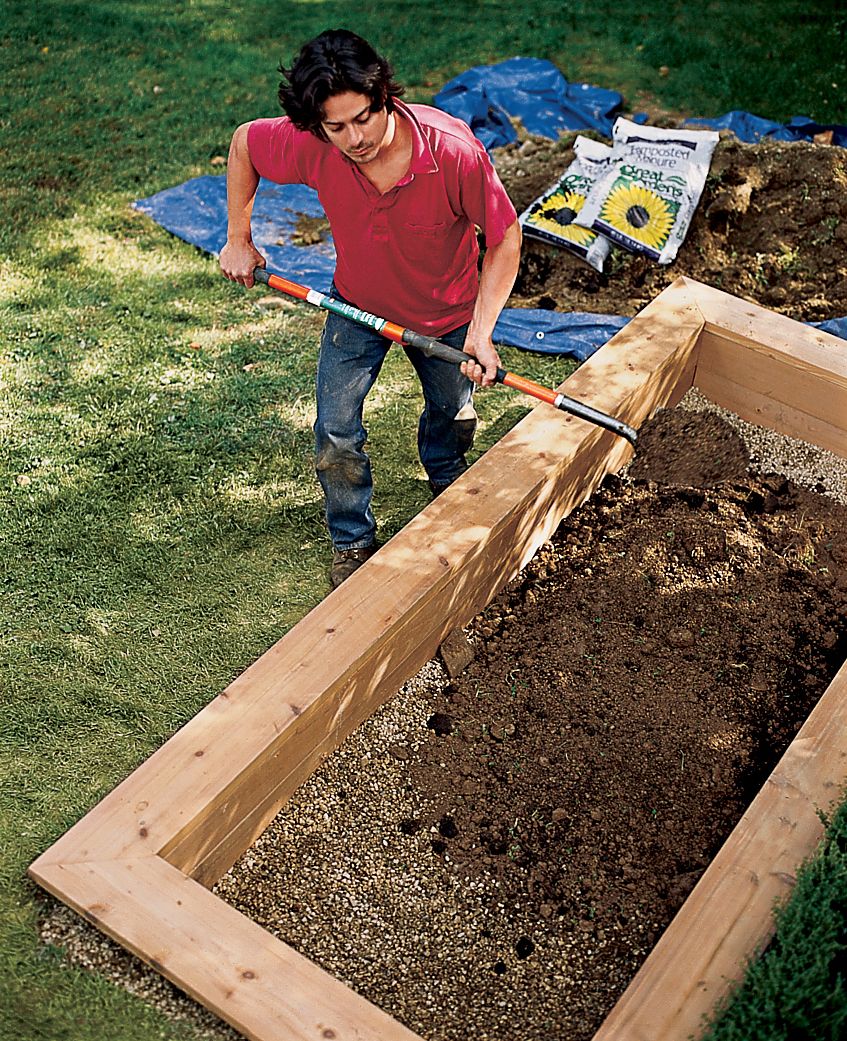
With the structure complete, you can prepare your bed for planting. Start by adding a three-inch layer of gravel across the bottom of the bed, smoothing it with a hoe. This layer allows for better drainage and helps prevent soil compaction.
Next, fill the bed with high-quality topsoil—this topsoil should crumble easily between your fingers and feel gritty. Add the soil in layers, tamping it lightly every six inches to reduce settling. Continue until the soil level is within two to three inches of the top of the bed. This extra space allows room for mulch and prevents soil from washing out during watering or rain.
Finally, rake the soil to create an even planting surface. Consider using organic matter, such as compost, aged manure, or peat moss, for the soil. Over time, these materials will improve soil structure and fertility, providing the best-growing conditions for your plants. After this step, you can fill your raised bed with your favorite vegetables, herbs, or flowers.
