Project details
Skill
Cost
Estimated TIME
Richard Trethewey and Nathan Gilbert team up to help a homeowner create space for and install a dishwasher. Richard received an email asking for help installing a dishwasher in a 1950s-built home. Installing a dishwasher can be a straightforward job but if the kitchen has never had a dishwasher before, cabinetwork will need to be done. Richard gets some help from Nathan to tackle the project.
Steps for Retrofitting a Dishwasher
Step 1: Start by making measurements
- Make a mark on the countertop where you’ll cut away from the sink and/or countertop.
- Make marks where you would like to cut your opening on the cabinet.
Step 2: Remove the countertop
- To get a precise cut you’ll need a framing square and a scrap piece of wood. Square up the wood to the line you marked on the countertop.
- Screw the wood to the countertop
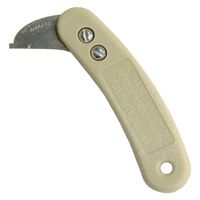
- Use a laminate scoring knife for a preliminary cut using the wood as guidance.
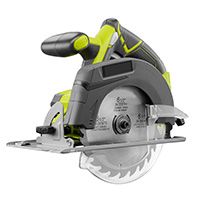
- Use a circular saw to cut an ⅛ to ¼ inch away from the line made with the scoring knife.
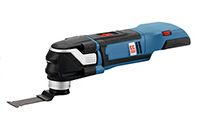
- Use an oscillating saw to cut the parts the circular saw cannot reach.
Step 3: Remove the cabinets
- Nathan used a similar process to get the cabinets out as he did the countertop. Using the scrap wood to make a line and a circular saw and oscillating saw to make the cuts.
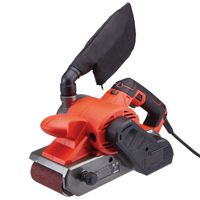
- Clean up the sides with a belt sander to make a smooth, clean line for the new countertop and dishwasher to go.
- Make sure the measurements of the new dishwasher will fit in the space you have available, looking at the depth and height.
Step 4: Connect the dishwasher
- Shut the water supply off.
- Replace the hot water valve with an angle stop dishwasher supply valve. This valve has a horizontal connection for the dishwasher and a vertical connection to go back up the faucet.
- Replace the tailpiece of the sink with a branch tailpiece. This tailpiece allows for somewhere to connect the drain from the dishwasher. There’s usually already an outlet in a garbage disposal for this connection, but since the homeowner didn’t have one, Richard installed the tailpiece instead. This is simply a threaded connection that can be hand tightened in place.
- Slide the dishwasher into place and make these connections:
1. Drain line into the tailpiece.
2. Waterline into the supply valve.
3. Power cord into the outlet. The homeowner already had an outlet in the back of the cabinet, which makes the installation easier. - Turn the water back on and test all the connections.
- Cut and sand the butcher block to the size of your countertop. Add clips to secure the dishwasher to the underside of the countertop.
- Add silicone caulk around the edges of the countertops and wall surrounding the area where you’ll be placing the butcher block. Place the butcher block in position.
- Screw the top cover of the dishwasher to the bottom of the new countertop with screws. Apply a finish to the countertop. Nathan recommends a mineral oil, as it is food safe.
- For countertops, 2-3 layers should be adequate before any use. After that, you should reapply every month.
Resources
Richard installed a 55 dBA in Stainless Steel Front Control Built-In Dishwasher with Steam Clean by GE Appliances. To connect the dishwasher, Richard used a standard dishwasher hose, a Y tailpiece for the drain, and a push connect shutoff valve, all of which can be found at home centers and plumbing supply houses.
To adjust the cabinets to make room for the dishwasher, Nathan used a variety of tools, including a circular saw and a reciprocating saw, that can be found at most home centers.
To bridge the gap between the Formica countertops and the sink, Richard actually re-used an old piece of butcher block that he salvaged from the Newton Generation NEXT House, but butcher block can also be found at The Home Depot.
Expert assistance with this segment was provided by William C Gilbert Carpentry.
Shop Dishwashers at The Home Depot