
Project details
Skill
Cost
Estimated Time
Q: The electrician who put in new light switches left gaping holes in our lath-and-plaster walls. How should we fix them?
– Daniel and Lauren herlocker, Brattleboro, VT.
A: Retrofit work by clueless electricians is the number one cause of damaged plasterwork these days. But it’s easy to make the damage disappear for good if you use good techniques and the right materials.
What’s the wrong material? So-called patching plaster sold at home centers. It’s much harder than the wall’s original plaster, and it sets in the blink of an eye. A softer, slower-setting lime-based plaster, like the one I developed for Big Wally’s line of plaster-repair products, takes about an hour to set, isn’t prone to cracking or delaminating, and needs no sanding, which keeps dust to a minimum. Just follow the steps on the next page, and your electrician’s less-than-handiwork will be history.
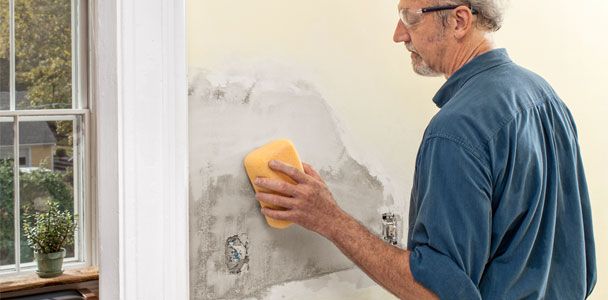
Pictured: Rory Brennan uses a damp sponge to smooth the final coat on a plaster patch.
Step 1
Fix the Lath
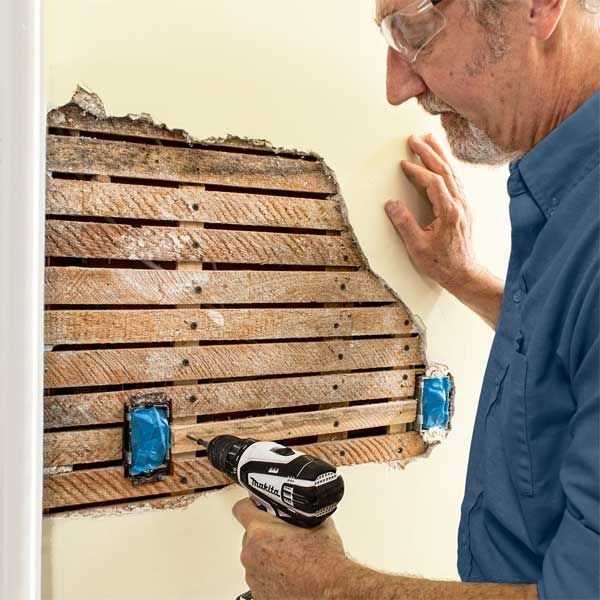
Replace any missing lengths of lath, and refasten all loose pieces. Use drywall screws, and always drill pilot holes to avoid splitting the wood. If there’s no stud to anchor a lath end, slip a piece of lath into the cavity and screw it to the back of the existing ones, parallel with the studs. Then you can screw new or loose lath to it, as if it were a stud.
Step 2
Stabilize the Wall’s Edge
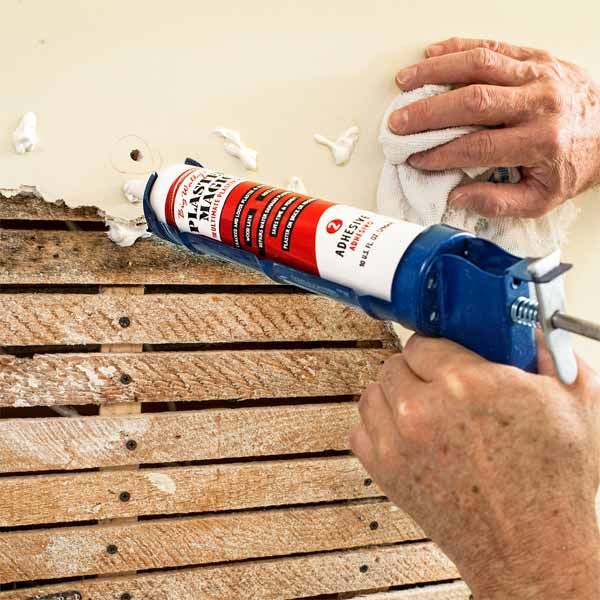
Using a 3/16-inch masonry bit, drill holes every 3 inches around the damaged area, about 1 inch from the edge. Drill until the bit hits the lath. If it misses, pencil a mark by that hole. Vacuum the holes and spray them with plaster conditioner. Wait 15 minutes, then fill all unmarked holes with a squirt of plaster adhesive. Wipe off the excess with a damp rag.
Step 3
Wet the Substrate
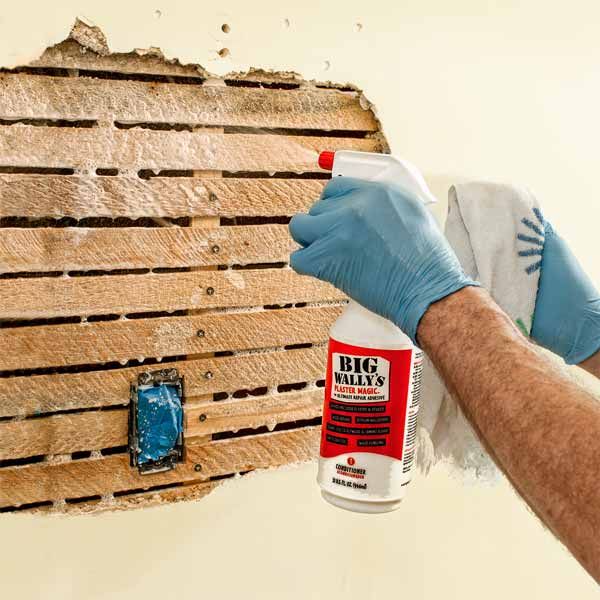
Dry lath and the exposed plaster edge will suck water out of wet plaster before it has a chance to harden. To prevent this, saturate those surfaces with conditioner. Wipe up any drips or overspray with a damp rag. Wait until the conditioner dries—about 20 minutes—before going to Step 4.
Step 4
Apply the Scratch Coat
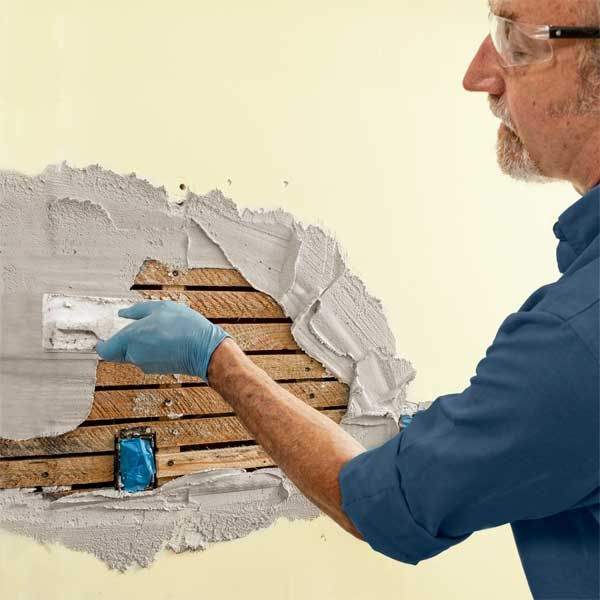
In a clean bucket with cool tap water, mix Plaster Magic patching plaster to the consistency of natural peanut butter. Using a margin trowel, smear the mix against the old plaster edge, as shown, and over the lath. Keep this layer recessed by half the thickness of the original plaster. Rough up the patch by scratching it with a scarifier, then scrape any blobs off the wall.
Step 5
Trowel on the Second Coat
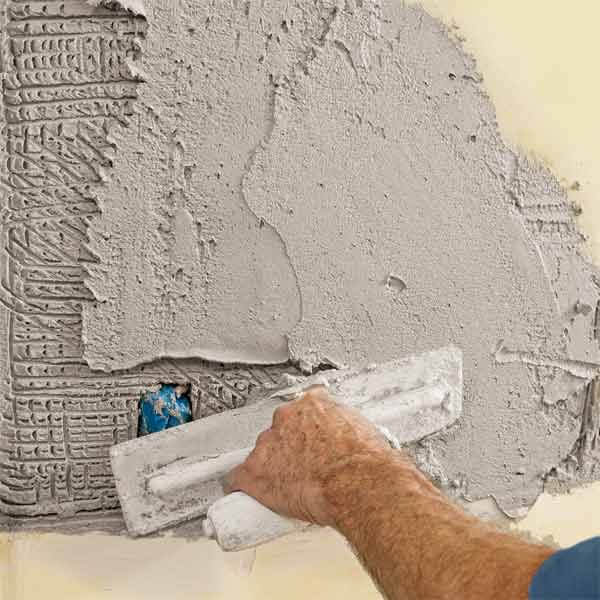
Wait until the scratch coat is firm to the touch—about an hour—then mix up a new batch of plaster to a slightly thinner consistency—closer to that of buttercream frosting. Use a plastering trowel to smooth the mix flush with the wall surface; scrape any excess off the wall. Wait another hour for that coat to set.
Step 6
Smooth the Top Coat
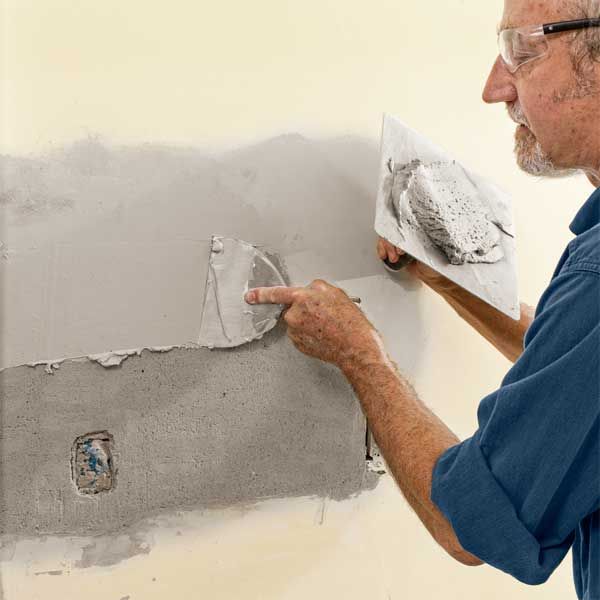
Using a 6-inch taping knife, scrape the patch area smooth, and cover the patch with a thin layer of ready-mix joint compound. Let dry overnight. Gently scrape it smooth and apply a second coat. On the third day, spread another coat, and after it dries, smooth it gently with a damp sponge. The patch is now ready to prime and paint.
