
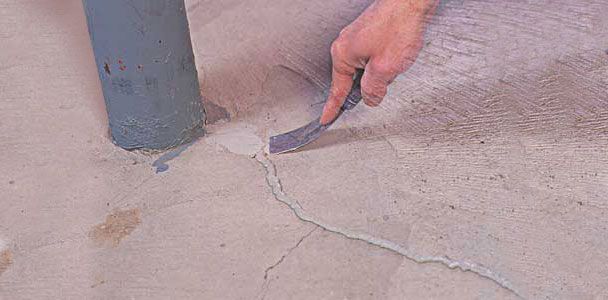
Concrete cracks range from minor hairline fractures to more serious structural problems. Some of them are purely cosmetic, but others can compromise your foundation’s integrity and allow groundwater, insects, and radon gas in. We’ll show you a simple and effective way to patch cracks with concrete crack filler.
Types of Concrete Cracks
Concrete cracks can occur for various reasons. Here are a few kinds you might see:
- Hairline cracks: These are thin, superficial cracks that are typically less than 1/8 inch wide. They can result from freeze-thaw cycles or stress from heavy weight, and typically don’t affect structural integrity. Addressing them quickly can prevent water infiltration that can worsen them.
- Crazing: Crazing occurs when concrete dries before it can fully cure. It commonly appears as a spiderweb pattern.
- Settlement cracks: These cracks develop when the ground beneath the concrete shifts or settles unevenly.
- Structural cracks: Wider and deeper structural cracks that may indicate more serious issues, such as tree roots or an unstable foundation.
Preparing for Concrete Crack Repair
Proper preparation is key to a long-lasting repair. Before applying any filler, scrub the area clean of any loose concrete, paint, or crack filler with a wire brush and vacuum. The repair material will adhere better to clean concrete.
Accurately measure the crack’s width and depth to determine how much filler you need. If the crack is wider than 1/4 inch or extends through the entire slab, consulting a professional for the repair might be better.
Fixing Small Concrete Cracks
For minor cracks, homeowners can often make repairs themselves using readily available products. These methods are affordable and convenient for small-scale issues.
Using Concrete Caulk
Concrete caulk is used for mild hairline cracks or horizontal surfaces that don’t bear significant weight. Apply it with a caulk gun and smooth it down with a putty knife. Then, let it cure according to the manufacturer’s recommendations.
Applying Epoxy Filler
Epoxy filler provides a strong and durable repair for small to midsize cracks, especially for vertical surfaces. Mix the epoxy according to the manufacturer’s instructions, then use a putty knife to apply it to the crack. Smooth the surface and let it fully cure before walking on or applying load to the area.
Fixing Large or Deep Concrete Cracks with Injection Ports
The injection port method is an effective way to repair large and deep concrete cracks. It involves both surface-level sealing and injecting filler deep into the crack.
Cleaning the Cracked Area
Before you start, check to make sure the crack is dry. If it’s slightly damp, dry it with a blow-dryer and wait 15 minutes. If it remains dry, proceed with the repair. However, if the dampness returns, water is still seeping into the crack, and you’ll have to wait for it to dry out on its own.
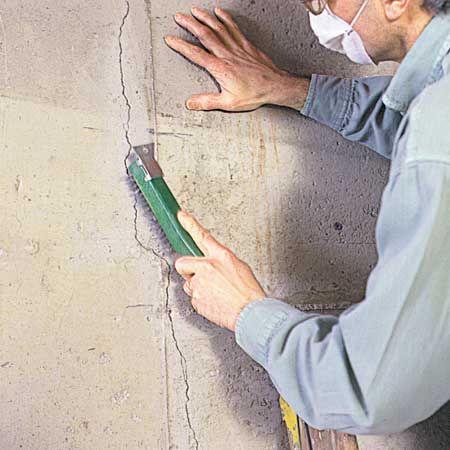
First, scrub the crack clean of loose concrete, paint, or old crack filler using a wire brush. Remove all dust and debris with a shop vacuum.
Blocking Out Injection Ports
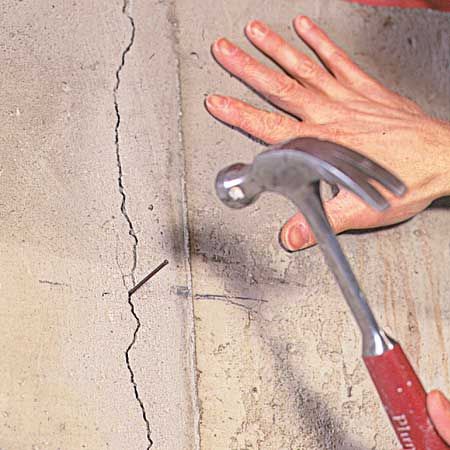
Tap 3-inch finishing nails partway into the crack, spaced 1 foot apart. You’ll use these nails to align the injection ports with the crack.
Preparing the Sealer
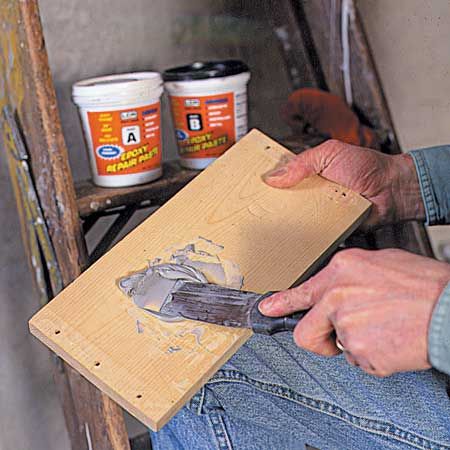
Once the nails are in place, start preparing the sealer. Strong epoxy sealers for large cracks may come in multiple parts that you need to mix together. Using a putty knife on a scrap board, blend the parts together until you get a uniform gray color.
Attaching the Injection Ports
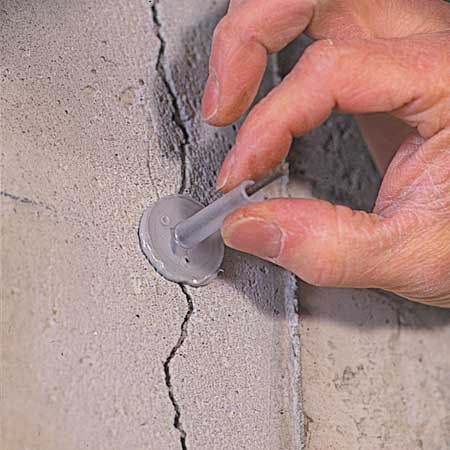
Spread some sealer onto the base of one of the injection ports, but don’t plug its hole. Slide the port over one of the nails sticking out of the crack, then press it to the wall. Repeat for the other ports.
Sealing Along the Crack
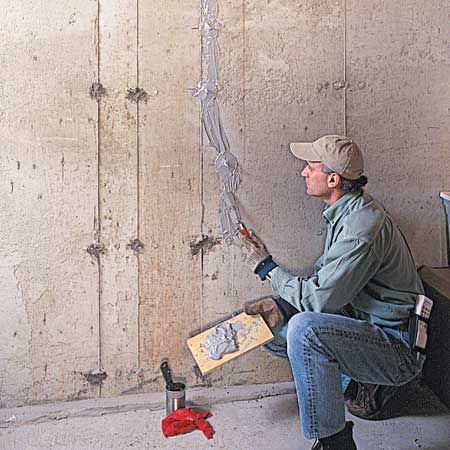
Apply sealer to the entire crack using a putty knife or margin trowel. Spread the sealer about 1/8 inch thick and 1 inch on either side of the crack. You should also cover each injection port’s flange so just the extended neck portion shows. Smooth the sealer and feather its edges with a paintbrush dipped in mineral spirits.
If the other side of the wall is accessible, check to see if the crack goes through and apply sealant as necessary. Let the sealant cure for 6–10 hours before proceeding.
Injecting the Epoxy into the Crack
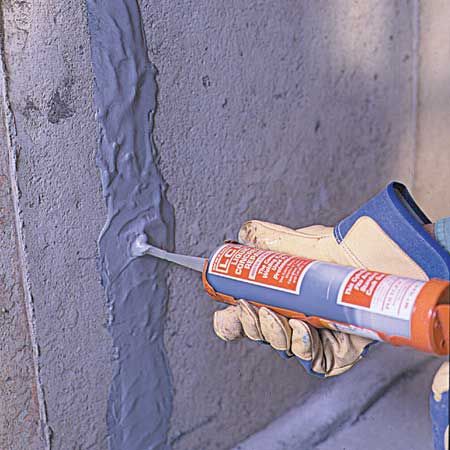
You’ll need a concrete epoxy in tube form for this next step. Thoroughly mix it using the included plunger rod, then load the tube into a caulk gun. Start injecting epoxy at the lowest port, and continue to squeeze the trigger until you see epoxy coming out of the next highest port.
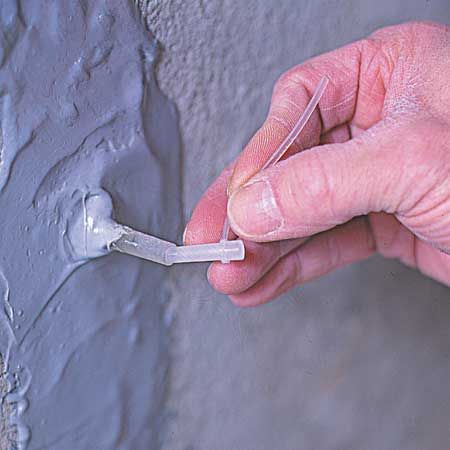
Remove the gun and plug up the port. Then, insert the cartridge tip into the oozing port and inject epoxy into it.
Repeat this for the remaining ports, plugging each one up before proceeding to the next one.
Cutting Away the Injection Ports
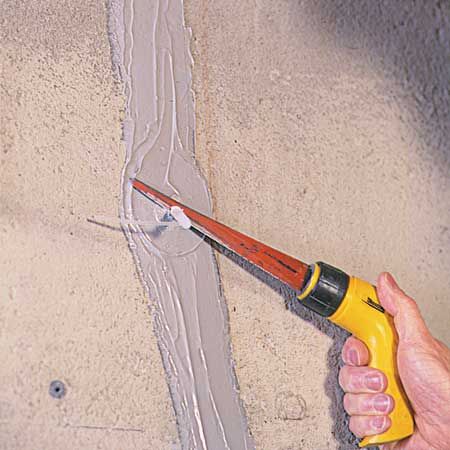
Let the epoxy you injected cure for 5 days, then cut off the necks of the ports with a hacksaw. For cosmetic reasons, you might prefer to patch the severed ports with some crack sealer.
When To Call a Professional for Concrete Cracks
You can take care of many concrete cracks yourself, but some require professional expertise. If you see any of the following signs, call a local concrete or foundation repair company:
- The area has an extensive network of cracks.
- The crack is wider than 1/4inch.
- The crack keeps growing over time.
- The foundation crack is in a load-bearing wall, making it dangerous to repair on your own.
- The foundation crack is in a retaining wall.
- Water is seeping through the crack.
- Your doors or windows don’t close properly, which could signify a structural shift.
Preventing Future Concrete Cracks
Taking proactive measures can help prevent new cracks from forming and existing ones from worsening.
Proper Concrete Maintenance
Regular maintenance can extend your concrete’s life span. Follow these tips:
- Avoid using de-icing chemicals on concrete during winter. Instead, use sand.
- Clean spills promptly to prevent staining and chemical damage.
- Promptly address drainage issues around concrete structures to avoid water accumulation.
- Seal concrete surfaces every 2-3 years to protect against moisture.
Addressing Underlying Issues
To prevent cracks in the future, address any underlying issues that might cause them. You might need to do the following:
- Ensure your yard is appropriately graded to direct water away from concrete structures.
- For future projects, consider using reinforced concrete for high-stress areas.
- If tree roots add pressure to the concrete, consider installing root barriers.
- Improve soil drainage around the foundation to prevent water buildup.
Our Conclusion
Fixing concrete cracks early can prevent more serious structural issues and water damage. While you can fix many small cracks yourself, larger or more complex ones may need professional help. Ultimately, prevention is key to keeping concrete structures safe and long-lasting.
