
Project details
Skill
Cost
Estimated Time
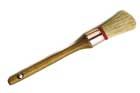
 Glazing paintbrush – round bristle
- Stiff bristle brush
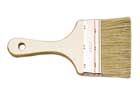
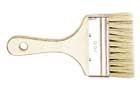
- Spalter brushes
- Spalter brush

Introduction
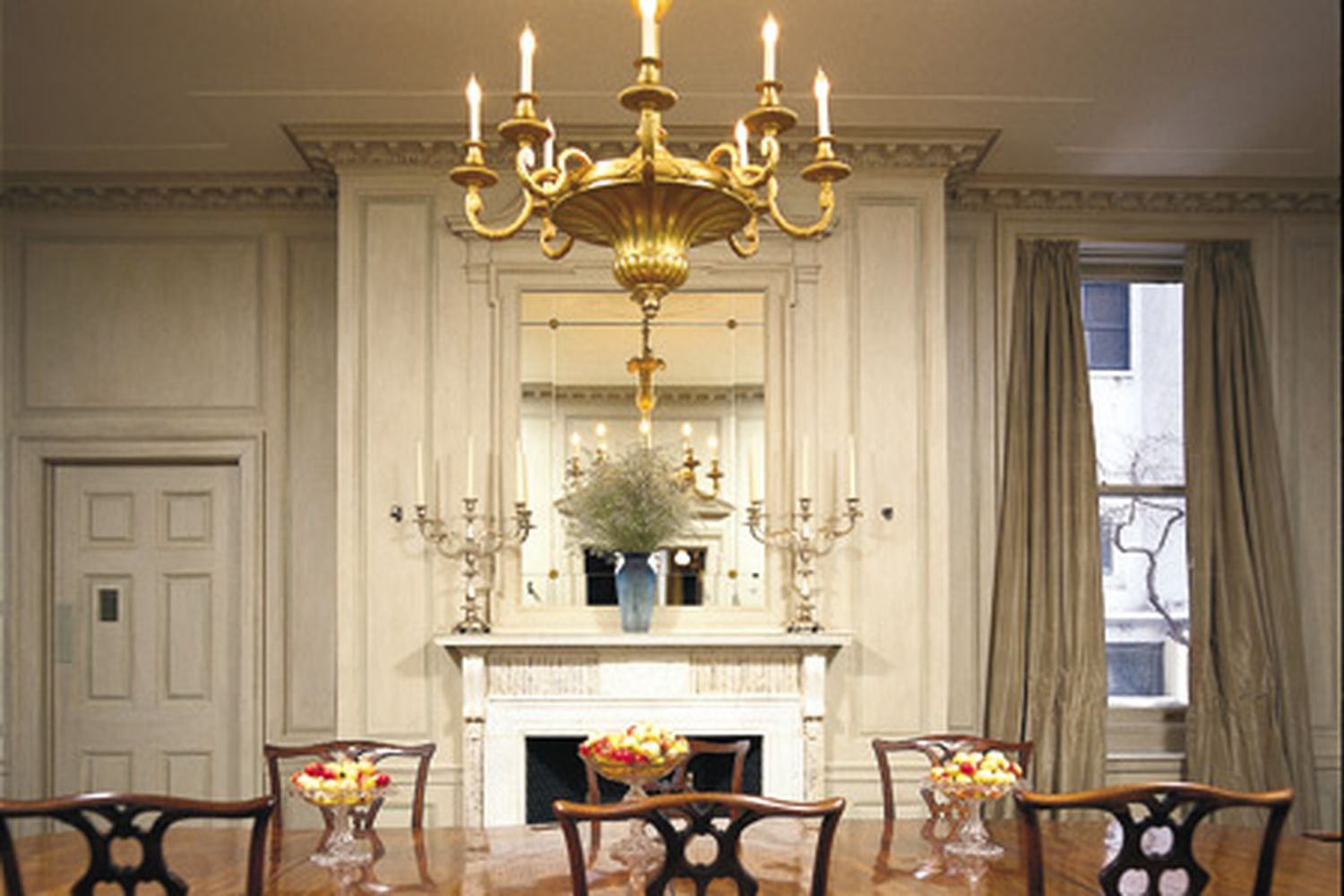
Before rollers and latex, paint was a thick emulsion that went on with tedious brushing. Bristle marks were often visible, and they became more prominent as years and dirt accumulated. The strie technique mimics the look of centuries-old paint altered by dust and sun. It’s best used on paneling or other woodwork; in white, it’s perfect for creating French country kitchen cabinets.
Finkelstein creates the effect by layering coats of glaze tinted a base color onto a paneled wall; each layer darkens the surface. Then he runs a brush through the glaze to create bristle marks that reveal the lighter base. He accents the most recessed section of the panel with a second glaze in a related color..
Getting Started
The secret to decorative painting is glaze, a transparent coating that’s tinted and applied over a painted wall. Glazes come in latex (water-based) and alkyd (oil) formulas. Finkelstein recommends the latter for its longer working time. Note, however, that alkyd glaze requires an alkyd base coat, and cleanup means mineral spirits or turpentine.
Glazes are sold untinted, so to get the color you want you’ll need to add pigment. Many paint stores will sell you small amounts of the pigments they use to tint paint separately; for as little as $5 you should be able to purchase enough to tint a gallon. To get the color right, fill a small bucket with glaze and add pigment drop by drop. Make sure your base paint and all glazes are thoroughly mixed and that you try them out together on a test piece of primed drywall before you begin.
Step 1
Apply Glaze
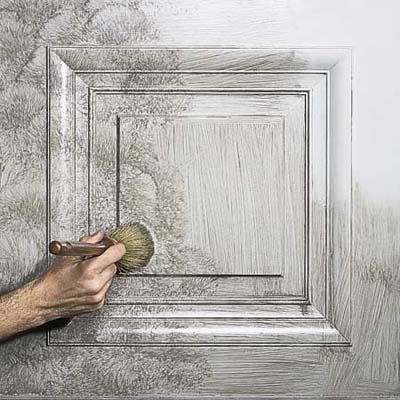
•Paint the panel with the base color and allow to dry.
•Using a glazing brush, spread a coat of glaze tinted the base color onto the panel.
•Go back over the glaze, moving your wrist in an X pattern to break up the straight lines and get the glaze in all the crevices.
Step 2
Blend the Brush Strokes
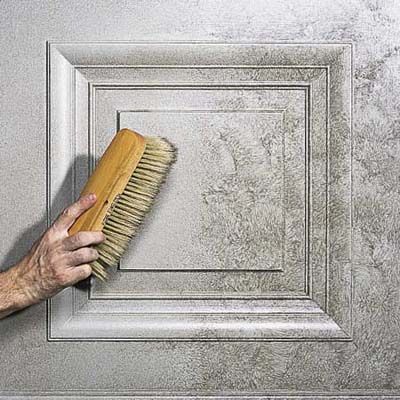
•Remove the brush strokes with a dry stipple brush. Tap from the wrist, at the same time twisting the brush like a dial by raising and lowering your elbow.
•Move slowly across the entire panel, occasionally wiping your brush to keep it clean.
Step 3
Strie the Glaze
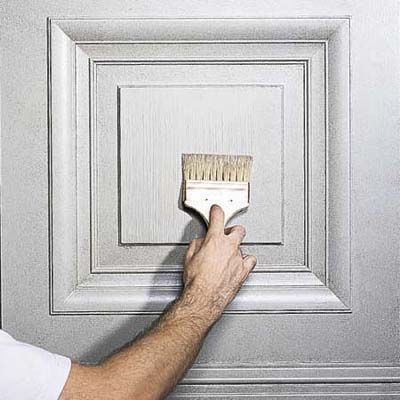
•Make straight lines through the glaze with a toothed brush, following the shape of the panel.
•Move from the shoulder with a locked elbow. For long sections, start at either end and brush toward the middle.
Step 4
Highlight the Panel
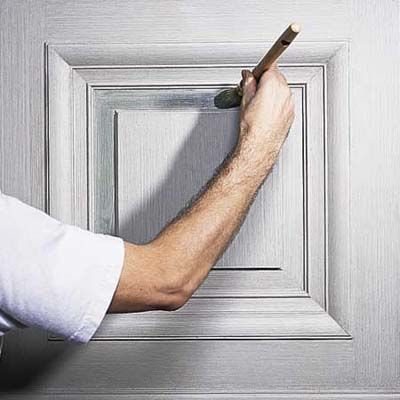
•After the first coat of glaze has dried completely, apply the second tinted glaze to the recessed parts of the paneling with a small glazing brush.
•Strie this section with a narrow toothed brush.
Step 5
Layer On More Glaze
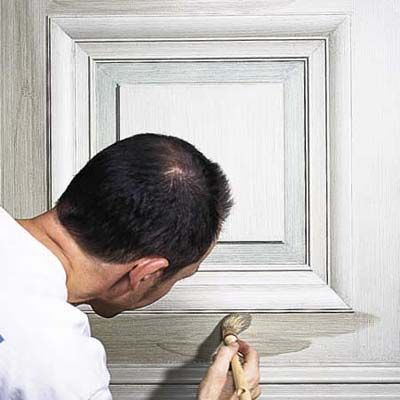
•Paint the rails and stiles with another coat of the first glaze color, using a glazing brush.
Step 6
Strie the glaze
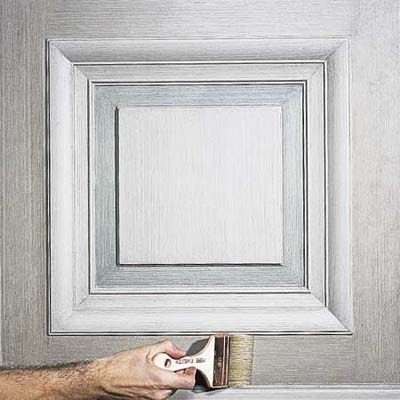
•Using a toothed or regular spalter brush, add brush lines to the second layer of glaze in the same manner as the first layer.
