
Project details
Skill
Cost
Estimated Time
 Stiff bristle brush
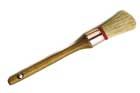
- Glazing paintbrush – round bristle
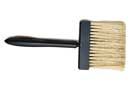
- Chalk paint brush – wide-bristle
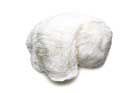
- Cheesecloth

Introduction:
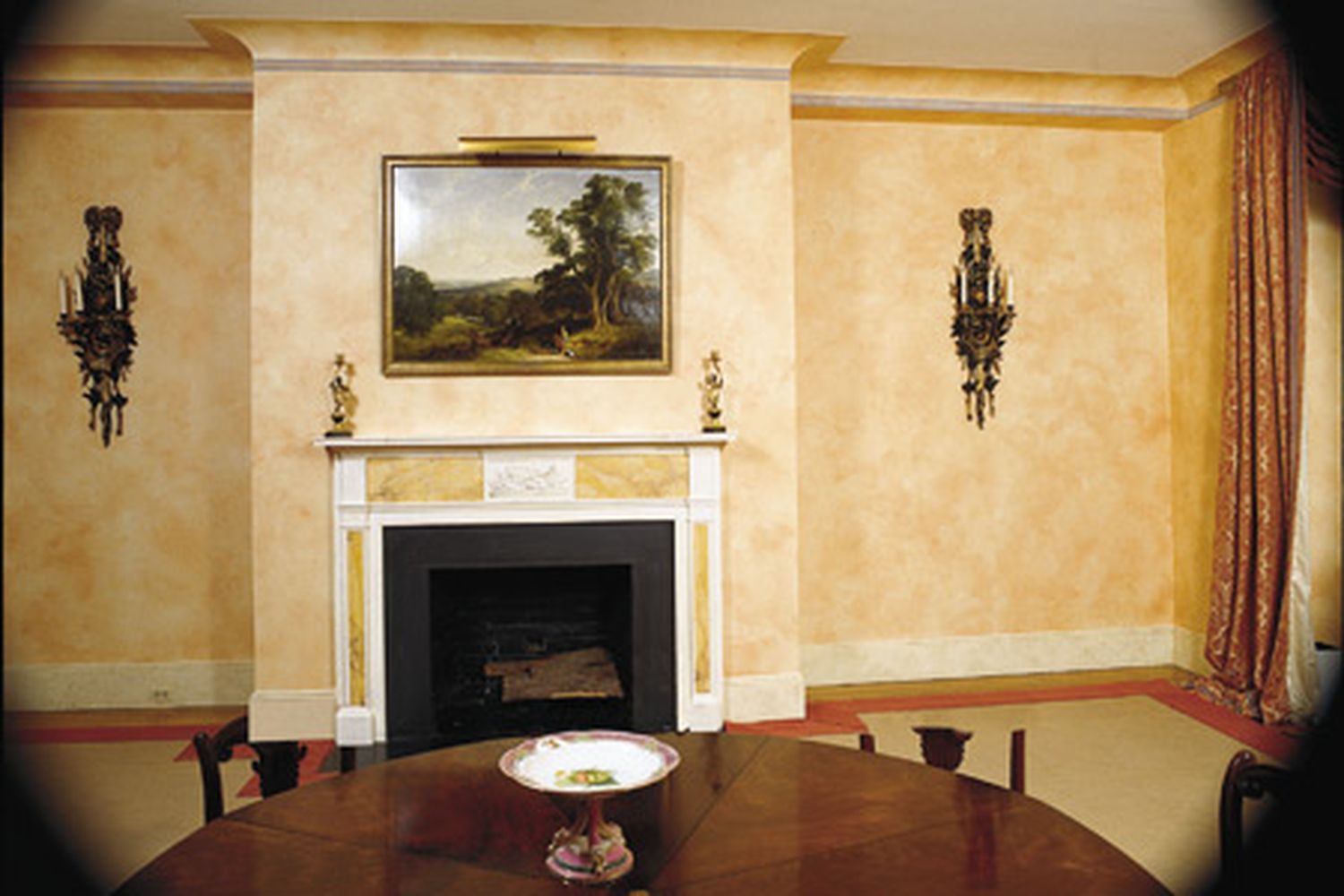
To create the effect of patinaed plaster, Finkelstein brushes two different colors of glaze over a base coat of paint, then blots it with cheesecloth. The technique works well with colors from the same family, but can also work with unrelated colors. One foolproof method is to pick a “goal” color from a manufacturer’s color strip, then go one shade lighter for the base and use the goal color and a shade one notch darker for the two tinted glazes. But remember: Always test a scheme on posterboard before committing to it on the wall.
Getting Started
The secret to decorative painting is glaze, a transparent coating that’s tinted and applied over a painted wall. Glazes come in latex (water-based) and alkyd (oil) formulas. Finkelstein recommends the latter for its longer working time. Note, however, that alkyd glaze requires an alkyd base coat, and cleanup means mineral spirits or turpentine. Glazes are sold untinted, so to get the color you want you’ll need to add pigment. Many paint stores will sell you small amounts of the pigments they use to tint paint separately; for as little as $5 you should be able to purchase enough to tint a gallon. To get the color right, fill a small bucket with glaze and add pigment drop by drop. Make sure your base paint and all glazes are thoroughly mixed and that you try them out together on a test piece of primed drywall before you begin.
Step 1
Prepare the Wall
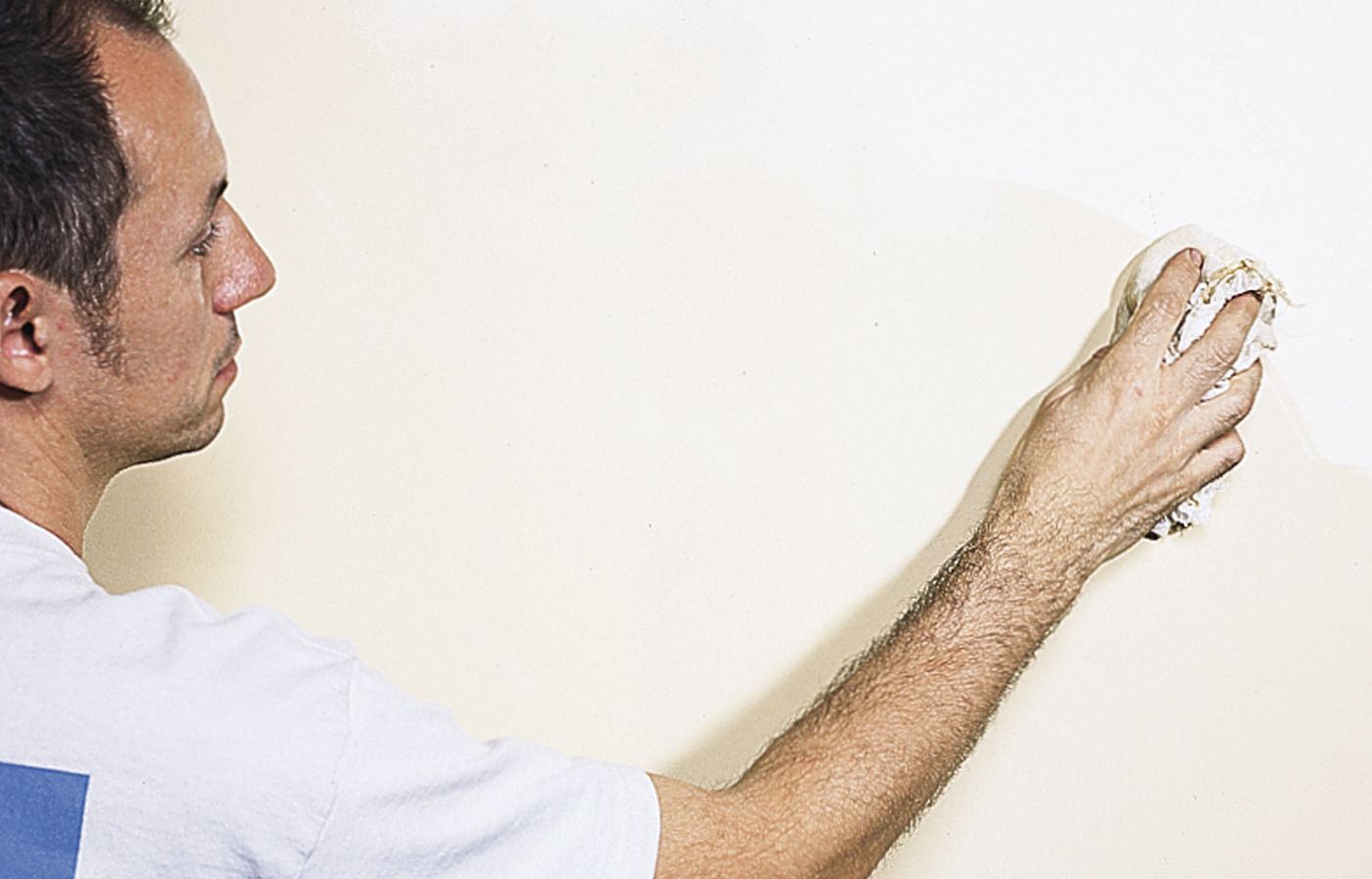
•Paint the wall in the base color. Allow to dry.
•When glazing, work in manageable, 5-foot sections so the wall doesn’t dry as you work.
•Using a piece of cheesecloth, spread on a coat of clear glaze to help keep the surface workable longer.
Step 2
Apply the First Color
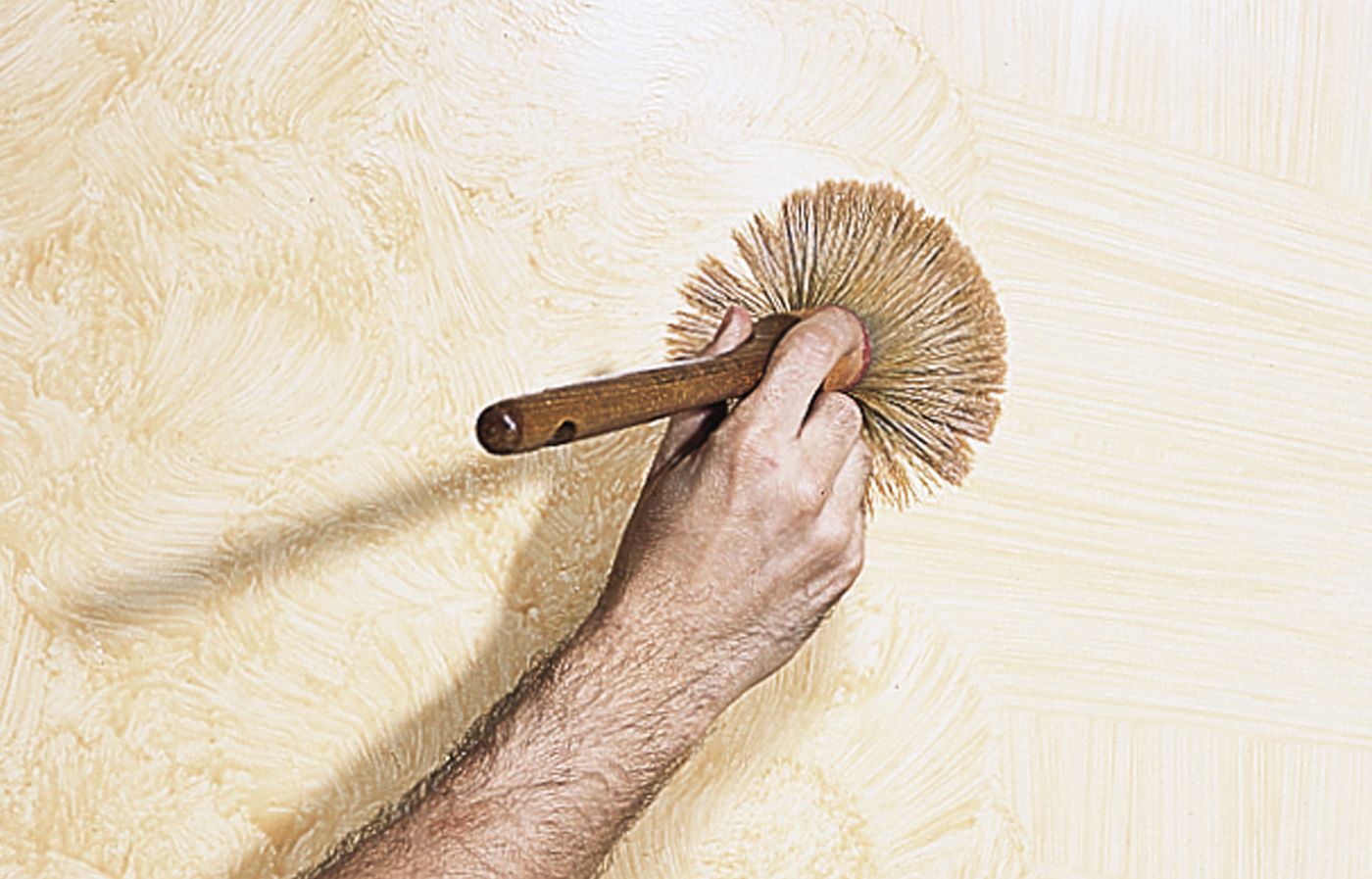
•Apply the first tinted glaze to the wall with a round glazing brush. Use short, quick wrist movements to make a random, loose X pattern while keeping your elbow steady.
Step 3
Add the Second Color
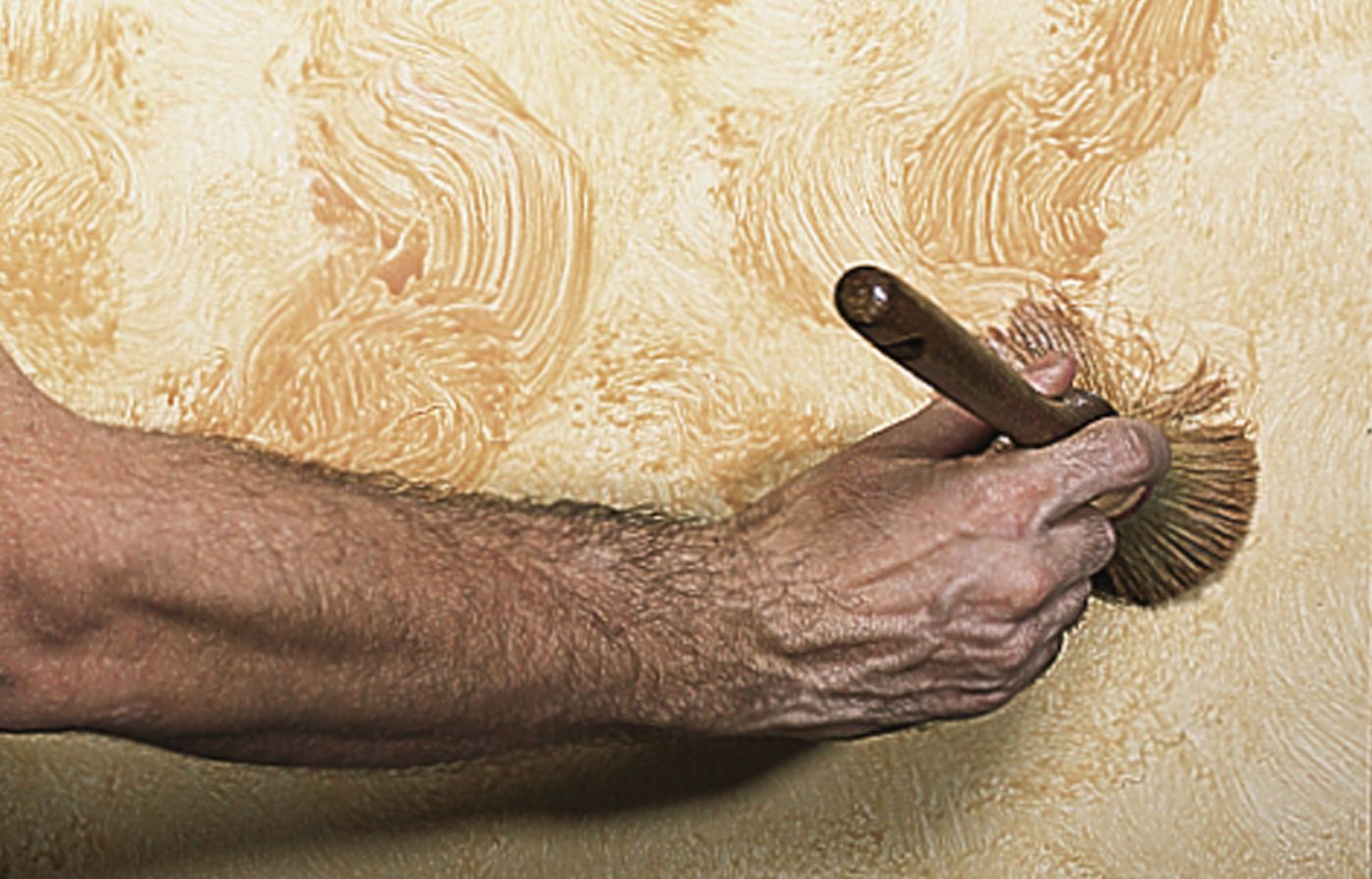
•Fill in blank spots on the wall with the second glaze color, using the same wrist flick to make more X’s.
Step 4
Blend the Brush Marks
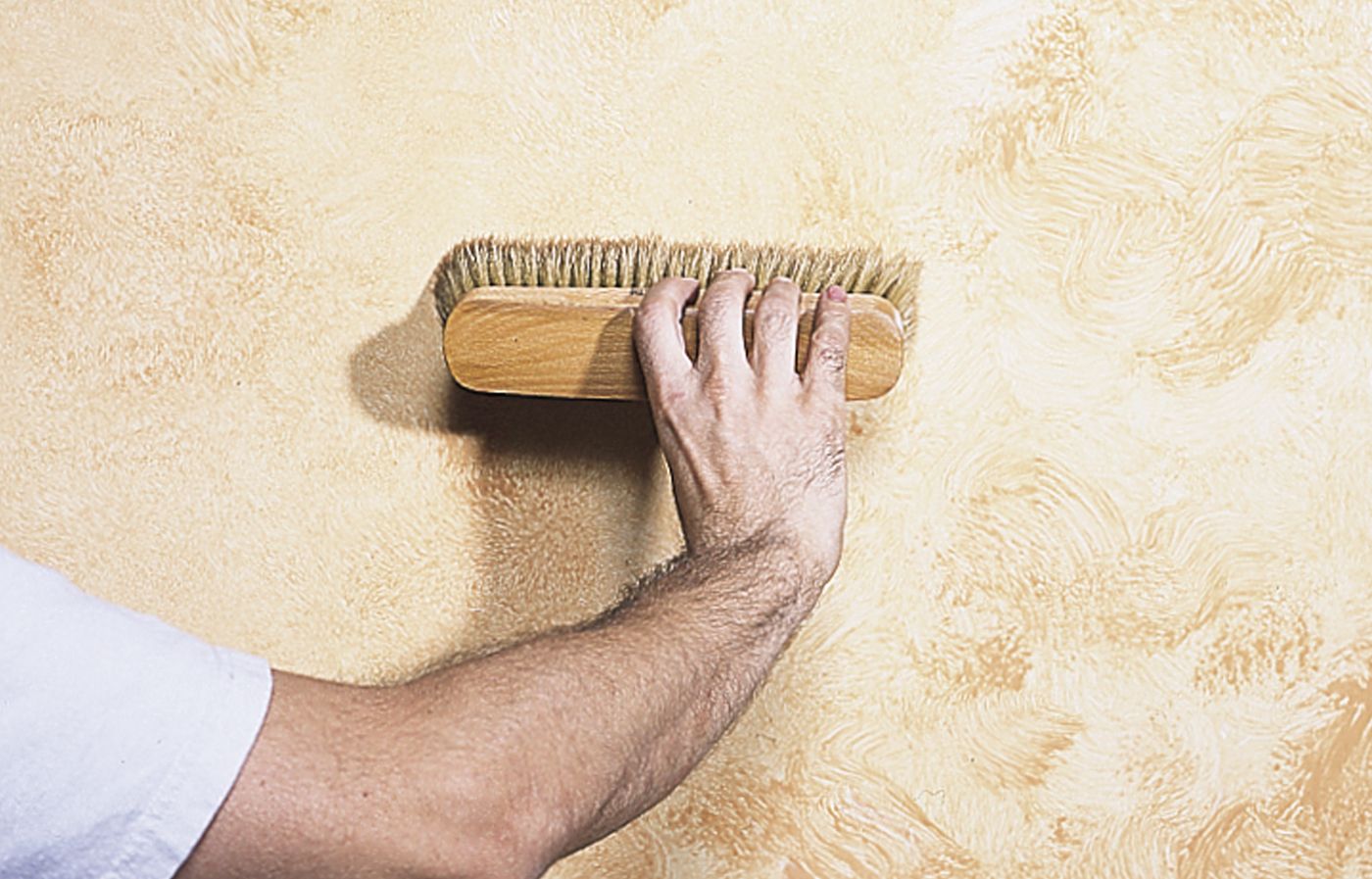
•Tap a dry stipple brush against the wall, starting at one side and moving slowly and methodically across the work area.
•Tap from the wrist, at the same time twisting the brush like a dial by raising and lowering your elbow.
Step 5
Blot Excess Glaze
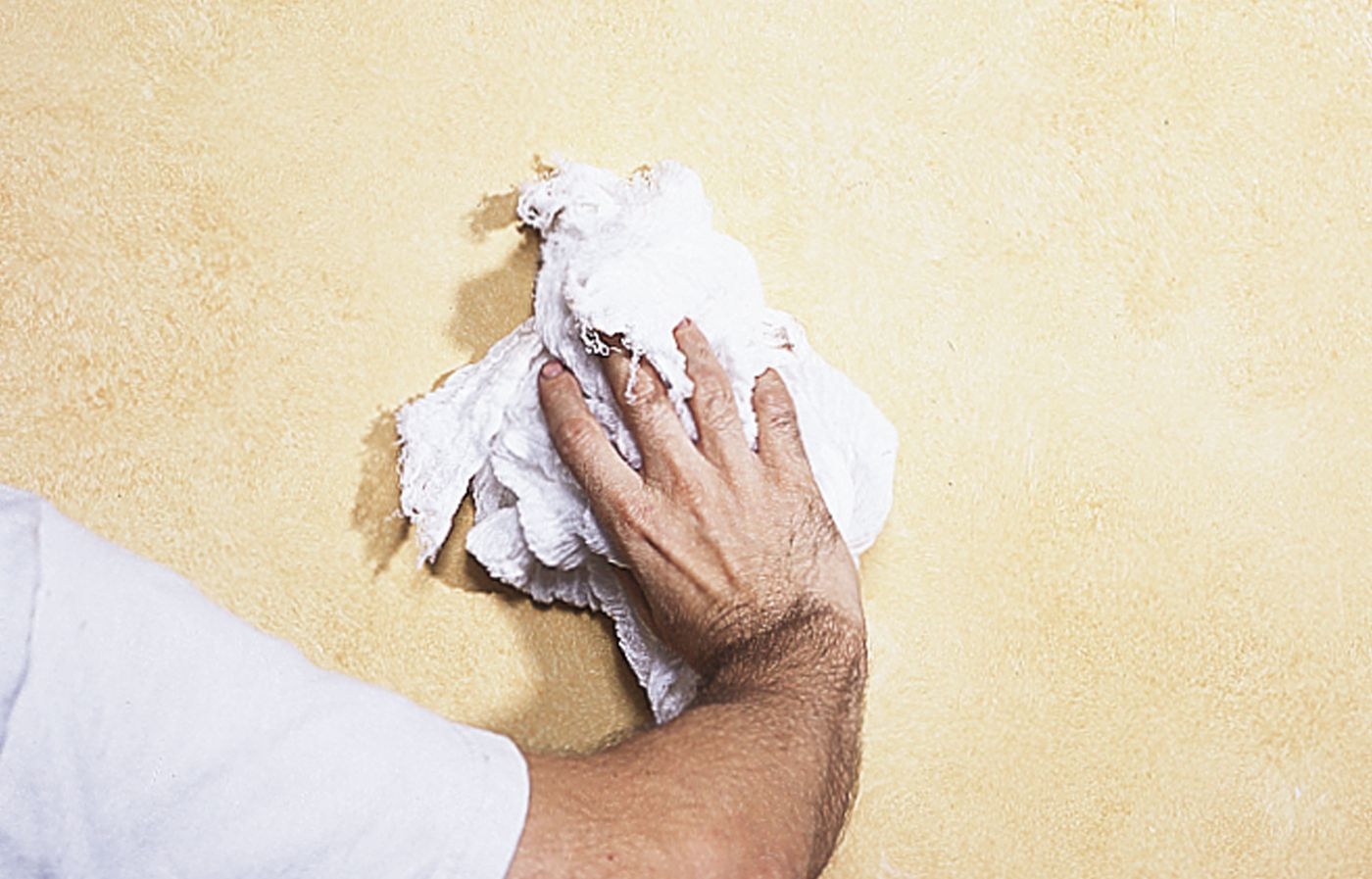
•Crumple a 4-foot section of cheesecloth into a loose ball. Blot the wall, using the same motion as for stippling.
•When the cloth surface is saturated, shake it out and recrumple it. When the whole cloth is soaked, replace it with a new piece.
Step 6
Smooth Out the Color
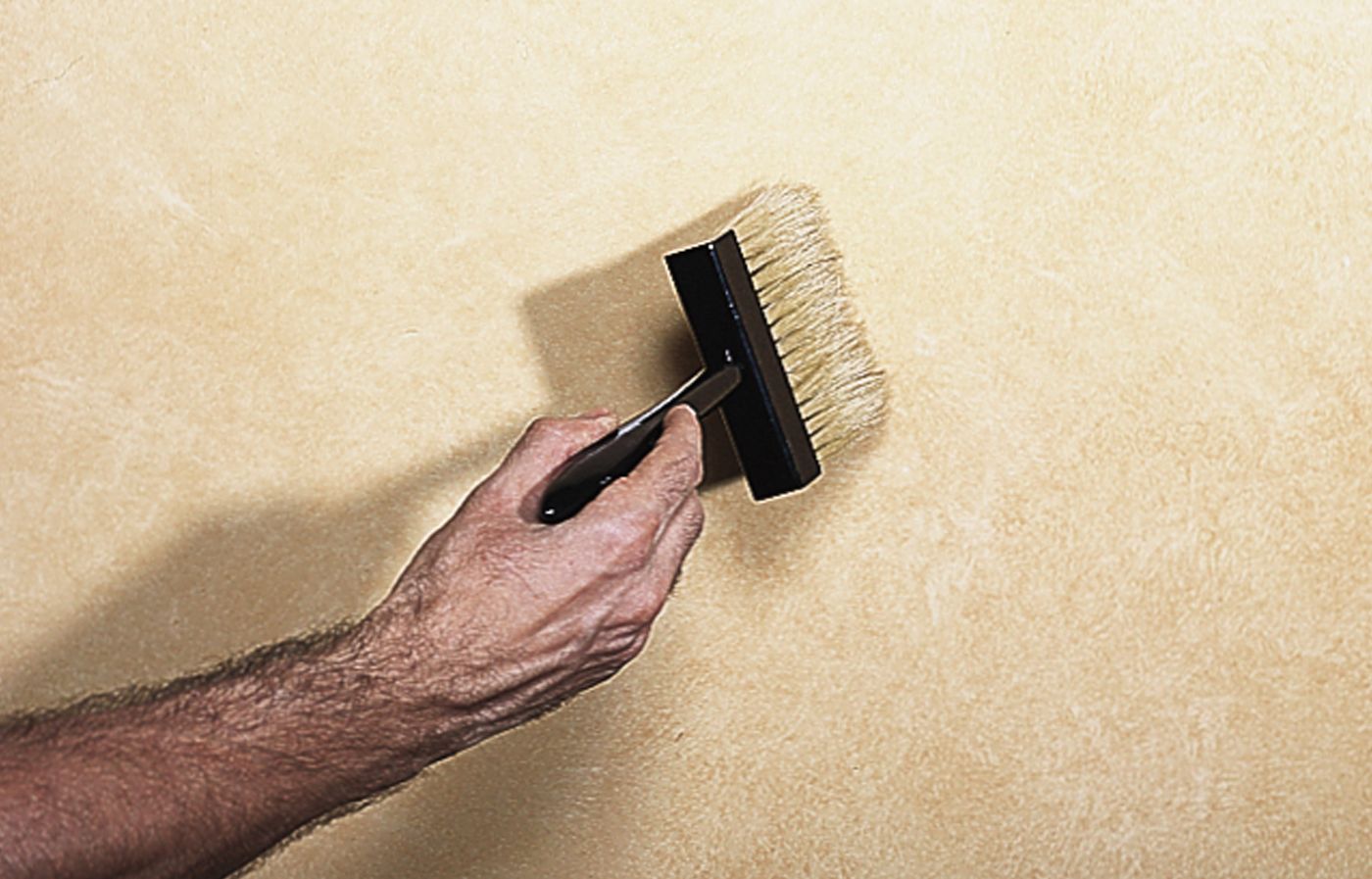
•Take a dry fine brush and stroke it across the glaze to soften any sharp marks.
•Make broad horizontal figure eights with the brush to feather the colors into one another.
