
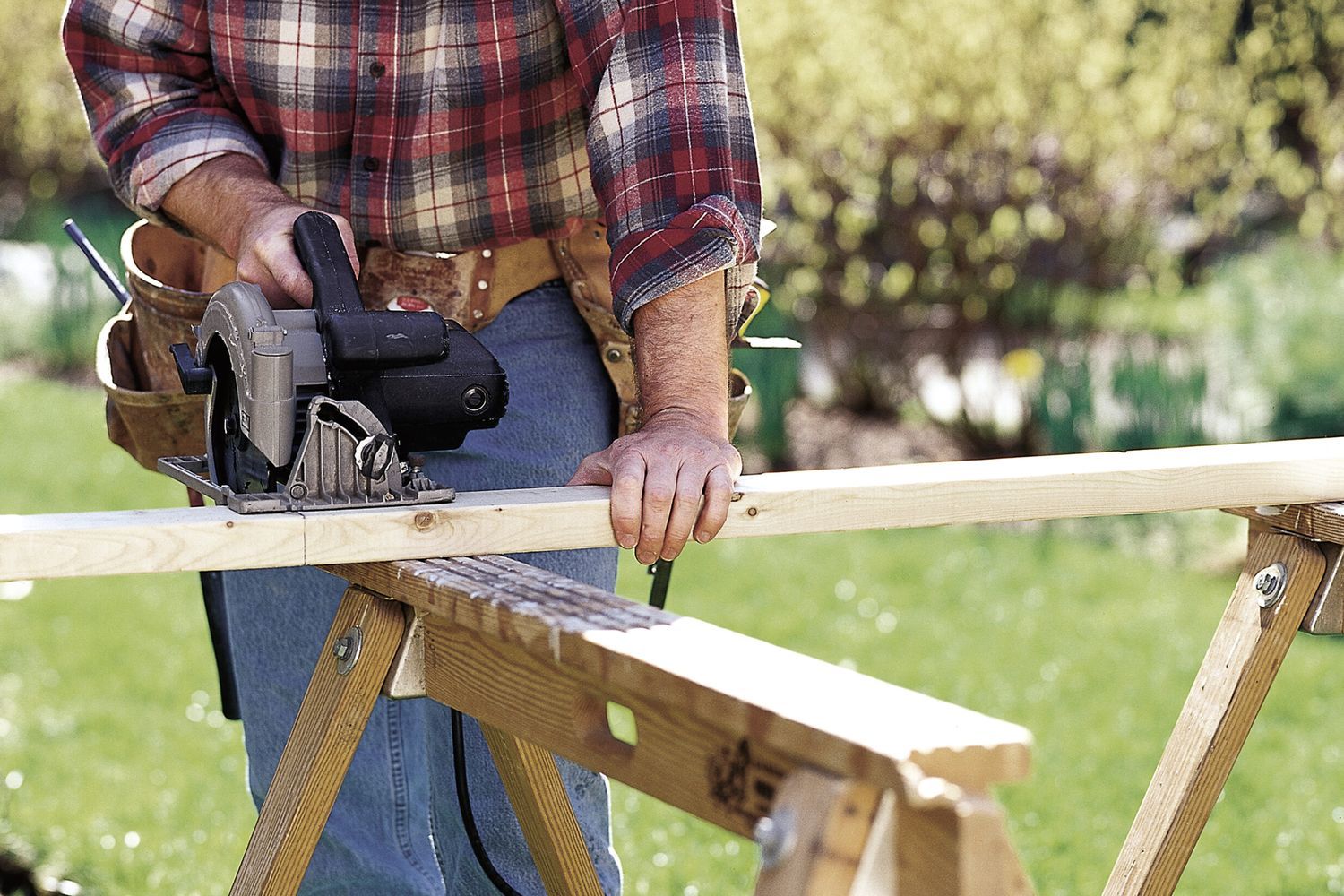
If you want to step up your DIY game to work with plywood and lumber, a circular saw is a valuable power tool to add to your toolbox. It’s more mobile and often faster to use than a table saw, and while you’ll change the blades frequently, the saw itself can last for decades. Below, we’ll tell you what you need to know to find the right saw for your project and give you some tips on using it safely and effectively.
What Makes a Good Circular Saw?
A good circular saw should have enough raw power to slice through everything from wet lumber to dense hardwood without bogging down. “When the motor slows, the blade heats up and dulls quickly,” explains Tom Silva, This Old House general contractor. This not only produces a poor cut, it’s dangerous because the blade can climb out of the kerf—the rut created by the blade—and push the saw back toward the user.
However, evaluating power from the motor ratings can be misleading. Amps indicate only the amount of electricity a motor draws, not the power it sends to the blade. The current standard is 15 amps for a saw that will see frequent use. Horsepower accounts for torque—the rotational force—but not necessarily how well the saw operates under working conditions.
In the end, the most reliable appraisal may be price. A dependable sidewinder—the more compact design, in which the motor sits alongside the blade—starts at around $100. There are many saws on the market under this price, but they’re not as powerful, nor are they built for a lifetime’s use. Professional-grade sidewinders, which run quieter and cut through dense wood better, cost between $125 and $150. This Old House master carpenter Norm Abram prefers this tool, noting that buyers should choose one based on balance and maneuverability. “I’d never buy a saw I didn’t have a chance to hold first,” he says.
On the other hand, a good worm-drive saw will set you back at least $200. This is Tom’s choice for framing because of its high torque output—its beefy spiral gear transfers power to the blade more efficiently. Either way, a top-of-the-line saw, if treated with care, should still be cutting well when you’re ready to hand it down.
Circular Saw Styles
The style of saw you need will depend on what you’re cutting and how much power you need. Different styles have different motor configurations and different average weights. Sizes will also vary, but most pros recommend a 7 1/4-inch blade for all-purpose DIY use.
Worm Drive Saw
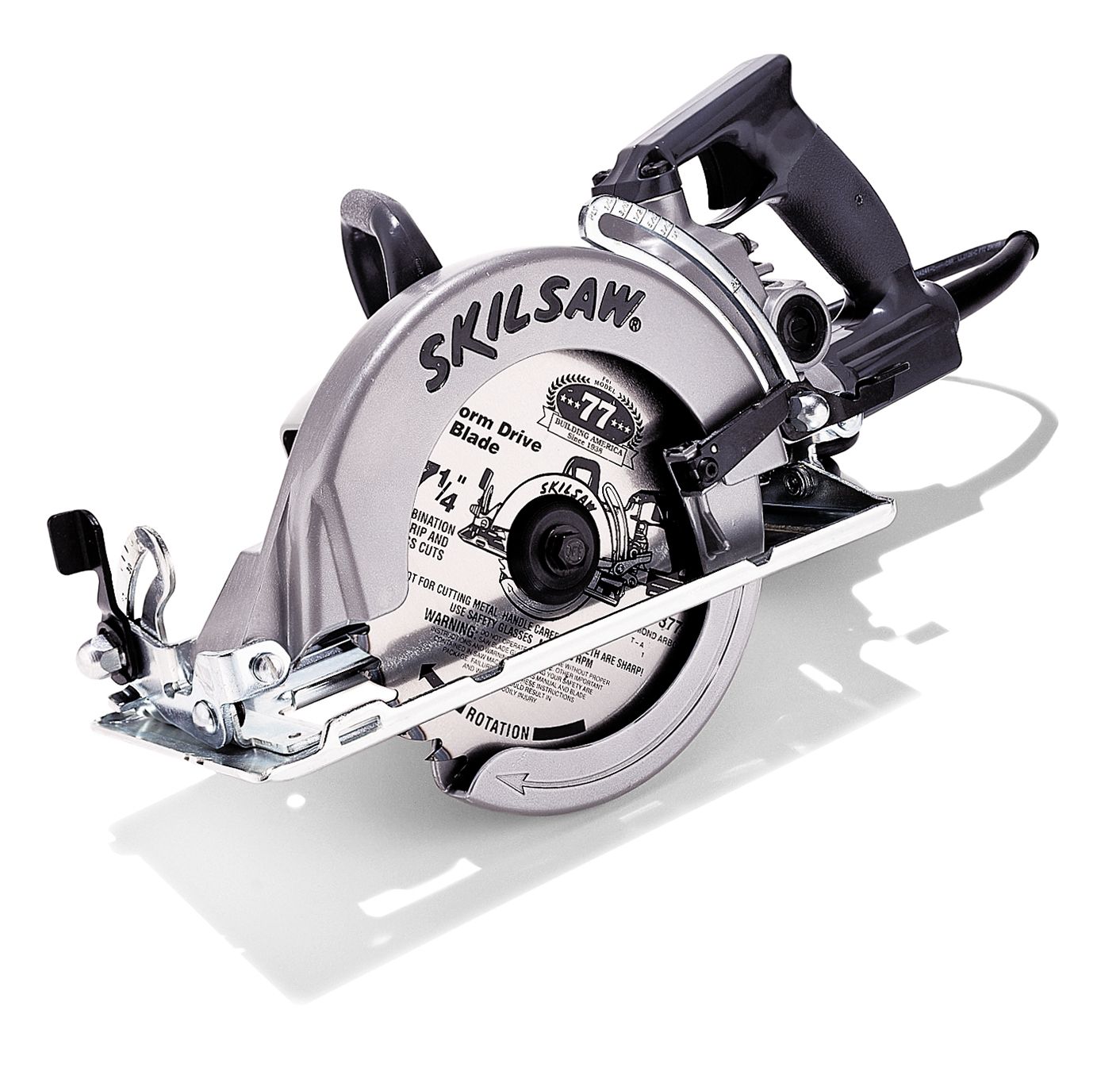
On this type of circular saw, the motor sits behind the blade, delivering enough torque to carve up wet lumber or saw through concrete, which makes a worm drive ideal for framing or major renovation jobs. With the handle farther back, a user can better resist kickback and steer the 16-pound saw through long rips. A system of internal gears adds weight and requires regular lubrication but gives these saws superior torque and power. As on most full-size worm-drive saws, the blade of this Skil HD77 sits to the motor’s left—in easy view for right-handed users.
Hypoid Saw
Hypoid gear saws have a different set of gear mechanisms than worm drives and can provide even more cutting power. However, hypoids house these internal gears in a sealed casing, reducing the need for lubrication and maintenance. The trade-off is that not many brands produce hypoids, and they’re generally more expensive and heavier than worm drives.
Sidewinder
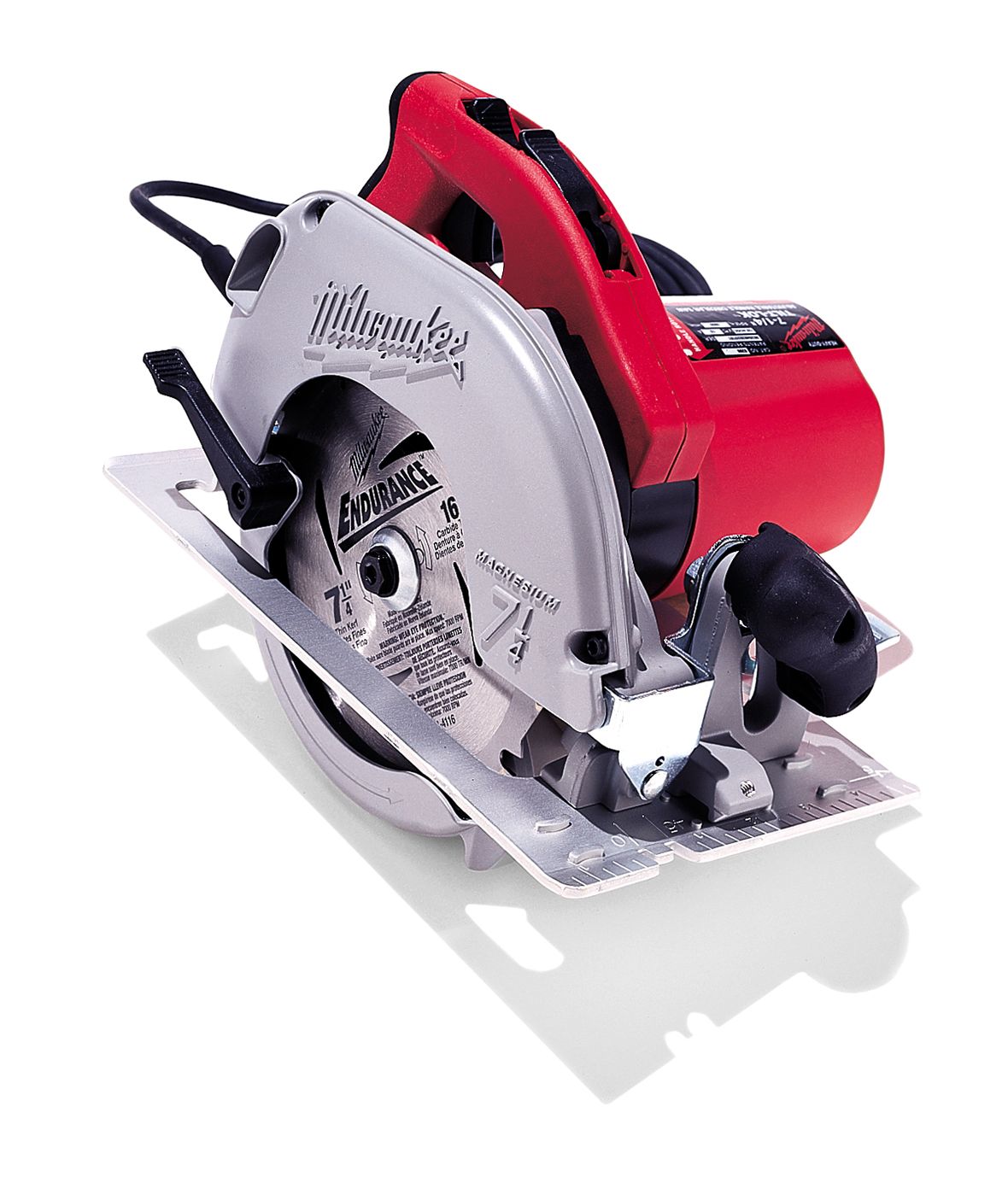
On a direct-drive or sidewinder saw, the motor sits alongside the blade and is connected directly to the shaft. This makes for a lighter saw, at 11 pounds or less, which is more maneuverable over a long day than a worm drive. However, sidewinders also pack a bit less power. The helical gearing on higher-end sidewinders, such as this Milwaukee 6390-20, beefs up the torque, making these models worthy competition for worm drives. Because of their simpler internal mechanics, sidewinders also need less maintenance than worm drives.
Small Sidewinder
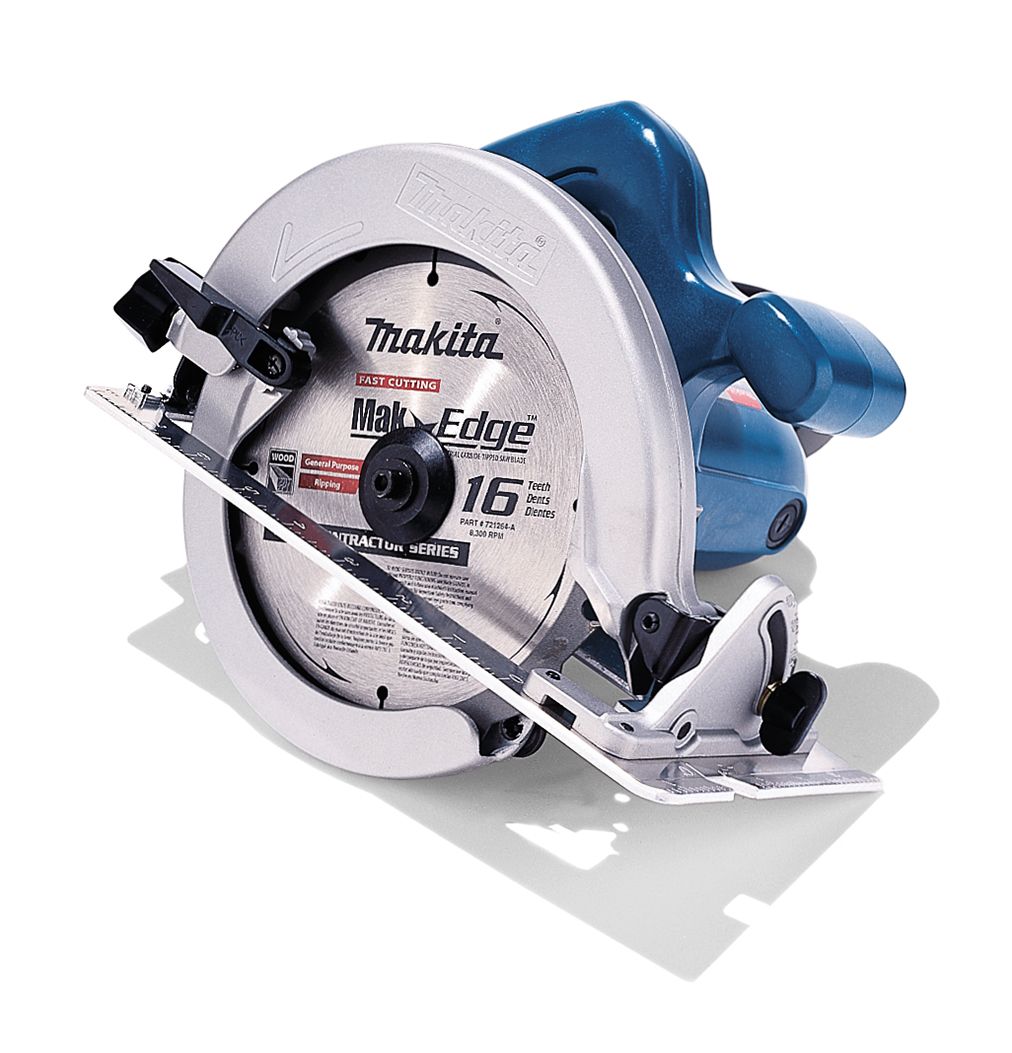
Weight, balance, and handle size are all key features to consider when choosing a saw that fits you. For a slight-bodied person, a small pro model like this 7.7-pound Makita 5740NB may be more appropriate than a full-size sidewinder.
Cordless
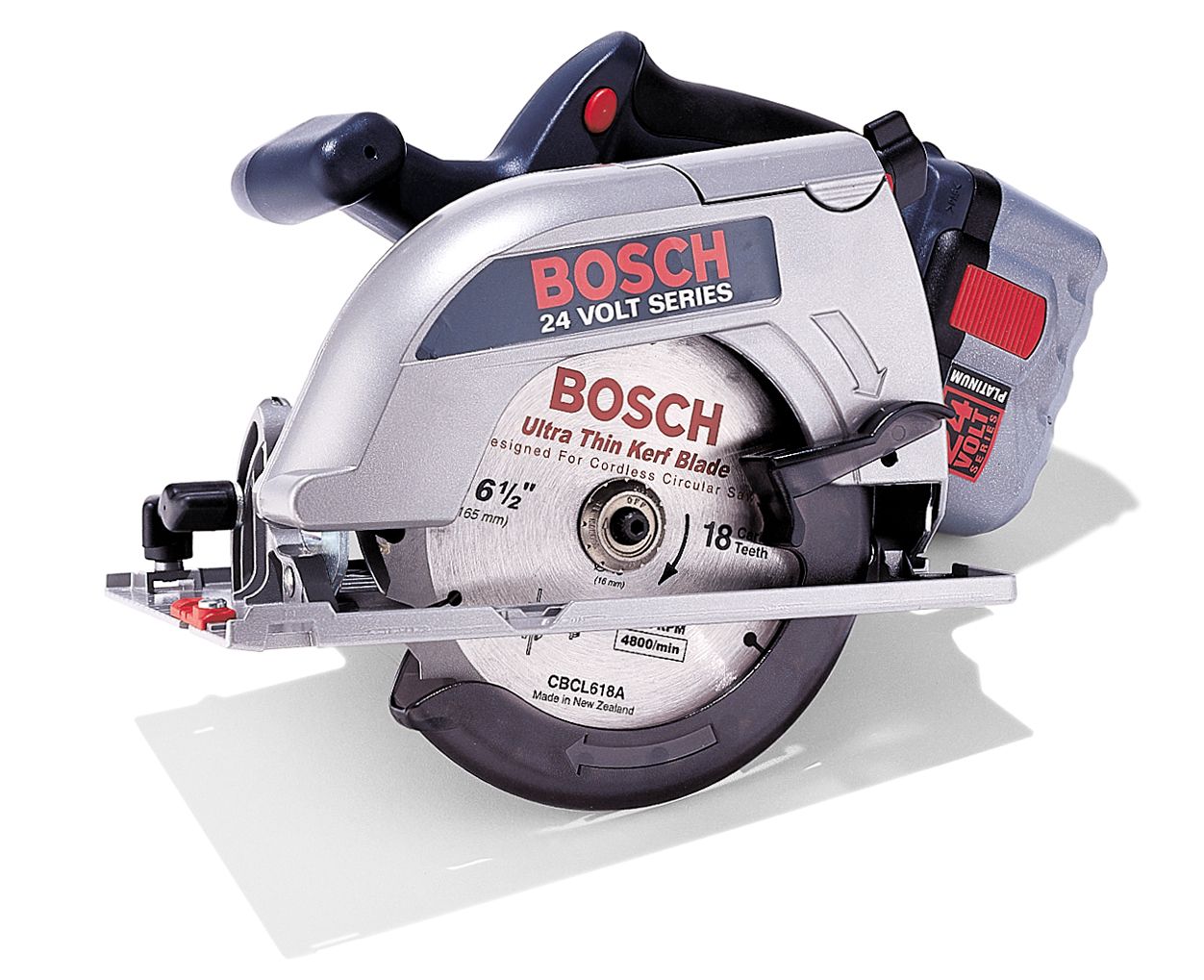
Battery-driven models have increased in size as their power packs have gained voltage, making them convenient tools out in the field or when the electricity’s not on. This Bosch 1660K sports a 6 1/2-inch blade and a 24-volt battery—the largest in its class. Cordless technology has improved over the years, but cordless models still have limited run times and generate less torque than corded saws.
Trim Saw
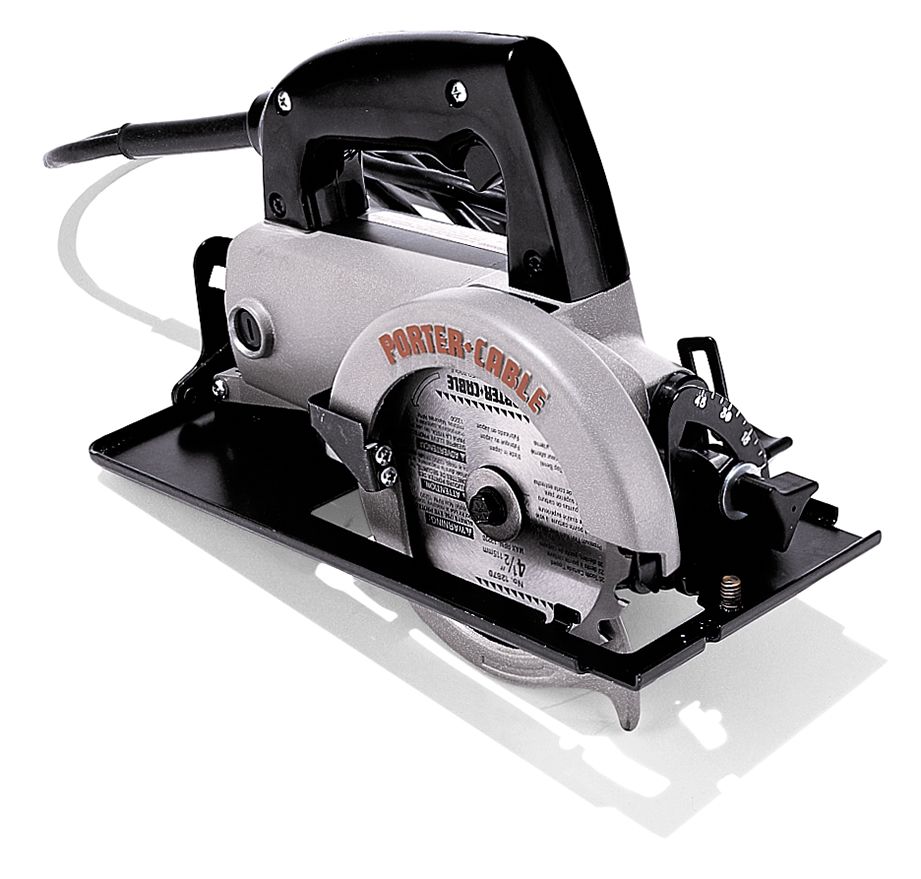
For finish work or paneling, Norm Abram prefers a small trim saw—blades range from 3 1/2 to 4 1/2 inches. This Porter-Cable 314, with a 4 1/2-inch blade, is the one worm drive on the market—all others are sidewinders.
Features of a Circular Saw
In addition to saw type, consider the following features on any saw you’re considering.
Ease of Adjustment
Large, smooth-cornered lever locks and full-round knobs that can be tightened down with the whole hand, make it faster and easier to change the depth of cut and bevel settings than small, hard-to-grasp levers and wing nuts.
Shoe Styles and Materials
The saw’s metal shoe sits on the material you’re cutting and keeps the blade moving straight and even. Any bends or breaks in the shoe, which can happen if you drop the saw, will require repair. “No matter what you do, you will drop your saw,” warns Tom Silva. Shoes may be made of steel, aluminum, or magnesium and may be stamped or cast. Cast-metal shoes with raised reinforcing ribs on the top surface won’t bend like flat stamped shoes if the saw hits the ground. On the other hand, a cast metal shoe adds weight to a saw. Magnesium shoes are always cast and provide the greatest strength with the least weight, but they’re also the most expensive.
Ergonomics
While you might be tempted to order a circular saw online, we recommend actually going to a store and seeing how the saws feel in your hand. Often, models of the same weight and power will feel quite different. Make sure the handle fits your hand, the weight of the saw feels balanced, and the important components and switches are easily visible or accessible. If you find a better deal online, you can always order the saw you want after you’ve tested a few.
Right-Blade vs. Left-Blade Saws
Right-blade saws have the blade placed on the right-hand side of the motor when viewed from the back, and left-blade saws have the blade on the left side of the motor. Generally, right-handed people use right-blade saws and lefties use left-blade saws, but there are pros and cons to both kinds no matter which hand you write with. Righties using right-blades and lefties using left-blades will have an easier time cutting with guides and using two hands on the saw, but righties using left-blades and vice versa will have an easier time making freehand cuts and cutting very large pieces of material.
Other Features
Here are some other features you might find on a circular saw.
- Brakes: Some high-end saws have an electric brake to slow the blade faster when the trigger is released. This makes the saw safer to use.
- Laser guides: A laser light projected ahead of the blade helps you make straighter cuts.
- Spindle lock: This feature holds the blade in place and makes changing out blades easier.
- Work lights: Lights on the saw illuminate what you’re working on for better visibility.
Norm’s Circular Saw Basics
Now that you’ve chosen your circular saw, it’s time to learn how to use it. Here are some tips to get you started safely.
Safety First
Circular saws can be dangerous. Always wear safety glasses and follow the safety instructions printed in your saw’s owner’s manual. In general, never let the exposed, unencased blade get between your hand and the rest of your body, especially when using two hands to control the saw. Only use sharp blades, and if you suspect that there are any problems with the saw, don’t use it.
Setting Blade Depth
Every time you make a cut, you’ll need to set the saw blade based on the depth of the material you’re cutting. Set the blade so that its bottommost tooth is 1/8 to 1/4 inch below the work piece. Any more than that and too much of the spinning blade will stick out beneath the material. Additionally, always make sure the power source is unplugged before making any adjustments to the saw.
Setup
Support the material on a bench or two strong sawhorses, overhanging enough so that the cut piece will fall. Never prop up this off-cut, or the material will buckle and bind the blade, causing a dangerous kickback. On large projects, don’t try to cut farther than the reach of your arms—always keep both feet on the floor.
Cross-Cutting
For an accurate cut, mark the side of the material that will become waste, then line up the blade to just leave the pencil line on the keep side. To make the cut, support the front of the saw shoe on the work piece, but keep the blade about an inch from the material. Then start the saw, letting it come up to full speed before pushing it steadily through the wood.
TIP: For 90-degree cross-cuts, use a speed square to guide the saw (below).
Ripping
Sawing along with the wood grain is called ripping. To do this, place large sheets of plywood on 2 x 4s laid across sawhorses and positioned to support both sides of the cut. Clamp a strip of plywood or other straight material to the work piece at the right distance to guide the saw shoe while cutting the line. Walk alongside the plywood as you cut, holding the cord to make sure it doesn’t get snagged.
TIP: For narrow rips, keep the saw straight by holding the shoe with your free hand and bracing your forefinger on the wood’s edge. You can also use a pair of locking pliers (below) or a rip-fence accessory.
More of Norm’s Circular Saw Tips
These are some slightly more advanced tips for the more experienced DIYer.
Finish Cutting
As a circular saw blade cuts up through wood, the fibers on top splinter off, a condition known as tear-out This is usually worse on cross-cutting. If appearances are important, put the good side down when cutting. If you must cut the board face-up or if both sides will show, score the cut line with a utility knife before cutting.
TIP: When cutting a finished piece, such as a painted door, duct-tape the bottom of the saw shoe so it can’t scratch the finish.
Plunge Cutting
Plunge cutting involves starting the cut in the middle of a board. A saw blade sinking through the face of a board can “walk” back across the surface, so make sure that no part of your body or the cord is in line with blade. Release the lever for the depth setting and drop the shoe below the blade. Then tighten the lever slightly to keep the blade from dropping, but don’t lock it all the way. Bring the saw up to full speed, lift the guard, and slowly push the body of the saw down to start the cut.
TIP: Make sure to start back far enough so that you only push the saw forward—never drag a spinning saw back.
Ripping Wider Lumber
If a board is too wide for the saw shoe to hang over the edge during a rip cut, hold a narrow scrap of wood between thumb and forefinger, bracing your finger along the edge of the board, and butt the saw shoe against the edge of the wood scrap as you push both along the board.
Gang Cutting
When cutting more than one piece of plywood to the same size, stack them on top of each other (or side by side in the case of dimensional lumber), clamp them together firmly, and cut the lot in one pass to save time and ensure consistency.
Beveling
Blade guards have a tendency to jam on steep bevel cuts, so carefully nudge the guard lever with one finger to ease it over the edge. Once the cut has been started, let the lever go. Never remove the guard or rig it so that it stays up permanently.
Our Conclusion
As you shop for circular saws, take into account saw style, size torque, and weight. Also consider right-blade versus left-blade, corded versus cordless, shoe material, and other features. Once you’ve made your choice, take all appropriate safety precautions and practice making different kinds of cuts until you’re ready to start on your project.
Where to Find It
Worm Drive
Skil HD77
S-B Power Tool Company
Chicago, IL
877-754-5999
Sidewinder
Milwaukee 6390-20
Milwaukee Electric Tool Company
Broofield, WI
800-414-6527
Small Sidewinder
Makita 5740NB
Makita USA Inc.
La Mirada, CA
800-462-5482
Cordless
Bosch 1660
Bosch Power Tool Company
Chicago, IL
877-267-2499
Trim
Porter-Cable 314
Porter-Cable Corporation
Jackson, TN
800-487-8665
Full-Round Knobs
DeWalt 364
DeWalt Industrial Tool Co.
Baltimore, MD
800-433-9258
Cast-Metal Shoe
Porter-Cable 347
Porter-Cable Corporation
