
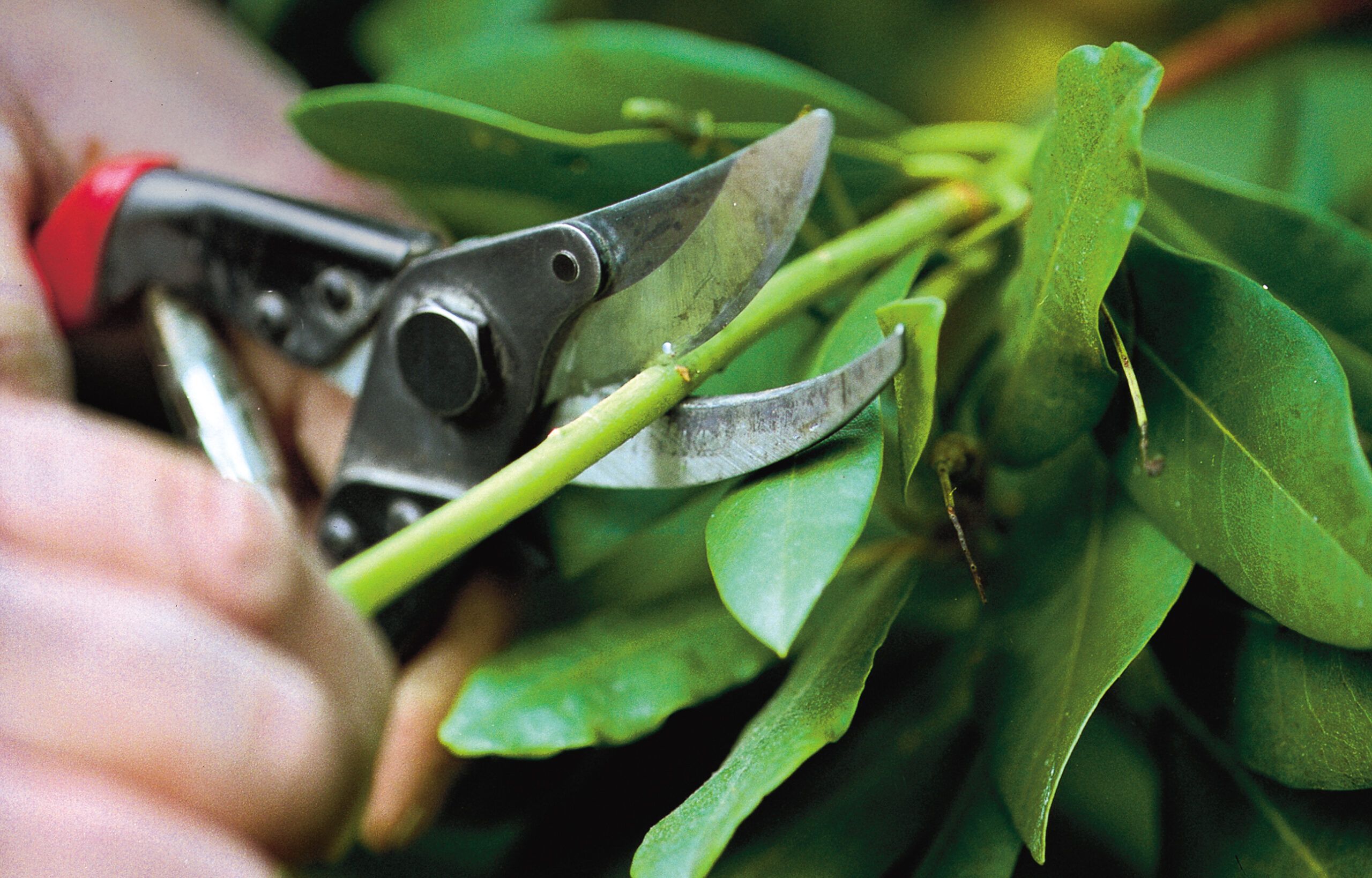
A few minutes spent pruning is one of the best things you can do for the plants in your yard, but it’s one of the most neglected tasks around the home. Why? Because for most of us, it’s a black art. The risks of butchery seem high, and the rewards low. “But pruning isn’t difficult,” says This Old House landscape contractor Roger Cook. “And what you get in return is thicker foliage, more flowers, and healthier plants.”
Here we show you a few simple pruning techniques and how to apply them to small trees and shrubs on your property and the best time to do so.
Pruning Small Flowering Trees
Avoid pruning a young or newly planted tree — it needs as many leaves as possible to produce the food required for good root growth. Remove only dead, broken, or injured branches, as well as those that cross or rub each other. And always prune back to a healthy stem or branch without leaving stubs. This eliminates hiding places for pests and diseases, and looks better. Never cut back the plant’s leader — the top-most growing point of the tree — which is vital to letting the tree develop its natural form.
What to Prune from a Tree
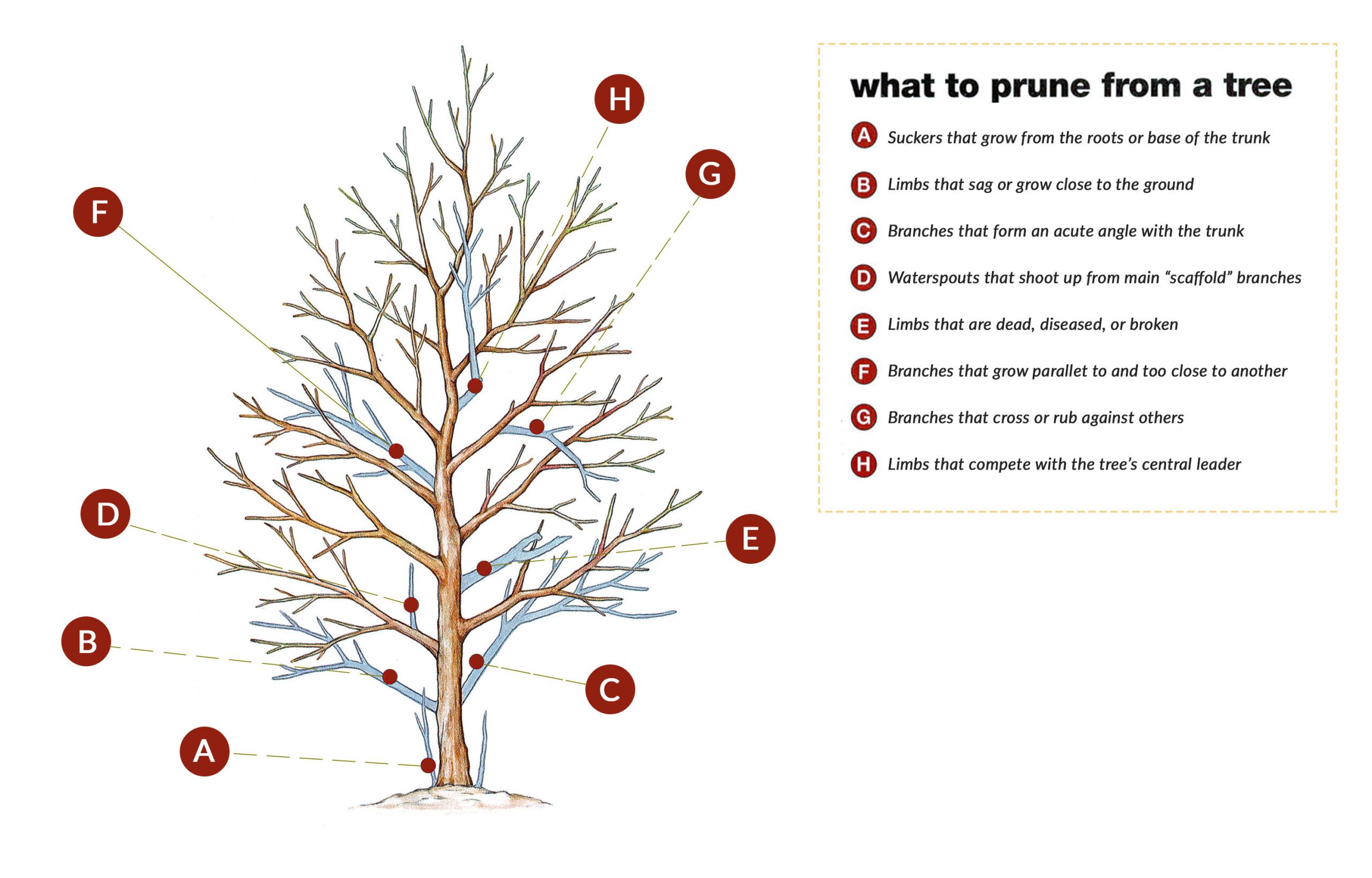
A. Suckers that grow from the roots or base of the trunk
B. Limbs that sag or grow close to the ground
C. Branches that form an acute angle with the trunk
D. Watersprouts that shoot up from main “scaffold” branches
E. Limbs that are dead, diseased, or broken
F. Branches that grow parallel to and too close to another
G. Branches that cross or rub against others
H. Limbs that compete with the tree’s central leader
Once the tree is a few years old, shape it gradually over the course of several years to maximize foliage and flowering. The tree’s branches should be well-spaced up the trunk and spiraling around it. As a guideline, prune no more than one-fourth of the tree’s total leaf area in a single year. To raise the tree’s crown or create clearance beneath it, remove the lowest branches. Also target branches that are spaced too closely together or that join the trunk at a narrow angle — 45 degrees or less. These form weak limb attachments and will break easily in wind or under the weight of snow and ice.
When Removing an Entire Tree Branch
Cut as close to the branch collar — the swollen ring of bark where the limb meets the main stem or trunk — as possible without cutting into it. When cutting branches more than 1 inch in diameter, avoid tearing or stripping bark by using a pruning saw and the three-cut method shown below. A good pruning cut will heal quickly and naturally without the use of dressings or poultices.
Three-cut tree branch removal
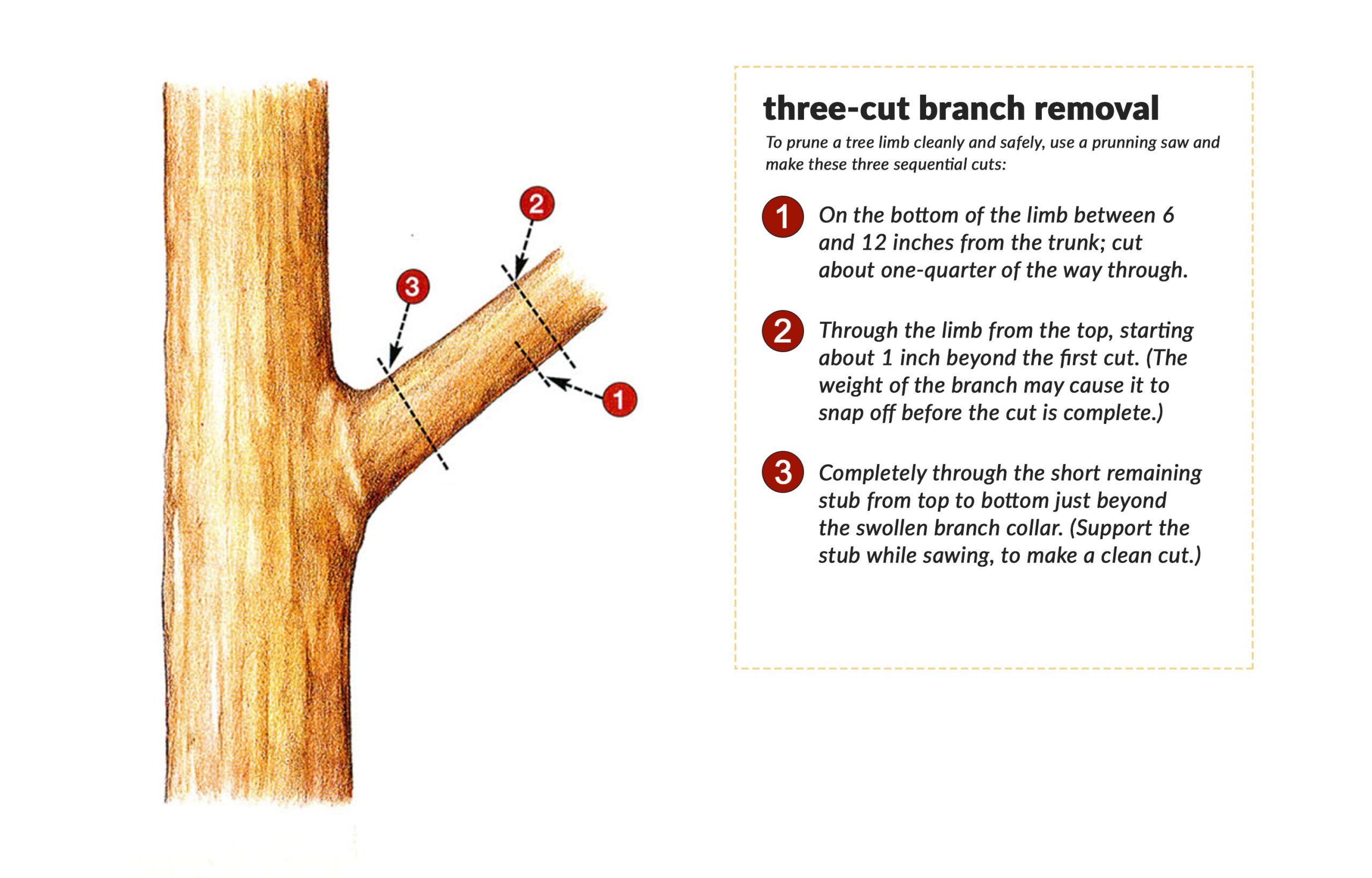
To prune a tree limb cleanly and safely, as shown in the image above, use a pruning saw and make these three sequential cuts:
- On the bottom of the limb between 6 and 12 inches from the trunk; cut about one-quarter of the way through.
- Through the limb from the top, starting about 1 inch beyond the first cut. (The weight of the branch may cause it to snap off before the cut is complete.)
- Completely through the short remaining stub from top to bottom just beyond the swollen branch collar. (Support the stub while sawing to make a clean cut.)
Remove fast-growing stems, called suckers, that grow up from the roots or the base of the trunk as they appear, as well as the extravigorous (and often weakly attached) shoots, called watersprouts, that grow straight up from the trunk or branches.
Mature trees require only occasional pruning to maintain their structure and appearance. Never make the mistake of cutting off the top of a tree’s canopy to reduce its size. Topping typically leaves the tree much less attractive and much more prone to weak growth and pests.
Pruning Conifers
Needle-leafed evergreens fall into two basic groups: random branching and whorled branching. Each requires a different pruning technique.
Evergreens with random-branching patterns — arborvitae, hemlock, juniper, and yew — should be pruned in the same manner as a flowering tree or shrub. Use heading cuts to encourage dense growth and thinning cuts made close to the trunk to maintain the tree’s shape. One important difference: Heading cuts will only sprout new branches if the remaining branch still has needles growing on it.
Whorled-branching evergreens — fir, spruce, and pine — are quite different. These plants have pale growth buds, called candles, that develop at the branch tips in the spring. Instead of making heading cuts, use your thumb and forefinger to pinch off the new, light-colored growths while they’re still soft.
This will maintain plant size and produce denser growth. You won’t want to make thinning cuts to whorled-branching evergreens — they will produce a dead snag, not new growth. The only exception is spruce trees: They have side buds that will sprout if trimmed back to the previous year’s growth.
Pruning Flowering Shrubs
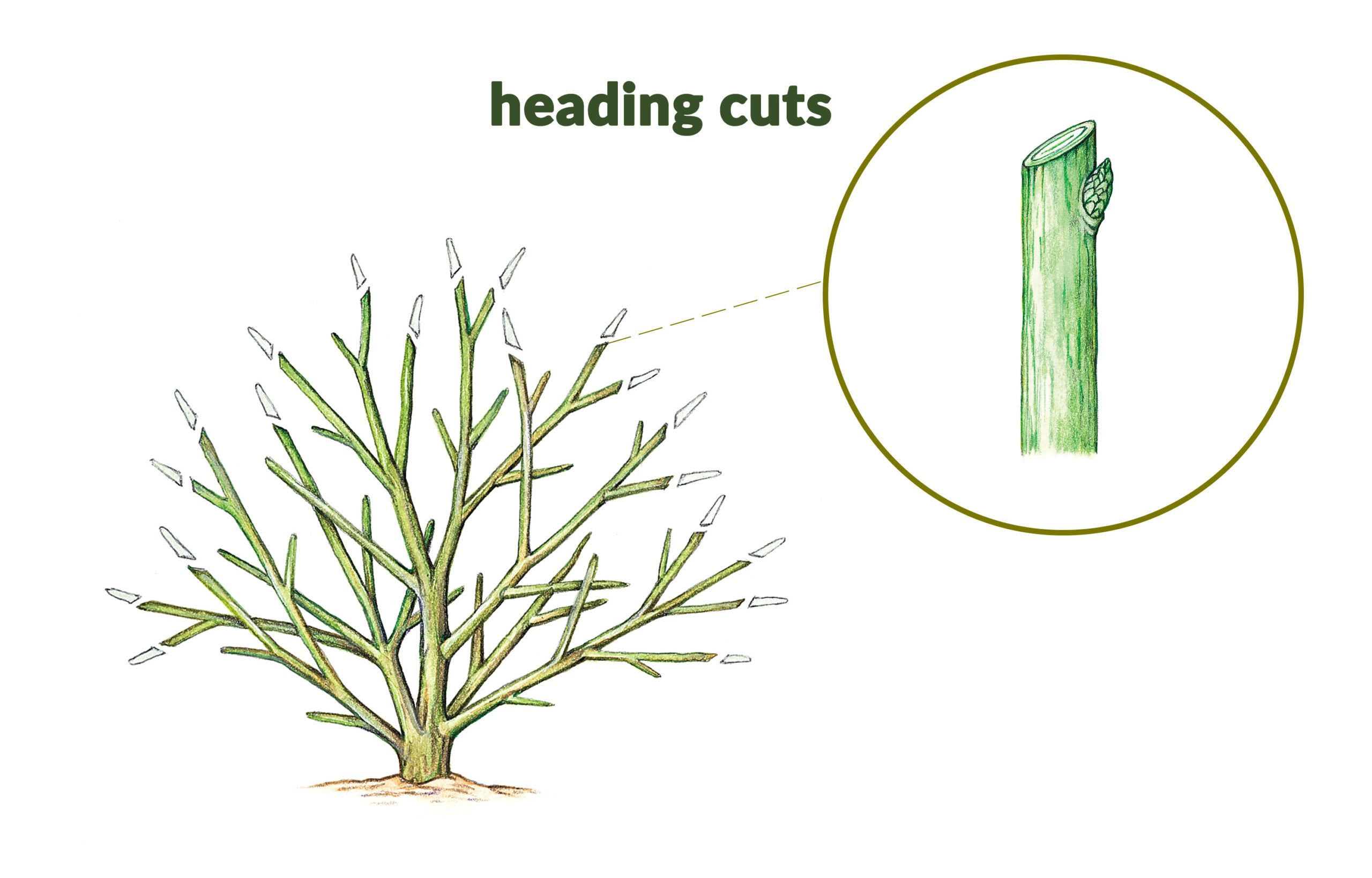
Young shrubs should be pruned lightly to make them grow fuller and bushier. With hand pruners, trim long, unbranched stems by cutting just above a healthy bud. This type of pruning, called heading, encourages lower side branches to develop and enhances the shrub’s natural form. When selecting a bud tip to trim to, keep in mind that the new branch will grow out in the direction of the bud. Like most pruning, heading cuts should be timed to avoid disrupting the plant’s flowering.
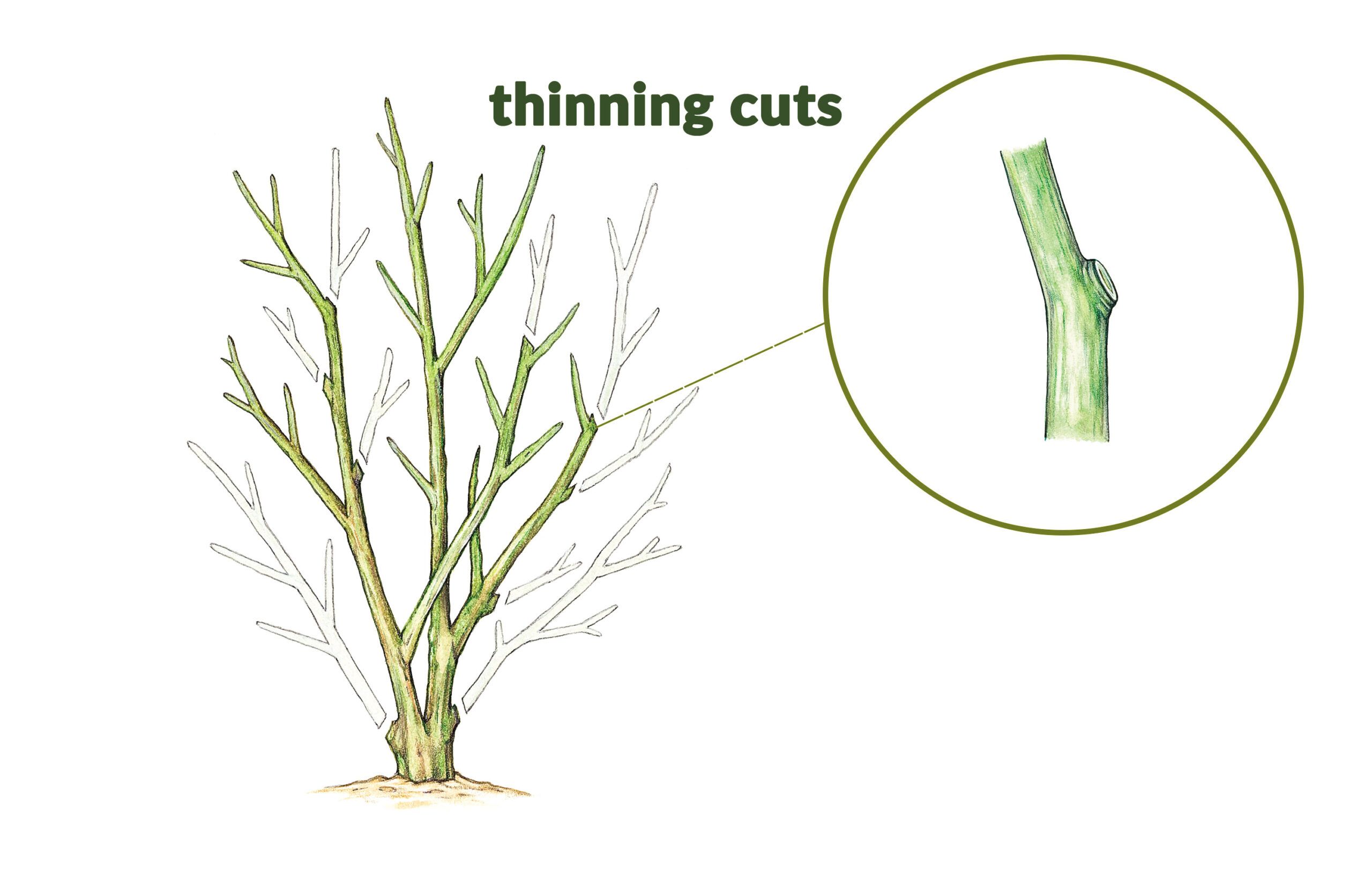
As a shrub develops, thin out old, weak, rubbing, or wayward branches where they merge with another branch. This opens up the middle of the plant to more sunlight, which keeps interior branches healthy, stimulates growth, and increases flowering.
Older and Neglected Shrubs
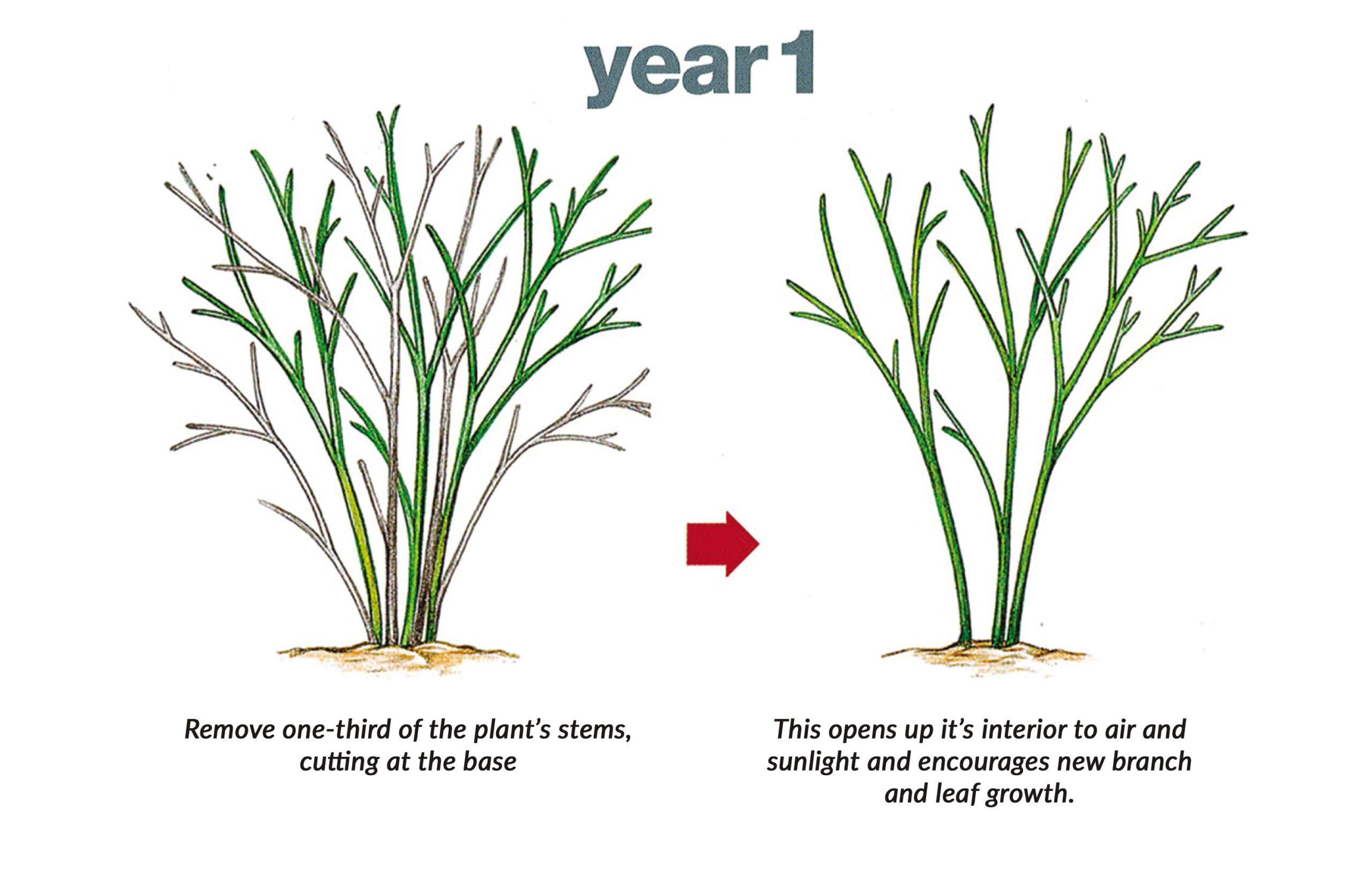
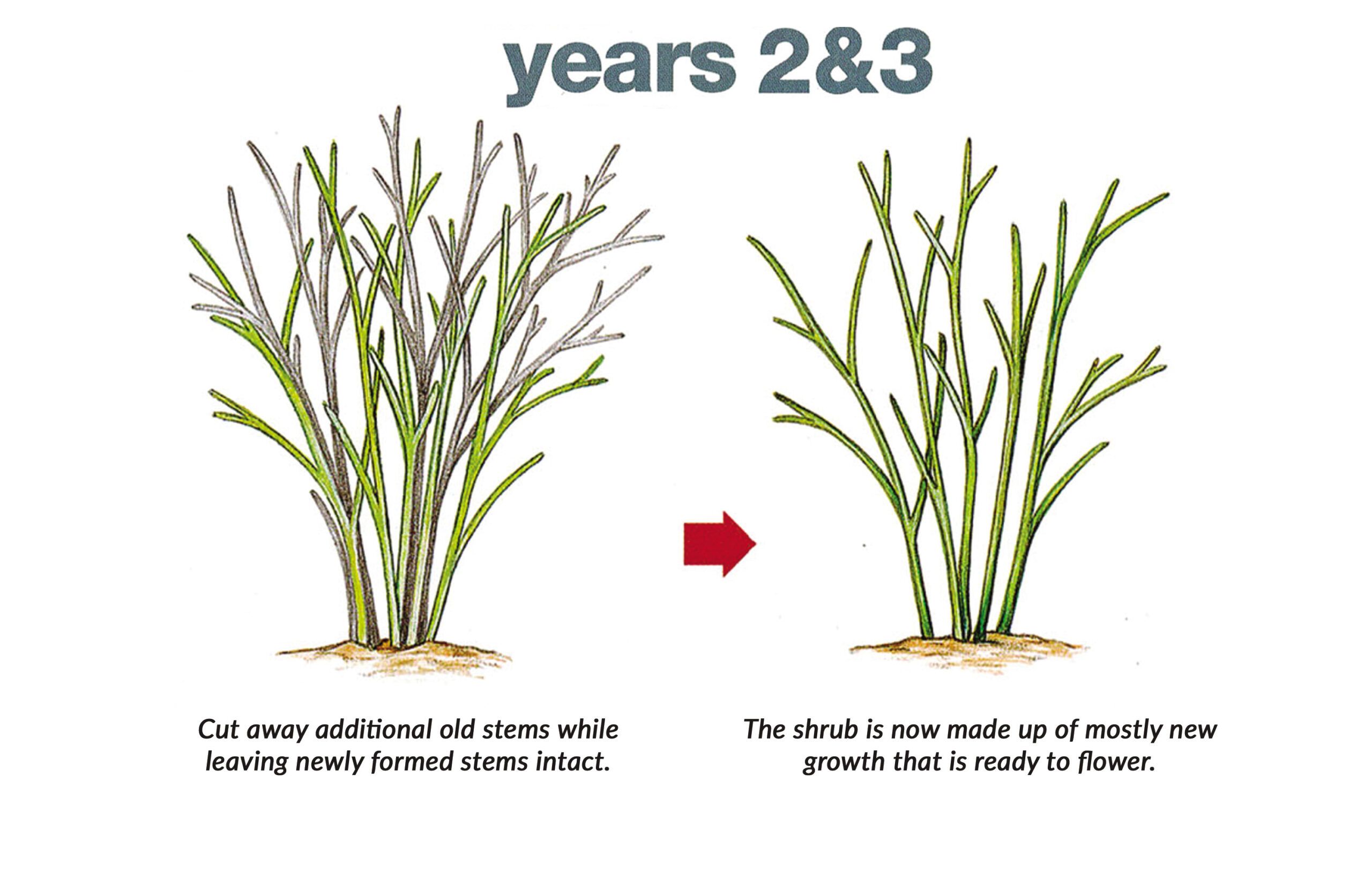
Older shrubs that have become a tangle of unproductive stems may require a more extensive program of thinning cuts, called renewal or renovation pruning, that takes at least three years. On shrubs with multiple stems that grow up from the base, like lilac, viburnum, forsythia, and dogwood, gradually remove all of the old stems while leaving the new, flower-producing growth untouched. Eventually, the new flower-producing stems will completely replace the lackluster old growth.
Neglected shrubs may call for a more drastic approach: hard pruning. Most deciduous shrubs that respond well to renewal pruning can also take hard pruning, as will a handful of broadleaf evergreens, such as privet. Using loppers and a pruning saw, cut back all stems to within an inch of the ground during the plant’s winter dormancy. (For more on the correct tools to use, see Choosing and Using Pruners and Loppers) Come spring, the plants will quickly produce new shoots from the base. Of course, this technique will leave you with little to look at while waiting for the new growth.
When to Prune
There is important pruning that can be done anytime — namely, the removal of dead, weak, damaged, or crossing branches. But poorly timed pruning, like that done in the fall or early winter, can injure a plant and stunt or even eliminate its foliage and flower production. What follows are the three recommended pruning “seasons” for various common trees and shrubs across the country. Stick to this schedule to keep plants healthy and maximize blossoms. When in doubt, Roger Cook suggests, postpone pruning until right after the plant flowers.
Late Winter/Early Spring
Prune summer-flowering plants, which will flower on the coming season’s new growth, while they are still dormant. Their bare limbs make it easy to see the plant’s structure, and the flush of spring growth will quickly heal wounds. Prune random-branching conifers once new growth is visible.
Shrubs
- Beautyberry (Callicarpa species)
- Bumald spiraea (Spiraea bumalda)
- Butterfly bush (Buddleia davidii)
- Gardenia (Gardenia jasminoides)
- Japanese barberry (Berberis thunbergii)
- Japanese spiraea (Spiraea japonica)
- Nandina (Nandina domestica)
- Privet (Ligistrum species)
- Repeat-flowering roses (Rosa species)
- Rose-of-Sharon (Hibiscus syriacus)
- Summersweet (Clethra species)
- Sweetshrub (Calycanthus floridus)
Late Winter/Early Spring (cont.)
Trees
Chaste tree (Vitex agnus-castus)
- Crape myrtle (Lagerstroemia species)
- Sweet olive (Osmanthus fragrans)
- Golden-rain tree (Koelreuteria paniculata)
- Sweet bay (Magnolia virginiana)
- Random-branching conifers
- Arborvitae (Thuja species)
- Cypress (Cupressus species)
- Hemlock (Tsuga species)
- Juniper (Juniperus species)
- Southern yew (Podocarpus macrophyllus)
- True cedar (Cedrus species)
- Yew (Cephalotaxus and Taxus species)
Late Spring/Early Summer
Prune spring-flowering plants immediately after their blossoms fade. Because they produce flowers only on old growth from the previous season, pruning soon after bloom will maximize flower production the next year. Pinch the candles on whorled-branching conifers when you see new growth.
Shrubs
- Azalea (Rhododendron species)
- Beautybush (Kolkwitzia amabilis)
- Bigleaf hydrangea (Hydrangea macrophylla)
- Bridal wreath spiraea (Spiraea prunifolia)
- Common lilac (Syringa vulgaris)
- Deutzia (Deutzia species)
- Flowering quince (Chaenomeles species)
- Forsythia (Forsythia species)
- Japanese kerria (Kerria japonica)
- Japanese pieris (Pieris japonica)
- Mock orange (Philadelphus species)
- Rhododendron (Rhododendron species)
- Weigela (Weigela florida)
Late Spring/Early Summer (cont.)
Trees
- Flowering almond (Prunus species)
- Flowering cherry (Prunus serrulata)
- Fringe tree (Chionanthus virginicus)
- Ornamental pear (Pyrus calleryana)
- Redbud (Cercis species)
- Saucer magnolia (Magnolia soulangiana)
- Serviceberry (Amelanchier species)
- Star magnolia (Magnolia stellata)
- Witch hazel (Hamamelis species)
- Whorled-branching Conifers Fir (Abies species)
- Norfolk Island Pine (Araucaria heterophylla)
- Pine (Pinus species)
- Spruce (Picea species)
Midsummer
Prune “bleeding” trees — those with exceptionally heavy spring sap flow — after their leaves have fully developed.
- Birch (Betula species)
- Dogwood (Cornus species)
- Elm (Ulmus species)
- Maple (Acer species)
- Yellowwood (Cladrastis lutea)
Resources
Our thanks to:
Deborah Brown, University of Minnesota Extension horticulturist
Landscape Contractor:
Roger Cook
K & R Tree and Landscape
Burlington, MA
781-272-6104
For more information:
The Pruning Book by Lee Reich
Taunton Press
Newtown, CT
800-477-8727
www.taunton.com