
We may be compensated if you purchase through links on our website. Our team is committed to delivering honest, objective, and independent reviews on home products and services.
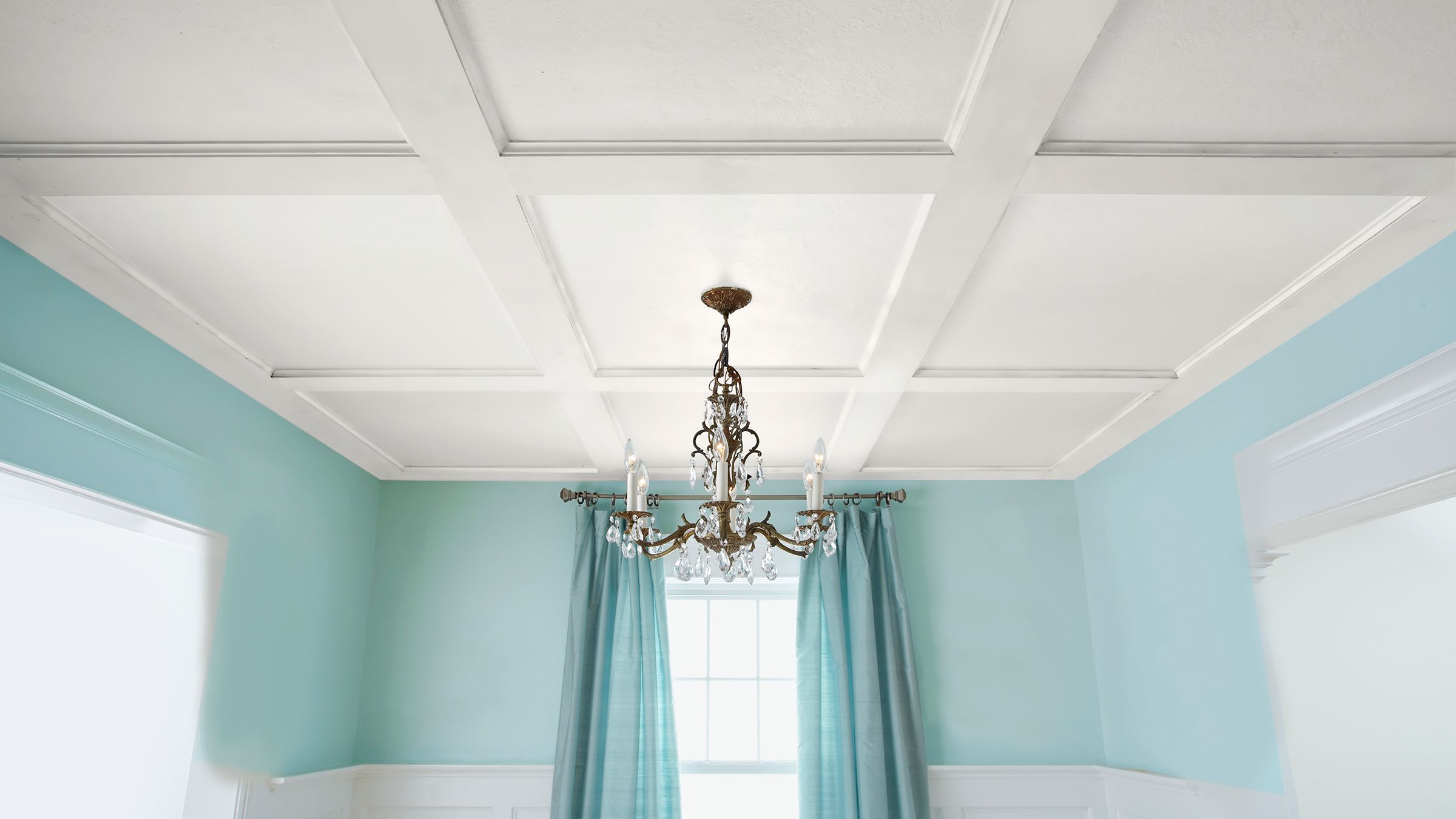
Redoing your ceiling gives you the opportunity to fix basic design flaws and give a room a whole different feel. For example, a room with a high, formal ceiling can feel cozier when topped with a warm or dark color. Or you can go with lighter ceiling shades to visually enlarge a space, just like patterns or colors do on walls.
Luckily, ceiling remodeling is really not as difficult as it may seem. With a little help, a homeowner with moderate skills can accomplish the six treatments described below over just a few weekends.
Ceiling Preparation and Repairs
No matter which upgrade you choose, assess the condition of your current ceiling before jumping into a renovation. Repairs may be in order.
If your home has plaster ceilings, use plaster washers to snug up sagging areas where plaster “keys” are broken off behind the lath. With drywall, you can screw a sagging piece back into the joist.
In most cases, you won’t need to repair most ceiling cracks if you’re going to install a hard covering, like wood, tin, or fiber planks. But if cracks are more than a hairline thick, or run the length of the room, investigate their cause before covering them up.
For other types of designs or soft coverings like wallpaper, your ceiling should be repaired and cleaned with diluted TSP (trisodium phosphate). Repair cracks with drywall tape and mud, and thoroughly cover stains with a white shellac-based product.
Locating Ceiling Joists
Most of the ceiling projects we describe below require you to attach to ceiling joists, so you’ll need to know how to find them. But first, a warning: If your home was built or remodeled before 1980 and the existing ceiling is covered with sprayed acoustical material or acoustic tiles, have a sample checked for asbestos. If asbestos is present, contact a professional abatement contractor to remove the old ceiling.
To locate the joists:
- Look in the attic to see what direction the joists are running and how far apart they are.
- Mark the location of one joist by driving a finishing nail along its side.
- From below, use a stud finder or rap lightly on the ceiling until you hear a solid sound.
- Locate the edges of the joist by nailing through the ceiling at small intervals. Mark the center, then measure over 16 inches (or the spacing you found in the attic) to find the center point of the next joist.
- Snap a chalk line along all joists; it will save you time and work later.
By accurately marking these points, you’ll be able to plan better and avoid unnecessary adjustments during installation. This is especially important for heavier materials like wood planks or multilayered drywall.
1. Ceiling Medallion
Ceiling medallions are a relatively simple way to add a touch of sophistication to any room. These decorative elements are typically installed around light fixtures or ceiling fans.
Modern ceiling medallions are often made from lightweight polyurethane foam, which is easy to install and paint. Given their adaptability, medallions suit various of design tastes, from classic to contemporary.
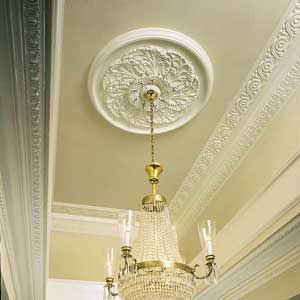
Installing a ceiling medallion is a straightforward process that most homeowners can complete in an afternoon. Here’s how to do it:
- Choose the right size medallion for your space and light fixture.
- Apply urethane adhesive to the back of the medallion.
- Position the medallion on the ceiling, centering it around the light fixture.
- Secure the medallion by countersinking nails or screws every few inches along the edge.
- Fill any indentations with spackle and sand smooth.
- Paint the medallion to match your ceiling or create a contrasting effect.
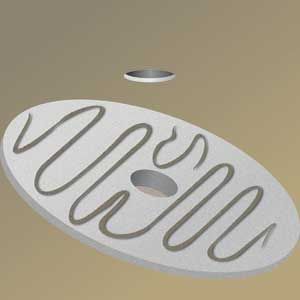
Ceiling medallions come in various sizes and styles, and prices typically start at $25 and can go up to $100 or more for larger, more intricate designs. When selecting a medallion, consider the size of your room and the scale of your light fixture to ensure a balanced look. The right finish can further enhance the medallion’s impact, whether you opt for a glossy paint or a subtle matte tone.
2. Pressed-Tin Panel Ceiling
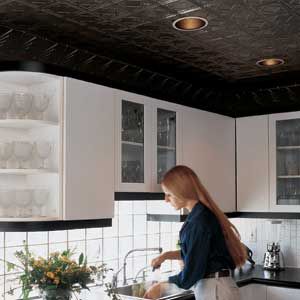
Pressed-tin panels have surged in popularity over the past decade, offering a charming, vintage-inspired look that works well in traditional and industrial-style interiors. These patterned metal sheets add texture, and are ideal for kitchens and dining rooms. Pressed-tin ceilings can also be utilized in unexpected spaces like foyers or bathrooms to create a distinctive appearance.
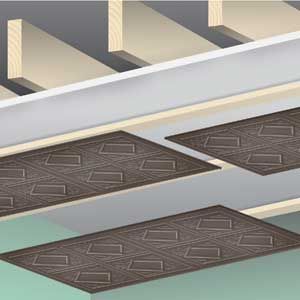
When considering pressed-tin panels, keep in mind:
- Acoustics: Tin panels can amplify sound, so they’re best suited for rooms with soft furnishings to absorb echoes.
- Installation: While not overly complex, installing tin panels is typically a two-person job due to the size and weight of the sheets.
- Finishing: Panels can be left in their natural metallic state, painted, or sealed with clear polyurethane for different effects.
To install pressed-tin panels:
- Install furring strips around the perimeter of the ceiling and every 12 inches across the field.
- Attach the panels to the strips using 1-inch common nails or a nail gun.
- Use tin snips to cut panels as needed to accommodate fixtures or vents.
- Paint or seal the panels after installation if desired.
Pressed-tin panels typically come in 2×4-foot sheets and start at around $18 per sheet. Various patterns are available, allowing you to choose a design that complements your home’s style. Some manufacturers offer customized patterns, enabling you to integrate unique designs that reflect your personal taste.
3. Wallpapering a Ceiling
Wallpapering a ceiling can dramatically change the look and feel of a room. With an endless array of patterns, textures, and colors available, wallpaper offers unparalleled design flexibility. It’s suitable for flat, sloped, and irregularly shaped ceilings.
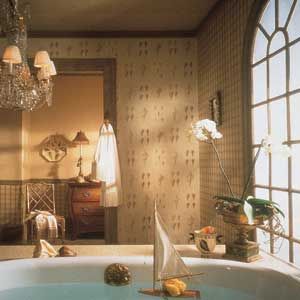
When selecting wallpaper for your ceiling, consider:
- Room size: Light colors and small patterns can make a room feel larger, while dark colors and bold patterns create a cozy atmosphere.
- Ceiling shape: For sloped or irregular ceilings, opt for solid colors or scattered patterns rather than stripes or plaids.
- Existing features: If you want to highlight architectural elements like exposed beams or skylights, choose a wallpaper that complements these features.
Wallpapering a ceiling is more challenging than wallpapering walls, so it’s best to work with a partner. Here are some tips for a successful installation:
- Start with the ceiling before wallpapering the walls, if you’re doing both.
- Use strippable paper for easier future removal.
- Overlap the ceiling paper onto the top of the walls by about 1/2 inch for a clean finish.
- Consider using prepasted paper, which activates when wet, for easier application.
Wallpaper is typically sold in 36-square-foot rolls, with prices ranging from $3 to $180 or more per roll, depending on the quality and design. To achieve a cohesive look, coordinate the ceiling wallpaper with wall treatments, fabrics, and other decorative elements in the room.
4. Suspended-grid ceiling
A suspended-grid ceiling, or a drop ceiling, is an excellent solution for rooms with exposed pipes, ducts, or electrical connections. This system creates a smooth, uniform surface while allowing easy access to the utilities above.
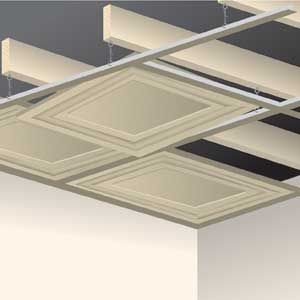
Key benefits of suspended-grid ceilings include:
- Concealment of unsightly infrastructure
- Improved acoustics, especially with mineral-fiber panels
- Easy integration of lighting fixtures
- Potential for creative designs using different panel types
Installing a suspended grid ceiling is a moderately complex project that typically requires two people. The basic steps include:
- Attach hanger wires to the existing ceiling joists.
- Install wall molding around the perimeter of the room.
- Hang main beams from the hanger wires.
- Install cross T-fittings to create the grid.
- Place panels into the grid openings.
A standard 10×12-foot package using mineral-fiber panels costs around $150. The system can be installed as little as 3 inches below the original ceiling, minimizing height loss in the room. With the variety of panel designs available, including textured and smooth finishes, you can customize the ceiling to meet practical and aesthetic needs.
5. Layered Drywall Ceiling
Layered drywall is an innovative technique suited for spaces with open floor plans. Applying a simple border or pattern of single-thickness drywall to an existing ceiling creates a visual separation between areas without blocking light or views. This technique can also accentuate specific areas within a larger room, such as dining spaces or reading nooks.
This treatment is particularly effective in:
- Open-concept living and dining areas
- Large rooms that need visual definition
- Spaces with raised-panel cabinetry or wainscoting
To install a layered drywall border:
- Plan your design, considering the room’s shape and existing features.
- Cut drywall pieces to size for your border or pattern.
- Attach the drywall to the ceiling using construction adhesive and drywall screws.
- Use J-bead to create crisp edges on the new layer.
- Finish with joint compound and paint to match or contrast the existing ceiling.
This project requires moderate DIY skills and can typically be completed over a weekend. If you’re creating an intricate pattern, take the time to measure and cut accurately. The clean edges and precise lines of layered drywall can make a room appear more refined and thoughtfully designed.
6. Paneled Ceilings
Paneled ceilings offer a classic, timeless look that can work in various home styles–from rustic cottages to modern farmhouses. Several materials are available for creating a paneled ceiling effect, each providing a different look and functional benefit. Paneled ceilings can add texture and warmth to a room, transforming the ceiling into a focal point.

Wood
Wood paneling options include:
- Plywood panels: Products like Georgia-Pacific’s Ply-Bead imitate traditional beadboard and come in 4×8-foot sheets.
- Solid wood tongue-and-groove boards: Available in various widths and thicknesses, these create an authentic wood ceiling look.
When installing wood paneling:
- Nail panels or boards directly to ceiling joists.
- Use construction adhesive for added security.
- Finish with paint, stain, or clear sealer as desired.
The natural grain and warmth of wood add a unique touch that suits both contemporary and traditional interiors.
Mineral-Fiber Planks
For a wood look without the weight, consider mineral-fiber planks. They are generally:
- Lightweight and easy to install
- Available in various widths and patterns
- Able to be painted or stained for different effects
These planks typically attach directly to existing drywall or plaster with adhesive or staples. Mineral-fiber planks can emulate the appearance of wood at a lower cost while providing resistance to humidity and temperature changes.
Where to Find Ceiling Materials
For your convenience, here’s a list of manufacturers and suppliers for various ceiling treatments:
- Tin panels: American Tin Ceilings, Armstrong World Industries, Chelsea Decorative Metal Company
- Medallions: Decorators Supply Corp., Focal Point Architectural Products
- Paneling: Georgia-Pacific
- Professional resources: Wallcovering Installers Association
These suppliers offer products to suit different styles and budgets. Exploring different options can help you find the perfect materials for your ceiling makeover.
