
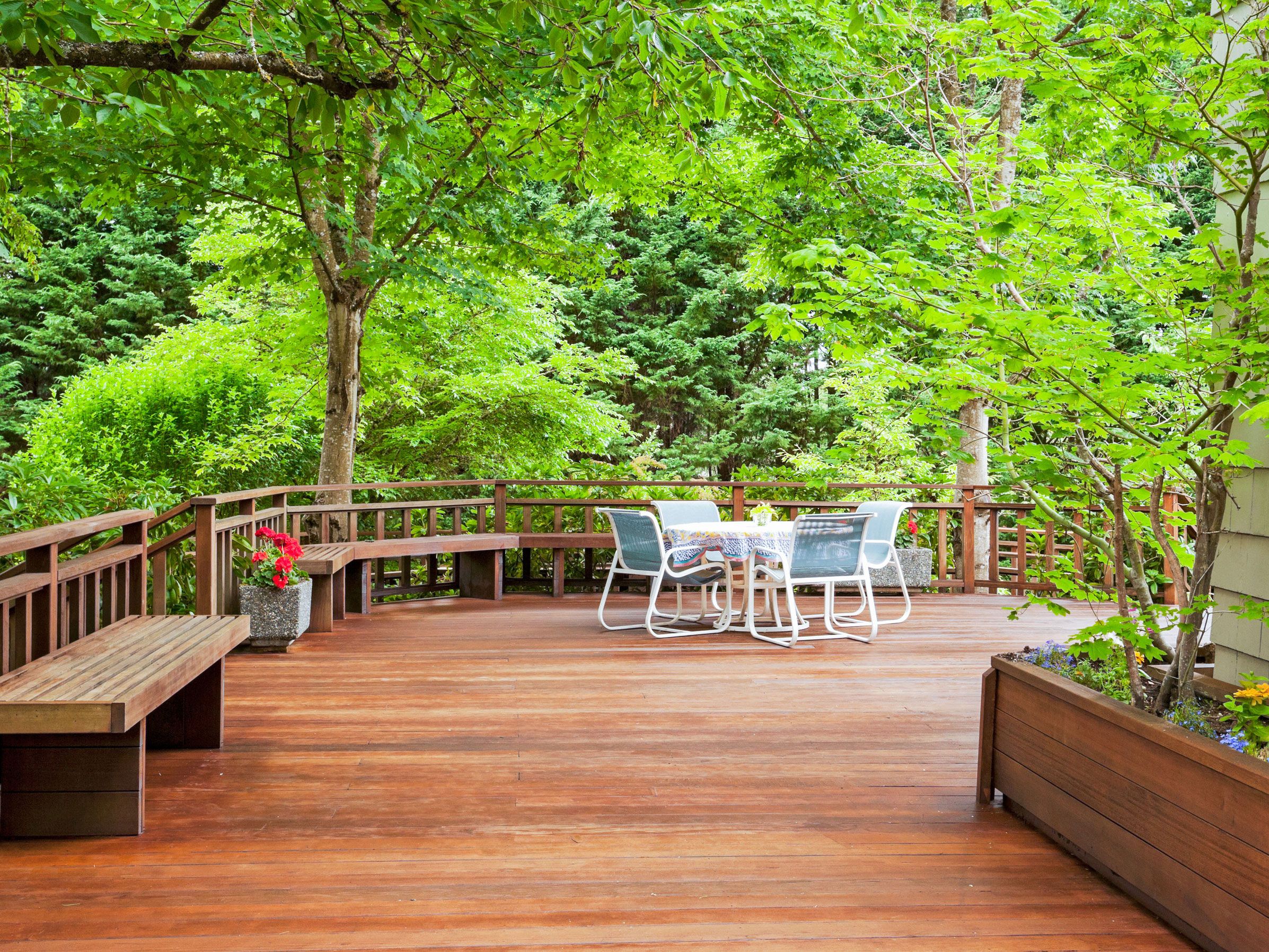
Transforming an old, weathered deck into a vibrant outdoor living space doesn’t always mean going through a complete tear-down and rebuild. This comprehensive guide will walk you through restoring an old deck in four manageable steps, whether your deck has suffered from years of neglect or just needs a refresh.
Assessing Your Deck’s Condition
Before diving into the restoration process, thoroughly evaluate your deck’s current state. This will help you determine what repairs to complete and guide your restoration plan. Focus on two main areas: structural integrity and cosmetic damage.
Identifying Structural Issues
Start by inspecting the deck’s foundation and support system. Use a screwdriver to check for soft spots in posts, joists, and beams, particularly where they contact the ground. “If you can sink the tip of a screwdriver into a post or joist, it means you’ve got rot and it’s time for a major renovation,” advises George Graf, a lead carpenter with Mobile’s Lipford Construction. Pay special attention to the deck-to-house connection, checking for loose fasteners, missing flashing, or signs of water damage on the house’s exterior.
Evaluating Cosmetic Damage
Next, examine the deck’s surface for issues like splintering boards, popped nails, and areas of discoloration. Look for loose railings and any boards that feel unstable underfoot. These cosmetic problems not only affect the deck’s appearance but can also pose safety risks if left unaddressed.
Essential Tools and Materials for Deck Restoration
To successfully restore your deck, you’ll need several tools and materials. Here’s a basic list to get you started:
- Pry bar and hammer for removing damaged boards
- Circular saw for cutting replacement boards
- Drill and screws for securing new boards
- Pressure washer for thorough cleaning
- Stiff-bristle brush for scrubbing
- Deck cleaner and wood preservative
- Exterior wood stain and applicators (brush, roller, or sprayer)
- Safety equipment (work gloves, eye protection, dust mask)
Step 1: Making Necessary Repairs to Your Deck
Once you’ve assessed your deck’s condition, address any structural or cosmetic issues.
Replacing Damaged Boards
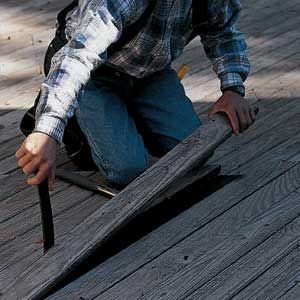
Start by removing any boards that are beyond repair. Use a pry bar to carefully lift damaged boards, taking care not to harm adjacent planks. When cutting replacement boards, use a circular saw and adjacent boards as a guide for accuracy. If you need to rip replacement decking to match existing boards, use a table saw. Ease the sawn edge using a router fitted with a 3/8-inch roundover bit.
Reinforcing Weak Spots
Address any structural weaknesses identified during your assessment. This may involve reinforcing joists, tightening loose connections, or replacing rotted support posts. Pay attention to the ledger board where the deck attaches to your house, ensuring it’s properly flashed and securely fastened.
Fastening Loose Connections
Loose connections can compromise the stability of your deck. Check all screws and nails, replacing or tightening them as necessary. Use galvanized or stainless-steel fasteners to ensure long-lasting results. If your deck has nails popping up, consider replacing them with deck screws for a more secure hold.
Step 2: Thorough Cleaning and Surface Preparation
This step removes dirt, mildew, and weathered wood fibers to prepare the deck for staining.
Choosing the Right Cleaning Solution
Select a cleaning solution appropriate for your deck’s condition. A mixture of household bleach, laundry detergent, and warm water can be effective for general cleaning and mildew removal. Commercial deck cleaners are also available, with options tailored to specific issues like tannin stains or heavy grime.
Pressure-Washing Techniques
A pressure washer can be an effective tool for cleaning your deck, but proper technique is crucial. Graf recommends using a fan-type nozzle instead of a pinpoint nozzle that can dig into the wood. Work in the direction of the wood grain, maintaining a consistent distance from the surface to avoid damaging the wood. After pressure washing, allow the deck to dry thoroughly before moving on to the staining phase.
Scrubbing and Rinsing
For areas with stubborn grime or mildew, use a stiff-bristle brush to scrub the surface. Apply your chosen cleaning solution and let it sit for about 10–15 minutes before scrubbing. Rinse thoroughly with a garden hose or pressure washer, making sure to remove all cleaning residues. Allow the deck to dry completely before proceeding to the next step.
Step 3: Applying Protective Stain
Staining your deck enhances its appearance and provides essential protection against the elements. This step is key to extending the life of your restored deck.
Selecting the Appropriate Stain
For older decks, a semitransparent stain is often the best choice. “The grain still shows through, but the pigment gives the old wood a clean, uniform color and helps the new wood blend in,” explains John Starling, owner of John the Painter. Semitransparent stains also offer better UV protection than clear finishes, helping your deck withstand sun exposure.
Application Methods and Tips
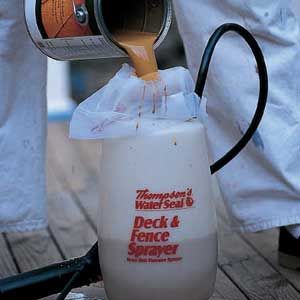
Use a sprayer for fast application, followed by a brush to work the stain into the wood and ensure even coverage. “Spraying is fast and puts more stain on the wood than rolling or brushing,” says Starling. Apply the stain in thin, even coats, working in the direction of the wood grain. Be prepared to use more stain than you might expect—old wood can be particularly absorbent.
Ensuring Even Coverage
To avoid blotchy or uneven staining, apply the stain in manageable sections, about 2–3 boards at a time. Use a brush to ensure the stain penetrates deeply into the wood. If the wood appears too dry or absorbs the stain unevenly, apply a second coat after the first has dried.
Step 4: Upgrading Deck Features
With the basic restoration complete, consider upgrading your deck’s features to enhance both its appearance and function.
Railing Replacement Options
If your deck’s railing is beyond repair, replacing it can dramatically improve your deck’s overall look. Consider low-maintenance materials like vinyl-coated composites for a durable, attractive solution. These options come in premade panels or kits, making installation relatively straightforward.
Adding Decorative Elements
Consider adding post caps, decorative balusters, or built-in planters. These elements can add personality and style to your outdoor space, making it more inviting and enjoyable.
Upgrading Furniture and Accessories
To complete the transformation, update your deck furniture and accessories. Choose weather-resistant materials such as teak or aluminum for longevity. Incorporate elements like outdoor rugs, cushions, and potted plants to create a cozy and welcoming atmosphere.
Cost Considerations for Deck Restoration
The cost of restoring a deck can vary widely depending on its size, condition, and the extent of repairs needed.
DIY vs. Professional Services
While hiring professionals can save time and ensure expert results, it comes at a higher cost. According to Angi, professional deck refinishing can cost between $3 and $7 per square foot. DIY restoration can save you $300–$600 on average.
Budgeting for Materials
When budgeting for a DIY restoration, account for cleaning supplies, replacement boards, fasteners, and stain. Basic tools and supplies will generally cost around $150–$200, while sealant and stain can cost between $20 and $60 per gallon. Additional materials like a paint sprayer ($100–$300), power washer ($50–$250), or a sander rental ($40–$70 per day) can add up, so take everything into account before getting started.
Choosing to do the job yourself can still save you a significant amount of money. Here’s a breakdown of labor costs by work type:
| Prep Work | Labor Cost* |
| Cleaning | $0.40 per square foot |
| Repairs | $850–$3,500 |
| Stripping paint | $30–$50 per hour |
| Sanding | $40–$70 per day |
Timeline for Completing a Deck Restoration Project
A typical deck restoration project can be completed over two weekends. Here’s a general timeline:
- Weekend 1: Assessment, repairs, and cleaning (1–2 days)
- Week: Allowing the deck to dry completely (3–5 days, weather dependent)
- Weekend 2: Staining and finishing touches (1–2 days)
This timeline allows for drying between cleaning and staining, which is crucial for the stain’s adhesion and longevity.
Adjusting to Weather Conditions
Weather can significantly affect your project timeline. Plan restoration activities during a period of dry weather to ensure optimal results. If you encounter unexpected rain, focus on indoor preparation tasks like cutting replacement boards or planning deck upgrades.
Common Deck Challenges and How To Overcome Them
During your deck restoration, you may encounter several challenges:
- Hidden damage: Be prepared to replace more boards than initially anticipated if you uncover additional damage during repairs.
- Persistent stains: For tough stains, try a specialized deck stain remover or oxalic acid-based cleaner.
- Uneven stain absorption: Apply multiple thin coats rather than one thick coat to achieve even coverage.
- Weather delays: Plan your project during a period of dry weather to avoid interruptions.
Handling Stubborn Mildew
Mildew can be particularly stubborn and may require multiple cleaning sessions. Use a mildew-specific cleaner and scrub thoroughly. Allow the area to dry completely between cleanings.
Enhancing Your Deck’s Functionality
While restoring your deck, consider improvements that can enhance its usability and appeal.
Incorporating Built-In Seating
Built-in benches or seating areas can maximize your deck’s space and provide convenient, permanent seating options. For a cohesive look, they can be constructed using the same materials as your deck.
Installing Lighting Features
Adding lighting to your deck can extend its usability into the evening hours and enhance safety. Consider options like recessed deck lights for a sleek, integrated look or string lights for a more whimsical atmosphere.
Adding Shade Structures
To make your deck more comfortable during hot summer days, consider adding shade structures such as pergolas or retractable awnings. These structures can provide a stylish touch and enhance the overall ambiance of your outdoor space.
Environmental Considerations in Deck Restoration
When restoring your deck, consider the environmental impact of your choices:
- Choose eco-friendly cleaning solutions and stains with low VOC (volatile organic compound) content.
- Properly dispose of old stain and cleaning materials according to local regulations.
- If replacing boards, consider sustainable wood options or composite materials made from recycled content.
- Implement water-saving measures during cleaning, such as using a pressure washer with an adjustable flow rate.
Reusing Existing Materials
If some of your deck boards or components are still in good condition, consider reusing them in your restoration project. This can reduce waste and lower your overall costs. For instance, old boards can be repurposed to create built-in planters or benches.
Maintaining Your Restored Deck
To protect your investment and keep your deck looking its best, establish a regular maintenance routine.
Regular Cleaning Routine
Throughly clean your deck at least once per year to remove dirt, debris, and potential mildew growth. Use a gentle deck cleaner and a soft-bristle brush to avoid damaging the wood surface. Regular sweeping and occasional rinsing can help prevent buildup between deep cleanings.
Periodic Inspections and Touch-ups
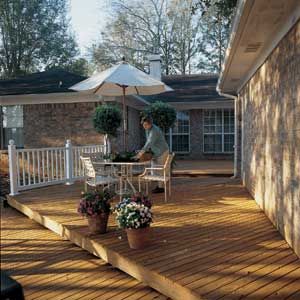
Inspect your deck annually for signs of wear, damage, or loose fasteners. Address any issues promptly to prevent them from worsening. Apply a fresh coat of water repellent or stain every two to three years, or as needed, to maintain protection against moisture and UV damage.
Addressing Minor Repairs
Minor issues like small cracks or splinters should be addressed as soon as they’re noticed. Use wood filler for small cracks and sand the area smooth. This prevents further damage and keeps your deck looking well-maintained.
