
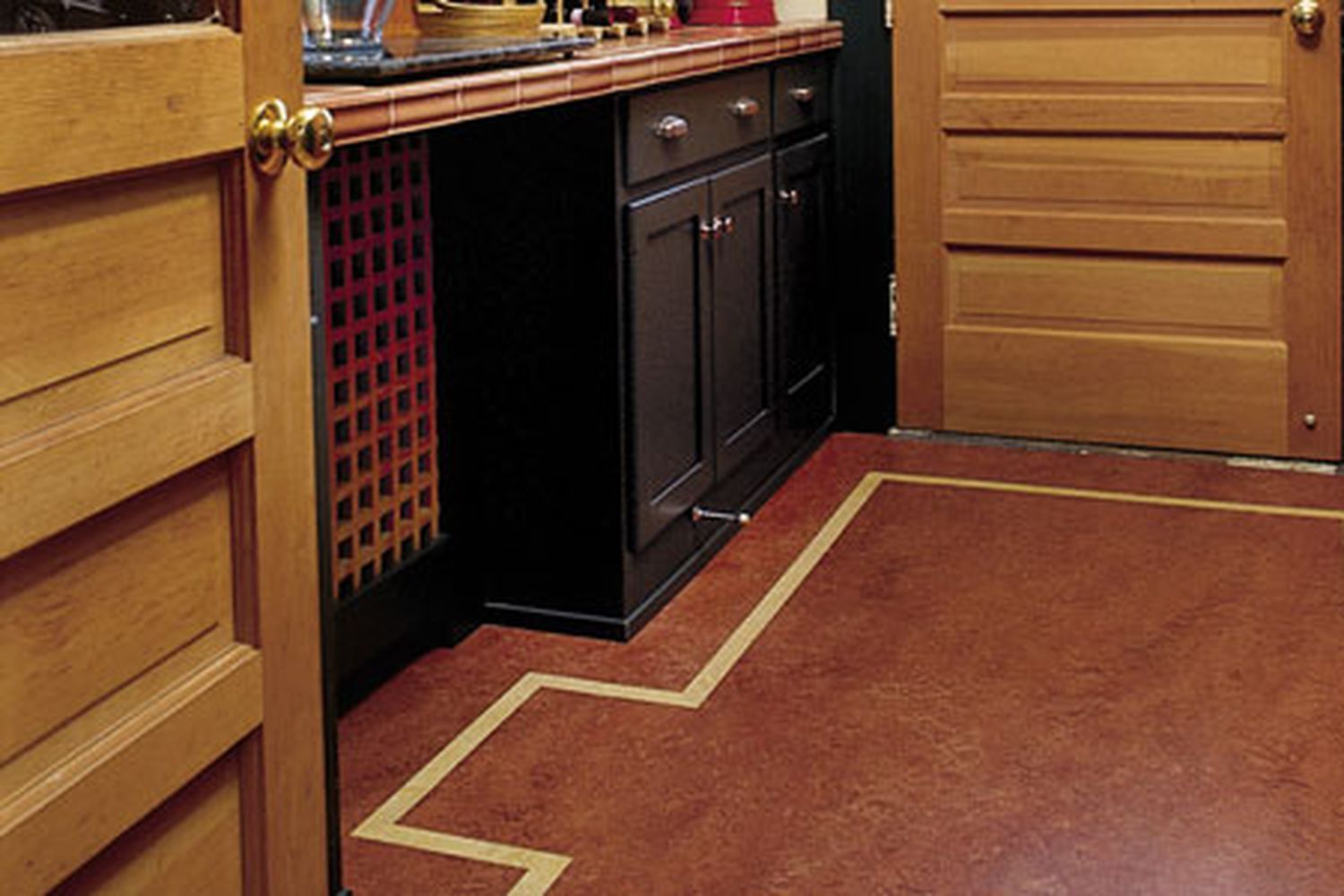
Linoleum flooring has made a comeback in recent years, offering homeowners a durable, eco-friendly, and stylish option. Often confused with vinyl, linoleum is a distinct material with unique properties and benefits. Our guide explores all there is to know about linoleum flooring, including how to install and maintain it.
What Is Linoleum Flooring?
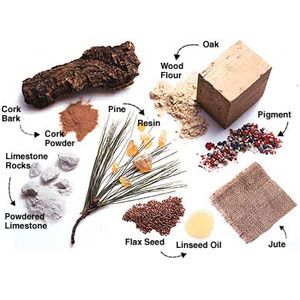
Linoleum is a natural flooring material made from renewable resources. Unlike synthetic options, linoleum offers both environmental benefits and long-lasting performance. Linoleum is made from all-natural ingredients, including the following:
- Linseed oil
- Cork dust
- Wood flour
- Tree resins
- Ground limestone
- Pigments
- Jute backing
The manufacturing process involves mixing these ingredients, pressing them onto a jute backing, and curing the material for several weeks. This results in a durable, colorfast flooring material with patterns and colors that go all throughout the product.
Benefits of Choosing Linoleum
Linoleum comes with many advantages that make it an attractive option. Let’s explore its benefits in more detail below.
Durability and Longevity
One of linoleum’s standout features is its exceptional durability. “It seems to last forever,” says Duo Dickinson, an architect in Madison, Connecticut. Some linoleum floors have been known to survive 20–40 years. This longevity makes it a great choice for high-traffic areas in homes, such as kitchens and entryways.
Eco-Friendly Attributes
Linoleum is a top choice for environmentally conscious homeowners. “From a resource standpoint, it’s great,” says Alex Wilson, editor of Environmental Building News. “It’s made from natural, largely renewable materials, and there are no environmental toxins involved in its manufacturing or disposal. ” This natural composition also means linoleum is biodegradable at the end of its life cycle.
Design Versatility
Modern linoleum comes in an array of vibrant colors and patterns, a far cry from the limited options of the past. Its design flexibility allows for creative installations, including decorative inlays and borders. Linoleum can be installed in sheets, tiles, or even as area “rugs,” offering versatility and style.
Comparing Linoleum to Other Flooring
Knowing how linoleum compares to other flooring will help you determine if it’s the right choice for your space.
Linoleum vs. Vinyl
While often confused, linoleum and vinyl are quite different. Vinyl is a synthetic product made from chlorinated petrochemicals, while linoleum is composed of natural ingredients. Linoleum is more durable and resistant to burning compared to vinyl. Linoleum’s colors and patterns go all the way through the material, whereas most vinyl patterns are printed on the surface.
For a deeper dive into vinyl flooring options and how they compare to linoleum, you can explore our comprehensive guide to vinyl flooring.
Linoleum vs. Ceramic Tile
Compared to ceramic tile, linoleum offers a softer, more comfortable surface underfoot. “Ceramic tiles can be hard on your legs, and some people are nervous about having wood flooring around dishwashers,” says interior designer Sue Walling of SW Design Inc. in Minneapolis. “Linoleum is comfortable, you can get it wet, and you don’t have to worry about dropping knives on it. “
Linoleum vs. Hardwood
While hardwood flooring is timeless, linoleum provides superior water resistance and easier maintenance. Linoleum is an excellent alternative in areas where moisture might be a concern, such as kitchens and bathrooms. It’s also typically more affordable than hardwood, making it a budget-friendly option for larger spaces.
Installing Linoleum Flooring
Installing linoleum can be a DIY project for those with some home improvement experience, but we recommend professional installation for the best results, especially when working with sheet linoleum. Let’s look at the installation process for both tiles and sheets.
Assessing Your Subfloor
First, make sure the surface you’re installing on is clean, dry, and level. Any imperfections in the subfloor can show through the linoleum, affecting its appearance and longevity. Repair any cracks, fill holes, and sand down high spots to create a smooth surface.
Tools and Materials
Next, gather your materials. To install linoleum flooring, you’ll need the following:
- Linoleum sheets or tiles
- Adhesive suitable for linoleum
- Notched trowel
- Utility knife with spare blades
- Straightedge or T-square
- Measuring tape
- Roller (100-pound for sheet linoleum, lighter for tiles)
- Seam sealer (for sheet linoleum)
Installing Linoleum Tiles
Linoleum tiles are generally easiest for DIY installation. Walt Bamonto, a flooring installer with 30 years of experience, explains the process: “Just spread swaths of latex adhesive on the floor with a notched trowel, snug the tiles against each other, and flatten with a 100-pound roller. “
For a detailed guide on installing linoleum tiles, check out our step-by-step tutorial on linoleum tile installation.
Laying Sheet Linoleum
Installing sheet linoleum requires more skill and precision. Bamonto advises trimming seam edges with a two-bladed beveled edge trimmer for tight seams. He also recommends leaving 18 inches adhesive-free at each end when unrolling sheets. “When it hits the glue, linoleum shrinks in length and expands in width,” Bamonto says. After allowing the material to stabilize for about 30 minutes, he overlaps the next sheet and uses a special seam-scriber tool to ensure a perfect fit.
Addressing Seams and Edges
Proper seam and edge treatment creates a professional-looking installation. For sheet linoleum, use a seam roller to create tight, nearly invisible seams. Edges should be carefully trimmed and, if necessary, finished with a matching cove base or quarter-round molding for a polished look.
Maintaining Your Linoleum Floor
Proper maintenance preserves your linoleum floor’s beauty and longevity. With the right care, your linoleum can retain its appearance and performance for decades.
Daily Care and Cleaning
For daily maintenance, sweep or vacuum your linoleum floor to remove loose dirt and debris. When needed, damp mop with a mild, pH-neutral cleaner specifically designed for linoleum. Avoid using harsh chemicals or abrasive cleaners, as these can damage the floor’s surface.
Annual Maintenance and Sealing
To keep your linoleum floor in top condition, Bamonto recommends applying one or two coats of acrylic sealer to new floors and recoating once a year thereafter. This helps protect the floor from stains and wear, maintaining its appearance over time.
Common Linoleum Challenges and Solutions
While linoleum is a durable flooring option, it can face some challenges over time. Understanding these issues and how to address them can help you maintain your floor.
Dealing With Stains and Discoloration
Linoleum is susceptible to staining, especially if not properly sealed. For minor stains, a mixture of baking soda and water is often effective. For tougher stains, consult the manufacturer’s recommendations or a professional cleaner to avoid damaging the floor.
Repairing Scratches and Dents
Minor scratches in linoleum can often be buffed out with a soft cloth and a small amount of mineral oil. For deeper scratches or dents, you can fill the area with a mix of wood glue and fine scrapings from a leftover piece of linoleum, as Sue Walling suggests.
Preventing Mold Growth
While linoleum itself is naturally resistant to mold and bacteria, moisture trapped beneath the flooring can lead to mold growth. If necessary, ensure proper installation with a moisture barrier and address any water leaks or spills promptly to prevent mold issues.
Cost Considerations for Linoleum Flooring
When considering linoleum flooring, it’s important to factor in both initial costs and long-term savings.
Initial Installation Costs
Linoleum flooring costs are comparable to midrange vinyl options. Sheet linoleum typically costs between $2 and $5 per square foot installed, while linoleum tiles may range from $4–$7 per square foot installed.* These prices can vary based on the quality of the linoleum, the complexity of the installation, and your location.
*All price information in this article is sourced from Angi.
Long-Term Value and Savings
While the initial cost of linoleum may be higher than some flooring options, its durability and longevity offer excellent long-term value. With proper care, a linoleum floor can last 20–40 years or more, potentially outlasting multiple installations of less durable flooring materials. Additionally, its low maintenance requirements can lead to savings on cleaning and upkeep over time.

Our Conclusion
While linoleum requires some maintenance to keep it looking its best, its benefits often outweigh this minor drawback. As with any flooring decision, weigh the pros and cons carefully and consider consulting a flooring professional to determine if linoleum is the right choice for your home and lifestyle.
