
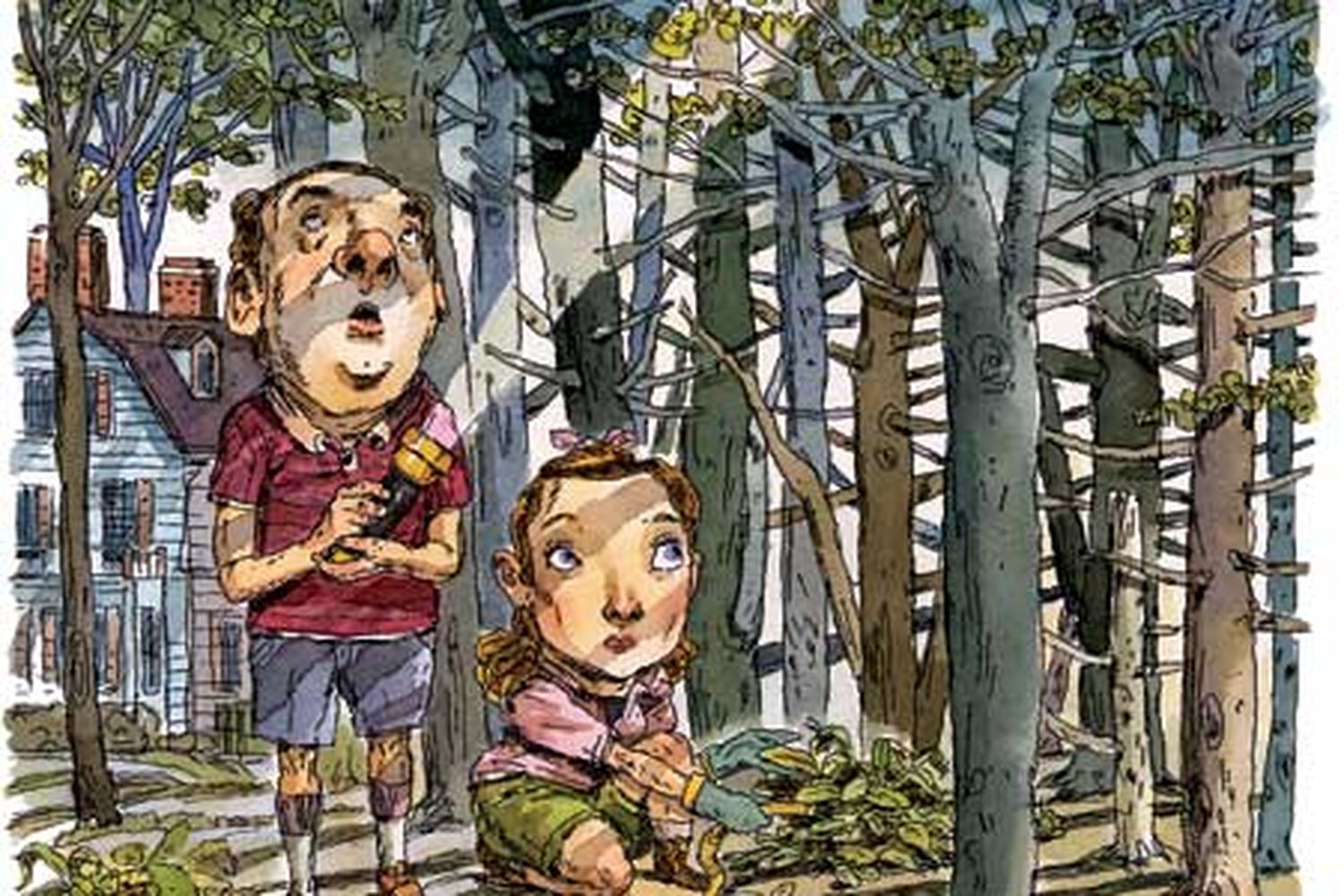
CREEEAAK, CREEEAAK, CREEEAAK… The sound of trees swaying in the wind can be pretty ominous, especially if they sometimes come crashing down within inches of your painstakingly renovated home. Just ask Sandy Herbert, a lawyer who lives in a Colonial Revival home built in the early 1900s on a heavily wooded acre in Englewood, New Jersey, and her husband, John.
After more than 20 years spent restoring her three-story fixer-upper, Herbert decided it was time to take on the menacing forest of dark trunks she stared at from her kitchen window. “Every time there was a storm, we’d have trees down,” says Herbert. “None had fallen on the house, but we knew it was just a matter of time.” The last straw came when an enormous one landed right behind the house and made a huge dent in the lawn.
The Pro Steps In
The Herberts called Denny Wiggers, a horticulturalist and landscape contractor they’d hired once before. His diagnosis was swift: Dead Backyard Syndrome. “The yard was full of tulip trees, a fast-growing variety related to the magnolia,” Wiggers says. “They were lanky and poorly branched because they were fighting for light.” Over the years, he guessed, tree seeds had simply sprouted where they fell, creating a crowded canopy that blocked the sun. “Even a mild storm could have spelled disaster for the house,” he notes.
Rather than bulldozing the yard flat, though, Wiggers suggested getting rid of five particularly scrawny 80-foot tulip trees. Doing so would let the healthier trees thrive and allow the scraggly lawn to fill out. The Herberts doubted his strategy would work, but when Wiggers showed them the yards of some of his clients, which had healthy trees arched over beautiful lawns, they decided to give it a shot.
Two weeks later the takedown team arrived. “You can’t cut trees off at the base, because even if they don’t hit the house or fall on somebody, they’ll damage the yard,” says Wiggers. A climber began with a large tree near the garage. He shimmied up its trunk using shoe and hand spikes, tied a rope to a large branch, then looped the free end of the rope over a larger branch above it and lowered the end to a man on the ground, creating a pulley system. The climber cut off the first branch, while the second man gave the rope enough slack to lower it safely to the ground. The two men repeated the process, cutting off branches and chunks of the trunk, until the tree was a mere stump.
Next, what to do with the stumps? Wiggers insisted they go, because they would still absorb water and disrupt the growth of the lawn. He hired a contractor to pulverize them into sawdust with a grinding machine.
With the five trees gone and the wood hauled away, the yard was bright and sunny, but the lawn was uneven where the roots and stumps had been. Wiggers brought in topsoil and a Bobcat to excavate and flatten it out, returning later with grass seed.
The Aftermath
“What a relief to know the dead trees are gone,” says Herbert. “Plus, I never realized how many shadows the trees had been casting.” She and her husband are enjoying their new yard so much they just built a stone patio so they can spend more time outside.
The Bill
Two days of tree removal: $3,600
Topsoil: $900
One day of excavation and grading (including equipment rental): $1,200
Total: $5,700
Questions to Ask Your Tree-Service Pro
Q: What credentials does a good tree guy have?
A: Some states have licensing programs for arborists, and the International Society of Arboriculture offers certification and training. But when you’re hiring, don’t rely on credentials alone. Get referrals, of course, and ask for before-and-after pictures of their work. “Call their former clients and ask if you can visit,” says Herbert. And make sure your pro is bonded and licensed in your state.
Q: How do I know if I need to remove a tree?
A: “Look for rot or decaying spots on the trunk, like where a branch used to be,” says Wiggers. Other bad signs include bare, droopy branches and leaves that crinkle at the edges. Deciduous trees that drop leaves in the fall earlier than similar trees could be suffering stress or infection.
Q: Should I ever take down a healthy tree?
A: “In some cases, a sun-blocking tree with lots of surface roots should be removed,” says Wiggers. Certain species, such as sweetgum and silver maple, tend to have surface roots, but most trees can develop them, especially if they’re grown in shallow soil or near water. “Such trees topple more easily when there are strong winds, and they’ll choke out other vegetation over time.”
Q: If I take down a tree, won’t I get standing water in my yard?
A: It’s highly unlikely. “As a general rule, vegetation and grass absorb more water than a tree,” says Wiggers. So removing a dead tree can actually speed water absorption. Of course, the sinkhole where the stump was removed should be filled in and graded so it won’t collect water.
Q: Can felled wood be cut up for firewood, furniture, or mulch?
A: In many cases, yes—but it depends on the tree’s type and condition. Ask your tree pro for advice, and he’ll give you suggestions about what to do with the wood.
