
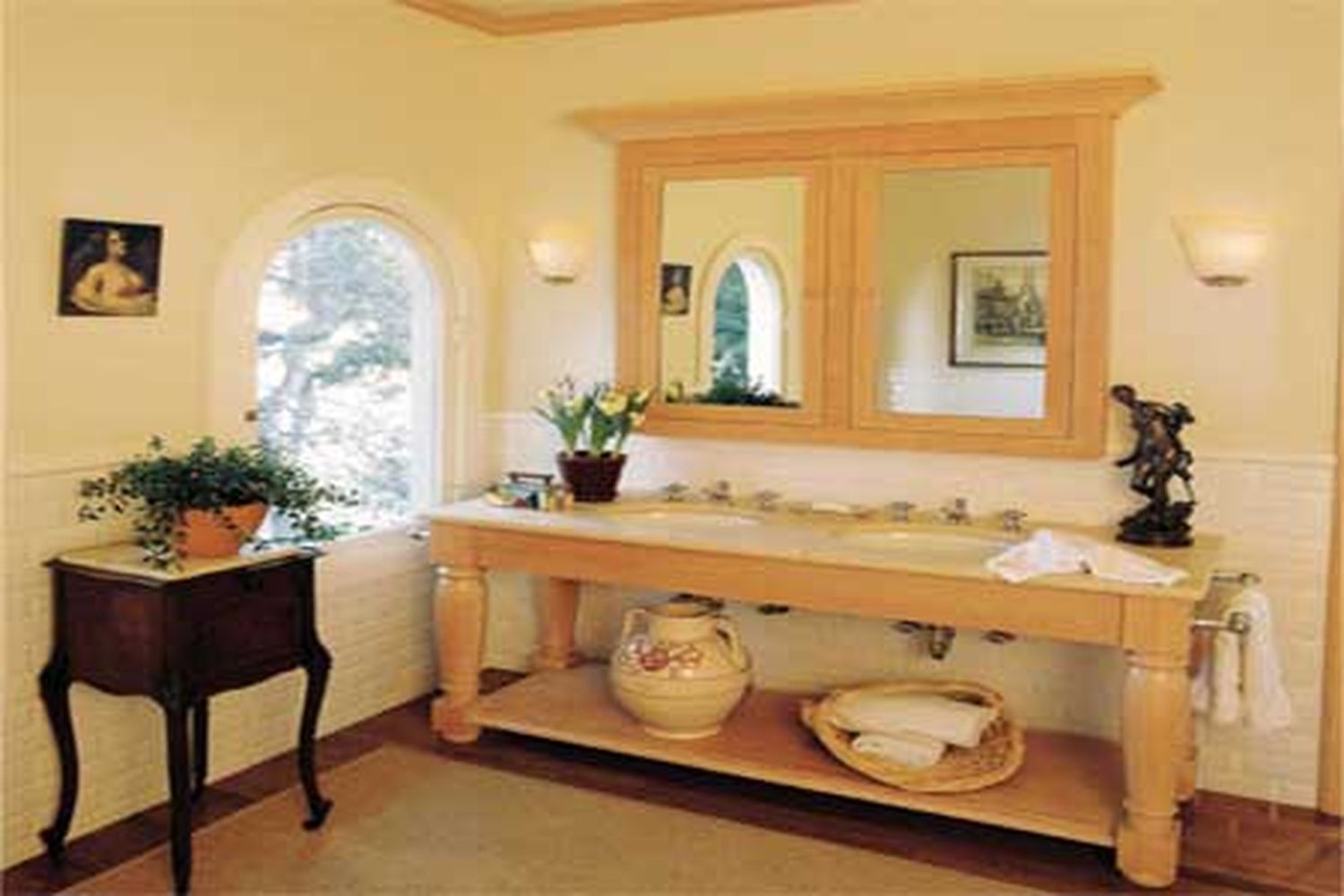
A second sink in the bathroom is a luxurious but practical solution for busy households. Whether you’re a growing family or a working couple, a double-sink vanity can improve your morning routine by eliminating the frustration of a lack of counterspace. This upgrade can also add value to your home as you can recoup as much as 50% of bathroom remodeling costs in a home sale. Read the guide below to learn more about double sinks and how they can make your bathroom more functional. Consult a professional as needed, especially for plumbing work, to be sure that your project complies with local codes.
Finding the Room for Two Sinks
Start by creating a scale drawing of your bathroom, including all existing fixtures. This visual aid will help you identify the possibilities and restrictions of your space. Here are some key considerations:
- Aim for a maximum of 30 inches between the centers of the two basins to simplify plumbing.
- Leave at least 30 inches of open space between a sink and opposite fixtures like tubs or toilets. This will also allow you to tie the sinks together with a single waste line.
- Allow at least 12 inches from the center of each sink to the closest wall.
- If moving a toilet, keep its center at least 15 inches from a wall or cabinet.
- Account for the swing of all doors, including the bathroom entry, linen closet, and shower.
- Always check your local building codes for specific regulations in your area.
Using a Custom Vanity
Repurposing furniture pieces like farmhouse tables or sideboards into vanities can create a unique, personalized look in your bathroom. When planning your design, factor in the practical aspects of using these pieces. In custom vanities, undermount sinks are often set close together, which may limit your countertop space. Additionally, the height of the sink is determined by the table’s size, which might not work for everyone.
Updating Double-Sink Vanity Fixtures and Fittings
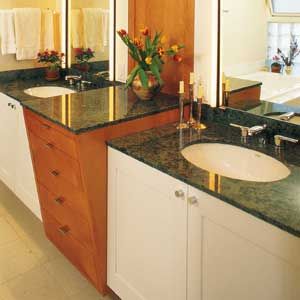
A double-sink vanity remodel is also a great time to replace or upgrade the inner components of your sink and plumbing fixtures.
Sinks
You’ll likely need to purchase a matched pair when selecting sinks for your double vanity, giving you more customization options. Popular materials include:
- Porcelain over cast iron: This classic choice is not only elegant but also incredibly durable and heat-resistant, making it ideal for daily use. The cast iron core provides strength, while the porcelain finish offers a smooth, glossy surface that resists chipping and staining.
- Solid surfacing and synthetic marble: These materials provide a seamless, modern look that can be easily customized to match your design preferences. They are non-porous, which makes them resistant to stains and easy to clean, and they can be fabricated to include integrated sinks, adding to the streamlined appearance.
- Vitreous china: Known for its high-gloss finish and durability, vitreous china is a popular choice for bathroom sinks. It’s resistant to wear and tear, easy to clean, and maintains its bright white color over time, making it a reliable and low-maintenance option.
Mounting options vary as well, so consider your budget, cleaning preferences, and style:
- Above-counter: Also known as vessel sinks, these modern and eye-catching sinks sit on top of the countertop, adding height and a focal point to the vanity. They come in various shapes, sizes, and materials, offering plenty of design flexibility, though they may require more frequent cleaning around the base.
- Integral-basin: This option provides a seamless look with the countertop, as the sink and counter are made from a single piece of material. It’s easy to clean with no crevices or seams to trap dirt, and it offers a sleek, contemporary appearance that works well in minimalist designs.
- Self-rimming: Also called drop-in sinks, these are the most common and typically one of the most affordable options. The sink is dropped into a hole cut in the countertop, with a rim that rests on the surface. This design is easy to install and works well with most countertop materials, though the exposed rim may require regular cleaning.
- Undermount: Installed beneath the countertop, undermount sinks offer a sleek, streamlined look with no visible edges. This makes them easy to clean around, as spills can be wiped directly into the sink without catching on a rim. They are typically more expensive and require professional installation but are a favorite for their sophisticated appearance.
Vanities
Modern vanities are no longer bound by standard heights, allowing for easier customization based on your family’s needs. Think about who will use the sink and how the sink needs to meet your daily needs when placing it. Are there children in the house? People using wheelchairs or walkers? Are there tasks that you prefer to do while sitting down? Some trends to consider include:
- Lower sections: Great for seated tasks like applying makeup
- Mixed heights: Combining different levels for varied functionality
- Taller vanities: Ideal for taller users and providing extra storage
For long-term planning, consider Universal Design principals and think about not only the height of the vanity, but the available space underneath.
Faucets
Matching hardware gives your setup a professional look. Faucets and handles, collectively known as the “lav set,” come in three main types:
- Center-set: Features separate hot and cold handles on a shared base with the faucet
- Single-control: Combines faucet and temperature control in one unit
- Spread-fit: Offers completely separate components for faucet and water controls
Your choice will depend on the number and positioning of holes in your sinks. Make sure to find a set that is easy to use, especially with wet hands. For example, single-control lav sets often allow for swift adjustments, proving beneficial during busy mornings.
Hooking Up a Second Bathroom Sink
Place your second sink near the first sink for an easier time hooking up the drain and to avoid cutting into the wall. Here are some key points to consider:
- Keep the centers of the two drains within 30 inches of each other.
- If you’re installing vanity tops at different heights, the new sink should be no more than 6 inches higher than the existing one.
While hiring a professional plumber is recommended, confident DIYers can tackle this project. Here’s a general overview of the process:
- Shut off the water supply and install new T-fittings to run supply lines to the new sink.
- Adapt the existing drain by removing its tailpiece and inserting a slip-joint T-fitting above the trap.
- Connect the new fitting to both lavs using tailpieces and a 90-degree slip-joint elbow under the new lav.
- Slope the drain pipe by 1/4 inch for every foot in length for proper drainage.
- Verify whether a separate vent is required for the new sink based on your local building codes.
While this overview provides a general idea of the process, plumbing work requires specialized expertise and knowledge of local codes. If you’re unsure about any step, it’s best to consult with a professional plumber.
In many cases, you can extend existing supply and drain lines if the distance from the vent is less than the maximum distance allowed by the building code. If you do have to add a separate vent for the new sink based on building codes, seek advice from a contractor.
Maximizing Your Double Sink Setup
Follow these tips to get the most out of your new double sink setup:
- Organize with purpose: Assign specific areas for each user’s toiletries to minimize clutter.
- Personal touches: Use decorative items or plants to make the space feel inviting.
- Shared storage: Install a central organizer between sinks for items that everyone uses.
- Quality lighting: Find the right color and wattage for shaving or applying makeup. The placement of lighting fixtures will also help you get the best light for any task you’re doing.
