
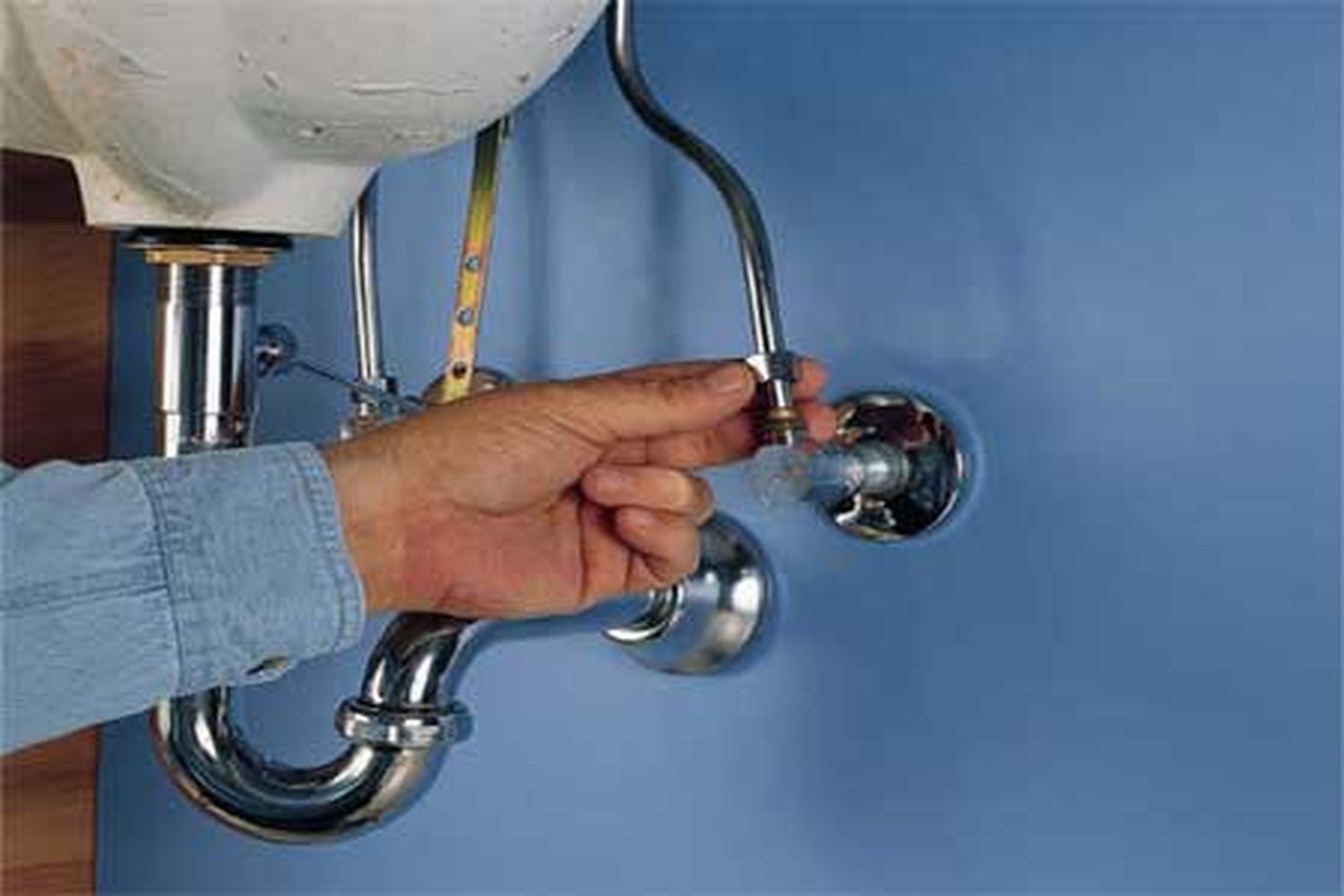
It shouldn’t be necessary to turn off the water to the entire house just to fix a leaky faucet, but that’s exactly what many homeowners must do. Why? Because they don’t have individual shutoff valves installed under every sink.
A sink shutoff valve lets you control water flow to an individual sink without affecting the entire house. Shutoff valves act both as a convenience and a safety measure. In a plumbing emergency – such as a burst pipe – you can quickly stop the water supply to prevent flooding.
Adding a compression shutoff valve to an existing sink is a simple, straightforward job that most homeowners can handle. In most cases, you won’t need to replace the supply tubes that run from the valves to the faucet. Standard compression valves cost about $7 each at most big-box hardware stores.
Preparing for Sink Shutoff Valve Installation
Before you meddle with the pipes behind your sink, shut off the main water valve and drain your pipes.
- Locate your home’s main water shutoff valve and turn it off. This valve is typically found near the water meter or where the main water line enters your home.
- Open all faucets in your home, starting with the highest floor and working your way down.
- When you disconnect the old fittings, keep a bucket handy to catch any water that may still be in the lines.
Choose the Right Type of Sink Shutoff Valve
There are two styles of compression valves commonly used in sink hookups: angle-stop valves and straight-stop valves. When the water pipe enters the sink cabinet through the back wall, a right-angle-stop valve is required to make the 90-degree turn to the faucet. No turn is needed when piping enters through the floor, so a straight-stop valve is used.
Consider the type of pipe that supplies water to the sink. If it’s made of 1/2-in. rigid copper, you’ll need a compression fitting to connect the valve. If the piping is threaded galvanized iron, use a valve that has female iron-pipe threads.
How to Install an Angle-Stop Valve
To install an angle-stop valve, you will need an angle stop valve, basin wrench, pipe wrench, adjustable wrench, wire brush, and pipe-joint compound.
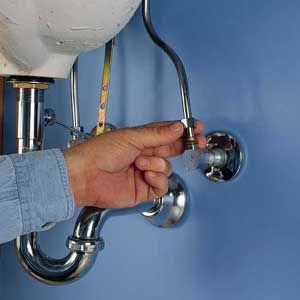
- After following the preparation steps above, use a wrench to loosen the water-supply tube from the adapter.
- Use a basin wrench to disconnect the other end of the supply tube from the faucet. The long handle of this wrench allows you to reach up behind the sink bowl and grab the faucet’s coupling nut.
- Use a pipe wrench to grip the threaded galvanized pipe stub coming out of the wall. Then use an adjustable wrench to unthread the old adapter from the pipe stub.
- Take a wire brush and clean away hardened pipe dope from the pipe threads. Brush on a fresh coat of pipe-joint compound.
- Thread on the new valve. Tighten the valve using the adjustable wrench, but be sure to backhold the pipe stub with a pipe wrench.
- Lubricate the threads of the angle-stop valve with pipe-joint compound and attach the new flexible supply tube.
- Connect the opposite end of the tube to the faucet with the basin wrench.
How to Install a Straight-Stop Valve
Sinks plumbed with copper pipe are even easier to upgrade. In this case, we attached a straight-stop valve to the pipe stub with a compression fitting. To install a straight-stop valve, you will need a straight-stop valve, pipe-joint compound, and two adjustable wrenches.
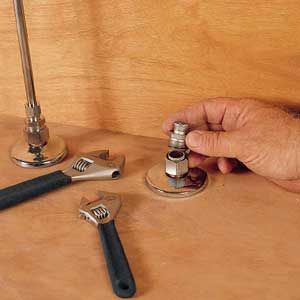
- After following the preparation steps above, lift out the old adapter fitting and set it aside. You won’t be able to remove the old compression nut because the crushed ferrule will keep it locked in place. The new valve will connect right onto the existing nut and ferrule.
- Brush pipe-joint compound onto the valve threads and then press the valve onto the pipe stub coming through the floor of the sink cabinet.
- Pull up on the compression nut and thread it onto the valve. Finish tightening the nut using two wrenches. Be careful not to overtighten the nut, or the fitting will leak.
- Reconnect the supply tube to the valve and faucet, then turn the water back on. If you find a slight leak, tighten the compression nut a little more.
Troubleshooting Tips When Installing a Shutoff Valve
Installing a shutoff valve can be straightforward, but there are a few common issues to watch out for to ensure a successful installation.
Leaks
One common issue is leaks at the compression nut. This often occurs due to over-tightening or under-tightening the nut. If you notice a leak, carefully tighten the compression nut a little more using two wrenches. However, be cautious not to overtighten, as this can deform the ferrule and worsen the leak.
Leaks can also stem from improper connections between the valve and nut. This usually happens because of misalignment of the valve with the pipe stub or the old compression nut. Ensure the valve is properly aligned with the pipe stub. The existing compression nut and ferrule should fit snugly with the new valve. Applying pipe-joint compound to the threads can help achieve a good seal.
You might also run into water issues if the main water supply isn’t fully shut off or if there is residual water in the line before starting the repair. Make sure the main water supply is completely shut off before starting the installation. Open nearby faucets to drain any remaining water from the pipes to minimize spills and pressure during installation.
Stuck Ferrules
A stuck or damaged ferrule can also cause problems. The old ferrule may be crushed or stuck in place, making it difficult to get a good seal. If the ferrule is damaged and causing leaks, you might need a ferrule puller tool to remove it and replace it with a new one.
By keeping these troubleshooting tips in mind, you can avoid common pitfalls and ensure a smooth installation process when installing a shutoff valve. Proper attention to detail and careful handling of components are crucial for achieving a secure, leak-free connection.
Regularly checking your work and making small adjustments as needed will help maintain the integrity of the installation. Should you encounter persistent issues, consulting with a professional plumber can provide additional assurance and expertise. With patience and precision, your shutoff valve installation can be a straightforward and successful project.
