
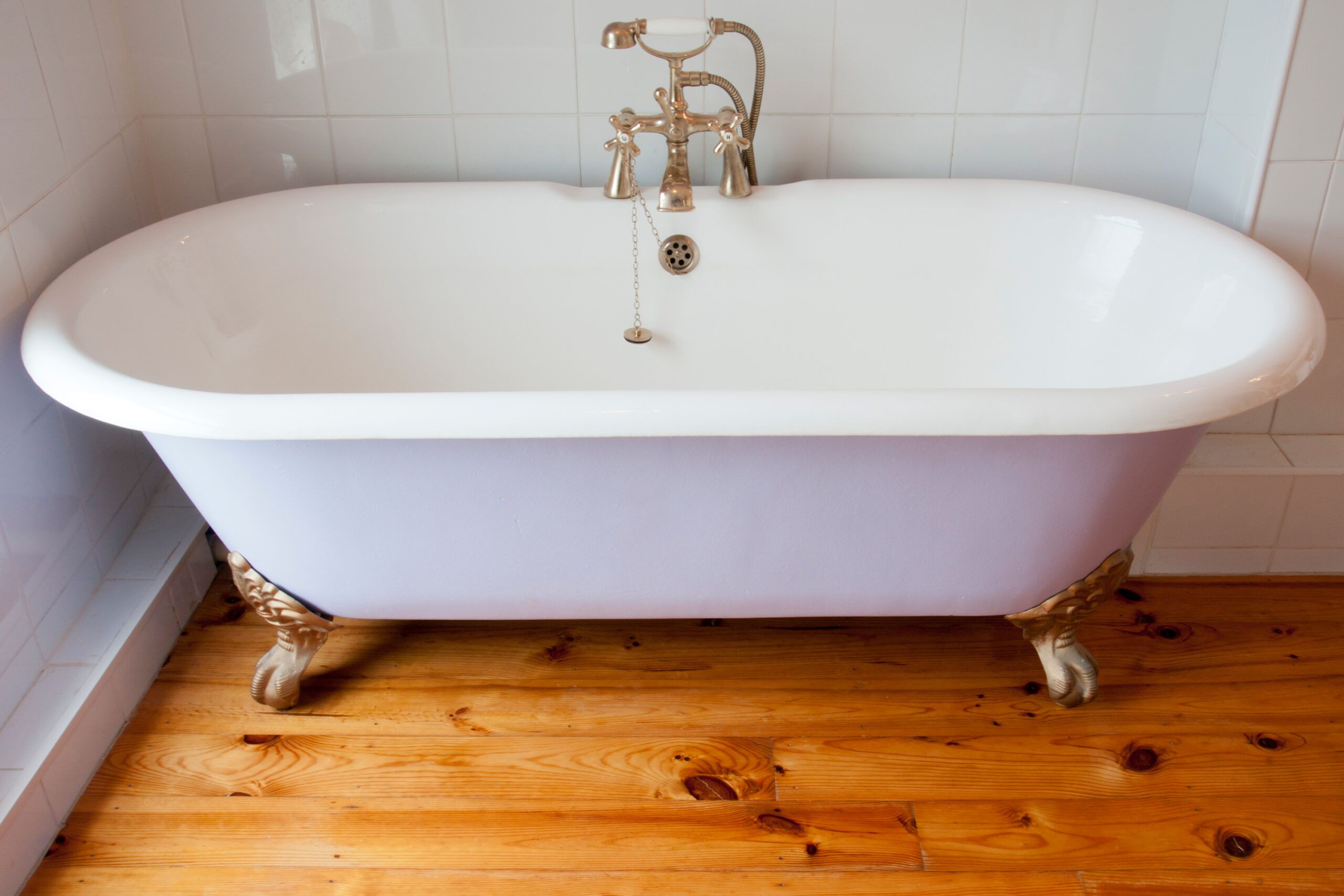
Is your bathtub showing signs of wear and tear? Replacing thee bathtub might seem like the obvious solution, but it’s often expensive and disruptive. Fortunately, there are two cost-effective alternatives: bathtub liners and refinishing.
This guide explores both options, helping you decide which solution is best for your bathroom needs.
Cons of Replacing Your Bathtub
When faced with a worn-out bathtub, many homeowners consider a full replacement. However, this option comes with significant challenges:
- High costs: A new standard bathtub can cost between $1,961 and $9,239.*
- Extensive demolition: Removing an old tub often requires tearing out surrounding tiles and fixtures.
- Plumbing modifications: New tubs may require changes to existing plumbing.
- Time required: The process can take several days to complete, during which time your bathroom may be out of commission.
*All prices in this article are based on contractor estimates used by Angi.
Tub Replacement Alternatives: Liners and Refinishing
Instead of a full replacement, consider less invasive and more budget-friendly options like bathtub liners and refinishing. The type of bathtub you have may dictate which option is best.
Porcelain tubs are excellent candidates for both liners and refinishing. Their sturdy construction makes them ideal for supporting a liner, while their smooth surface takes well to refinishing processes.
Homeowners with fiberglass and acrylic tubs may need to go right to refinishing. Many liner companies won’t work with these materials because they’re too flexible. Refinishing is often the preferred option for these tub types, but it requires special techniques to ensure proper adhesion.
Bathtub Liners
Average cost: $2,700–$10,100
Bathtub liners are custom-made acrylic or PVC shells designed to fit perfectly over your existing tub. They’re manufactured based on precise measurements of your bathtub, ensuring a snug fit that looks like a brand-new tub installation.
They’re ideal for homeowners who want a fresh, uniform appearance and offer a relatively quick way to renovate without extensive demolition. However, some find that liners can look “plastic” and may not replicate the intricate details of vintage tubs.
| Pros | Cons |
| Quick installation time | More expensive than refinishing and can be more expensive than replacement |
| No need for extensive demolition | Limited color options compared to refinishing |
| Can be used the same day as installation | May not replicate the intricate details of older tubs |
| Lasts up to 15 years with proper care | Risk of water getting trapped between the liner and old tub |
Bathtub Liner Installation Process
The exact process of installing a bathtub liner can vary by company. To give you an idea of what to expect, here’s an overview of Re-Bath’s liner installation process. The Mesa, Arizona-based company has been making tub liners since the 1970s.
- A local installer sends precise measurements and photographs of the tub to company headquarters.
- The company identifies the model, pulls it off the shelf and vacuum-forms an exact mold of the tub. The result is a 35-pound liner that slips over the tired tub like a glove.
- To install it, the local rep cleans the old tub with denatured alcohol, removes the drain and overflow and trims the liner so it fits snugly against the walls.
- Then, using a combination of two-sided butyl tape and silicone adhesive, the rep attaches the liner to the old tub then finishes up by installing a new drain and overflow, and caulking the seams.
- Once the liner is delivered, which can take four to eight weeks, a single workman can install it in six to eight hours, and the homeowner can bathe in it that same evening.
The entire process usually takes 4–8 weeks, with the actual installation completed in about 6–8 hours.
Maintaining Bathtub Liners
You’ll need to take these steps to maintain a bathtub liner once installed:
- Use nonabrasive cleaners to avoid scratching the surface.
- Avoid using suction cup mats that can trap moisture.
- Regularly check for signs of water seepage between the liner and old tub.
- Clean the liner weekly to prevent soap scum buildup.
Bathtub Refinishing
Average cost: $330–$630
Bathtub refinishing, also known as reglazing, involves applying a new finish to your existing tub, effectively giving it a fresh, smooth surface. Refinishing can restore the original look of your tub or completely change its color. This option is particularly appealing for those with vintage or unique tubs they want to preserve.
| Pros | Cons |
| More affordable than liners | Shorter lifespan than liners (5–10 years) |
| Wide range of color options | Requries careful maintenance to preserve the finish |
| Can restore the original look of vintage tubs | Strong chemicals used in the process require ventilation |
| Suitable for all tub materials, including cast iron and steel | Quality can vary significantly based on the skill of the technician |
The Refinishing Process Explained
Bathtub refinishing is an involved process that requires skill and proper safety precautions. Here’s a general overview:
- The bathroom is ventilated to handle fumes.
- The tub is thoroughly cleaned and any damage is repaired.
- The surface is etched with chemicals to promote adhesion.
- A primer is applied to the tub.
- Several coats of a specialized finish are sprayed onto the tub.
- The new finish is allowed to cure.
The entire process typically takes 4–6 hours, but the tub needs 24–48 hours to fully cure before use.
DIY Refinishing vs. Professional Services
While DIY refinishing kits are available, professional refinishing is generally recommended for several reasons:
- Safety: The chemicals used in refinishing can be hazardous if not handled properly.
- Quality: Professional-grade materials and techniques result in a more durable finish.
- Expertise: Professionals can address underlying issues and ensure a smooth application.
- Warranty: Many professional services offer warranties on their work.
For most homeowners, the superior results and peace of mind offered by professional services are worth the additional cost.
Maintaining a Refinished Bathtub
You’ll need to take these steps to maintain a refinished bathtub:
- Wait at least 24 hours before using the tub after refinishing.
- Use only mild, nonabrasive cleaners.
- Avoid dropping heavy objects in the tub to prevent chipping.
- Clean the tub regularly to maintain the finish.
- Consider reapplying a clear topcoat every few years for added protection.
Cost Comparison: Liners vs. Refinishing vs. Bathtub Replacement
While refinishing is the most budget-friendly option, liners can offer a middle ground. Because the cost of a liner can vary widely, it’s not always cheaper than replacement. Your choice may depend on the condition and design of your current tub, as well as your long-term plans for the bathroom. Here’s an overview of the average cost for each project.
| Project | Average Cost Range* |
| Bathtub refinishing | $336–$629 |
| Bathtub liners | $2,656–$10,110 |
| Full bathtub replacement | $1,961–$9,239 |
Our Conclusion
Bathtub liners are a durable, long-lasting option with minimal disruption, while refinishing your bathtub is more affordable and customizable. Both are good alternatives to replacing your bathtub, but your choice will depend on your budget, the condition of your current tub, and your visual preferences. Whichever method you choose, be sure to select a reputable company with a track record of quality work.
