
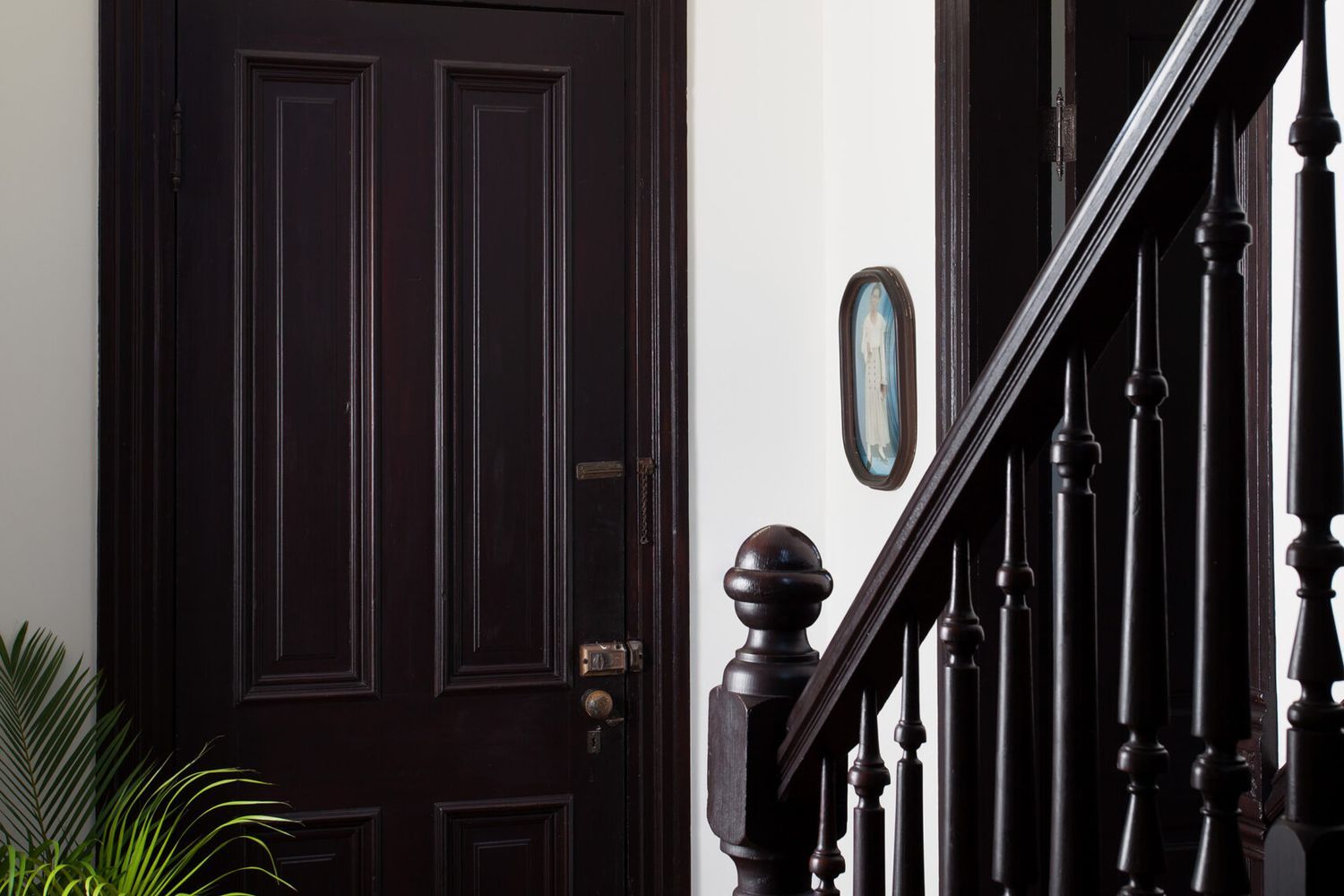
Newel posts are the vertical support at the start, end, or turning point of a staircase. Positioned at the end of a flight of stairs, they serve as both beam support and a decorative post and are meant to make a strong first impression in the entryway.
These architectural features have a rich history and can add character and charm to any home. Learn how to find and repurpose vintage newel posts in our guide, from ornate Victorian to modern craftsman styles.
Materials and Construction of Antique Newels
The materials and construction methods used for antique newels contribute to their durability and design appeal.
Common Woods Used
Due to their structural importance, newel posts were typically crafted from hardwoods. Oak and walnut were popular choices, prized for their strength and beautiful grain patterns.
“Unpainted wood was also easier to keep up, with hands running along it all the time. We all look for low-maintenance materials today, but the idea wasn’t lost on people a hundred years ago,” says Mark Foster of Second Chance, a nonprofit salvage dealer in Baltimore.
Craftsmanship and Detailing
Antique newels showcase the skill of past craftsmen. Many feature intricate carvings, turnings, and applied decorations. Unlike stair spindles, which were often made from lesser, paint-grade woods, newels and their accompanying handrails were typically clear-coated with varnish or shellac. This finish protected the wood while highlighting the natural beauty of the grain and the fine craftsmanship.
Sourcing and Pricing Vintage Newel Posts
If you’re interested in placing a vintage newel post in your home, knowing where to look and what to expect in terms of pricing will help.
Where To Find Antique Newels
Architectural salvage shops are excellent sources for vintage newel posts. These businesses specialize in rescuing and reselling pieces from demolished or renovated buildings. You might also find vintage newels at flea markets, antique stores, or online marketplaces specializing in salvage. Some restoration companies even offer reproductions of historical newel designs for those who want the look without the age.
Newel Post Price Factors
The price of a vintage newel post can vary widely based on several factors.
- Age and rarity: Older or unique designs may be more valuable.
- Condition: Well-preserved newels with minimal damage fetch higher prices.
- Decoration: Intricately carved or detailed posts are usually pricier.
- Size: Larger, more imposing newels are generally more expensive.
- Wood type: Rare or high-quality woods command higher prices.
Adding Old Newels to Modern Homes
Integrating vintage newel posts into contemporary spaces can create a unique blend of old and new. Here are some ways to use these architectural elements in your home.
Retrofit Vintage Newels on Staircases
Many old newels can be adapted for use in modern staircases. Most vintage newels have plinth-block bases that sit flush with the floor or stair landing, making them relatively easy to retrofit. However, some challenges may arise, such as the following:
- Base modifications: Newels with notched bases that followed the rise of a step may need leveling to fit properly at the end of a new balustrade.
- Height adjustments: Modern building codes may require taller newels. You might need to elevate the shaft on a new wooden block to meet current standards.
When retrofitting, ensure the newel is securely anchored to meet safety requirements. Consider hiring a professional for proper installation, especially if structural modifications are needed.
Creative Repurposing Ideas
Vintage newels can find new life beyond staircases. Here are some innovative ways to repurpose them:
- Decorative pilasters: Split a newel down the center to create a pair of pilasters for framing doorways or breaking up long walls.
- Headboard creation: Attach a pair of matching newels to an old door for a one-of-a-kind headboard.
- Kitchen island support: Use newels to prop up an extended countertop on a kitchen island, creating a bar-seating area.
- Lamp base: Drill a hole through the center of a shorter newel to create a unique table lamp base.
- Outdoor signage: Apply a weather-resistant finish and use a newel as a unique mailbox support or house number display.
- Table legs: Use four matching newels as legs for a custom dining or coffee table
Restoring and Maintaining Antique Newel Posts
Proper restoration and upkeep are key to preserving the beauty and integrity of antique newel posts. Here are some tips for caring for them.
Cleaning and Refinishing Techniques
When restoring an old newel post, start with gentle cleaning:
- Remove dirt and grime with a soft brush or cloth.
- For stubborn dirt, use a mild soap solution, being careful not to saturate the wood.
- Dry thoroughly to prevent water damage.
Take these steps for refinishing:
- Carefully remove the old finish with a chemical stripper or fine sandpaper.
- Repair any damage with wood filler or epoxy designed for antique wood.
- Apply a new finish that complements your home’s style while protecting the wood.
Always test cleaning products and finishes on an inconspicuous area first to make sure they won’t damage the wood or existing finish.
Reinforcing and Stabilizing Old Newels
Over time, newel posts can become loose or unstable. To reinforce an old newel, follow these guidelines:
- Check for loose connections at the base and top of the newel.
- Tighten any visible screws or bolts.
- For more severe instability, consider adding brackets or supports hidden from view.
- In some cases, you may need to remove the newel to reinforce its connection to the floor joists.
For extensive repairs or if you’re unsure about the structural integrity, ask a professional. You can find more information on reinforcing newel posts to help keep your staircase safe and sturdy.
