
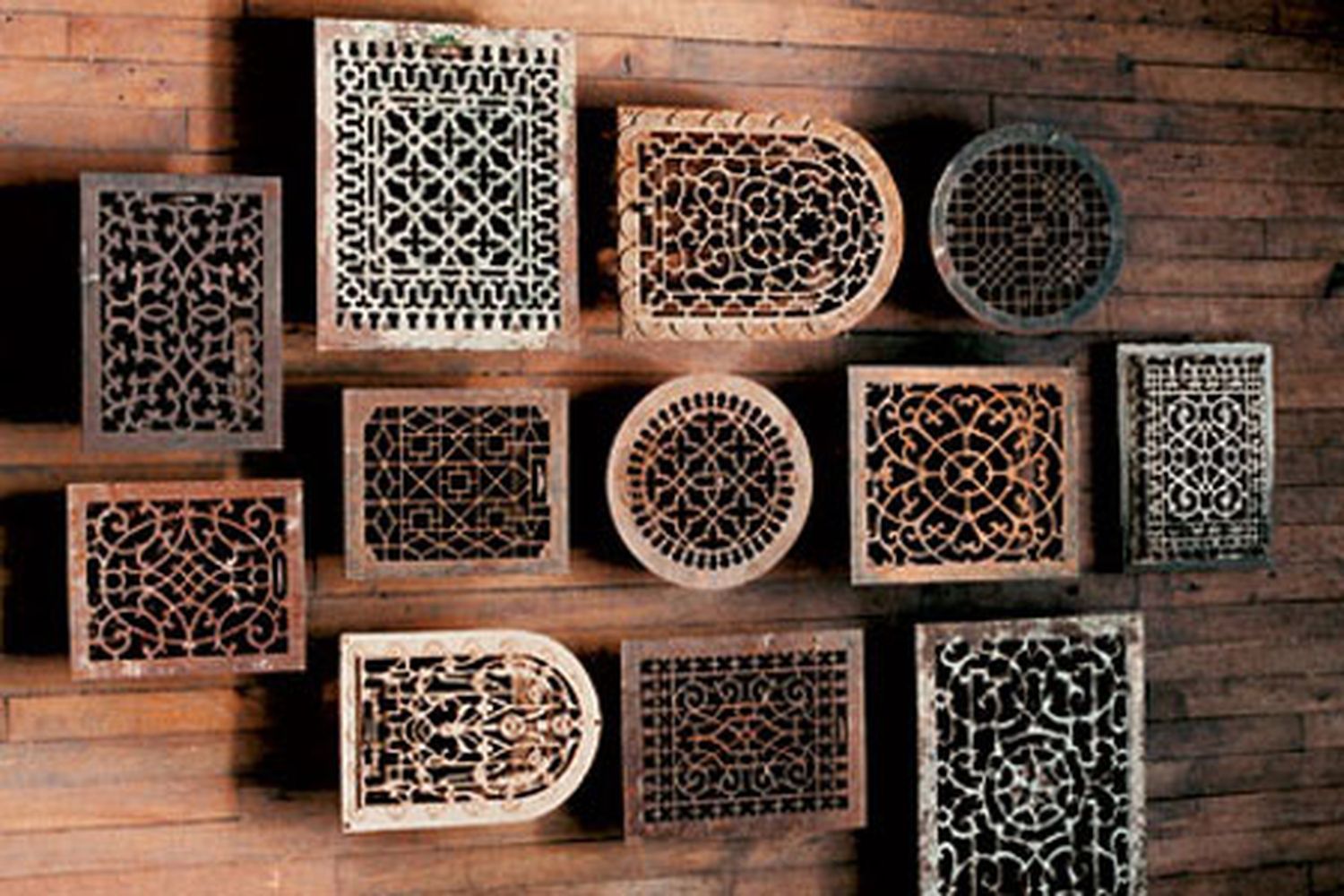
Vintage heat registers are functional components of older home heating systems, but you can also reuse them in modern homes. In this guide, we’ll look at the different types of vintage registers, how to clean and restore them, and creative ways to repurpose a vintage register. We’ll also provide tips on how to find antique heat registers and how to incorporate them into your home’s HVAC system.
Types of Vintage Registers and Grilles
Vintage registers come in many different styles and materials that can create a personalized look and match your home’s aesthetic.
Cast-Iron and Bronze Registers
Cast-iron registers were some of the most common types of registers found in older homes. These grates often featured intricate patterns and were designed with durability in mind. Bronze registers, while less common, were more luxurious and found in wealthier homes. Both materials were known for their build quality and heat-conducting efficiency.
Brass and Nickel-Plated Grilles
Brass and nickel-plated grilles offer a more refined look. The materials used in these grilles allow for more delicate designs while providing a bright, polished appearance. Some manufacturers created gold-plated options for homeowners who could afford this investment and wanted to personalize their homes.
Wooden Registers
Wood registers were another popular choice for homeowners who wanted to match the heat register with other wooden elements, such as the flooring and trim. These were often carefully carved and stained for a more cohesive look. Though not as durable as metal heat registers, they provided a more natural look to many homes.
How To Identify and Source Antique Heat Registers
From recognizing authentic pieces to finding vintage registers online, there are a variety of ways to buy your antique register.
Recognizing Authentic Vintage Pieces
To identify genuine antique registers, look for signs of age and craftsmanship. Authentic pieces will have a substantial weight and may show signs of wear consistent with their age. Vintage registers often feature intricate designs that were cast or molded, not stamped or printed like more modern heat registers you’ll see online and in stores.
Where To Find Salvaged Registers
Salvage yards are great places to find a vintage register. Stan Zaborski of Zaborski Emporium in Kingston, New York, says, “People want something better than that flimsy crap they make them out of today.” Zaborski specialized in architectural elements, highlighting the long-lasting appeal of vintage pieces in homes. Other places to find vintage registers include antique shops, online marketplaces, and architectural salvage websites.
Online Communities and Auctions
Websites like eBay, Etsy, and specialized auctions have created online communities and widened the availability of vintage items, including heat registers. Online communities and forums dedicated to home restoration can provide valuable tips for identifying and sourcing genuine pieces. Social media groups focused on architectural salvage are also great resources where members can share vintage items and recommendations.
Cleaning and Restoring Old Heat Registers
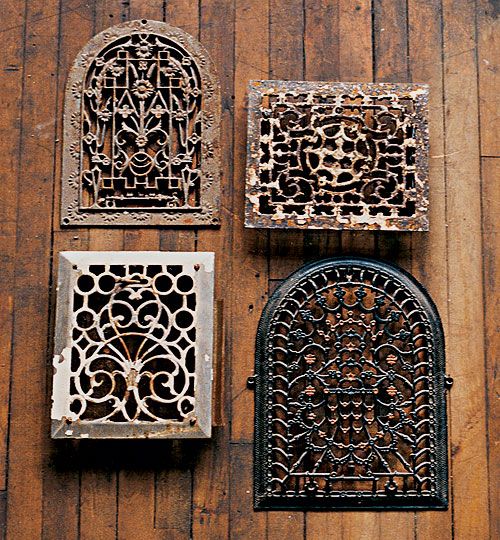
Removing lead paint, using proper refinishing techniques, and repairing the structural integrity of your vintage heat register will help restore your item.
Removing Lead Paint Safely
Many vintage registers contain lead paint, which requires careful handling. Consider professional sandblasting or using EPA-approved lead paint removal methods to get rid of the lead paint. Always prioritize safety when dealing with lead paint, and consider hiring a professional if you’re unsure about the removal process.
Refinishing Techniques for Different Materials
For cast-iron registers, remove rust with a wire brush and apply a rust-inhibiting primer before painting. You can polish bronze and brass pieces to restore their shine, and you may need to re-plate nickel-plated grilles if they have a worn finish.
Repairing Structural Integrity
It’s not uncommon for older registers to have minor damage, such as cracks or bends. When restoring, address any structural issues for the longevity and safety of the piece you’re working with. You may need to weld or solder cast iron, and use glue or clamping to repair any splits in wooden registers. Consider hiring a professional for complicated repairs to maintain the functionality and structural integrity of these vintage registers.
Creative Ways To Repurpose Vintage Registers
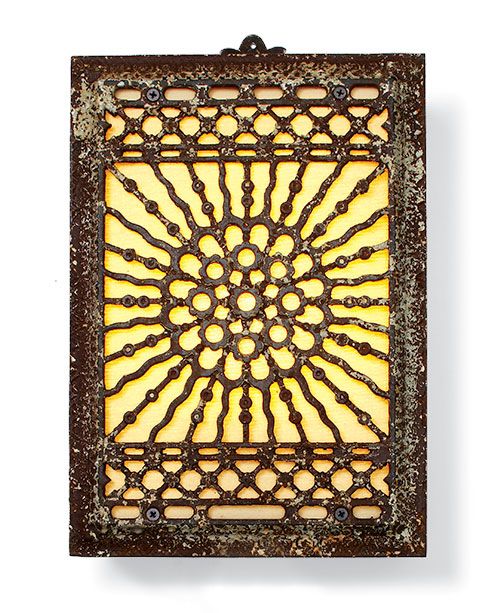
Old registers can find new life in modern decorative applications, from wall art and do-it-yourself (DIY) lighting fixtures to outdoor applications.
Decorative Wall Art and Shelving
Mounting a vintage grille on your wall can add a decorative element to your home. You can also attach a wooden bracket to a heat register, creating a customized wall shelf.
Upcycled Furniture Accents
Incorporating vintage grilles into furniture adds character and gives plain furniture a more vintage feel. For examples, you can cut a hole in a wooden tabletop and install a register into the middle of the table, giving it a unique and more customized appearance.
DIY Lighting Fixtures
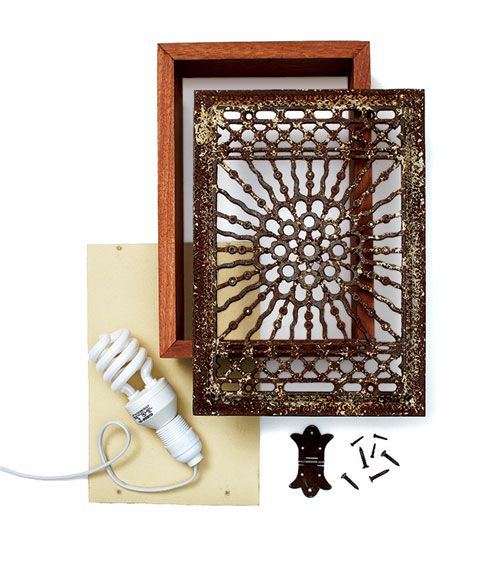
You can also transform an old grille into a light fixture. Below is a simple method to create a wall sconce using a recycled vintage register:
- Measure the grille and build a wooden frame sized to fit the grille.
- Drill a hole in the frame’s bottom for the power cord.
- Install a light socket inside the frame.
- Add a lampshade fabric between the frame and grille to diffuse the light.
- Secure the grille to the frame using existing screw holes.
- Hang the sconce using a salvaged cabinet hinge or D-ring picture hangers.
Garden and Outdoor Uses
Installing a cast-iron grille as a trellis for climbing plants or placing one as a decorative cover for a birdbath can add a unique element to your outdoor space. The construction of these grates makes them suitable for outdoor uses without much concern for wear during poor weather conditions.
Room Dividers and Screens
By connecting several registers vertically or horizontally, you can craft a piece that divides spaces while maintaining an open feel. This is a great option for lofts or open-concept homes, where you may want to create distinct areas without solid walls.
Vintage Registers in Modern HVAC Systems
While vintage registers are beautiful, integrating them into modern heating systems requires careful consideration. Factor in compatibility, professional installation, and ductwork when deciding whether to incorporate a vintage register into your home’s heating system.
Compatibility Considerations
Check that the size and airflow capacity of the vintage register matches your current HVAC system’s requirements. Some old registers may need modifications to fit modern duct openings. Consider using adapter plates to bridge the gap between old and new systems.
Professional Installation Tips
When installing vintage registers, consult with an HVAC professional. They can determine if the old registers will provide good airflow and can suggest any necessary modifications.
Custom Ductwork Solutions
In some cases, you may need custom ductwork solutions to integrate vintage registers into your current system. HVAC specialists can install ductwork that accommodates the unique size and style of antique grilles.
Maintaining and Preserving Antique Heat Grates
Cleaning your vintage register regularly to prevent rust and corrosion and accounting for seasonal changes can help keep your system in good condition.
Regular Cleaning Methods
You should regularly clean registers with a soft brush or vacuum attachment to remove dust and debris. For deeper cleaning, use a mild soap and water solution and dry the entire surface thoroughly to prevent any rust. We suggest avoiding any harsh chemical cleaners that could damage the finish or material.
Preventing Rust and Corrosion
Applying a thin coat of paste wax to cast-iron registers can help protect against moisture and prevent rust. For brass and bronze pieces, use a specialized metal polish to maintain the shiny finish and to avoid tarnishing.
Seasonal Maintenance
Before winter, check for any signs of rust or wear and address any issues promptly, as you’ll be using your heating system more frequently during the colder months. In the spring, clean and inspect the registers, removing any accumulated debris to reduce allergens, dust, and debris in your home.
Our Conclusion
Vintage heat registers can blend history with modern functionality. Whether you’re restoring an old home or looking to add character to a new space, vintage registers can serve both decorative and practical purposes. By understanding the proper care and creative reuse of vintage registers, you can preserve unique architecture while customizing your living space.
