
Patching plaster is a valuable skill for homeowners with older houses. While it may be tempting to tear down old plaster walls and replace them with drywall, it’s often possible to save the plaster. We’ll walk you through the patching process, from understanding when to patch to applying the final coat, whether you’re dealing with small cracks or larger damaged areas.
Why Preserve Plaster Walls?
Preserving plaster walls is often more than a matter of style. Plaster walls offer several advantages over modern drywall:
- Customization: Plaster allows for unique textures and finishes.
- Durability: Well-maintained plaster can last for centuries.
- Fire resistance: Plaster is naturally fire-resistant.
- Historical value: Plaster walls are an integral part of a home’s architectural history.
- Sound insulation: Plaster walls dampen sound more effectively than drywall.
When To Patch vs. Replace
Before beginning any repair work, assess the damage to your plaster walls. In many cases, patching is the best option, but there are situations where replacement might be necessary.
Signs that plaster can be patched include:
- Localized areas of damage
- Plaster that has separated from the lath but is still firm
- Small to medium-sized cracks
Consider replacement if the following apply:
- Large sections of plaster are crumbling or falling away
- The damage extends deep into the wall structure
- There’s extensive water damage or mold growth
When in doubt, get a professional assessment. An expert can determine the best course of action for your specific situation.
Tools and Materials for Plaster Patching
Having these tools and materials on hand before you start will make the process smoother and more efficient.
Tools You’ll Need
- Chisel
- Dust mask and safety goggles
- Hammer
- Mixing bucket
- Mixing paddle or trowel
- Putty knife or taping knife
- Sandpaper or sanding block
- Wire brush
Materials To Gather
- Bonding agent
- Clean water
- Drop cloths
- Fiberglass mesh tape
- Plaster of Paris or other patching plaster
- Primer
For larger repairs, you may also need plaster washers and drywall screws to reattach loose plaster to the lath.
Preparing the Damaged Area for Patching
Good preparation will ensure the new plaster adheres and blends seamlessly with the existing wall.
Remove Loose Plaster
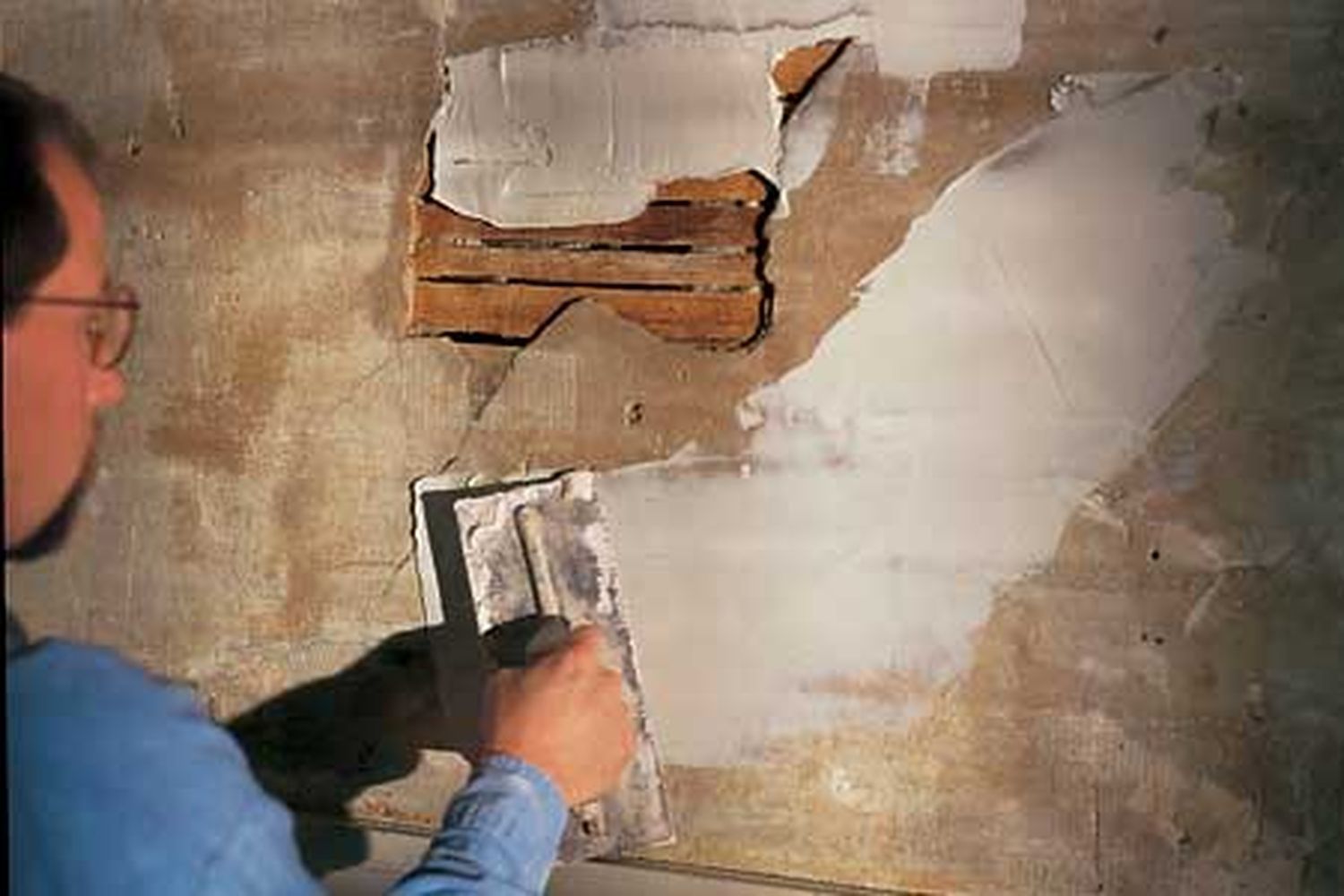
Start by carefully removing any loose or crumbling plaster. Use a putty knife or chisel to gently scrape away damaged areas until you reach solid plaster. Be cautious not to damage the underlying lath.
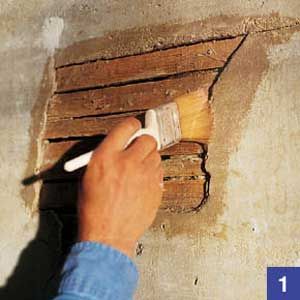
“Chisel out the old plaster from between the lath and brush away any loose dust and plaster crumbs,” says John Marshall, a plaster repair expert.
Clean and Prime the Surface
Once you’ve removed the loose plaster:
- Use a wire brush to clean the exposed lath and surrounding plaster.
- Vacuum or brush away all dust and debris.
- Apply a bonding agent to the exposed lath and surrounding plaster. This will help the new plaster adhere better.
- Allow the bonding agent to dry completely before proceeding.
Step-by-Step Patching Process
With the preparation complete, you’re ready to begin the actual patching process.
Mix the Plaster
For small repairs, you can use pre-mixed patching plaster. For larger areas, or for a more traditional approach, mix your own by doing the following:
- In a clean bucket, combine plaster of Paris with water according to the manufacturer’s instructions.
- Mix thoroughly until you achieve a consistency similar to thick yogurt.
- Let the mixture sit for a few minutes to fully hydrate.
Apply the Base Coat
- Using a putty knife or trowel, press the plaster firmly into the damaged area.
- Fill the hole slightly above the surrounding surface.
- Smooth the surface, but don’t worry about perfection at this stage.
- Allow this base coat to set partially before applying the next layer.
Add Reinforcement
For added strength, especially in larger patches, take these steps:
- Cut a small piece of fiberglass mesh tape to cover the patched area.
- Press the mesh into the wet plaster, ensuring it’s fully embedded.
- Apply a thin layer of plaster over the mesh to completely cover it.
Apply the Final Coat
- Once the base coat has set but is still slightly damp, apply a thin final coat of plaster.
- Smooth this layer carefully to match the surrounding wall texture.
- Allow the patch to dry completely, which may take 24–48 hours.
- Sand lightly if necessary to achieve a seamless blend with the existing wall.
- Don’t paint yet—it will need ample time to set.
Advanced Techniques for Large-Scale Repairs
When dealing with larger areas of damage or plaster that has separated from the lath, you may need to use more involved techniques.
Using Plaster Washers
Plaster washers can help reattach loose plaster to the lath:
- Drill pilot holes through the plaster and into the lath.
- Insert plaster washers and secure them with drywall screws.
- Cover the washers with plaster during the patching process.
Working with Fiberglass Mesh
For extensive repairs, consider using larger sheets of fiberglass mesh:
- Cut the mesh to cover the entire damaged area, extending a few inches beyond.
- Apply a base coat of plaster, then embed the mesh into it.
- Apply subsequent layers of plaster as described in the patching process.
Common Mistakes To Avoid When Patching Plaster
To get the best results, be aware of these common pitfalls:
- Applying too thick a layer: Multiple thin layers are better than one thick layer.
- Failing to match the existing texture: Take your time blending the patch with the surrounding wall.
- Neglecting to use a bonding agent: This can lead to poor adhesion.
- Overmixing the plaster: This can cause it to set too quickly.
- Rushing the process: Allow each layer to set properly before applying the next.
Differences Between Patching Plaster and Other Repair Materials
Understanding the differences between patching materials can help you choose the right product for your specific repair.
Plaster vs. Spackle
While spackle is suitable for small holes and cracks, plaster is better for larger repairs for the following reasons:
- Plaster is more durable and can be built up in layers.
- Plaster provides a better match for existing plaster walls.
- Spackle dries faster, but is weaker and prone to shrinkage.
Plaster vs. Drywall Mud
Drywall compound, or “mud,” is designed for use with drywall, not plaster. Here’s why:
- Drywall mud is easier to sand but doesn’t work well for deep repairs.
- Plaster is harder and more durable than drywall mud.
- Plaster sets through a chemical reaction, while drywall mud air dries.
Caring for Your Newly Patched Plaster
After completing your plaster patch, you can extend its lifespan with these tips:
- Allow the patch to cure fully before painting, typically 3–7 days.
- Use a primer designed for plaster before applying paint.
- Monitor the patch for any signs of cracking or separation.
- Address any new cracks quickly to prevent further damage.
Regular maintenance can help preserve your plaster walls for many years.
Our Conclusion
Patching plaster is a valuable skill that can help preserve the character and integrity of older homes. While it requires patience and attention to detail, the process is manageable for many do-it-yourself enthusiasts. By following the steps outlined in this guide, you can successfully repair damaged plaster and keep your walls’ historic charm.
