
We may be compensated if you purchase through links on our website. Our team is committed to delivering honest, objective, and independent reviews on home products and services.
Ductless mini-split air conditioners are popular for their energy efficiency, ease of installation, and versatility. Ductless mini-split models typically also offer heating capability and can connect to a refrigerant line instead of using ducts in your home. Ductless mini-split air conditioners can range dramatically in price, depending on factors such as the size, BTU (British Thermal Units) capacity, and how large of a room it can cool. You can expect to spend between $600-$900 for a smaller ductless model, while more heavy-duty units can range between $1,000 and upwards of $2,000.
To help you select the best ductless mini-split air conditioner for your home, we examined the best units on the market. Overall, our top choice is the Senville LETO 30K Smart Mini-Split, which is an energy-efficient model that can cool areas up to 1,400 square feet with an excellent cooling output. Read our buying guide below for more of our top picks.
Compare Top Ductless Mini-Splits
The table below compares the top mini-split systems from our rankings on cooling power, SEER ratings, and more.
Ductless Mini-Split Air Conditioning Unit Comparison
| Product | Retailer | Coverage | SEER Rating | BTUs | Warranty |
|---|---|---|---|---|---|
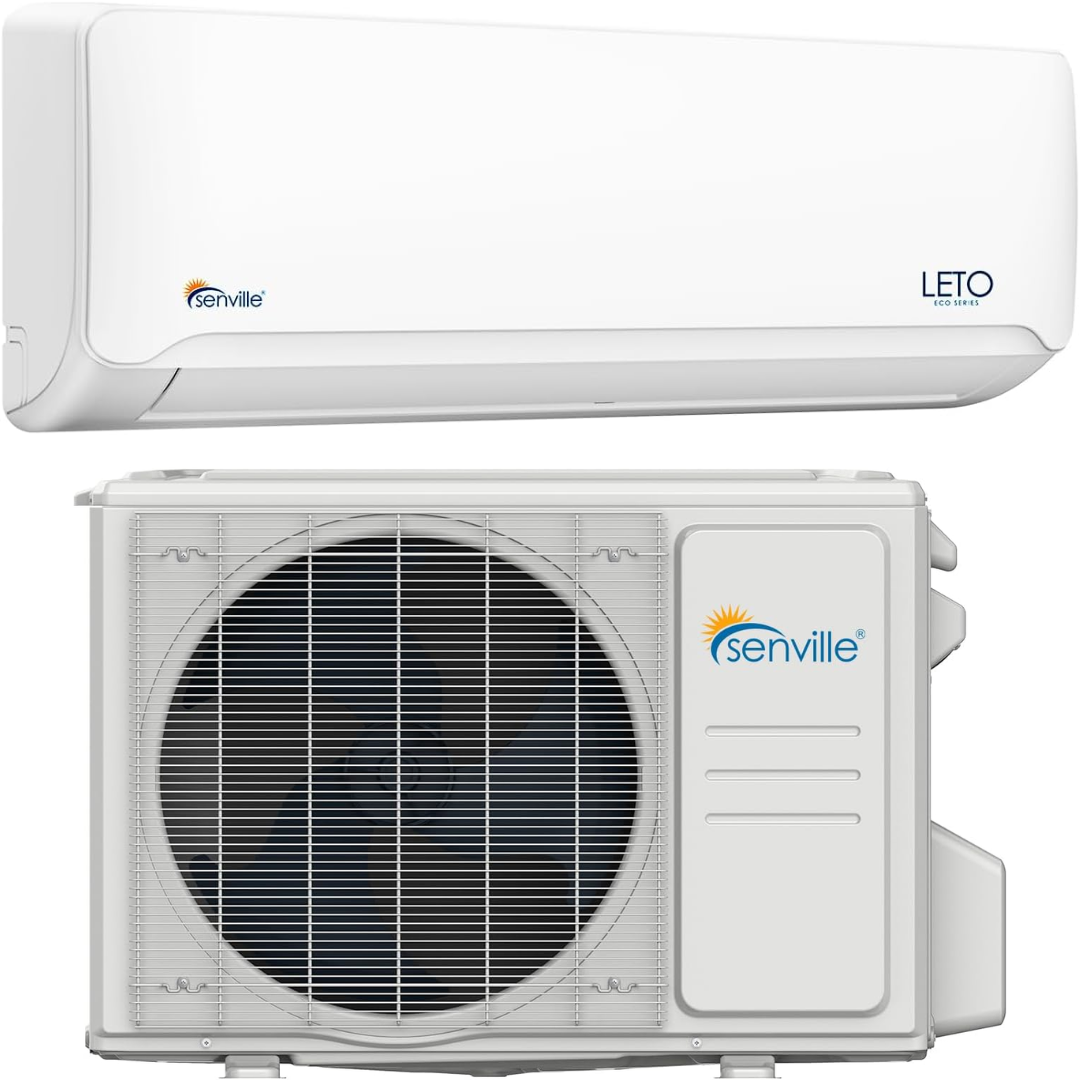
| Senville LETO 30K Smart Mini-Split | Amazon | 1,400 sq. ft. | 18.6 | 30,000 | Parts: 2 years; Compressor: 5 years |
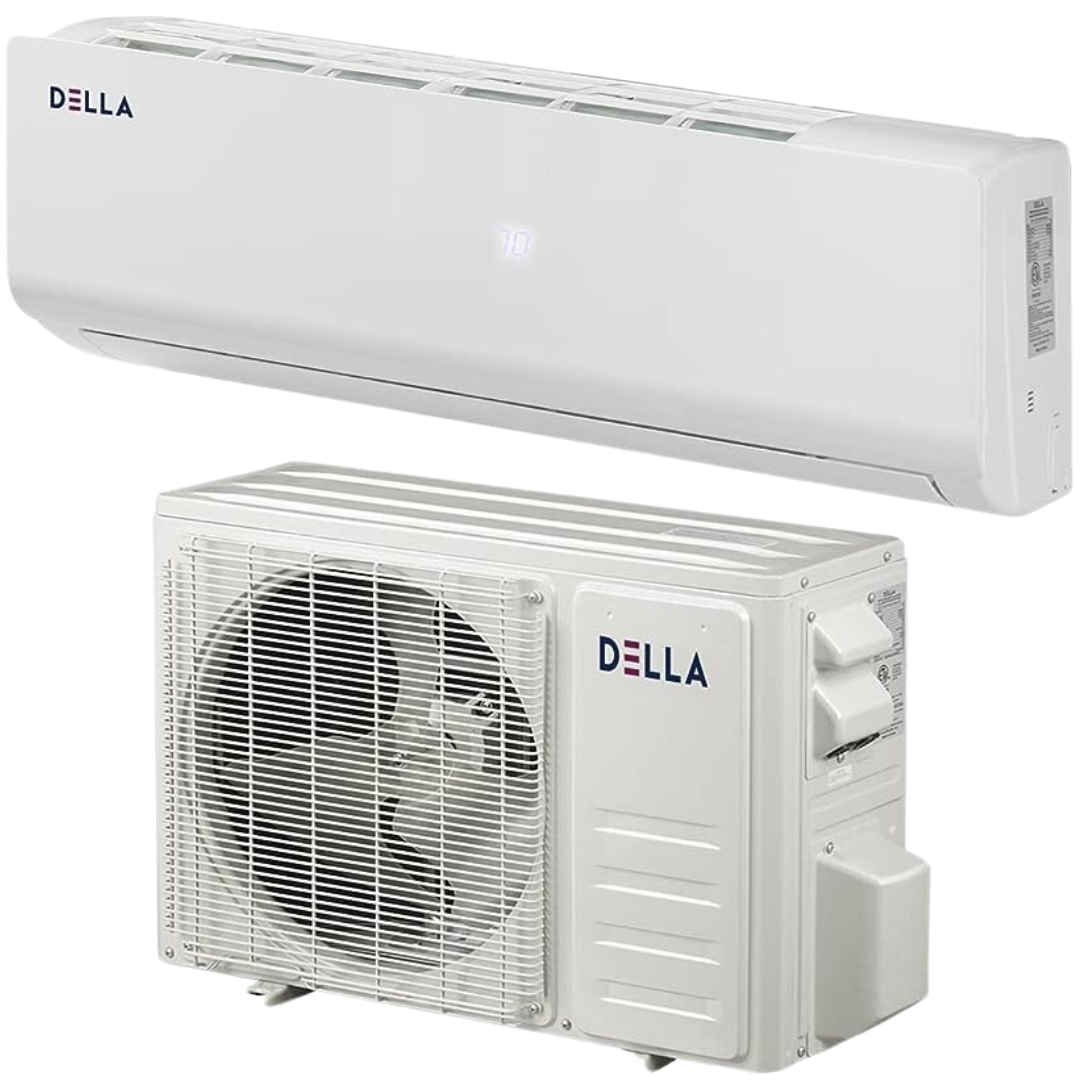
| DELLA Smart Mini-Split Inverter | Amazon | 500 sq. ft. | 20 | 12,000 | Parts: 3 years; Compressor: 5 years |
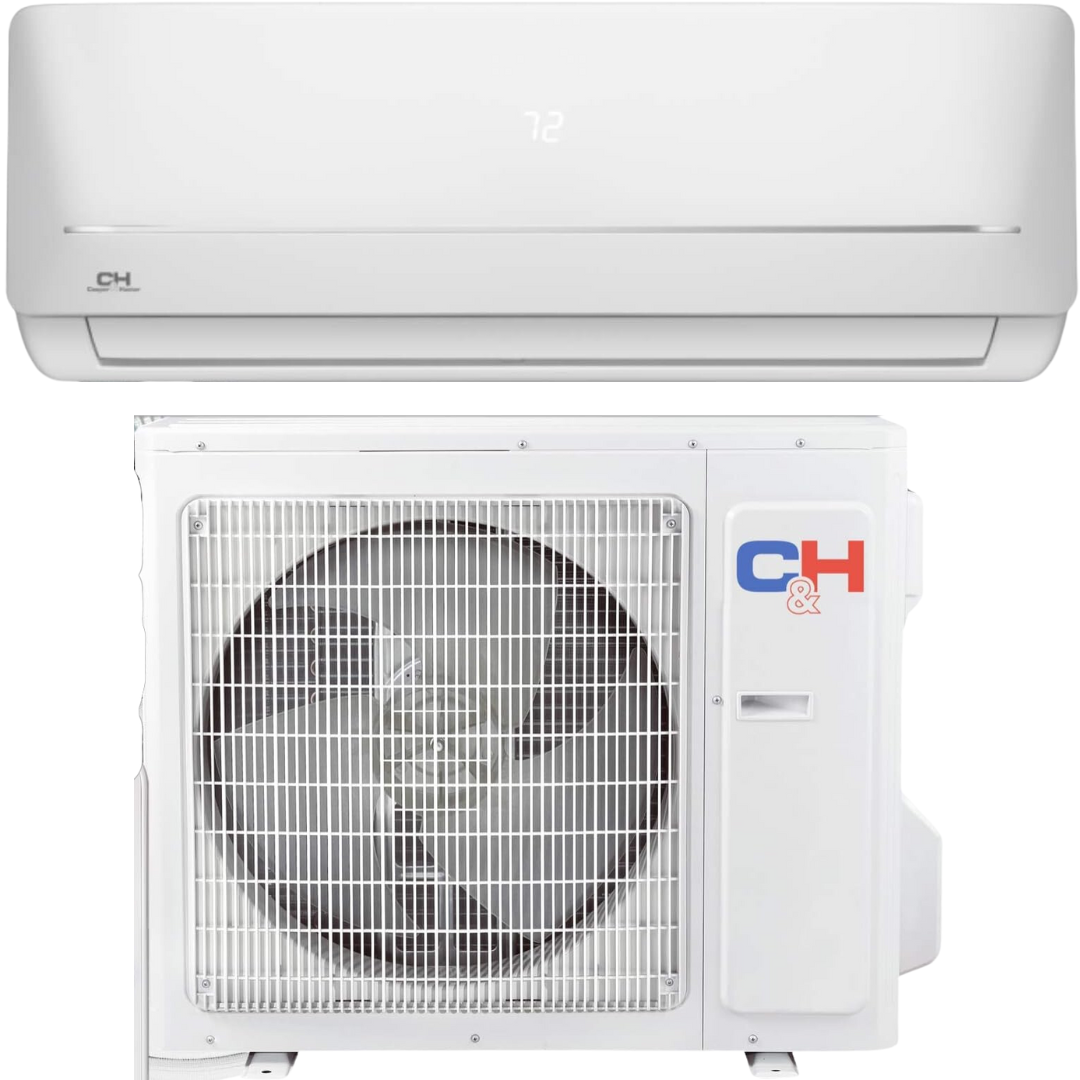
| Cooper & Hunter Mini-Split | Amazon | 800 sq. ft. | 19 | 18,000 | 7 years |
| Senville LETO 9K Smart Mini-Split | Amazon | 400 sq. ft. | 19 | 9,000 | 5 years |
| Pioneer Inverter+ Mini-Split | Amazon | 500 sq. ft. | 20.5 | 12,000 | 5 years |
| MRCOOL DIY Mini-Split | Amazon | 1,000 sq ft. | 20.5 | 24,000 | Parts: 5 years; Compressor: 7 years |
| Product | Retailer | Coverage | SEER Rating | BTUs | Warranty |
Top 6 Ductless Mini-Split Air Conditioners
Use the following links to jump to our detailed review of that product:
- Best Overall: Senville LETO 30K Smart Mini-Split
- Best Smart Features: DELLA 12K Wi-Fi Mini-Split
- Best Medium-Capacity: Cooper & Hunter 18K Mini-Split
- Best for Small Spaces: Senville LETO 9K Smart Mini-Split
- Quietest Operation: Pioneer 12K Mini-Split
- Easiest DIY Installation: MRCOOL DIY Ductless Mini Split AC & Heat Pump
Best Overall
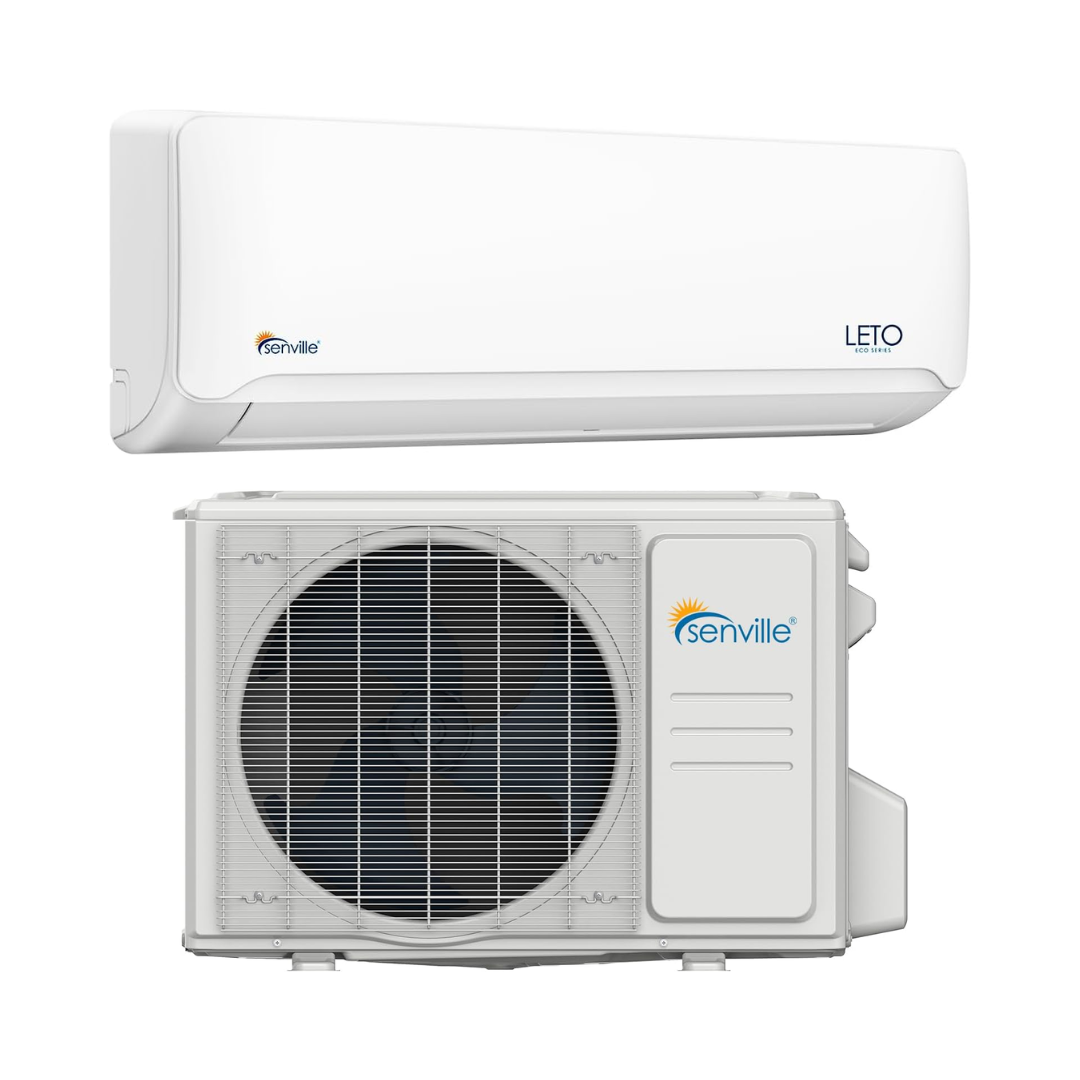
Senville LETO 30,000 BTU Mini-Split
- $1,799.99
Prices taken at time of publishing.
Good for: Heating and cooling open floor plans, garages, and larger rooms.
Customer Reviews of the Senville LETO 30,000 BTU Mini-Split
According to our customer research, buyers recommend this mini-split for its versatility, energy efficiency, and effective year-round performance. We encountered very few negative reviews, but one customer stated that they had to purchase additional parts to install the unit, and another had an issue with the instructions being unclear.
“It works well, down well below freezing temperatures. It’s quiet and elegant!. The most important thing is that customer service is excellent. I had some issues with my unit, and the response was very professional. I wish all the businesses would have such great customer service.” — Dorel via Amazon
“I’ve just started installing this…unit, and in my opinion, the instructions are almost useless, making this unit not easy at all for your average homeowner. You will need at least some mechanical aptitude and have done some home wiring … I’m pretty familiar with the installation process, but I’m going to have to measure everything twice and go over the wiring several times because of lack of good instructions.” — SheaLyn Duymovic via Amazon
Best Smart Features
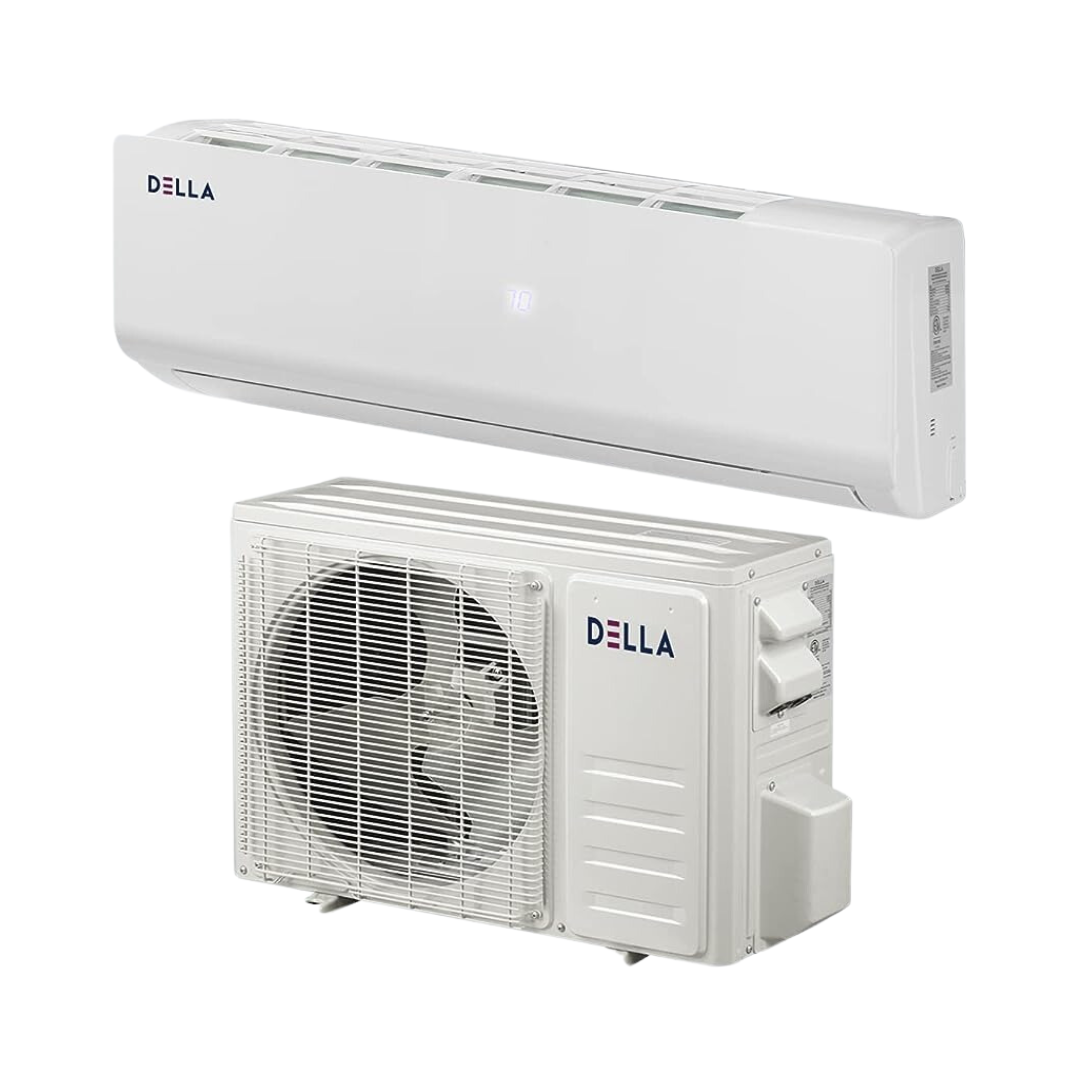
DELLA 12,000 BTU Mini-Split
- $679.96
Prices taken at time of publishing.
Good for: People looking for smart-home compatibility and heating and cooling for small-to-medium areas.
Customer Reviews of the DELLA 12,000 BTU Mini-Split
Our research shows that customers like the DELLA unit’s energy efficiency, overall performance, and included installation kit. Amazon yielded minimal negative customer reviews, but some customers did that their new mini-split would not turn on and others had issues with the remotes not working properly.
“I’ve only had this installed for about a month, but so far, everything is going great. I had no problems with the installation (you will need a vacuum pump), and it runs incredibly quietly (I literally had to walk up to it and bend over to make sure it was running). On heat (installed in winter), the air is much warmer than I expected for heat pump (much warmer than my central air heat pump).” — Wingate via Amazon
“One of the biggest issues I have with this brand is the remote. Expect to replace the batteries every 5-7 days. That’s all they last. The backlight on the remote cannot be turned off, thus draining the batteries really fast. if the batteries get below 1/4 power, the remote is useless and connect turn off or control the AC.” — Jason J. via Amazon
Best Medium-Capacity
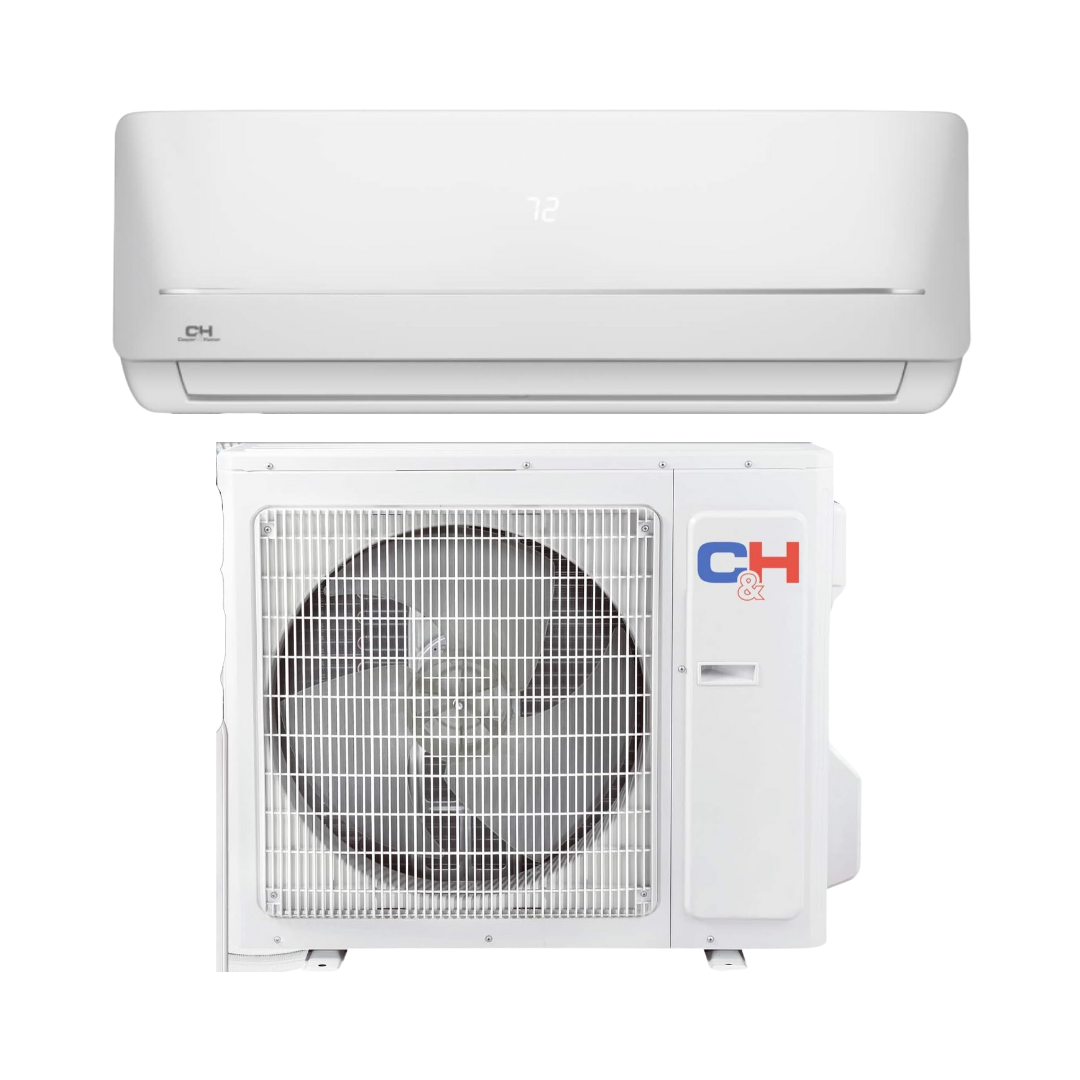
Cooper & Hunter 18,000 BTU Mini-Split
- $949
Prices taken at time of publishing.
Good for: Heating and cooling rooms up to 800 square feet in size.
Customer Reviews of the Cooper & Hunter 18,000 BTU Mini-Split
After reading dozens of reviews, we found that most reviewers praise this model for its high efficiency, easy installation, and performance. However, we found a handful of critical reviews by customers that encountered minor technical issues and had disappointing experiences with Cooper & Hunter’s customer service.
“I installed this in my outdoor workshop for heating and cooling. Not only does it do a great job at both of those things, but it does it very quietly. The indoor unit is somewhere between a whoosh and a whisper, but what’s really mind-blowing is how quiet the outdoor compressor is. I was worried about annoying my neighbors, but he can’t even hear it at all from his backyard. None of that loud compressor noise we all associate with AC units.”— Robert M. Kinstle III via Amazon
“Like the quality of the product. Dislike the installation information. Very confusing. Needs to be written specifically for the model purchased. Too many models in one set of instructions. Also, the product is sold as DIY when in fact, if you install it yourself, the warranty is not honored.” — Amazon Customer via Amazon
Best for Small Places
Senville LETO 9,000 BTU Smart Mini-Split
- $699.99
- $749.99
- 7% off
Prices taken at time of publishing.
Good for: Heating and cooling small rooms, such as a finished attic or single room addition.
Customer Reviews of the Senville LETO 9,000 BTU Smart Mini-Split
Our team found numerous reviews recommending this unit for its energy savings, range of settings, and compatibility with Amazon Alexa for easy remote control. However, some reviewers dislike that the unit lacks manual external controls—it’s only controllable via the remote and Alexa. Others had issues with the packaging, saying the unit arrived damaged.
“Let me start off by saying this thing is awesome. I installed this on a cargo trailer last year, and it’s made my life easier. The trailer is 16-foot and the only insulation is a thin layer on the roof that came from the factory. Even on the hottest days here in North Carolina, this thing will keep the inside of that trailer ice cold. The best part is I can run this unit and all my lights on a small 2000-watt inverter generator.” — Cory via Amazon
“This unit works great. However, it arrived damaged. (Exterior package was fine. The unit was damaged inside the box.) it didn’t damage the coils and we needed it installed so we kept it. Unimpressed with that.” — Erin via Amazon
Quietest Operation
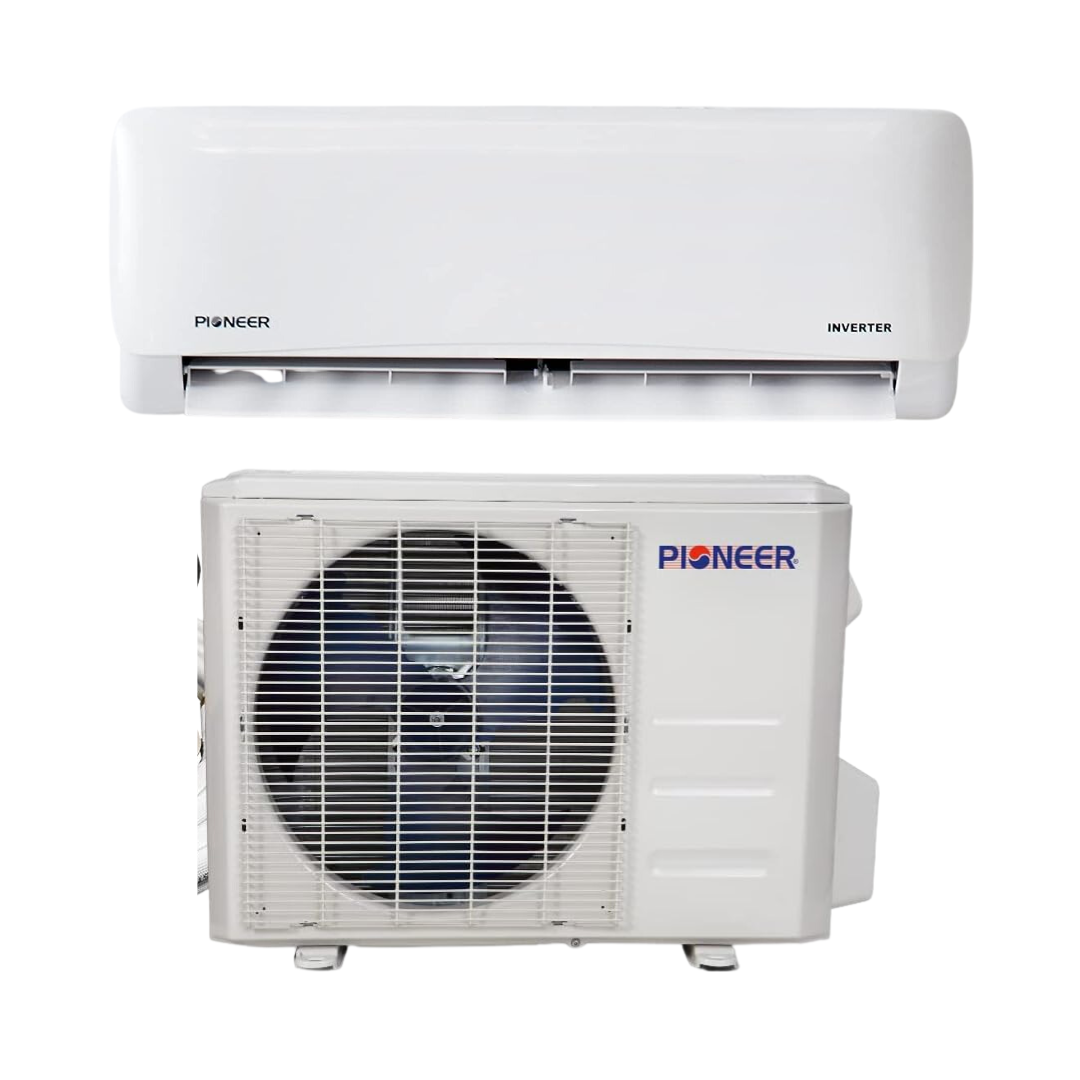
Pioneer 12,000 BTU Ductless Inverter+
- $838
Prices taken at time of publishing.
Good for: Customers seeking a reliable mini-split with quiet performance that requires minimal maintenance.
Customer Reviews of the Pioneer 12,000 BTU Ductless Inverter+
After reading dozens of reviews, we found that buyers especially like this unit’s whisper-quiet noise level, various settings, and comprehensive remote control. Less-than-happy reviewers are frustrated by the installation process, and others felt it did not have an energy-efficient design.
“Keeps my research building at a constant 78 degrees year-round in south Florida. Easy to install! Been running for almost four years. Just recently, the inside blower motor started having a high-pitched sound. Called tech support, and they were friendly and knowledgeable. They are sending me a new motor, as I can replace it myself. What makes it even better is that they said they will cover the cost even though it’s past warranty. I will buy from them again! Great experience.”— Amazon Customer via Amazon
“It blows really cold and is really quiet, but it has an annoying feature. The fan never seems to shut off. I have the fan set to auto, and it’s still blowing all night long when the unit is set to 81 degrees, the room is 62 degrees, and it’s 38 degrees outside. This is a waste of electricity and not a feature I wanted.” — Smeado via Amazon
Easiest DIY Installation
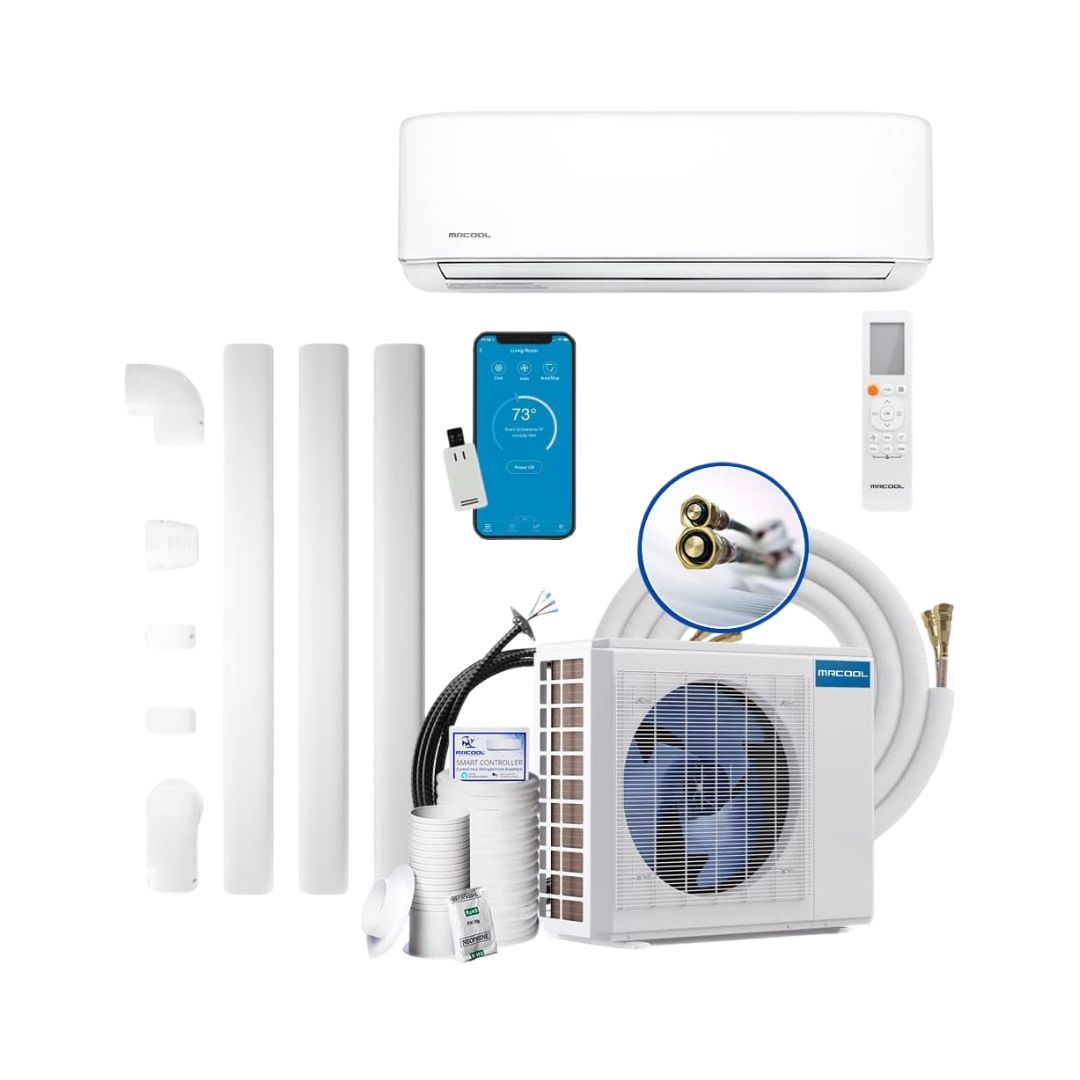
MRCOOL DIY Ductless Mini Split AC & Heat Pump
- $2,634
Prices taken at time of publishing.
Good for: Homeowners seeking a powerful DIY ductless AC unit.
Customer Reviews of the MRCOOL DIY Ductless Mini Split AC & Heat Pump
Our research showed that customers who gave this unit a positive review were impressed with how quickly it cooled down a house and how it worked great for large spaces. Others also liked how simple the install process was. However, some customers said they felt this air conditioner was too loud, and others claimed that the temperature hysteresis, which measures when the A/C unit turns off and off, was too wide.
“I’ve never seen a better-engineered product. I know nothing about air conditioning but installed it by myself except for help mounting the inside unit on the wall. It’s a little heavy and bulky. It’s quiet beyond belief. Best of all, it cooled great. I highly recommend this product.” — Michael Byrd via Amazon
“The temperature hysteresis for the temperature set point is too wide. For example if the cool set point is 73 degrees, the compressor will not start running until 76 degrees. Then the compressor will not fully turn off until the temperature hits 70 degrees. I have talked to MrCool tech support and there is no setting to change the hysteresis value.” — Michael J. Thornley via Amazon
Ductless Mini-Split AC Buying Guide
According to our team’s research, the most important mini-split ductless air conditioner features are energy efficiency, cooling capacity, noise level, and ease of installation. When deciding on a model that’s best for your home, start by examining each of those factors and determining what your budget is.
Next, you can examine some “nice-to-have” features, including smart connectivity, various modes, and remote control. These features can help you break a tie or narrow down your list of top choices.
Read our buying guide below for more details on choosing the best ductless mini-split air conditioner.
Terms to Know for Ductless Mini-Split Air Conditioners
- SEER Rating: SEER (Seasonal Energy Efficiency Rating) determines the cooling output of the system over an average cooling season divided by the total energy used.
- BTUs: BTUs (British Thermal Units) is the measurement that is used to determine how powerful an air conditioner’s cooling method is.
Energy Efficiency Measurements
Consider energy efficiency when buying a mini-split. High energy efficiency leads to lower utility costs and a reduced carbon footprint. To ensure that your ductless air conditioner meets energy efficiency standards, look for its Seasonal Energy Efficiency Ratio (SEER) rating. According to the Air-Conditioning, Heating, and Refrigeration Institute (AHRI), an air conditioning unit with a SEER rating of 14 or higher qualifies as energy-efficient.
Cooling Capacity Measurements
Cooling capacity, measured in British Thermal Units (BTUs), determines the unit’s ability to cool the intended space effectively. Generally, aim for a unit with a cooling capacity of 20 BTUs per square foot. However, the size of the air conditioner you need depends on several factors, including square footage, ceiling height, structural insulation and venting, and the location of the mini-split.
Ductless AC Unit Noise Level
Ductless air conditioners with low noise levels can make it easier to sleep, work, and relax in a room.
The operating volume of AC units, like most major appliances, is measured in A-weighted decibels (dBA). The lower a unit’s dBA, the quieter it is. According to the Centers for Disease Control and Prevention (CDC), noise levels above 70 decibels can start to damage hearing, and the louder the noise, the less time it takes to cause lasting hearing damage.
Installation Difficulty
According to our heating and cooling team’s Split AC Installation Guide, stand-alone installation of a ductless mini-split air conditioner costs between $300 and $6,000. This estimate does not include the cost of the air conditioner.
Factors that affect installation pricing include the number of units, their size, and the components used. Mini-splits that are easier to install generally come with lower installation costs.
As with any appliances that connect to your home’s electrical system, we highly recommend hiring a certified professional installer.
Other Features to Look For
Consider units with additional features such as smart features and Wi-Fi connectivity, remote control, sleep modes, and automatic switch between cooling and heating.
Ductless Mini-Split Air Conditioner FAQs
What is a mini-split ductless air conditioner?
A mini-split ductless air conditioner is an air conditioning system that does not require ductwork to distribute air. Instead, it uses an outdoor unit to condition the air, which it then distributes inside the home through the adjoining indoor unit. Ductless systems are ideal for homes or rooms that lack ductwork.
What are the benefits of a mini-split ductless air conditioner?
Mini-split ductless air conditioners offer several benefits over traditional HVAC systems. They are easy to install, are energy-efficient, and provide zoned cooling for maximum comfort. Additionally, mini ductless units tend to have a low operating volume, and the latest models are controllable via a remote or smartphone.
How much does a mini-split ductless air conditioner cost?
The cost of a mini-split ductless air conditioner depends on the brand, model, and installation requirements. Generally, a single-zone system can cost anywhere from $1,500 to $4,000, while a multi-zone system can cost up to $8,000.
To determine the exact cost for your particular situation, we recommend getting a quote from a professional HVAC contractor.
How long do mini-split ductless air conditioners last?
Mini-split ductless air conditioners can last for up to 20 years with proper maintenance and care. It’s important to clean the filters regularly and have the system serviced by a professional HVAC contractor at least once per year.
How do I choose the right size mini-split ductless air conditioner for my room?
To choose the right size mini-split ductless air conditioner for your room, you’ll need to calculate the square footage of the space and account for factors such as ceiling height, insulation, and sun exposure.
A professional HVAC contractor can help you determine the appropriate BTU rating for your mini-split ductless air conditioner based on these factors.
Additional Air Conditioner Resources
There’s a lot to consider when it comes to investing in a ductless mini-split air conditioner—far more than we could hope to cover in this product roundup alone. We also reviewed the best air conditioner brands in this guide.
Since we want to provide our readers with the most holistic guidance possible, we’ve compiled a list of our favorite air conditioning resources below.
- AHRI’s Guide to Ductless Mini-Split Systems
- What Size Air Conditioner Do I Need?
- How Much Does Split AC Installation Cost?
- Our Top 10 Air Conditioning Tips
- How To Maintain Your Air Conditioner
- Our Guide to Air Conditioner Repair Cost
Who This Ductless Mini-Split AC Guide Is For
Whether you’re a first-time homeowner, a seasoned homeowner, or somewhere in between, a quality ductless mini-split unit can be the key to transforming a stuffy room into a place of reprieve.
Our team evaluated a variety of ductless mini-split systems to accommodate a range of setups, budgets, and preferences, including the best ductless mini-splits for large, medium, and small rooms, as well as the quietest ductless mini-split and the mini-split with the best smart feature set.
Our Methodology
To provide our readers with the best ductless mini-split air conditioner recommendations possible, we rely on several key sources of information to help guide our selection process.
Initial Research: Our research process began by generating a list of mini-split units with a significant number of verified buyer reviews and an average customer review rating of 4–5 stars. We looked at positive and negative reviews, focusing on information from both satisfied and critical buyers.
Expert Insights: Through our years of experience, we’ve learned that listening to what others have to say is key to building accurate, well-rounded articles. To complement our in-house expertise, our team analyzed reviews and videos from trusted publications and independent testers, spoke with subject matter experts, and drew insights from reader contributions.
Final Product Selection: We then began fine-tuning our list by replacing older models with the latest versions and eliminating any discontinued models. From there, we pared the list down further by comparing each model’s feature set and selecting the best-in-class options for a variety of buyers, budgets, and scenarios.
Why You Can Trust Us
This Old House has empowered homeowners and DIY-ers for more than four decades with top-notch home improvement advice in the form of television programs, print media, and digital content.
Our small team focuses on creating in-depth product and service review content. To date, we’ve published over 1,600 reviews on products in the major appliance and home improvement space, from ceiling fans and floor coating to doorbell cameras and garage door openers.
Once we conclude our research, we craft a comprehensive, user-friendly article of recommended products and additional information to help our readers make the right purchase.
Questions or Comments?
To share feedback or ask a question about this article, send a note to our team at reviews@thisoldhousereviews.com.
