Make This Old House My Homepage
Sensational Ceiling
beadboard ceiling
photo by Roy Inman
marking the ceiling joists
photos by: Roy Inman
Step 2
photo by Roy Inman
Boring holes near the ends of the boards
photo by Roy Inman
Drive nailheads below the surface with a nailset.
photo by Roy Inman
recessed light fixture
photo by Roy Inman
Fit the last board
photo by Roy Inman
beadboard ceiling with crown molding
photo by Roy Inman

1. Snap chalk lines to mark the locations of the ceiling joists— typically laid out 16 in. on center

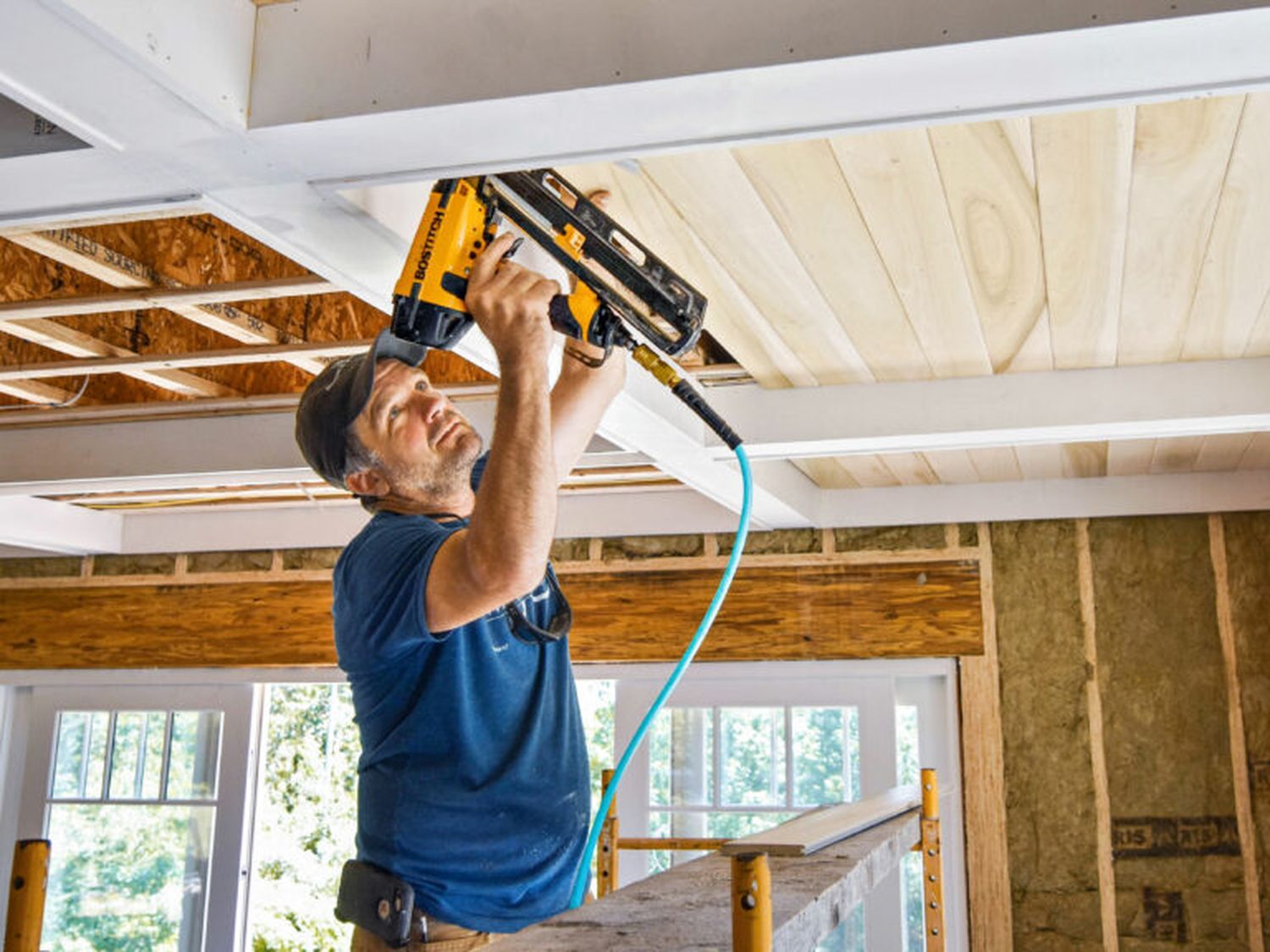
2. SECURE the first board by toe-nailing into the tongue and nailing through the face of the board along the wall.

3. Bore small pilot holes near the ends of the boards so the 4d finishing nails don't split the thin planks.

4. Drive nailheads below the surface with a nailset. Be careful not to split the tongue that's milled on the board.

5. Remove the trim from a recessed light fixture and use it as a template to mark where it overlaps the beadboard.

6. Fit the last board into place and secure it by face-nailing. Set the nailheads and fill the holes with putty.

7. Install crown molding with coped corner joints. Apply a final paint coat to both the ceiling and molding.

Advertisement

On Newsstands Now

In the Magazine
November - Refresh your rooms with color
boy on radiator kitchen sideboard painted accent wall colonial dining room dog bed ramp
Advertisement

Ceilings, like Rodney Dangerfield, get no respect. They're the most visible single surface in a room, yet most simply are painted white when a room is remodeled? and are ignored until a leak creates a stain or turns the drywall to mush.

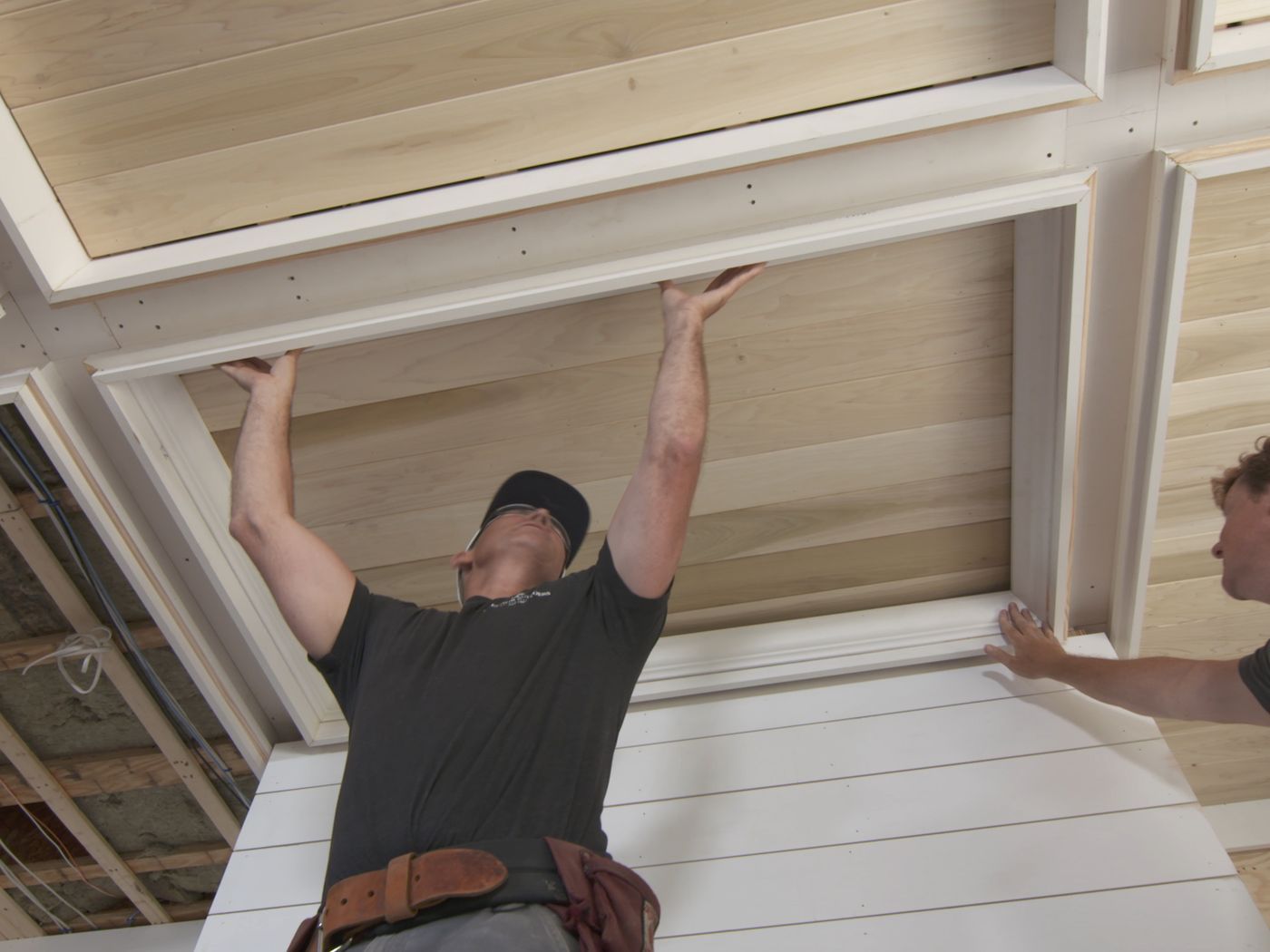
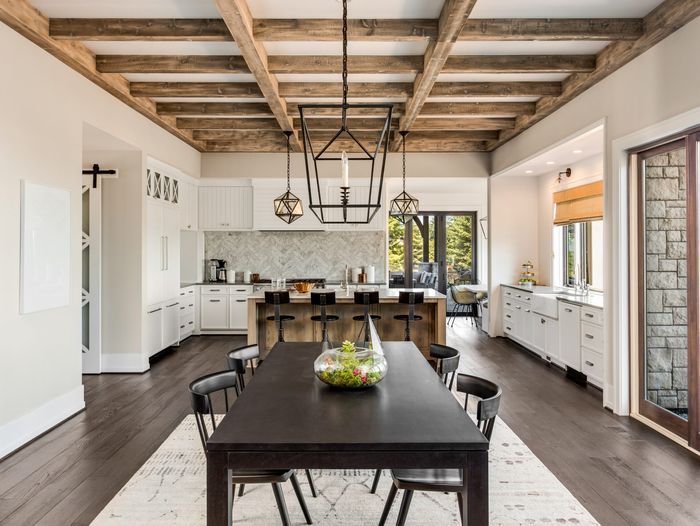
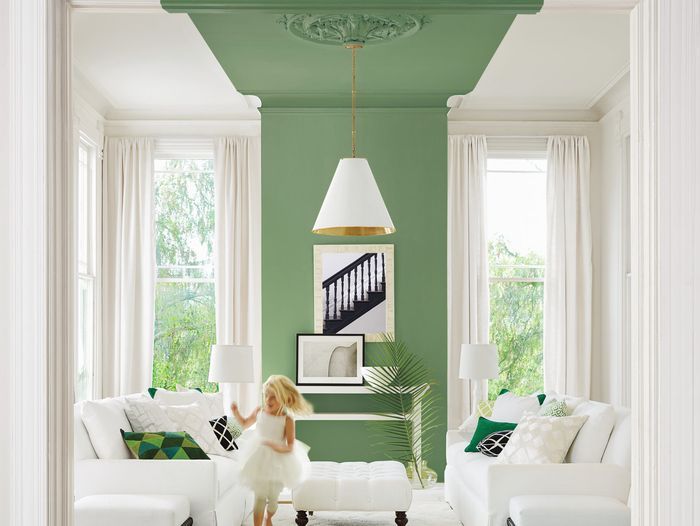
Invest a little time and money, and you can turn the ceiling into the focal point of a room. Or, "remodel" an entire room simply by sprucing up a blank, boring ceiling.

Several readily available, easy-to-install materials will help you do either of the above. Common choices include stamped-metal ceiling panels, plywood paneling, tongue-and-groove board paneling, acoustical tiles and planks, along with various wallcoverings and fabrics.

The most popular of these materials is a type of wood board paneling known as either beadboard or plank paneling. It's commonly used as wainscoting on walls and for the backs of Colonial-style cupboards and bookcases. These tongue-and-groove pine boards are about 5/16 in. thick x 3 1/2 in. wide and have a rounded bead milled along one edge and a second bead routed down the center. When the boards are installed, each appears to be two narrower ones.

Most well-stocked lumberyards and home centers carry beadboard in 8-ft. lengths individually or in bundles. Expect to pay about $1 to $1.50 per square foot.

Page:  123 Next
Step By Step: How to Install Beadboard Wainscoting
Sign Up for Our Free Newsletters

Comments

Post a Comment